

Steppin' Out with Santa: 2-Part Choral Octavo
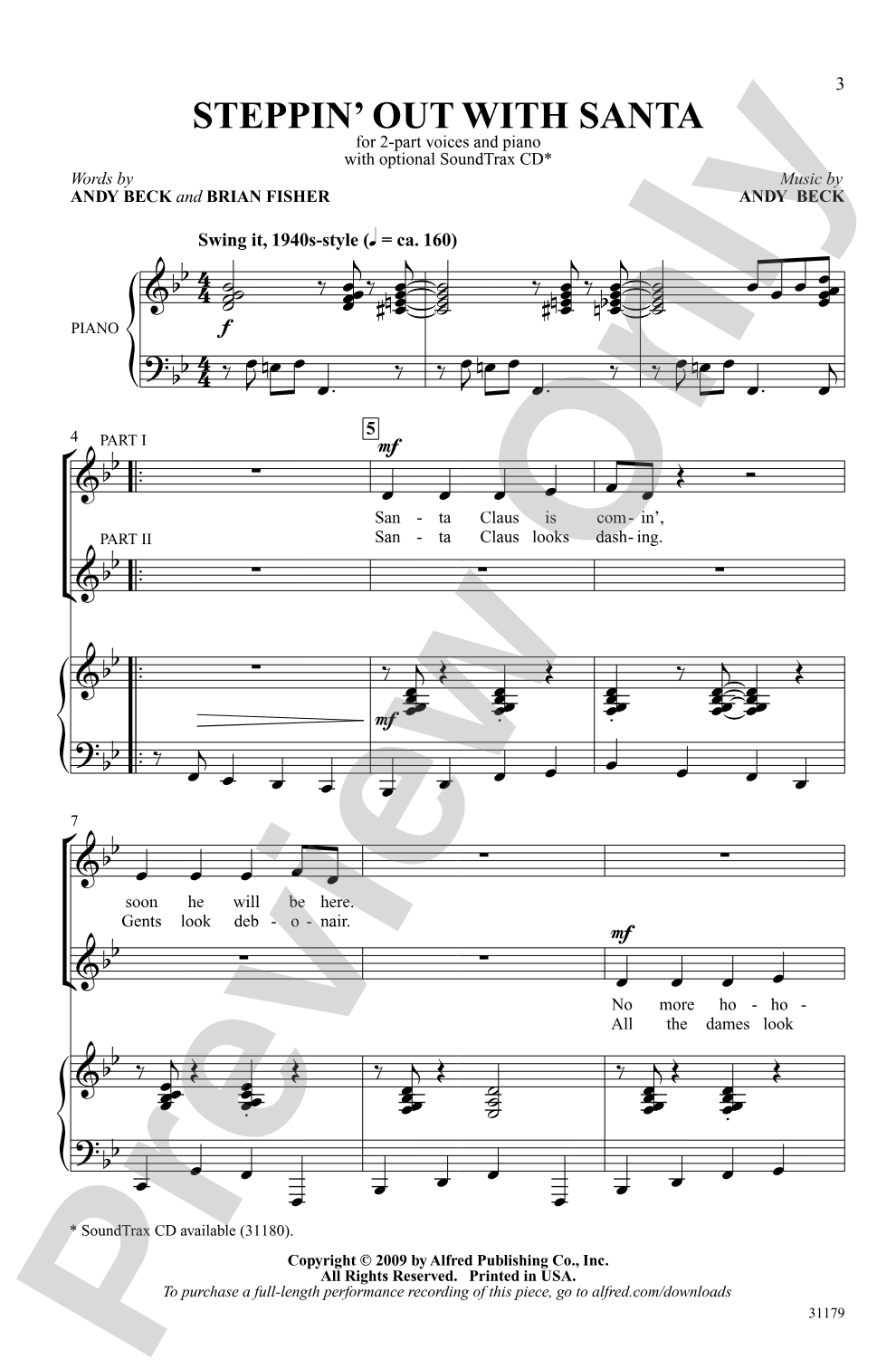
Words by Andy Beck and Brian Fisher, music by Andy Beck
Item: 00-PO-0000815
$1.75
Minimum order quantity: 20 copies
Pickup currently not available
Description
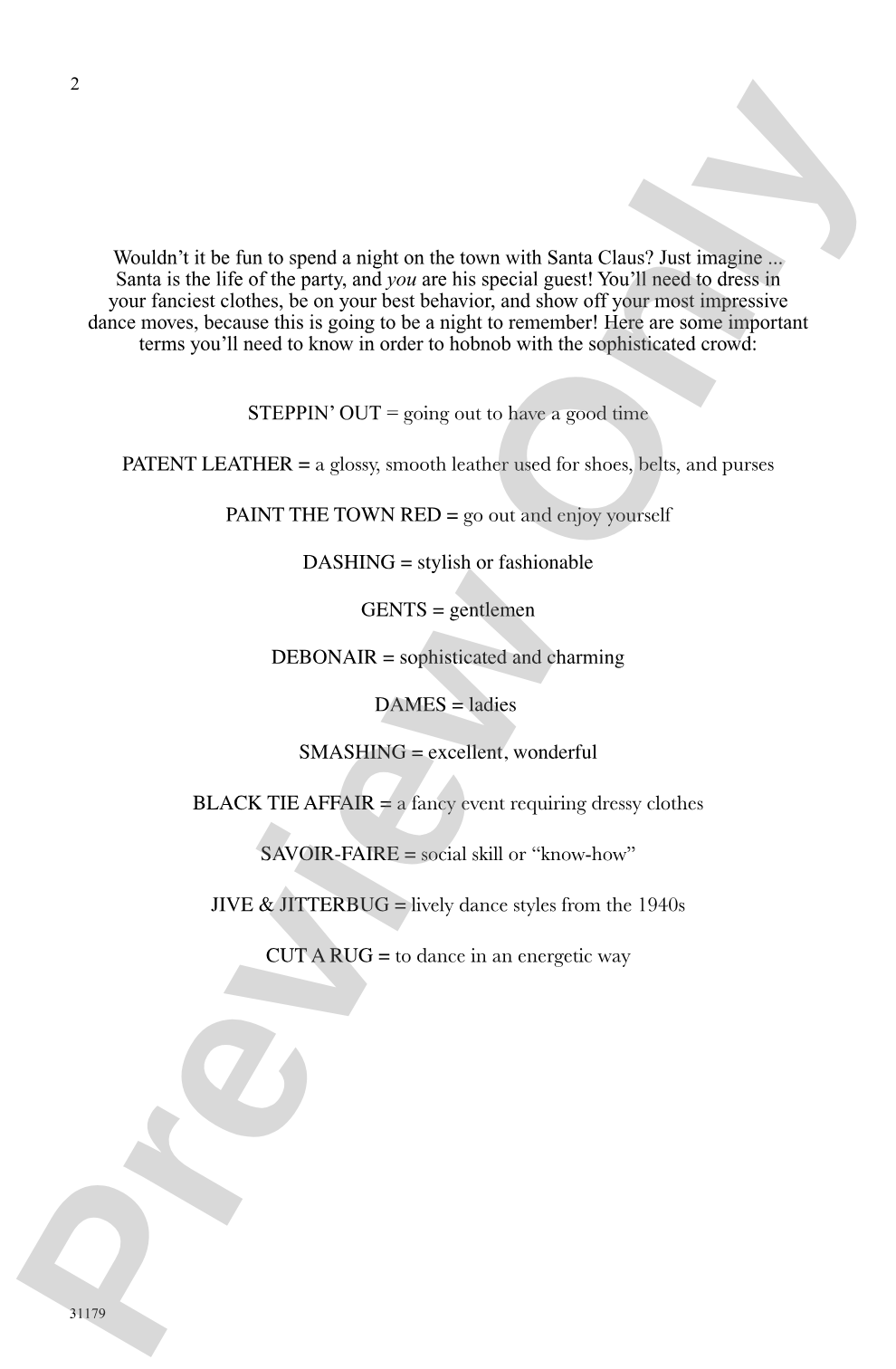
"Shine your patent leathers and put a top hat on your head" 'cause it's time to hit the town with the one and only Santa Claus. You'll have a blast singing (and perhaps dancing) this '40s-era novelty number with a stylish hook that sticks with you long after you've heard it. A gem! Featured on the Danza! Movement DVD (00-31225).


Steppin' Out with Santa: 2-Part Choral Octavo isn't in MakeMusic Cloud just yet...but it could be. Let us know you'd like to see it, and you'll help shape what comes next. In the meantime, start a free trial and dive into thousands of interactive titles your students can play along with today.
Request This Title
Tell us you want it.
Start Your Free Trial
Explore everything that's ready to play right now.
Sample Audio
1
Audio File
--:--
0:00
0:00
Sample Video
No sample videos found.
Additional Details
Series:
Alfred Choral Designs
Publisher:
Alfred Music
Page Count:
12
SKU:
00-PO-0000815
More about this title
About the Composer: Andy Beck

Andy Beck leads the choral publications program at Alfred Music, where he oversees a catalog of over 450 choral works, vocal resources, and children's musicals. His output spans composition, arrangement, and pedagogy; he has authored vocal technique resources including Sing at First Sight, Foundations in Choral Sight Singing, and Vocalize! 45 Vocal Warm-Ups That Teach Technique. His music circulates globally, performed by choirs across every age level and ability.
Beyond the publishing office, Beck works regularly as a guest conductor, choreographer, and clinician for music educators and ensembles nationwide. He has served as commissioned composer and guest conductor for honor choirs throughout the Southeast, including all-state groups. A trained tenor with degrees in music education from Ithaca College and Northwest Missouri State University, he performs with the North Carolina Master Chorale Chamber Choir and directs musical theatre. Since 1992, he has also recorded as a studio singer for Alfred Music, bringing direct performance experience to every piece he creates.
Why we love this
Beck writes novelty numbers with genuine craft, and this '40s-style romp succeeds because it respects both the joke and the singers. The melodic hook genuinely sticks, the two-part writing sits comfortably on young voices, and the movement element (included via the Danza! DVD resource) invites students to engage their whole selves rather than just standing and singing. For choirs that need festive repertoire with real personality, this delivers.
What to expect
A whimsical step into mid-century nightclub energy; the kind of song that makes you want to tip your hat and tap your feet. The melody is sophisticated enough to feel genuinely musical, but the concept is playful enough that singers can enjoy the comedy without winking at the audience. It's vintage Americana with a built-in smile.
Who it's for
Two-part choirs of high school age and above, as well as adult community choirs and mixed ensembles looking for holiday material with style and swing. This works especially well for groups comfortable with movement or seeking a concert moment that breaks the traditional reverent tone of holiday programming.
How to get the most out of it
- Keep the rhythm precise but bouncy; the '40s swing feel collapses if you push too hard or drag. Think "tap-dancing in patent leathers," not marching band energy.
- If you're using the movement staging from Danza!, rehearse the choreography as fully as the vocal line. Students should internalize both simultaneously so neither dominates or distracts.
- Balance the hook so it lands with style every time it appears. The catch phrase does the heavy lifting for memorability, so singers should deliver it with confidence and clarity rather than belting it out.
How to use it
Slot this as a palate cleanser between more serious holiday pieces, or anchor a full festive set with other upbeat, secular Christmas numbers. The movement component makes it a natural fit for concerts where staging and choreography are part of the design. Early-to-mid December works best, when audiences are in the mood for fun without sacrificing musical quality.
Skills your students will build
- Stylistic interpretation of '40s-era popular music idioms
- Rhythmic precision in swing-inflected vocal lines
- Coordination of singing and choreography
- Two-part blend and balance in a fun, high-energy context