
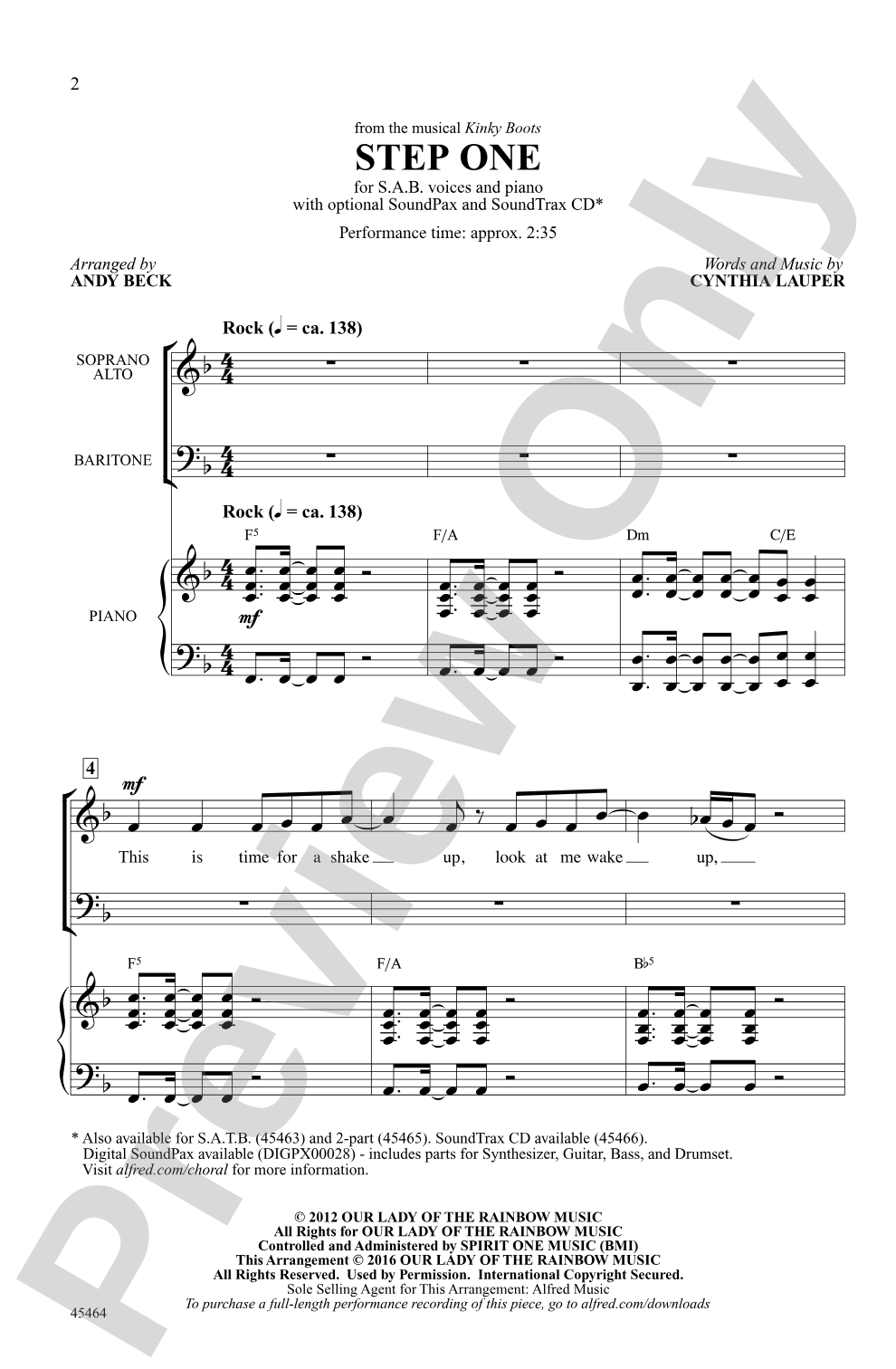
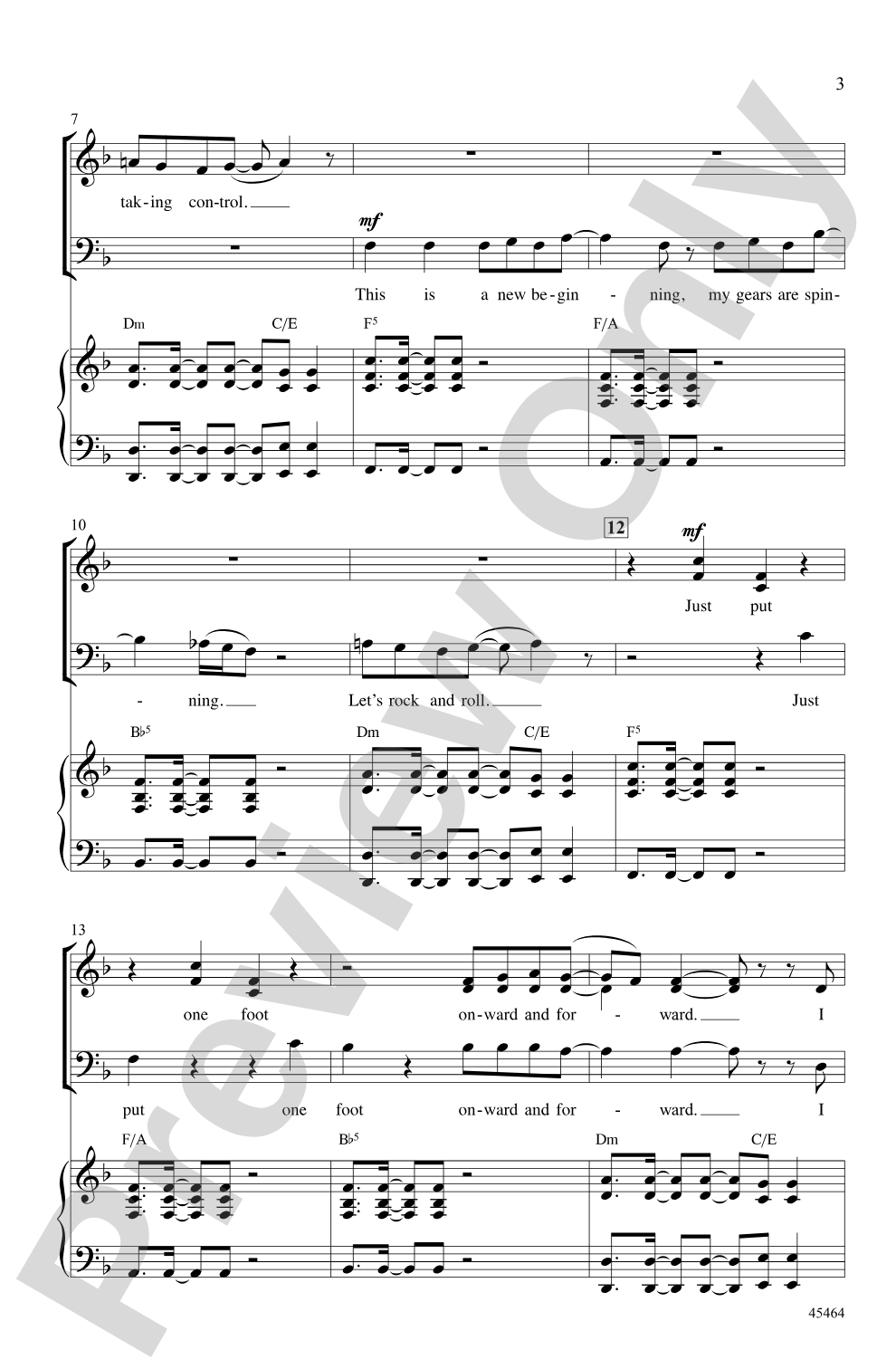
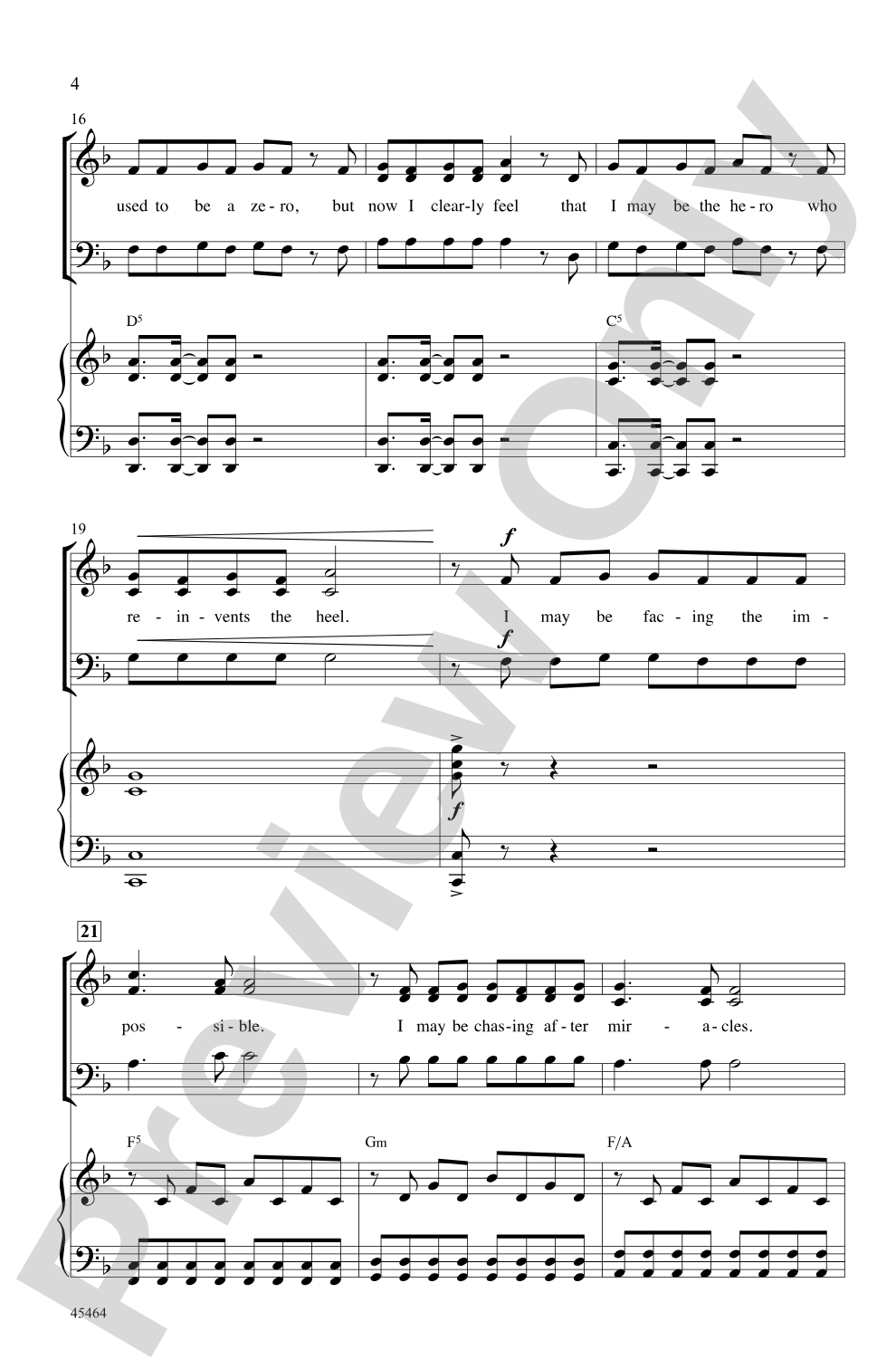

Step One (from the musical Kinky Boots): SAB Choral Octavo
From the Musical Kinky Boots
Words and music by Cynthia Lauper / arr. Andy Beck
Item: 00-PO-0003707
$2.10
Minimum order quantity: 20 copies
Pickup currently not available
Description
"Just put. One foot. Onward and forward." As one of the many highlights from Cyndi Lauper's Tony Award®-winning score, this is perfect for any ensemble looking for an energetic Broadway feature. Fabulous and fun! See Andy's choreography on the Step One! DVD.


Step One (from the musical Kinky Boots): SAB Choral Octavo isn't in MakeMusic Cloud just yet...but it could be. Let us know you'd like to see it, and you'll help shape what comes next. In the meantime, start a free trial and dive into thousands of interactive titles your students can play along with today.
Request This Title
Tell us you want it.
Start Your Free Trial
Explore everything that's ready to play right now.
Sample Audio
1
Audio File
--:--
0:00
0:00
Sample Video
Additional Details
Series:
Alfred Pop Choral Series
Publisher:
Alfred Music
Page Count:
12
SKU:
00-PO-0003707
More about this title
About the Composer: Cynthia Lauper
Cynthia Lauper is a singer, songwriter, and performer whose fearless artistry has shaped popular music across four decades. Beyond her chart-topping solo career, she composed the score for the 2013 Broadway musical Kinky Boots, earning a Tony Award for Best Original Score and proving herself as a skilled theatrical composer who understands how to craft songs that move audiences emotionally while celebrating individuality and resilience.
Lauper's work in musical theater draws on her instinct for melody and her gift for writing lyrics that resonate with real human experience. Her compositions for Kinky Boots demonstrate a deep commitment to storytelling through music, creating moments that are simultaneously entertaining and deeply moving.
Why we love this
This is pure joy on the page. Andy Beck's arrangement captures the irrepressible energy of Lauper's original while keeping the part writing accessible for three-part ensembles, and the message of moving forward with courage feels genuinely needed in rehearsal rooms right now. Directors will appreciate music that doesn't sacrifice sophistication for accessibility, and audiences will respond immediately to this unmistakable Broadway sound.
What to expect
Infectious and uplifting. The piece pulses with forward motion and optimism, celebrating the idea that even small steps lead somewhere. There's a lightness here, but also genuine heart. Singing it feels like being part of something bigger than yourself.
Who it's for
Choirs seeking contemporary Broadway repertoire that feels genuinely theatrical without technical strain. SAB voicing makes this accessible to mixed ensembles at the high school and community choir level, yet the Lauper score keeps it from feeling simplified or watered down. This works beautifully for directors who want to program something current and joyful.
How to get the most out of it
- Push the rhythmic drive without rushing. The energy comes from conviction and forward momentum, not tempo. Lock the ensemble's rhythmic precision first, then layer in personality.
- Treat the unison moments as solid anchors. When the voices come together, make it count. This creates dynamic contrast that keeps the arrangement fresh across twelve pages.
- Balance the SAB texture so the soprano line reads clearly over the middle parts. In three-part writing, the top voice often carries the melody, and this arrangement is no exception.
- Record yourself early and often. Hearing the recorded accompaniment will settle questions about style, articulation, and phrasing faster than verbal description ever will.
How to use it
Feature this as a spring concert centerpiece or a standalone Broadway showcase set. The inherent energy and contemporary style make it an excellent choice for audiences who might not expect to hear recognizable music from your ensemble. It also works as a powerful closing number that leaves audiences smiling and inspired.
Skills your students will build
- Reading SAB voicing with clear part independence
- Maintaining rhythmic precision in syncopated figures
- Executing style-specific articulation for Broadway idiom
- Building ensemble blend across three distinct voice parts
- Performing with theatrical presence and narrative commitment