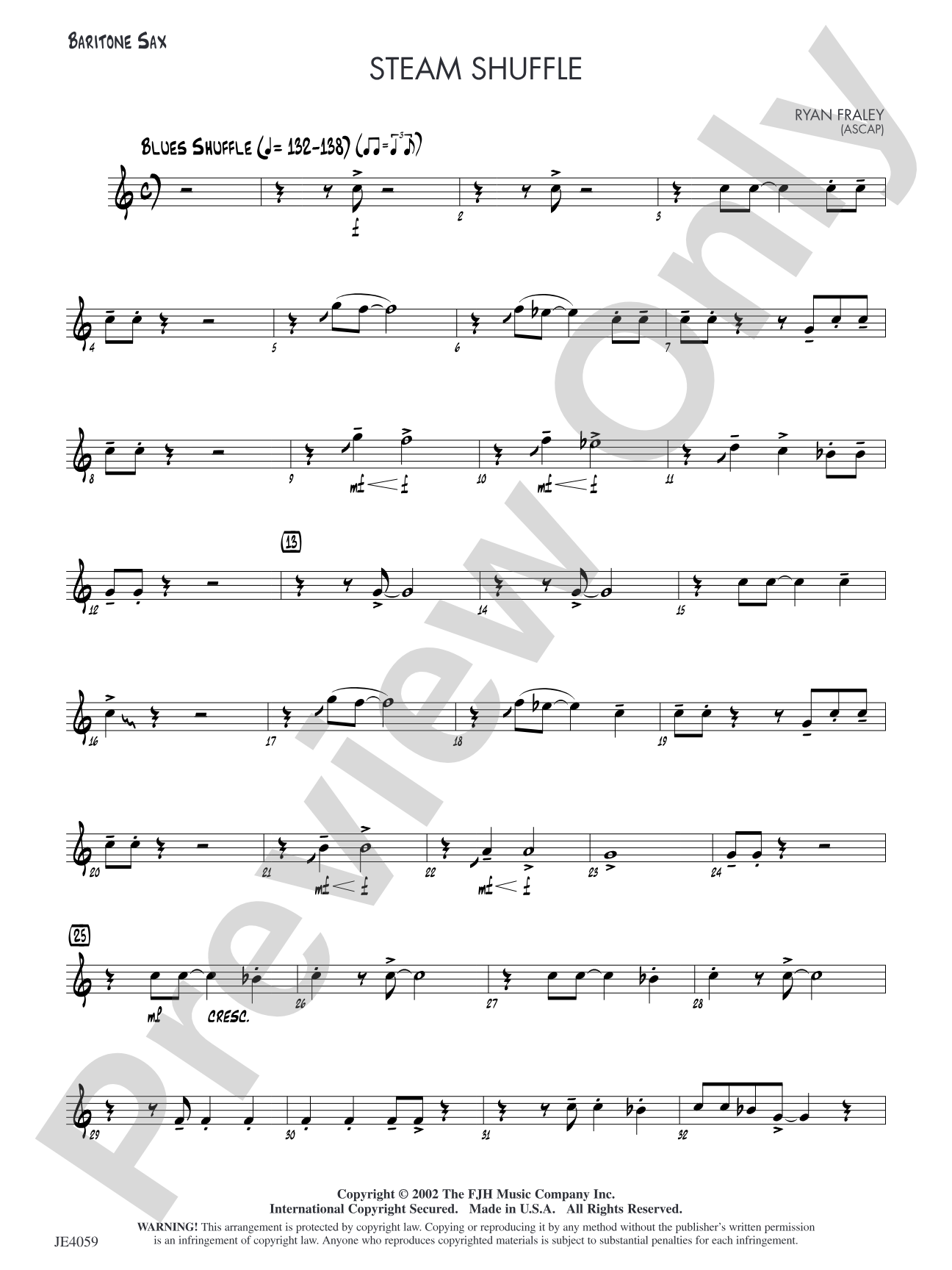
With its medium shuffle groove and simple riff-based melodies, Steam Shuffle is the perfect blues chart for your beginning jazz ensemble. The solo section can be opened up to provide an opportunity for you to show off your talented soloists. Well notated rhythm section parts and strong unison horn lines will make this chart work with even the most inexperienced jazzers. Very easy.
Discover MakeMusic Cloud: thousands of interactive titles your students can play along with today.
Ryan Fraley is a composer and arranger with a gift for writing accessible jazz that doesn't talk down to young musicians. His work in the FJH Beginning Jazz Ensemble series demonstrates deep understanding of what actually works in the rehearsal room: parts that sound good quickly, rhythms that lock in naturally, and arrangements that give everyone something meaningful to play.
Why we love this
Ryan Fraley has built Steam Shuffle specifically for ensembles still finding their footing with jazz vocabulary, and it shows in every measure. The riff-based construction means students stay locked into a groove without struggling through complex changes, while the optional solo section lets you feature growing improvisers without pressure. This is the rare beginner jazz chart that sounds like real jazz, not a watered-down approximation.
What to expect
A laid-back blues groove with swagger. The shuffle rhythm bounces forward naturally, and the unison horn lines give the ensemble an immediate sense of cohesion and swing. It feels like real jazz because the riff-based melody sits perfectly into the rhythm section pocket.
Who it's for
Directors building a first jazz ensemble or introducing jazz to young musicians who read standard notation but have no improvisation experience yet. Trumpet, trombone, saxophone, and rhythm section players at the start of their jazz journey will find accessible parts that teach phrasing and ensemble listening without overwhelming technical demands.
How to get the most out of it
Establish the shuffle feel with your rhythm section first. Lock the drums, bass, and piano into the groove before full ensemble rehearsal; this foundation carries everything else.
Keep horn lines crisp and unified even at slow practice tempos. The strength of this chart comes from cohesive section work, not individual polish.
Open the solo section strategically. If you have one confident improviser, feature them; if you have several developing soloists, use it as a rotating practice opportunity where different players trade chorus by chorus.
Let the rhythm section breathe during the melody sections. Resist the urge to push tempo; the medium shuffle sits best when it feels relaxed and intentional.
How to use it
Place this early in the year as a confidence builder before tackling more complex changes and structures. It works beautifully on a concert that pairs small jazz combos with the full ensemble, or as a standalone piece showing how students can make real music immediately after learning basic jazz vocabulary.
Skills your students will build
Reading and playing within a shuffle feel
Responding to rhythm section groove rather than conductor tempo
Phrasing blues changes and riff-based melodies
Trading solos and responding to other improvisers
Balancing section blend while playing straightforward unison lines
You May Also Like
Scan to Complete Your Purchase
Use your phone's camera to scan the code below
You'll log in on your phone and the order will be added to your account