
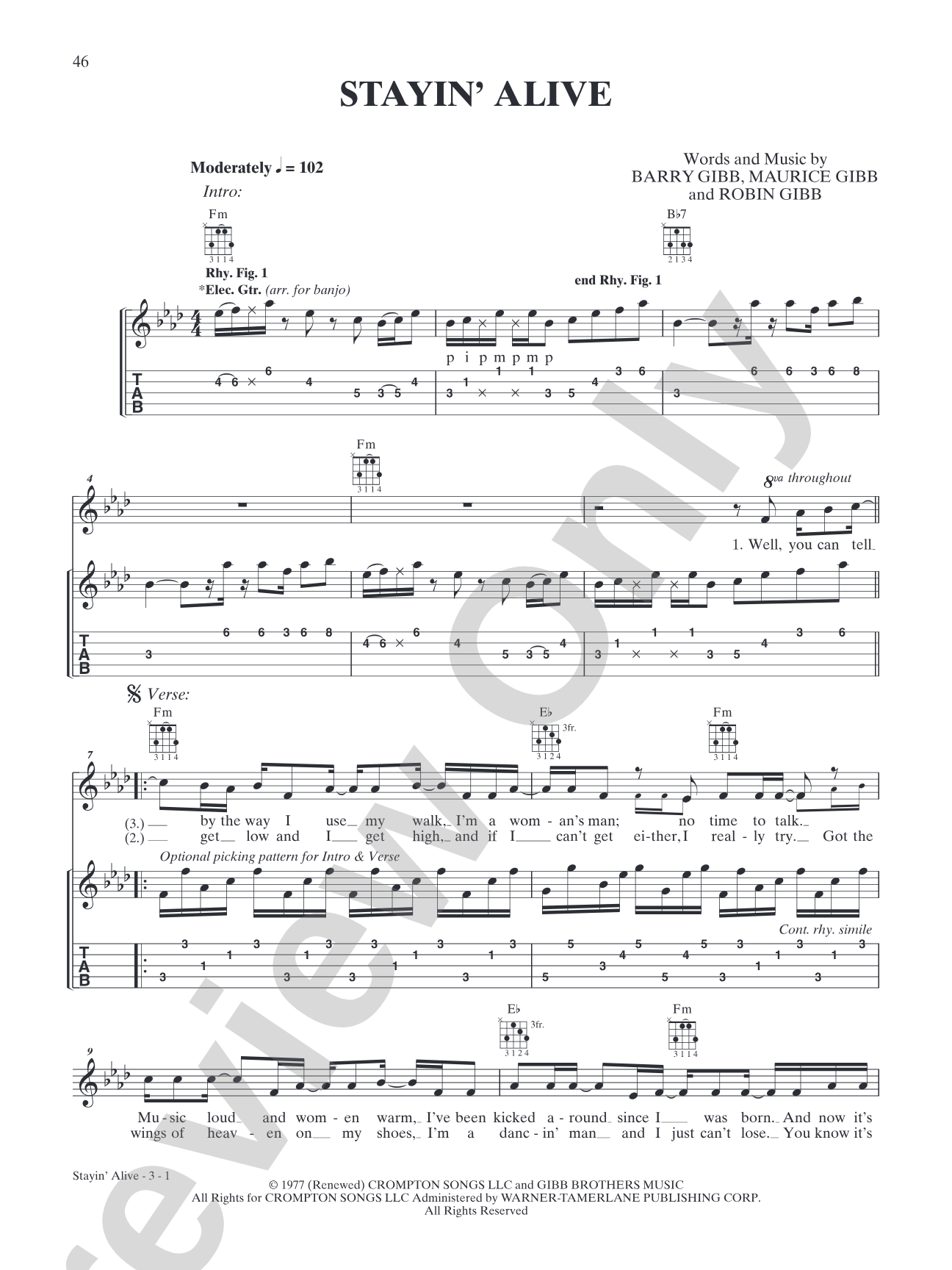

Stayin’ Alive: Banjo TAB
12 Great Songs from Classic to Modern Rock
Item: 00-PS-0011822
$4.99
One moment…
Description
Rock and Pop Banjo is designed for your total enjoyment. Each song uses the original guitar parts arranged for the banjo. Also, we've added some suggested roll and picking patterns to add to the fun. Titles: Beat It (Michael Jackson) * China Grove (The Doobie Brothers) * Do You Want to Know a Secret (The Beatles) * Don't Stop Believin' (Journey) * How You Remind Me (Nickelback) * Jumpin' Jack Flash (The Rolling Stones) * Layla (Unplugged version) (Eric Clapton) * Lyin' Eyes (Eagles) * Panama (Van Halen) * Running on Empty (Jackson Browne) * Stayin' Alive (Bee Gees) * Wild Night (Van Morrison).


Stayin’ Alive: Banjo TAB isn't in MakeMusic Cloud just yet...but it could be. Let us know you'd like to see it, and you'll help shape what comes next. In the meantime, start a free trial and dive into thousands of interactive titles your students can play along with today.
Request This Title
Tell us you want it.
Start Your Free Trial
Explore everything that's ready to play right now.
Sample Audio
No sample audio found.
Sample Video
No sample videos found.
Additional Details
Series:
Just for Fun
Publisher:
Alfred Music
Page Count:
64
SKU:
00-PS-0011822
More about this title
About the Composer: Barry Gibb
Barry Gibb is a British-Maltese singer, songwriter, and musician best known as the co-founder and sole surviving member of the Bee Gees. Alongside his brothers Robin and Maurice, he shaped the sound of disco and pop music across five decades, crafting some of the most recognizable melodies in recorded history. His compositions have sold over 200 million records worldwide and continue to define the era.
Why we love this
This collection captures the genius of arranging iconic songs for banjo in a way that honors the originals while showcasing what the instrument can do in rock and pop contexts. The mix of disco, rock, and singer-songwriter material means banjo players get genuine repertoire variety, not just bluegrass retreads. The included roll and picking patterns transform each arrangement into a learning tool as much as a performance piece.
What to expect
Playing these songs on banjo feels like stepping into a different world while staying grounded in recognizable melodies. The inherent brightness and snap of the instrument give familiar hits an unexpected energy, especially on tracks like "Panama" and "Jumpin' Jack Flash." There's real joy in discovering how disco grooves, arena rock riffs, and singer-songwriter fingerpicking patterns work when filtered through a banjo.
Who it's for
Banjo players who want to expand beyond traditional and bluegrass genres into the rock and pop songbooks they already know. Intermediate to advanced players will get the most from these arrangements, as the original guitar parts require confident navigation of the fretboard and solid rhythm control.
How to get the most out of it
- Study the suggested roll patterns as written before personalizing them; they're designed to capture the energy of each original arrangement.
- Balance percussive attack with melody clarity, especially on faster passages where both elements compete for attention.
- Use the chord charts to explore alternate fingerings that feel natural on your instrument; the guitar-based voicings don't always translate one-to-one to banjo.
- Record yourself playing alongside the original recordings to lock in the groove and hear how the banjo voice sits in the band mix.
How to use it
Slot these arrangements into recitals or showcases where you want to bridge the gap between traditional banjo repertoire and contemporary music. They work especially well for informal performances or jam sessions where players want to contribute to songs everyone recognizes. Consider pairing a selection of these with a small ensemble or backing track to show banjo's versatility.
Skills your students will build
- Adapting guitar-based voicings and shapes to banjo fingering
- Executing variations of rolls and picking patterns across different song styles
- Maintaining steady rhythmic groove in rock and pop contexts
- Reading and interpreting TAB notation with chord and pattern annotations
- Balancing percussive articulation with melodic phrasing in contemporary genres