
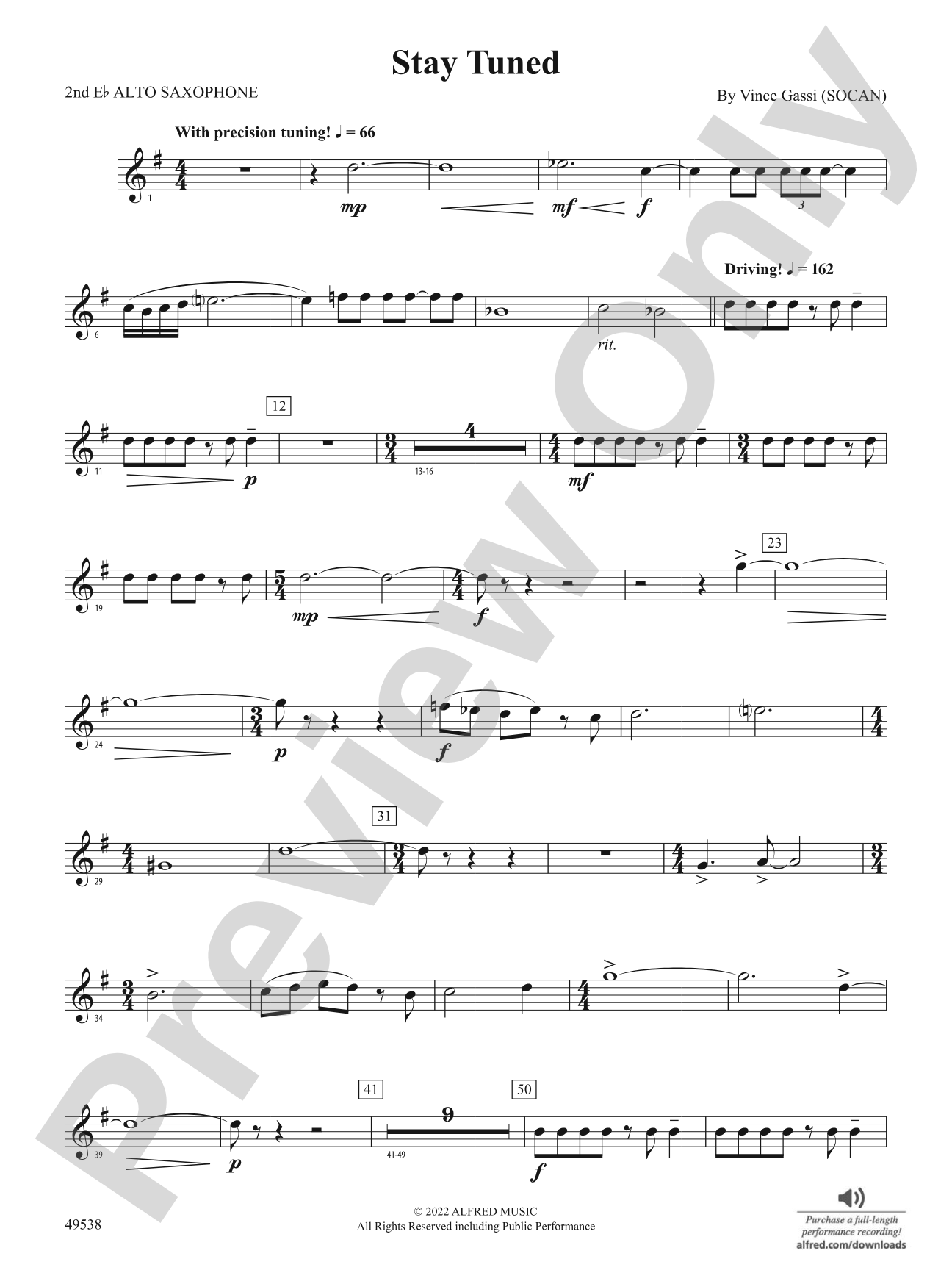

Stay Tuned: 2nd E-flat Alto Saxophone
By Vince Gassi
Grade: 2.5
Item: 00-PC-0018879_AX2
$3.00
Pickup currently not available
Description
What would a piece for band entitled Stay Tuned sound like? How about one part tune up, one part driving energy, one part tuneful melody. Add to this that the tuning note is always present somewhere throughout (even in the lyrical section) whether sustained or rhythmically varied. Stay tuned with this great Vince Gassi original for audience fun! (2:55)
The PerformancePlus+ series is an innovative addition to the ever-expanding MakeMusic Cloud interactive library. These engaging selections are presented with educational resources designed to enrich the rehearsal process and create outstanding performances. Including:


The PerformancePlus+ series is an innovative addition to the ever-expanding MakeMusic Cloud interactive library. These engaging selections are presented with educational resources designed to enrich the rehearsal process and create outstanding performances. Including:
- Assignment, recording, and assessment tools within MakeMusic Cloud
- Piece-specific exercises focused on skills and techniques
- Educational tips and suggestions to support learning
Available in print and digital formats.
Don't just read it, hear it, play along with it, and watch your students grow with it. In MakeMusic Cloud, Stay Tuned: 2nd E-flat Alto Saxophone comes alive with professional accompaniment, adjustable tempo, and built-in practice tools that turn solo practice into real progress.
Open in the Player
Jump straight in and assign it today.
Start Your Free Trial
Open this title and explore the full library in minutes.
Sample Audio
1
Audio File
--:--
0:00
0:00
Sample Video
Additional Details
Series:
Alfred Concert Band - PerformancePlus+
Publisher:
Alfred Music
SKU:
00-PC-0018879_AX2
More about this title
About the Composer: Vince Gassi
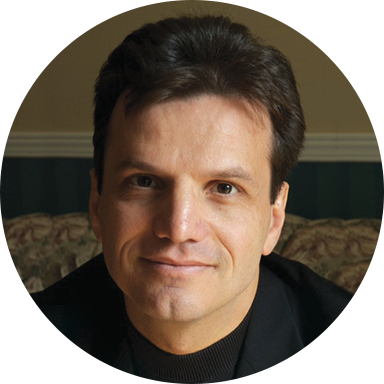
Vince Gassi has been publishing music through Alfred since 2006, building a catalog of more than 100 compositions that balance accessibility with genuine musical substance. His background spans performance, education, and advanced study: a Bachelor of Music from the University of Western Ontario, composition training at the Dick Grove School of Music in Los Angeles, and a Ph.D. in music from York University in Toronto.
For over two decades, Gassi taught instrumental music at elementary and secondary levels while establishing himself as a sought-after conductor, adjudicator, and clinician across the United States and Canada. His work appears regularly on festival and contest programs internationally, and his pieces have been performed throughout North America, Europe, and Japan. Beyond composing, Gassi leads workshops on creative engagement and digital workflows for music directors, helping educators integrate innovation into their rehearsal rooms.
Why we love this
Gassi's concept here is both clever and practical: the tuning note becomes a compositional device rather than just a warm-up artifact. It gives the piece an immediately recognizable identity while maintaining musical interest across contrasting sections. The driving energy and tuneful melody keep the ensemble engaged without overwhelming younger players, making it equally effective for concert programming or contest play.
What to expect
A piece that sounds like it's winking at the audience. The consistent presence of a tuning note gives it a purposeful, almost playful quality: energetic in its driving sections, warm in its melody, and never losing sight of accessibility. It's the kind of work that feels fresh to play because the concept itself keeps musicians curious about what comes next.
Who it's for
Grade 2.5 bands ready for material with recognizable melodic content and energy without excessive technical demand. This works well for ensembles preparing for contests or concerts where the audience appreciates clever compositional hooks alongside straightforward musicality.
How to get the most out of it
- Highlight the tuning note whenever it appears, especially in the lyrical section where it creates textural contrast. Even rhythmic variations of this pitch deserve clarity so the audience catches the compositional idea.
- Balance the driving energy of the main sections against the lyrical passages. Avoid letting intensity flatten out; use dynamic shape to sustain interest through the 2:55 duration.
- Rehearse entrances precisely when the tuning note shifts between sustained and rhythmic treatments. These transitions define the piece's architecture and require clean ensemble attacks.
How to use it
Program this on a concert where you want to showcase the band's ability to execute both rhythmic precision and lyrical playing. The moderate length and genre fit well in a mixed program after a heavier work or before an audience favorite. It's also an excellent festival selection where the distinctive concept helps the band stand out to judges.
Skills your students will build
- Executing sustained notes with consistent tone while other sections carry rhythmic material
- Balancing ensemble weight across contrasting energy levels
- Maintaining rhythmic precision in driving sections without rushing
- Shaping lyrical melody with appropriate phrasing and dynamics
- Following a composer's motivic idea across different orchestrations and contexts