
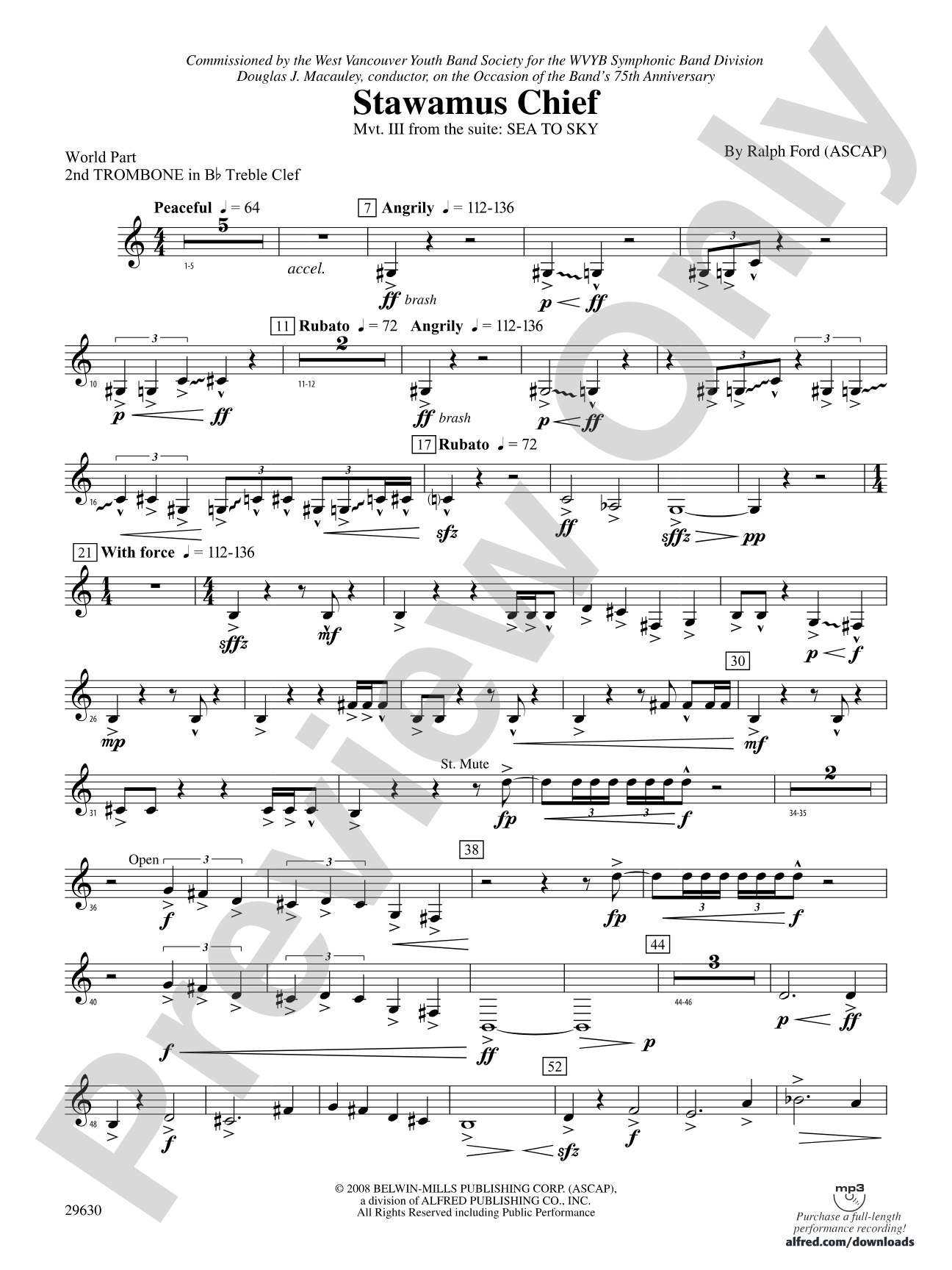
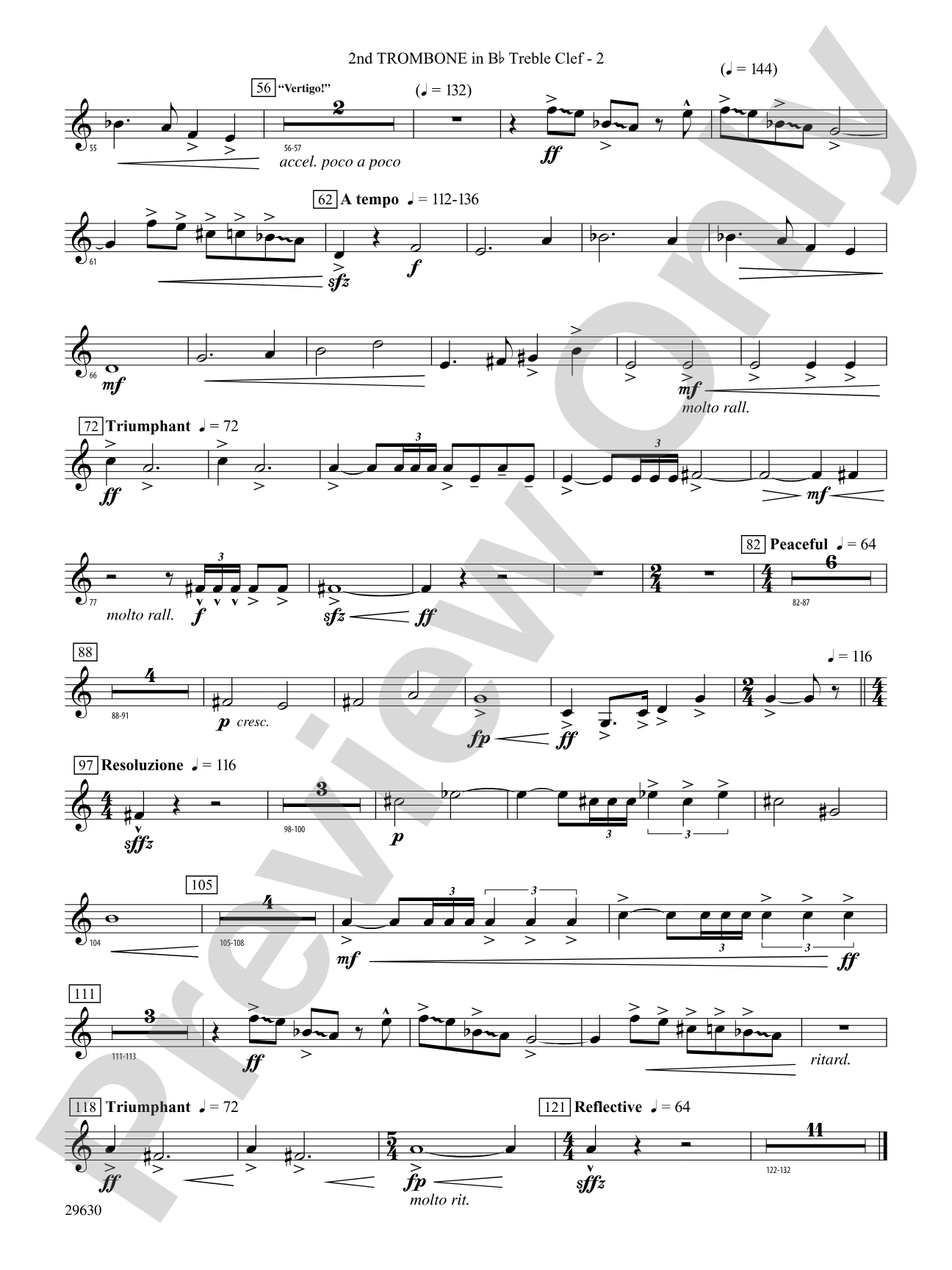

Stawamus Chief: (wp) 2nd B-flat Trombone T.C.
Mvt. III from the Sea to Sky
By Ralph Ford
Grade: 5 (Difficult)
Item: 00-PC-0001510_wpTN2TC
$3.00
Pickup currently not available
Description
The third installment of Ralph Ford's four-movement Sea to Sky Suite, the melodic and harmonic material for "Stawamus Chief" was crafted from the name Stawamus Chief itself. "Stawamus" inspired a beautiful and reflective theme that captures the grandeur and beauty of the monolith. Combine this bold, reverent third movement with "March: The Lion's Gate" (26772), then "Shannon Falls" (26773) and closing with "Beyond Whistler" (29631) to experience the complete set. An epic work! (6:43)


Don't just read it, hear it, play along with it, and watch your students grow with it. In MakeMusic Cloud, Stawamus Chief: (wp) 2nd B-flat Trombone T.C. comes alive with professional accompaniment, adjustable tempo, and built-in practice tools that turn solo practice into real progress.
Open in the Player
Jump straight in and assign it today.
Start Your Free Trial
Open this title and explore the full library in minutes.
Sample Audio
1
Audio File
--:--
0:00
0:00
Sample Video
No sample videos found.
Additional Details
Series:
Belwin Symphonic Band
Publisher:
Alfred Music
Page Count:
272
SKU:
00-PC-0001510_wpTN2TC
More about this title
About the Composer: Ralph Ford
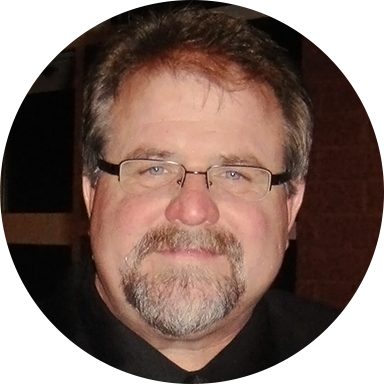
Ralph Ford has shaped concert band and orchestra repertoire for over three decades through his dual work as a university instructor and prolific composer. His career spans from his early years as a student arranger in Panama to his current role as an exclusive composer and arranger for Alfred Music, with more than 250 published titles across concert band, orchestra, jazz ensemble, and marching band formats.
Beyond the concert hall, Ford has established himself in media production and broadcast, earning international recognition for advertising work while composing news packages for national network affiliates and producing recordings for television and digital platforms. His commissions have reached university, military, professional, and school ensembles worldwide, reflecting his deep understanding of what works across different performance contexts and skill levels.
Why we love this
Ford's approach to thematic development here rewards careful listening and conducting. He mines the name Stawamus Chief itself for musical material, creating a composition that feels organically tied to its subject rather than imposing a generic heroic treatment. The result is a movement that demands your ensemble's attention to harmonic color and dynamic nuance, which are the hallmarks of Grade 5 writing done well.
What to expect
Stawamus Chief unfolds with the quiet dignity of a natural landmark. The music captures both the stillness and monumentality of the monolith, building moments of genuine power without losing its meditative core. This is music that asks the ensemble to listen to itself.
Who it's for
Concert bands at the Grade 5 level with the technical security and musical maturity to sustain lyrical ideas and execute dynamic subtlety. This movement particularly suits ensembles ready to move beyond purely technical showcases and engage with thematic development and harmonic sophistication.
How to get the most out of it
- Balance the reflective theme against the grandeur Ford builds around it; resist the urge to push tempo during the bold passages, as the reverence comes from clarity and control rather than speed.
- Pay close attention to the harmonic shifts that reinforce the monolith's presence; they're subtle enough to disappear under careless ensemble blend but striking when voices lock in.
- Conduct the longer phrases with a sense of architecture; Ford's melodic material wants space to breathe, so shape toward structural points rather than measuring out beat by beat.
How to use it
Program this as the dramatic centerpiece of your concert if you're performing the complete Sea to Sky Suite in sequence; its position as the third movement creates natural arc with the march that precedes it and the reflective pieces that follow. It also works as a standalone concert piece for programs seeking substantial Grade 5 material with geographic or cultural significance.
Skills your students will build
- Sustaining long melodic lines with consistent tone and phrasing
- Reading and balancing complex harmonic progressions
- Dynamic control across full ensemble range
- Responding to conducted gesture for structural unity in lyrical music
- Blend and intonation in sustained chord changes