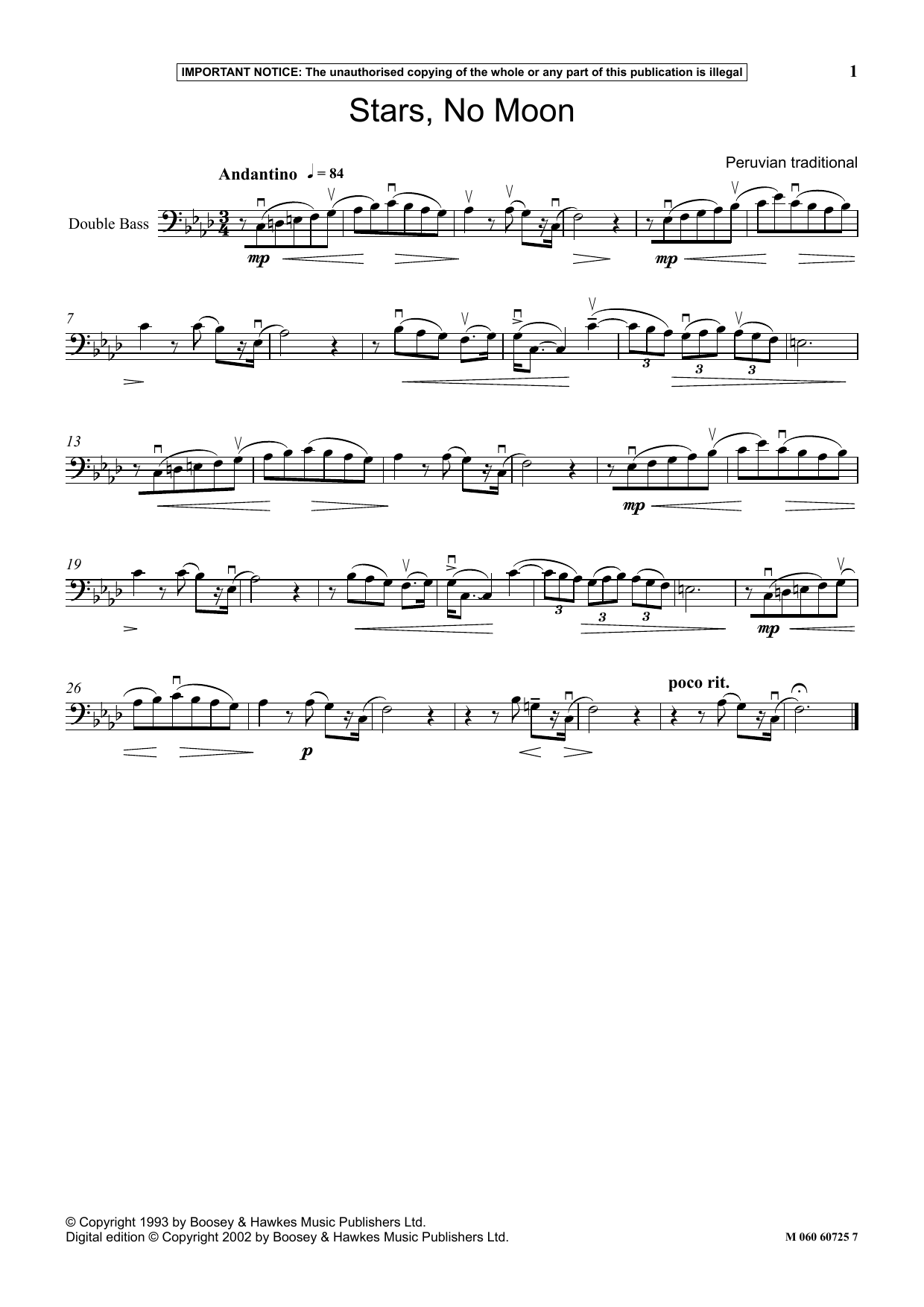
Stars, No Moon Sheet Music Preview

Stars, No Moon: Instrumental Solo

As performed by Peruvian Traditional

Item: 35-DS00239109

Digital Download
$3.99
One moment…
Description

Discover MakeMusic Cloud: thousands of interactive titles your students can play along with today.

Sample Audio
No sample audio found.
Sample Video
Additional Details
Publisher: Hal Leonard
Page Count: 3
SKU: 35-DS00239109

More about this title

About the Artist: Peruvian Traditional

Peruvian traditional music emerges from centuries of cultural blending, where indigenous Andean practices interwove with Spanish colonial influences and African rhythmic traditions. These compositions represent the living heritage of Peru's communities, passed down through generations and refined by countless musicians who adapted them to their instruments and regional contexts.

The traditional repertoire of Peru encompasses a vast range of styles, from the high-altitude folk songs of the Andes to the coastal rhythms that reflect Peru's geographic diversity. Songs like "Stars, No Moon" carry the emotional weight and poetic sensibility characteristic of Peruvian songwriting, often exploring themes of love, loss, and connection to the land.

Why we love this

This arrangement captures the lyrical quality of Peruvian song without exoticism or oversimplification. The three-page format makes it accessible for classroom performance, yet the melodic content retains the sophisticated phrasing and emotional nuance that makes traditional music worth studying in the first place.

What to expect

The piece unfolds with the quietness of nighttime reflection, its title invoking a landscape without lunar light. There's intimacy here, a quality that invites listeners into a personal moment rather than demanding their attention through volume or spectacle.

Who it's for

This works well for intermediate vocal ensembles, classroom singers exploring global repertoire, or any group looking to add substantive world music to their concert programming. It's equally suited for cultural studies contexts where music enriches language and history learning.

How to get the most out of it

  • Let the melody breathe by shaping phrases around the natural vowel sounds of the text rather than forcing metronomic regularity
  • Pay close attention to any ornamentation or embellishment markings, as these details carry cultural and expressive significance
  • Balance simplicity with intention; even sparse accompaniment requires careful voice leading and attention to harmonic rhythm

How to use it

Consider pairing this with other selections that explore themes of darkness, solitude, or celestial imagery for a contemplative concert section. It also serves well as an introduction to Peruvian music in world music units or as a complement to geography and social studies curricula exploring Andean cultures.

Skills your students will build

  • Phrasing and text expression in non-English language material
  • Cultural listening and appreciation of traditional music aesthetics
  • Sustaining simple yet emotionally communicative lines over minimal accompaniment

You May Also Like