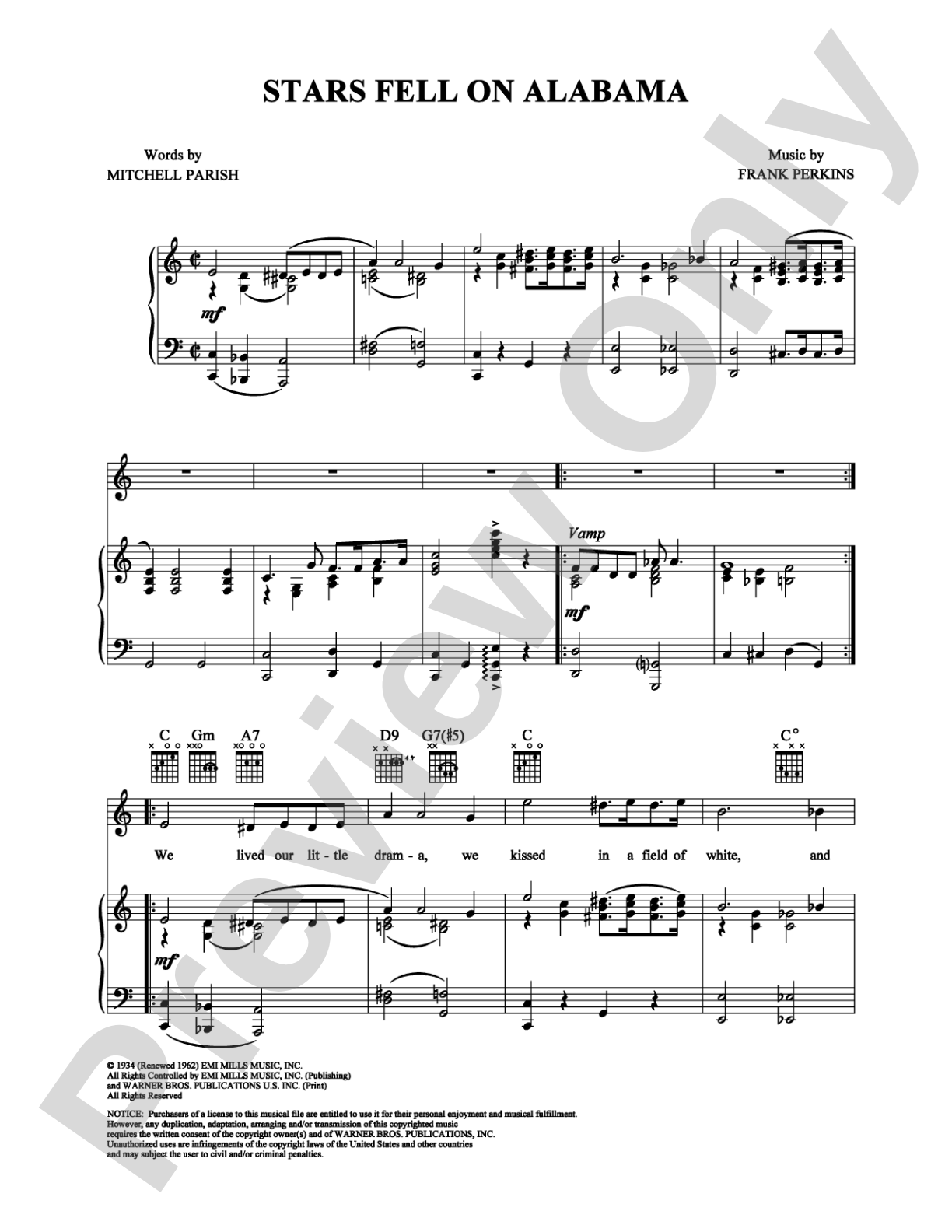
Stars Fell on Alabama: Piano/Vocal/Chords Digital Sheet Music

Stars Fell on Alabama: Piano/Vocal/Chords Digital Sheet Music

Frank Perkins, Jack Teagarden

Item: 00-PS-0000857

Digital Download
$3.99
Description

Stars Fell on Alabama: Piano/Vocal/Chords Digital Sheet Music isn't in MakeMusic Cloud just yet...but it could be. Let us know you'd like to see it, and you'll help shape what comes next. In the meantime, start a free trial and dive into thousands of interactive titles your students can play along with today.

Sample Audio
No sample audio found.
Sample Video
Additional Details
SKU: 00-PS-0000857

More about this title

About the Artist: Jack Teagarden

Jack Teagarden (1905-1964) was a trombonist and vocalist whose warm, bluesy tone and relaxed phrasing defined the sound of swing-era jazz. Known for his ability to blend seamlessly between instrumental and vocal performance, Teagarden led his own big band and appeared regularly on radio and in film throughout the 1930s and 1940s. His approach to jazz standards emphasized storytelling and emotional directness over technical display, making his interpretations a masterclass in how to serve the song.

Teagarden's influence on jazz education stems from his demonstration that technical mastery and accessible musicianship are not opposing forces. His recordings remain valuable reference material for students learning how jazz standards should breathe and swing.

Why we love this

This standard sits at the intersection of accessible jazz repertoire and genuine interpretive challenge. The melody is singable and the chord progression is fundamental to jazz literacy, but bringing the piece to life requires the kind of rhythmic flexibility and tonal awareness that Teagarden exemplified. It's a piece that rewards practice without demanding virtuosity.

What to expect

Nostalgic and warm, with an unhurried tempo that invites reflection. The melody floats easily over supportive harmonies, and the overall character is intimate rather than grand. There's a gentle melancholy underneath the romanticism, creating space for genuine emotional expression.

Who it's for

This arrangement serves singers exploring jazz standards at the intermediate level and pianists accompanying vocalists in jazz or pop contexts. It's also valuable for students studying the Great American Songbook who want to work with a piece that balances melodic accessibility with harmonic substance.

How to get the most out of it

  • Treat the vocal line as a conversation rather than a recitation. Listen to how Teagarden stretches and compresses phrases against the piano accompaniment, and use that as a model for your own phrasing choices.
  • Balance the piano voice and accompaniment carefully. The chords should support the lyrical line without overwhelming it, especially in passages where the melody sits in a lower register.
  • Work the rhythm section feel alongside your vocalist. Even in a solo piano-vocal setting, establishing a subtle swing and forward motion in the accompaniment will transform how the melody lands.

How to use it

This works well as a featured piece in a jazz standards concert or as part of a broader programming segment on American songbook classics. It can also serve as a bridge piece between classical and jazz repertoire in recitals that draw from multiple traditions. Consider pairing it with other standards from the same era to create a cohesive set.

Skills your students will build

  • Reading lead sheets and realizing chord symbols in pianistic context
  • Balancing vocal phrasing against accompaniment texture
  • Understanding swing rhythm and rhythmic flexibility in jazz standards
  • Voice leading and harmonic awareness in jazz accompaniment
  • Interpreting a melody with stylistic authenticity

You May Also Like