
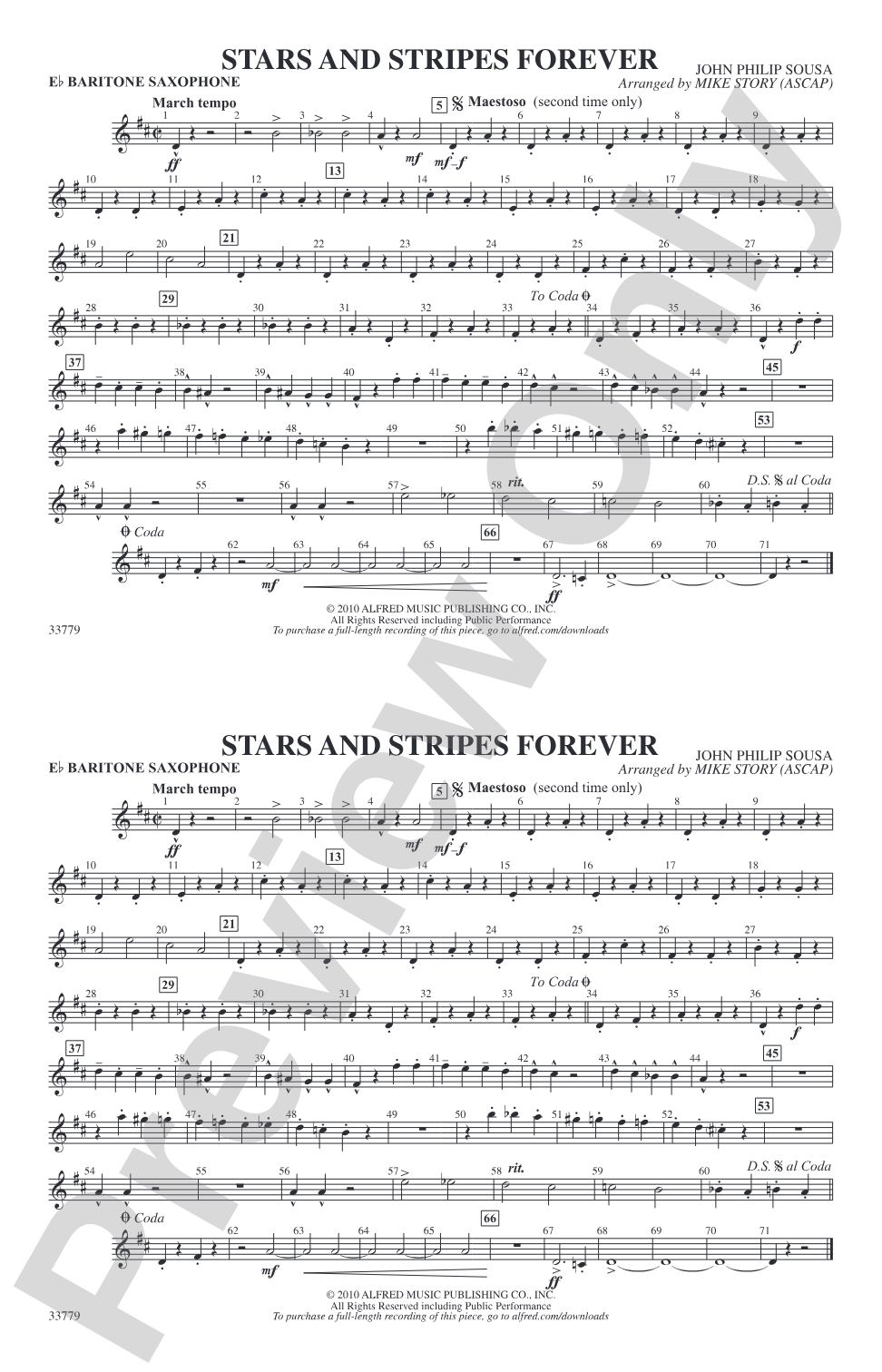

Stars and Stripes Forever: E-flat Baritone Saxophone
By John Philip Sousa / arr. Mike Story
Grade: 2 (Easy)
Item: 00-PC-0018213_BTX
$3.00
Pickup currently not available
Description
Mike Story gives us a strong arrangement of the most famous march in history. There is the option of playing this chart for a parade or on the field. It has all of the time-tested ingredients for success. This is sure to bring down the house! (1:45)


Don't just read it, hear it, play along with it, and watch your students grow with it. In MakeMusic Cloud, Stars and Stripes Forever: E-flat Baritone Saxophone comes alive with professional accompaniment, adjustable tempo, and built-in practice tools that turn solo practice into real progress.
Open in the Player
Jump straight in and assign it today.
Start Your Free Trial
Open this title and explore the full library in minutes.
Sample Audio
1
Audio File
--:--
0:00
0:00
Sample Video
Additional Details
Series:
Big and Easy
Publisher:
Alfred Music
Page Count:
114
SKU:
00-PC-0018213_BTX
More about this title
About the Composer: John Philip Sousa
John Philip Sousa (1854-1932) stands as America's most celebrated march composer and a towering figure in wind band literature. His gift for memorable melody, precise orchestration, and understanding of what makes music move both audiences and ensemble players established him as the defining voice of the American march. Beyond composition, Sousa's 39-year tenure conducting the United States Marine Band and later his own ensemble demonstrated his commitment to raising standards in wind music performance across the country.
Sousa's influence on music education endures because his marches are built on sound musical principles: clear phrasing, balanced arrangement, and parts that remain engaging whether you're playing the melody or a supporting voice. Teachers and conductors continue to program his work because students learn musicianship through marches that actually inspire them to play with precision and pride.
Why we love this
Mike Story's Grade 2 arrangement captures the iconic character of Sousa's masterpiece while keeping the technical demands manageable for developing ensembles. The orchestration respects the integrity of the original while giving every section rewarding material to play, and at just under two minutes, it's the perfect length for parades, halftime shows, or concert performance without wearing out your group.
What to expect
Stately, energetic, and impossibly catchy. The piece radiates confidence and pride from the first note, with a march stride that makes both players and listeners stand taller. You feel the weight and dignity of American musical tradition woven through every section.
Who it's for
Marching bands at all skill levels benefit from this arrangement. Grade 2 means growing ensembles can tackle it successfully while still building musicianship and confidence. This is ideal if you're developing a march program or need reliable patriotic repertoire that actually engages your students.
How to get the most out of it
- Nail the rhythmic precision in the opening march theme; this piece depends on crisp attacks and clean releases to land its famous melodies. A metronome during rehearsal pays dividends here.
- Balance the countermelodies that appear throughout. In a march this well-known, audiences listen for every layer, so bring out the inner voices without overwhelming the main tune.
- Shape phrases across the full 16 or 32-bar sections rather than stopping at every cadence. Sousa's marches breathe, and your phrasing should too.
- If performing on the field, lock your tempo early and stay committed. The uniformity of a steady march tempo matters as much as the notes themselves.
How to use it
This belongs front and center at any summer or Fourth of July concert, or as a strong opener for a parade or field show. Pair it with other patriotic selections or lighter marches to build a program that showcases your ensemble's precision and musicality. The familiar tune also connects with audiences who may not typically attend classical concerts.
Skills your students will build
- Marching fundamentals (cadence consistency, uniform articulation, forward motion)
- Clear phrasing in march style (breathing points, lyrical shaping across periods)
- Part independence and balance (executing inner voices that don't drown the melody)
- Tempo stability and confidence in leading or following the ensemble