Stargazing Sheet Music Preview

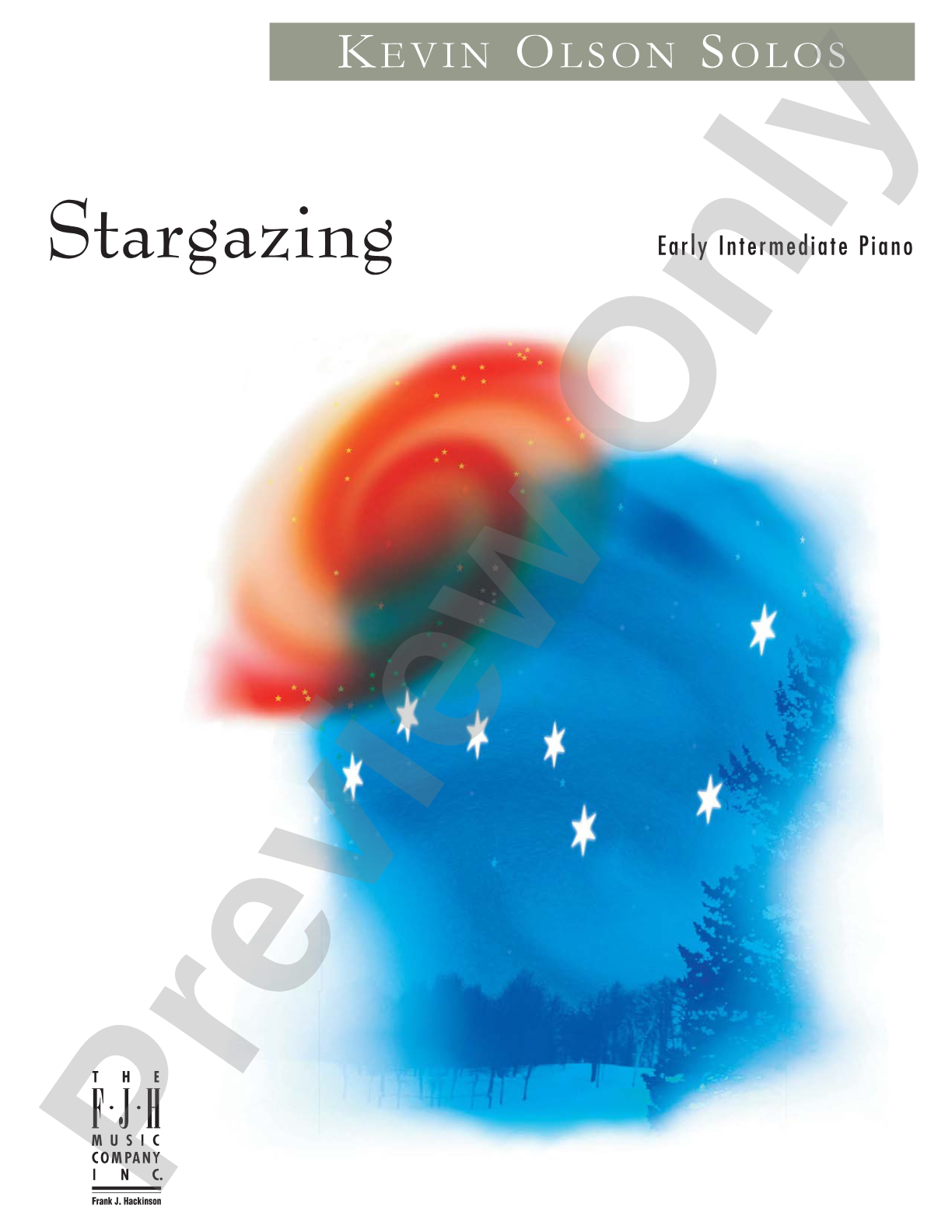
Stargazing: Piano

By Kevin Olson

Item: 98-DW9016

Digital Download
$1.95
Description
A lovely, gentle melody to be voiced over with a soft accompaniment. It features crossed hand figures, broken chord accompaniment, and encourages playing with "light thumbs."

Stargazing: Piano isn't in MakeMusic Cloud just yet...but it could be. Let us know you'd like to see it, and you'll help shape what comes next. In the meantime, start a free trial and dive into thousands of interactive titles your students can play along with today.

Sample Audio
No sample audio found.
Sample Video
Additional Details
Series: Written For You
Publisher: The FJH Music Company, Inc.
SKU: 98-DW9016

More about this title

Why we love this

Olson writes with genuine restraint here, resisting the urge to clutter a simple melodic idea. The gentle voicing and light accompaniment create space for students to hear themselves think, which builds confidence in early intermediate pianists. This is the kind of piece that teaches musicality through understatement.

What to expect

Quiet and contemplative, like watching stars emerge at dusk without rushing to identify them. The broken accompaniment creates gentle motion beneath the melody, never aggressive, always supportive.

Who it's for

Early intermediate pianists ready to balance melody and accompaniment in a single hand context, or those developing independence between hands. This works well for students who benefit from unhurried repertoire that rewards careful listening and control.

How to get the most out of it

  • Keep the broken chord accompaniment transparent by releasing each hand position cleanly before moving to the next. Muddiness will bury the melody.
  • Shape the melody with deliberate phrase breathing rather than constant pedal. Let silence speak between phrases to enhance the peaceful atmosphere.
  • Practice the crossed hand figures separately so the hand crossing feels natural rather than mechanical. Slow tempo work pays off here.
  • Listen for your own tone in the upper register and adjust dynamics so the melody sings without strain. Light thumbs means light touch throughout.

How to use it

Program this early in a recital to establish an intimate mood, or pair it with other space-themed works for a thematic set. It also serves well as a graded piece during studio recitals where younger or newer students perform alongside more advanced players.

Skills your students will build

  • Hand independence with melody and broken chord accompaniment
  • Crossed hand technique and position shifts
  • Dynamic control and phrasing without pedal reliance
  • Voice leading awareness in a single instrument context
  • Touch quality and tone production at soft volumes

You May Also Like