Star Wars: The Last Jedi (Medley) (arr. Larry Moore) Sheet Music Preview

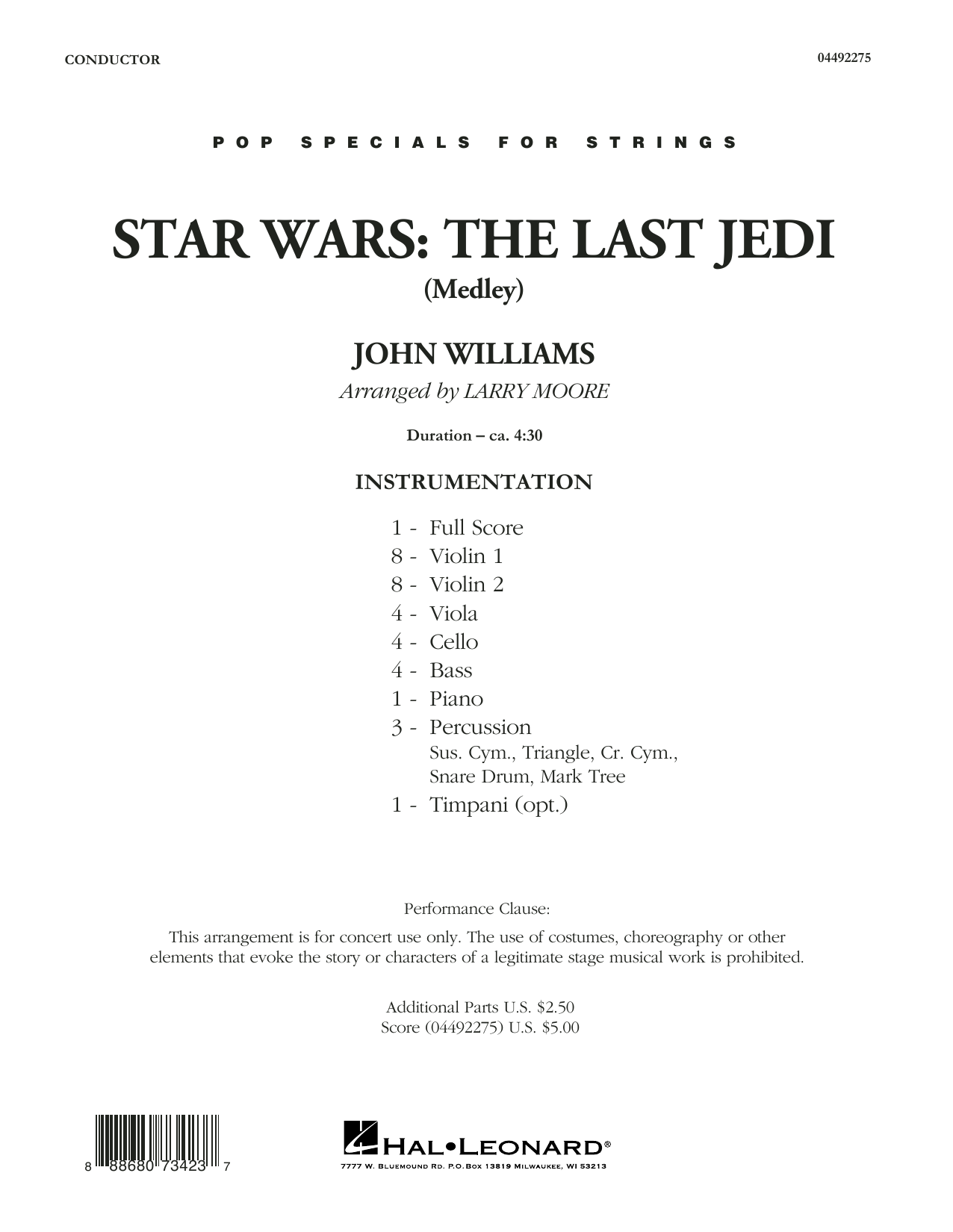
Star Wars: The Last Jedi (Medley) (arr. Larry Moore): String Orchestra Conductor Score & Parts

By John Williams / Arranged by Larry Moore

Grade: 3-4

Item: 35-PK00422070

Digital Download
$65.00

One moment…

Description
From the blockbuster movie "Star Wars: The Last Jedi," John Williams continues to display his mastery of music for film. This dynamic medley includes powerful new themes along with familiar classic themes, as some of our favorite characters return for this newest adventure in the Star Wars saga.

Star Wars: The Last Jedi (Medley) (arr. Larry Moore): String Orchestra Conductor Score & Parts isn't in MakeMusic Cloud just yet...but it could be. Let us know you'd like to see it, and you'll help shape what comes next. In the meantime, start a free trial and dive into thousands of interactive titles your students can play along with today.

Sample Audio
No sample audio found.
Sample Video
Additional Details
Publisher: Hal Leonard
SKU: 35-PK00422070

More about this title

About the Composer: John Williams

John Williams stands as one of the most influential film composers of our time, with a catalog spanning nearly six decades of cinema. His work across the Star Wars saga, Indiana Jones, Harry Potter, Jaws, and Schindler's List demonstrates an unparalleled gift for writing themes that become instantly iconic while serving the dramatic needs of film. For music educators, Williams represents a masterclass in orchestration, memorable melodic writing, and the power of leitmotif—concepts that translate directly into the concert hall and classroom.

Why we love this

Larry Moore's arrangement captures the scale and emotional arc of Williams' original score while remaining playable by young string orchestras. The medley weaves together the epic and intimate moments from the film, giving students access to genuinely sophisticated film music rather than watered-down approximations. Programming this piece bridges the gap between what your students hear in popular culture and what they're learning in rehearsal.

What to expect

Cinematic grandeur meets intimate character study. Williams' themes carry the weight of adventure, conflict, and hope; the string writing shifts from soaring unison passages to delicate divisi textures that can feel surprisingly vulnerable. Playing this medley feels like stepping into the emotional landscape of the film itself.

Who it's for

String orchestras at the Grade 3-4 level looking for repertoire with immediate appeal and genuine musical substance. This works equally well for groups preparing a film music concert or seeking pieces that excite student musicians through recognizable material while developing their technical and musical skills.

How to get the most out of it

  • Balance the thematic material carefully across your sections. The familiar themes tend to pull students' ears naturally; make sure your newer material gets equal attention during sectional work so the medley feels cohesive rather than episodic.
  • Attend to the dynamic range. Williams writes for tremendous contrast between intimate character moments and full orchestral swell. Young players often miss these opportunities for shade and depth; mark your parts clearly and rehearse the softer passages with as much intention as the fortissimos.
  • Treat the transitions between themes as compositional events, not mere connections. Moore's arranging likely includes bridge material or harmonic pivots that deserve musical clarity so the piece flows as a single narrative rather than separate excerpts.

How to use it

This pairs naturally with a film music themed concert or a pops program where you want to include substantial, concert-quality arrangements rather than lightweight transcriptions. It also works beautifully as the closing piece of a concert, where its familiarity and emotional resonance can send audiences out on a high note.

Skills your students will build

  • Reading and executing varied dynamic ranges (ppp to fff) with control
  • Sustaining melodic lines across extended passages while maintaining ensemble blend
  • Responding to thematic material presented in different registers and orchestrations
  • Navigating tempo changes and transitions between distinct musical ideas
  • Building musicianship through repertoire designed for dramatic storytelling

You May Also Like