
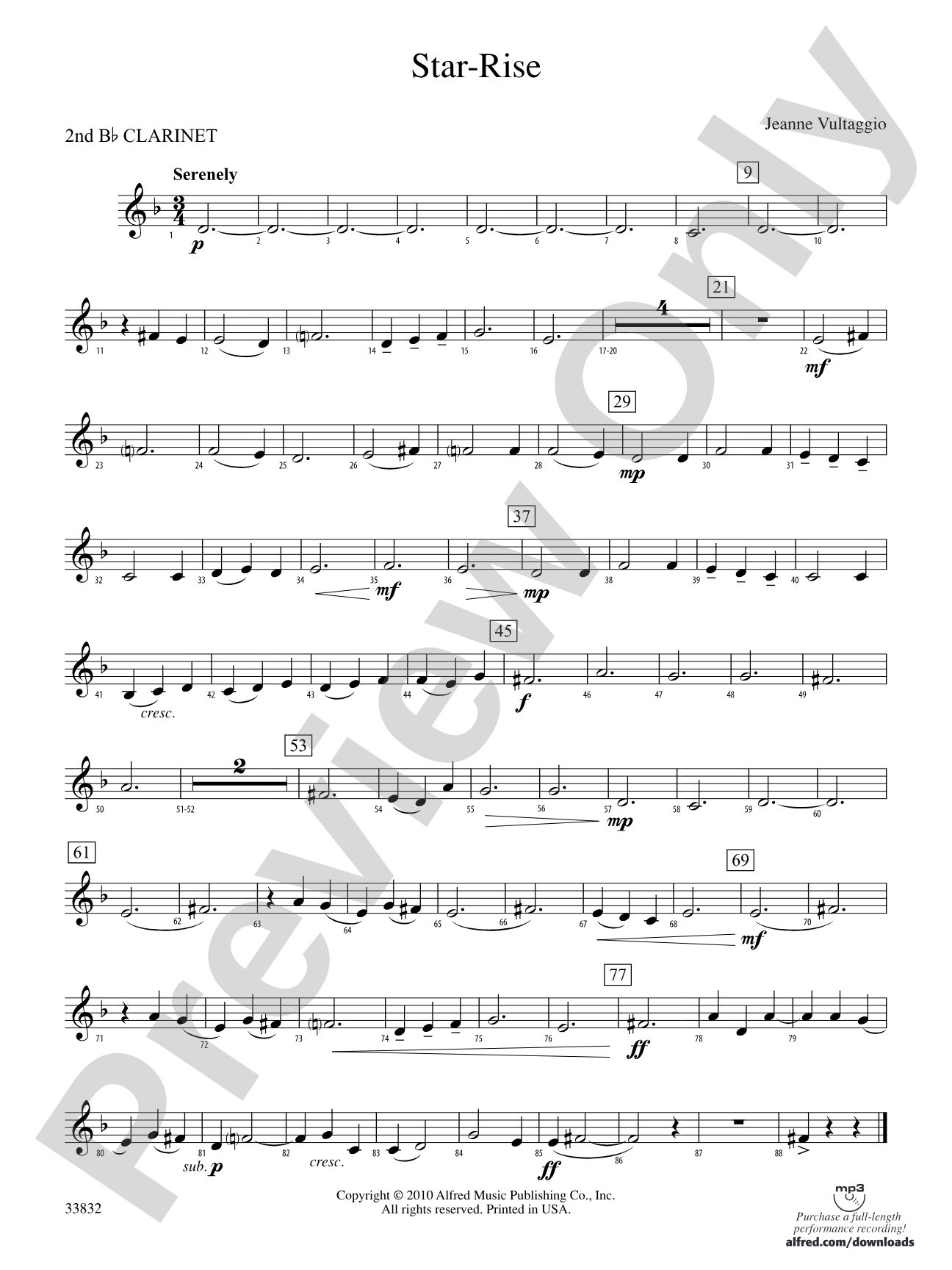

Star-Rise: 2nd B-flat Clarinet
By Jeanne Vultaggio
Grade: 1 (Very Easy)
Item: 00-PC-0014563_C2
$3.00
Pickup currently not available
Description
Star-Rise is a programmatic work depicting the progress of the stars across the night sky. Bells set the tone with a simple three-note melody as twilight falls and the first stars appear. Percussion effects represent crickets and cicadas chirping in the background. The texture becomes more chorale-like as related but distinct themes reveal themselves, representing rising constellations. As the star themes gently roll by, the harmony grows warmer and the melody becomes more grandiose in preparation for the final star-rise: the arrival of the morning sun.
"The work is a great exercise in part layering."
-The Instrumentalist


"The work is a great exercise in part layering."
-The Instrumentalist
Don't just read it, hear it, play along with it, and watch your students grow with it. In MakeMusic Cloud, Star-Rise: 2nd B-flat Clarinet comes alive with professional accompaniment, adjustable tempo, and built-in practice tools that turn solo practice into real progress.
Open in the Player
Jump straight in and assign it today.
Start Your Free Trial
Open this title and explore the full library in minutes.
Sample Audio
1
Audio File
--:--
0:00
0:00
Sample Video
No sample videos found.
Additional Details
Series:
Alfred Debut Series
Publisher:
Alfred Music
Page Count:
124
SKU:
00-PC-0014563_C2
More about this title
About the Composer: Jeanne Vultaggio

Jeanne Vultaggio earned her Master of Arts in Wind Conducting from Hofstra University under Dr. Peter Boonshaft, building on undergraduate studies in Music Education and Brass Performance at Boston University, where she studied horn with Eric Ruske. Her work as an elementary band director on Long Island has shaped her compositional voice; she began arranging and composing for her own students to address gaps in repertoire for beginning musicians.
Vultaggio's background spans both performance and pedagogy. She has performed with the Hofstra University Symphonic Band, the Long Island Symphonic Winds, and regional theater orchestras, while maintaining active involvement in NYSSMA and MENC as a certified adjudicator. Her compositions reflect deep understanding of what young musicians need to grow: music that is accessible without being artistically compromised.
Why we love this
Star-Rise works because it tells a clear story without requiring students to strain technically or musically. The programmatic arc (twilight to sunrise) gives younger players tangible imagery to shape their sound, and the piece itself demonstrates how effective layering of simple themes can build emotional weight. Directors praise it as an excellent example of part writing that young musicians can actually hear themselves contributing to, which builds investment and ensemble awareness from the ground up.
What to expect
Star-Rise unfolds like a gentle evening meditation. It begins in quiet simplicity with the bell establishing the first stars, then gradually fills with life and warmth as night deepens. By the finale, the piece blooms into something grand and affirming, the collective sound of the ensemble now rich and intentional.
Who it's for
Beginning band directors introducing Grade 1 students to concert repertoire that demonstrates purpose beyond technique drills. Ensembles new to programmatic music will find Star-Rise an ideal entry point: the narrative is intuitive and the musical gestures make sense even for players in their first year.
How to get the most out of it
- Let the bell melody in the opening breathe with space; resist the urge to rush. This sets the twilight mood and gives students time to lock in.
- Balance the cricket and cicada effects (percussion) so they support rather than obscure the melodic layers. They should shimmer in the background.
- Shape the transition into the chorale-like section with a slight broadening of tempo and warmer dynamic. This signals the shift to rising constellations.
- Build the final star-rise gradually. The crescendo toward the sunrise arrival benefits from ensemble discipline and attention to balance across all parts.
How to use it
Open a fall or winter concert with Star-Rise to set a reflective mood before moving into more energetic selections. The piece also works beautifully as a closer if you're programming thematically around nature or seasons, creating a graceful arc through the evening. Its accessibility makes it ideal for honor bands or festivals where mixed-age beginning ensembles need a shared success.
Skills your students will build
- Sustaining longer melodic lines with attention to phrasing and breath
- Balancing multiple parts and recognizing their role in layered texture
- Responding to programmatic intent through dynamic and tempo shaping
- Listening across the ensemble to maintain rhythmic alignment during sustained passages
- Building confidence in Grade 1 repertoire without relying on unison safety