
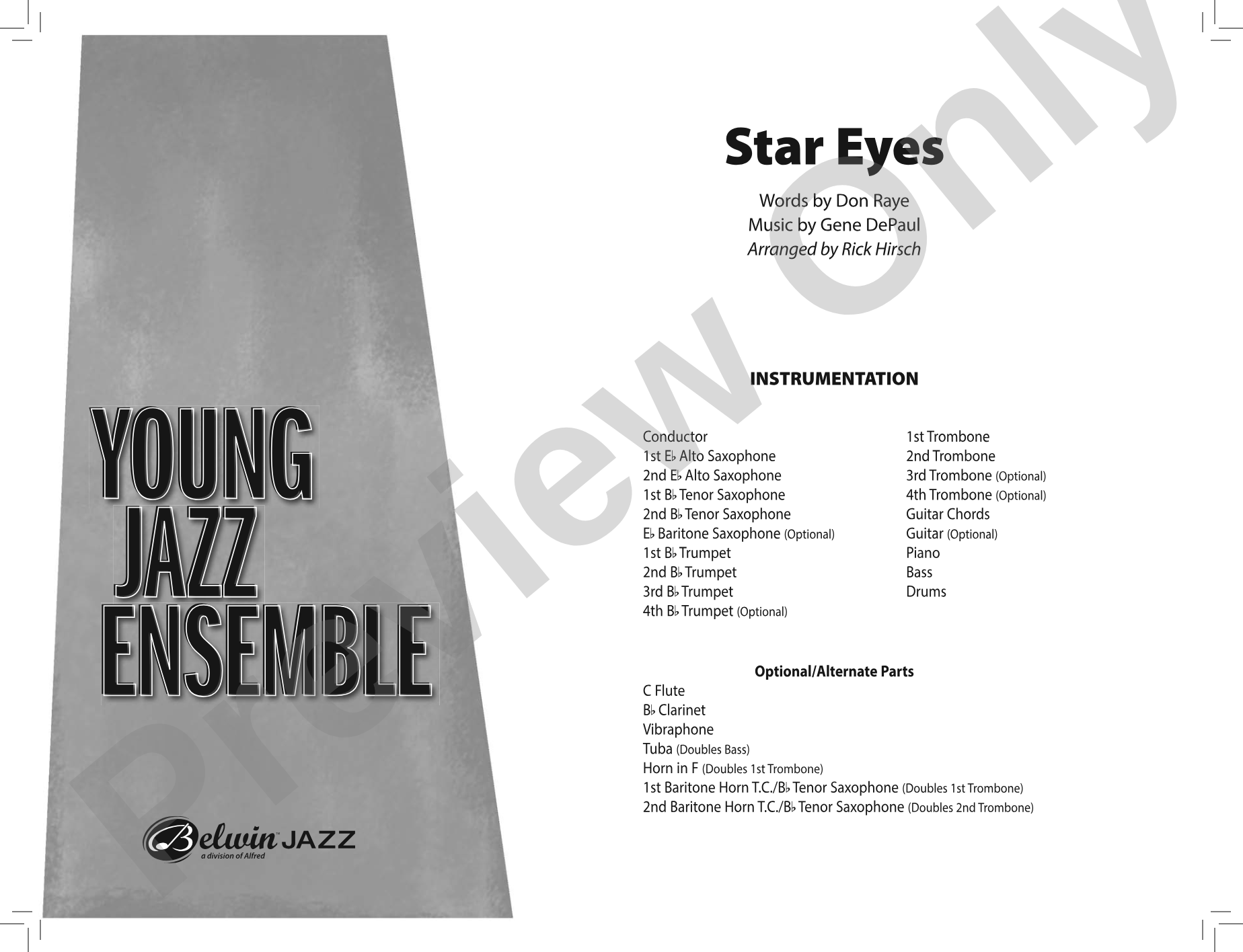
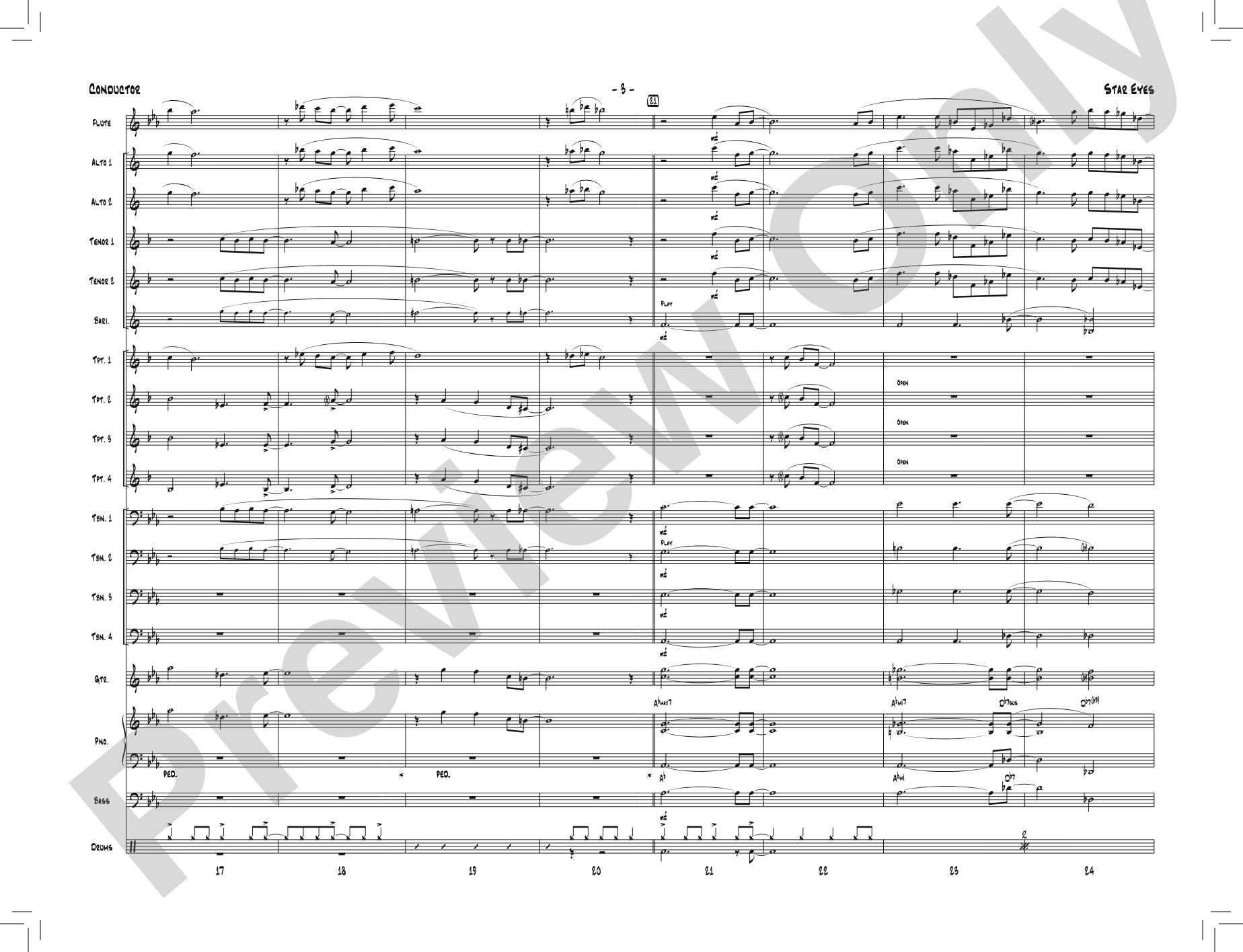
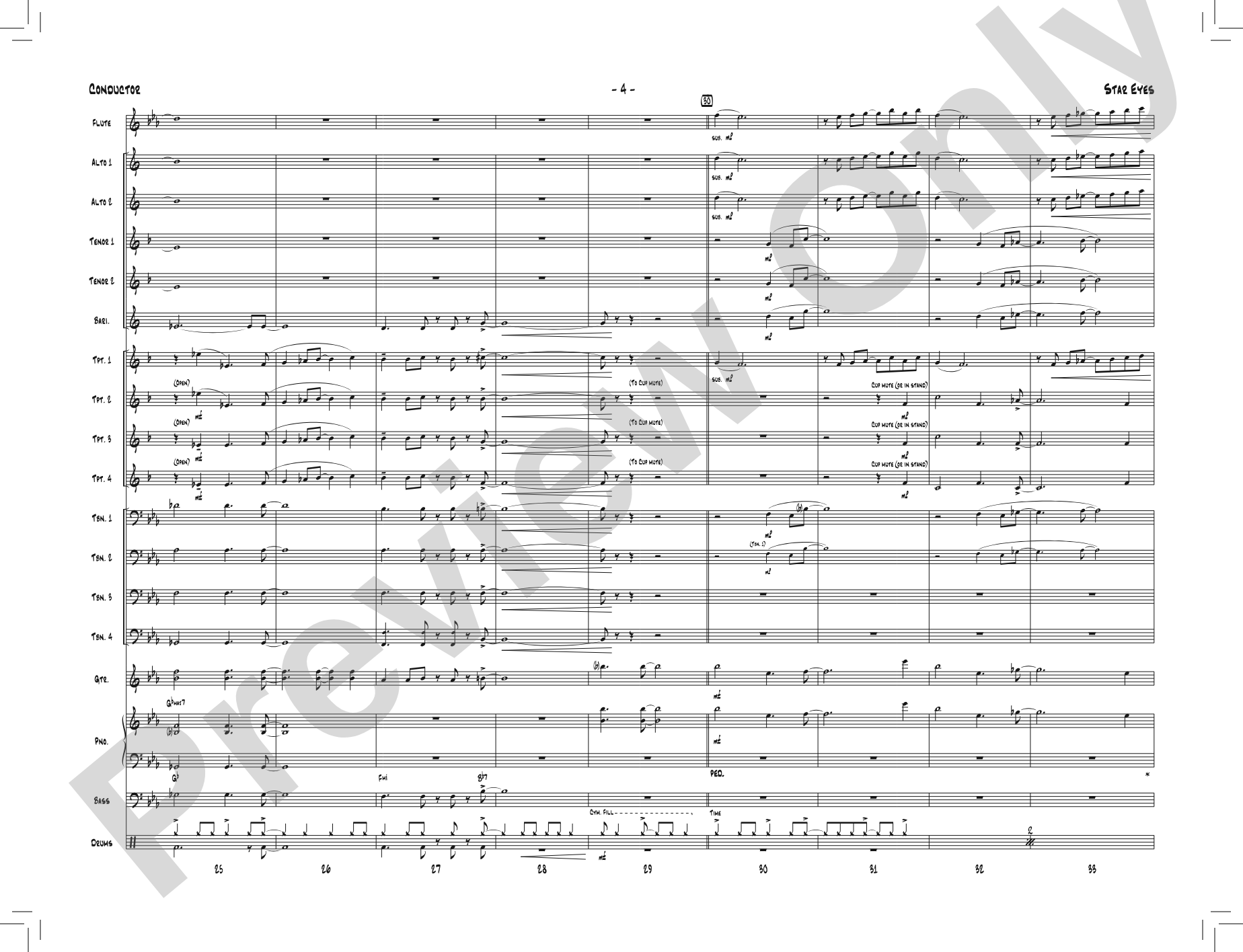
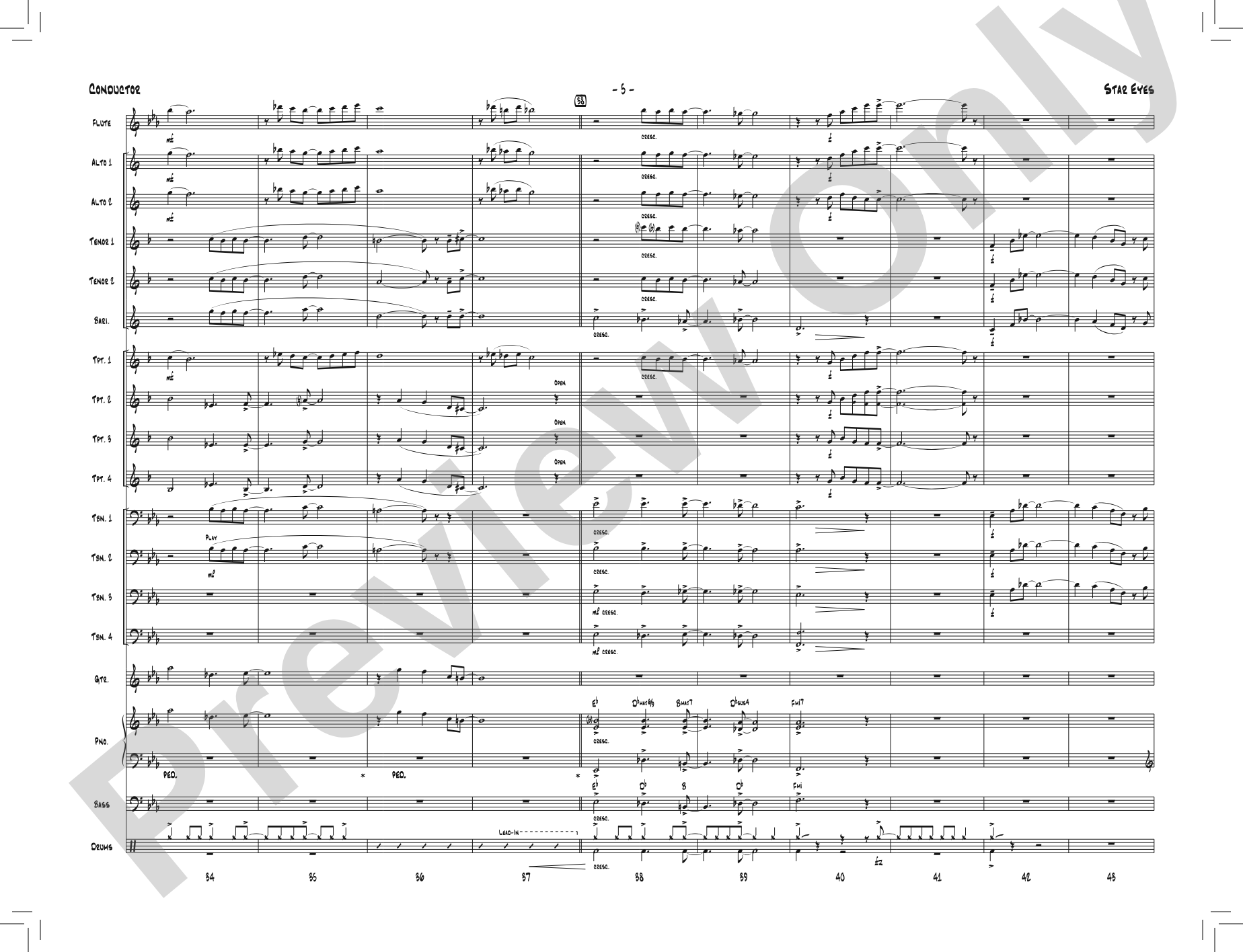
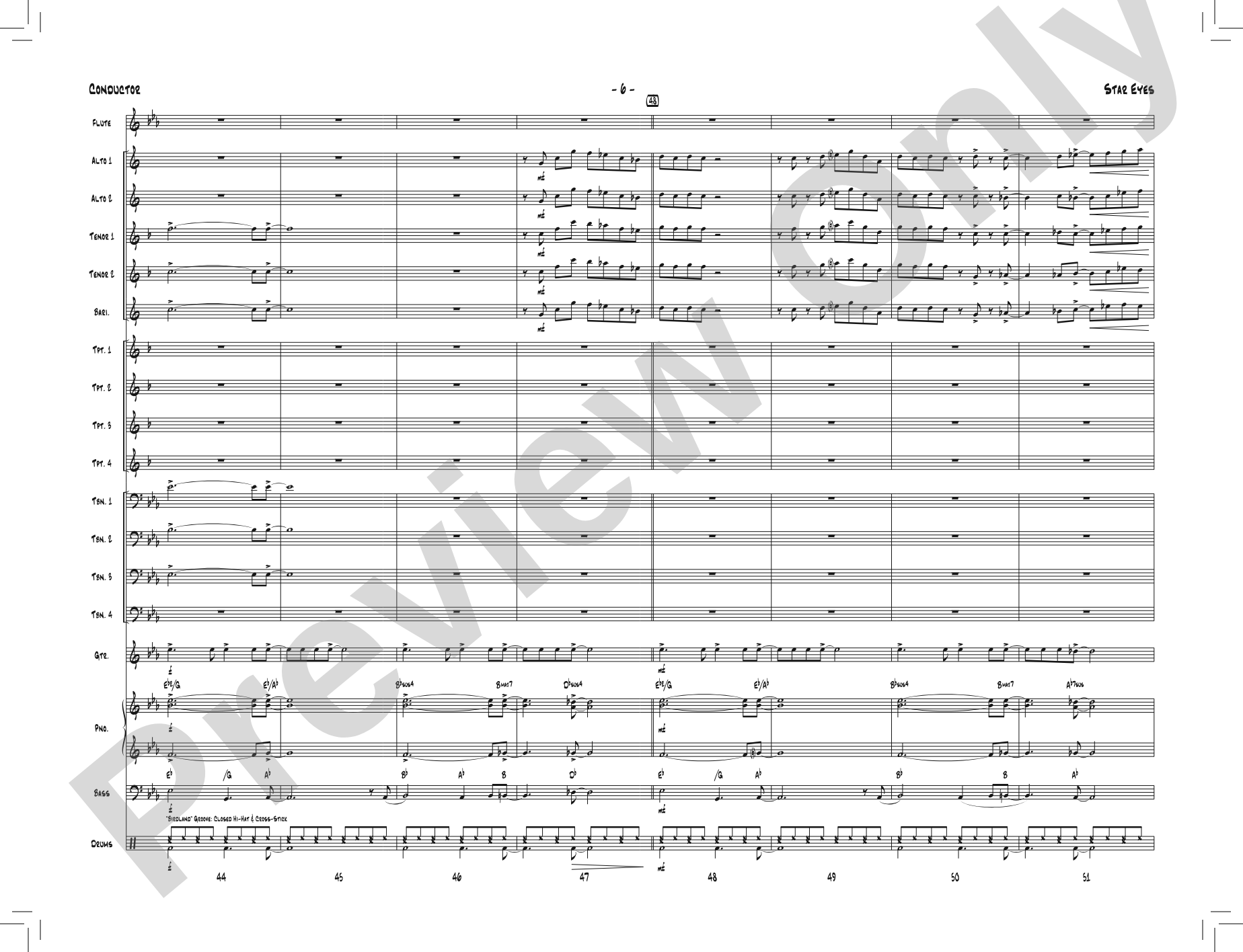
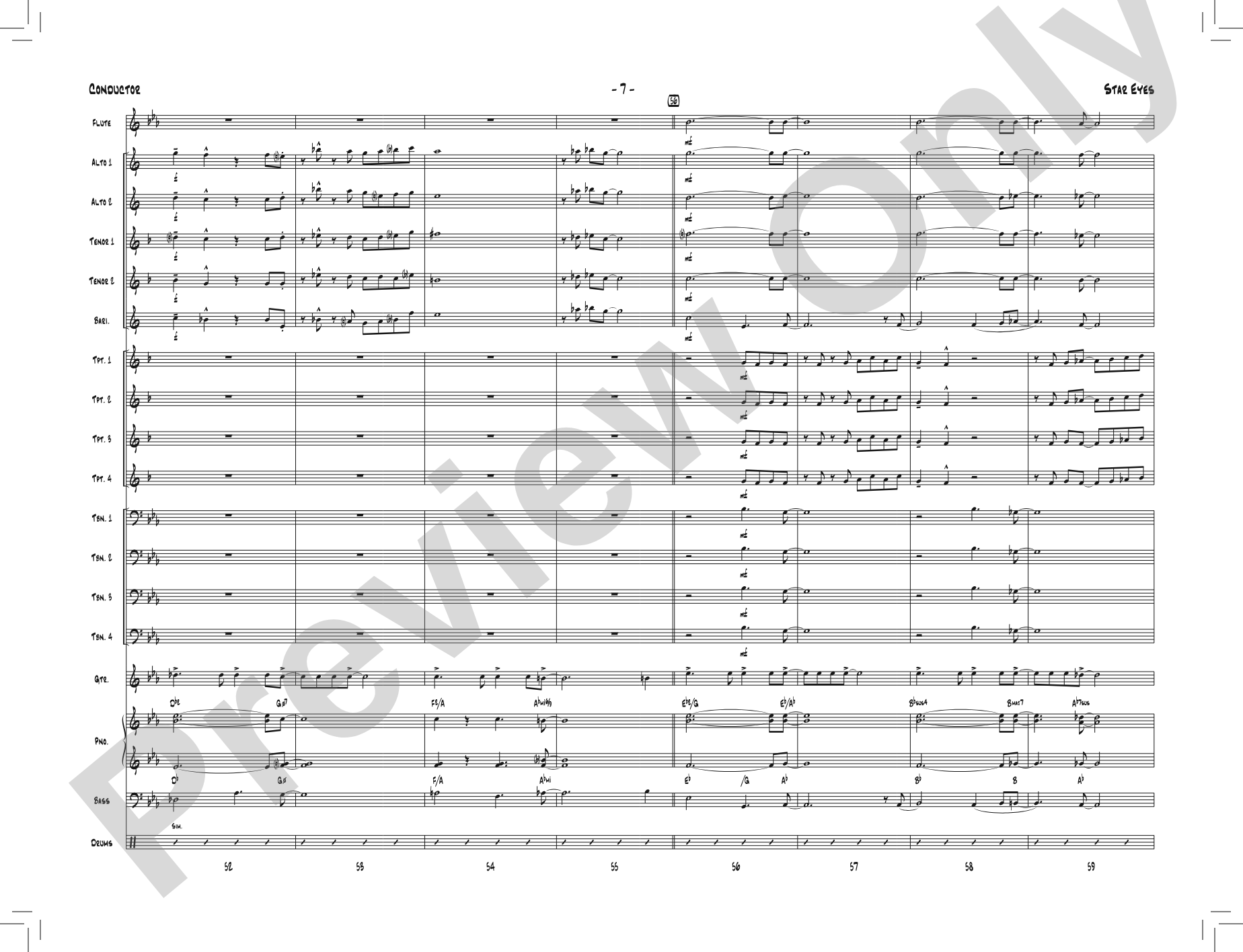
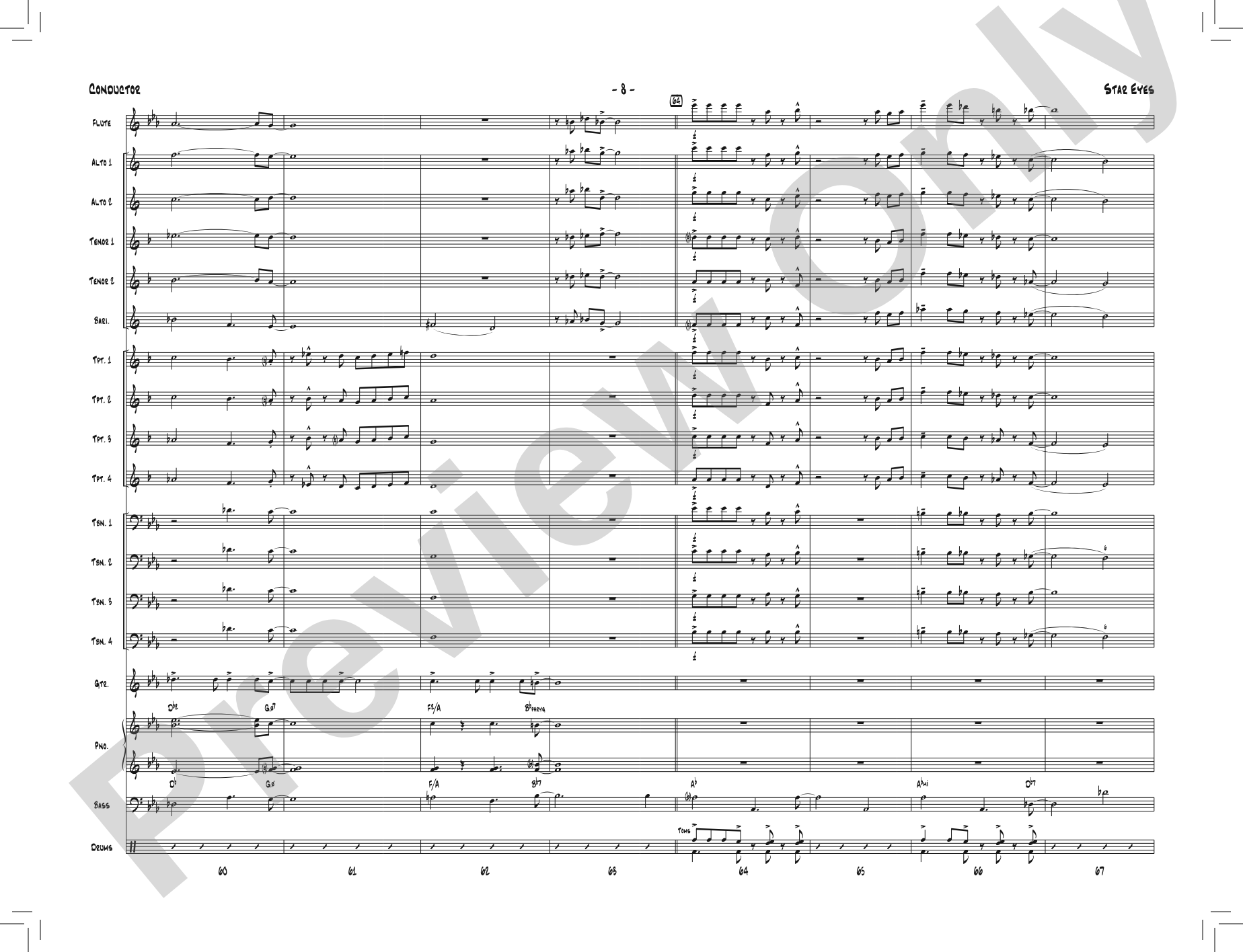
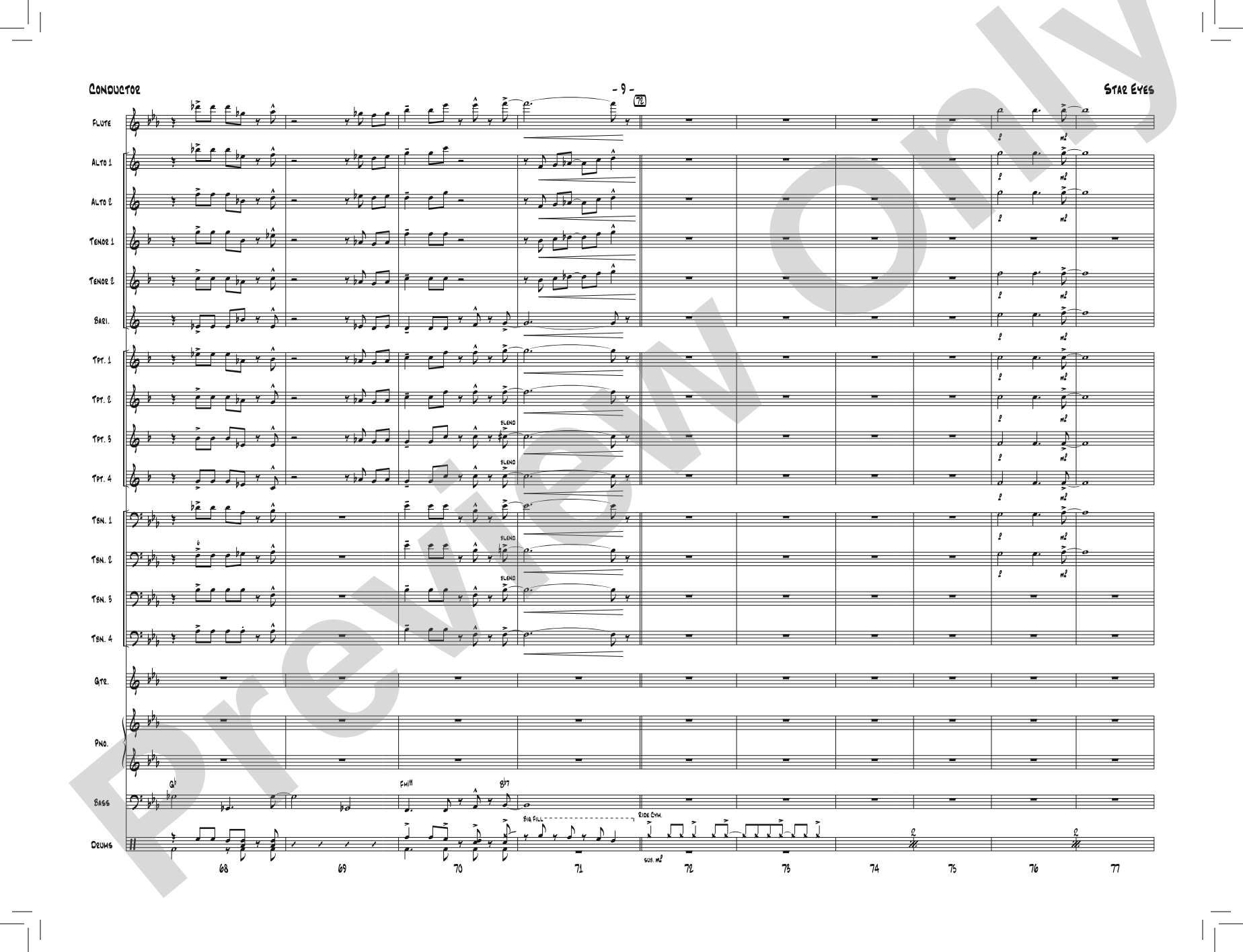
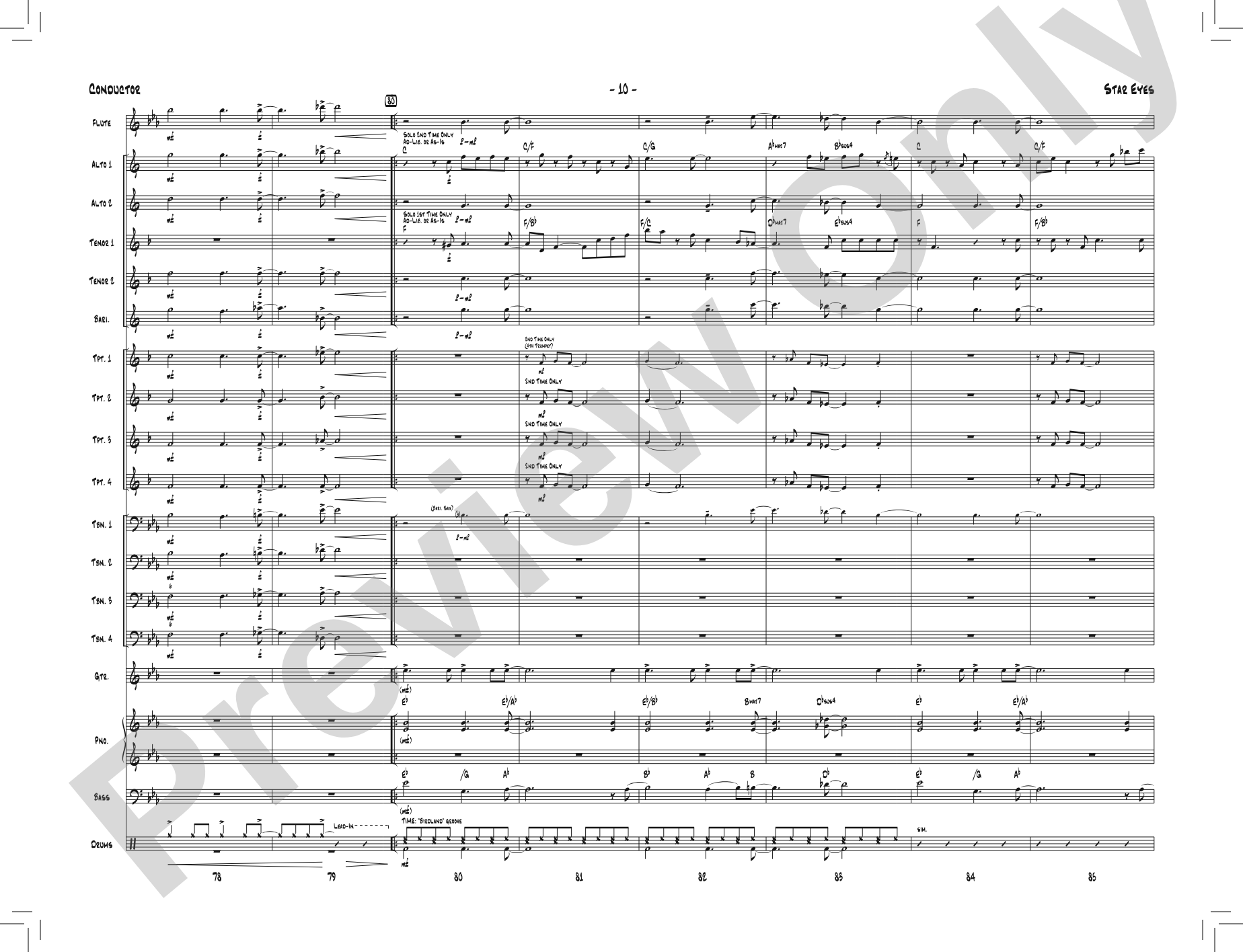
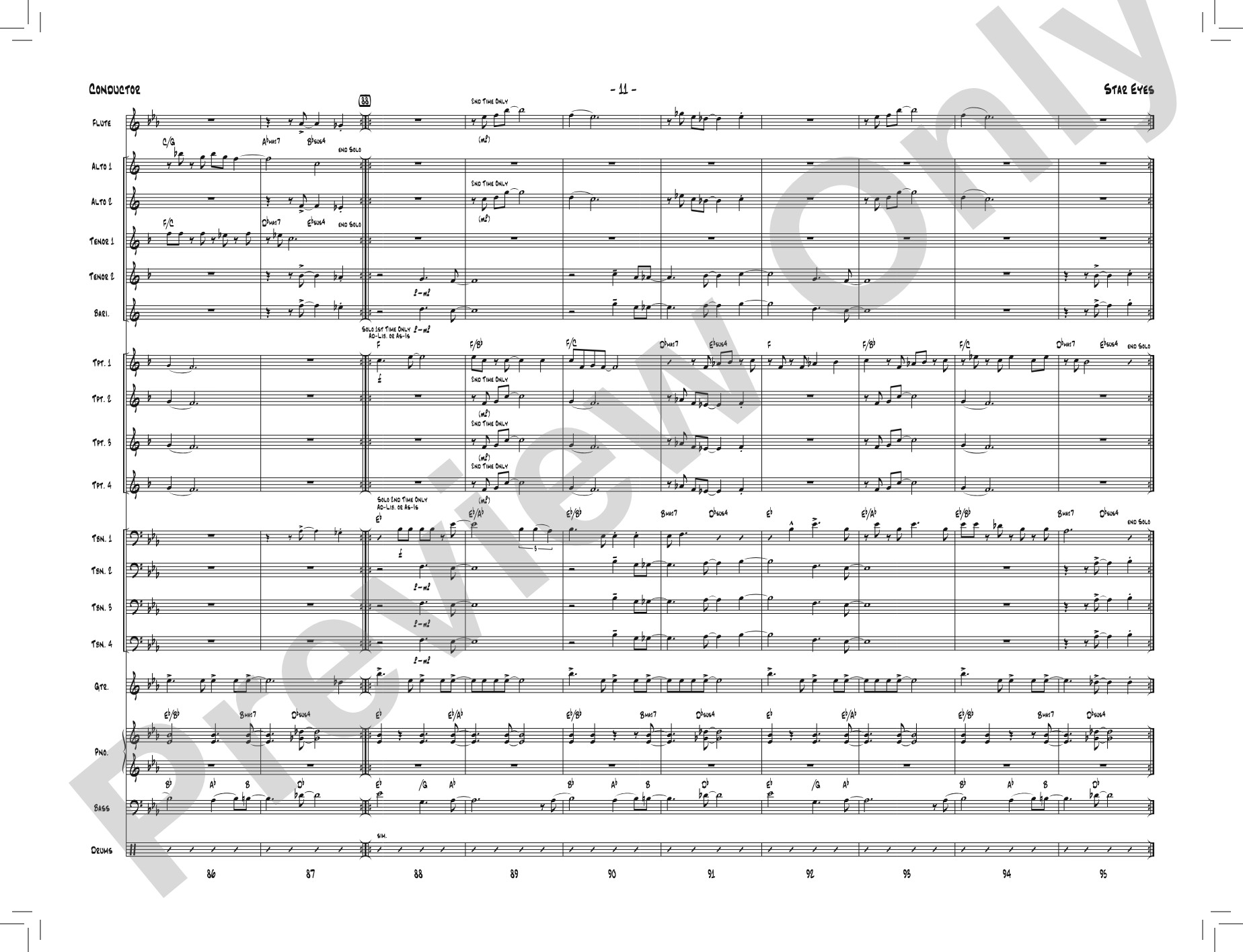
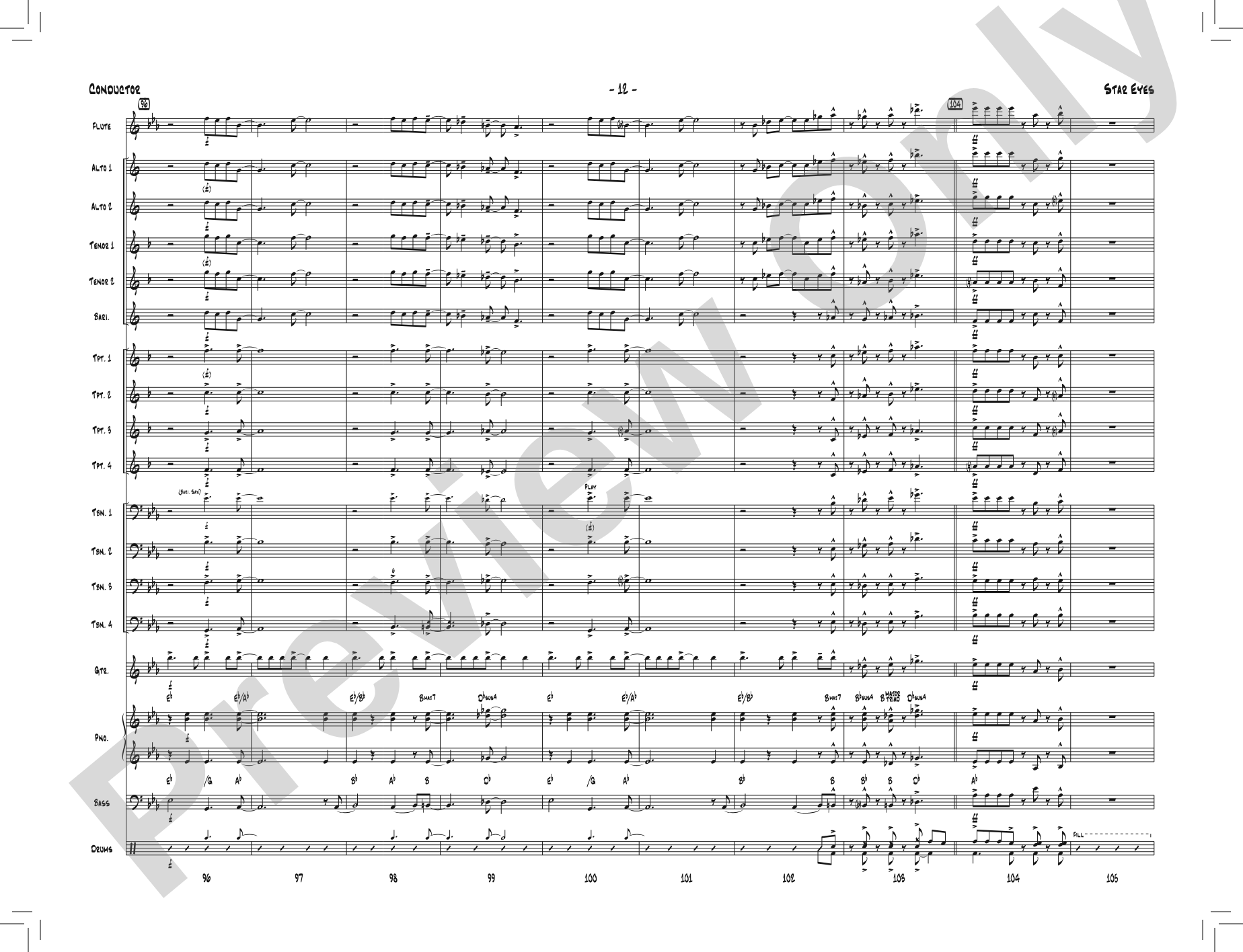
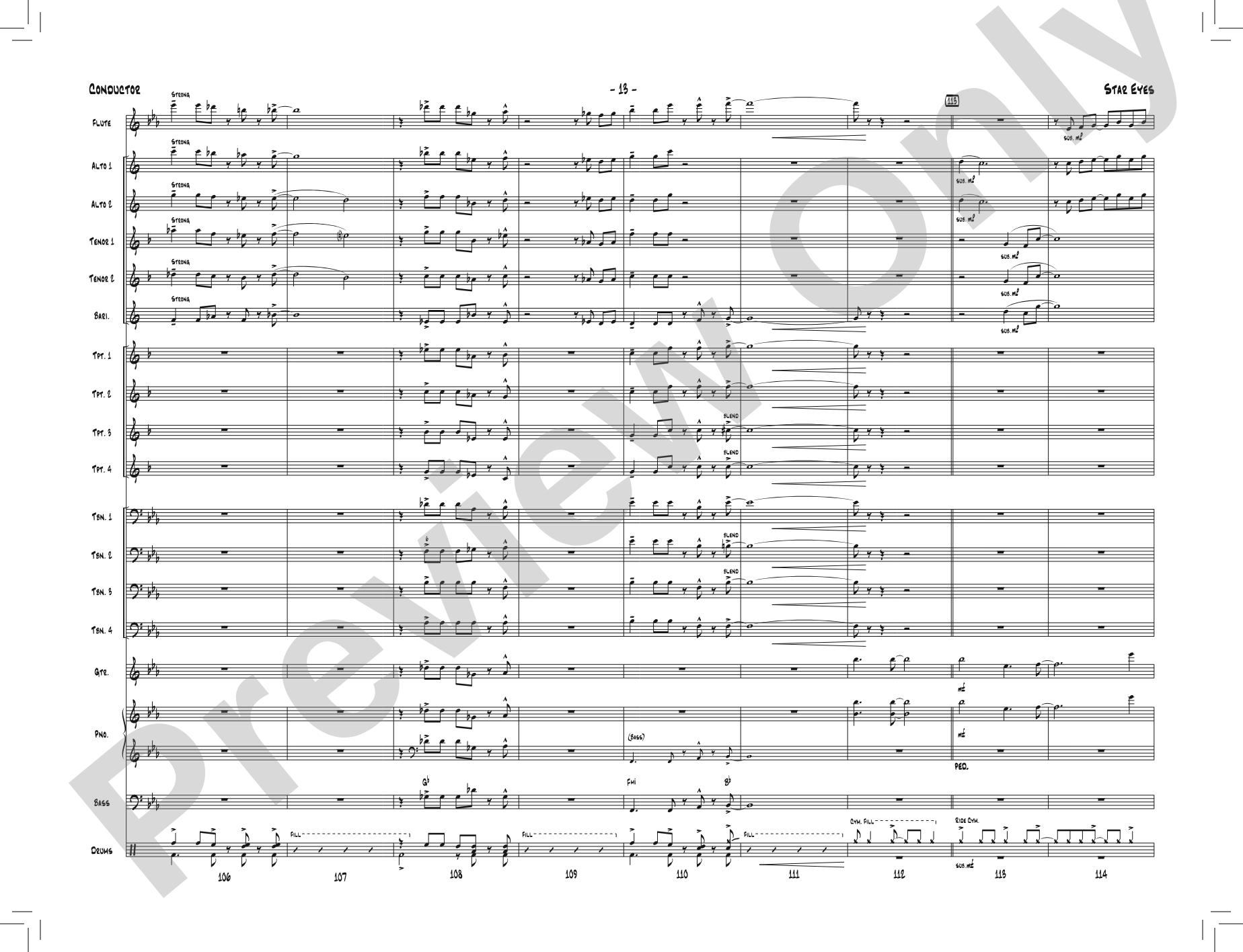
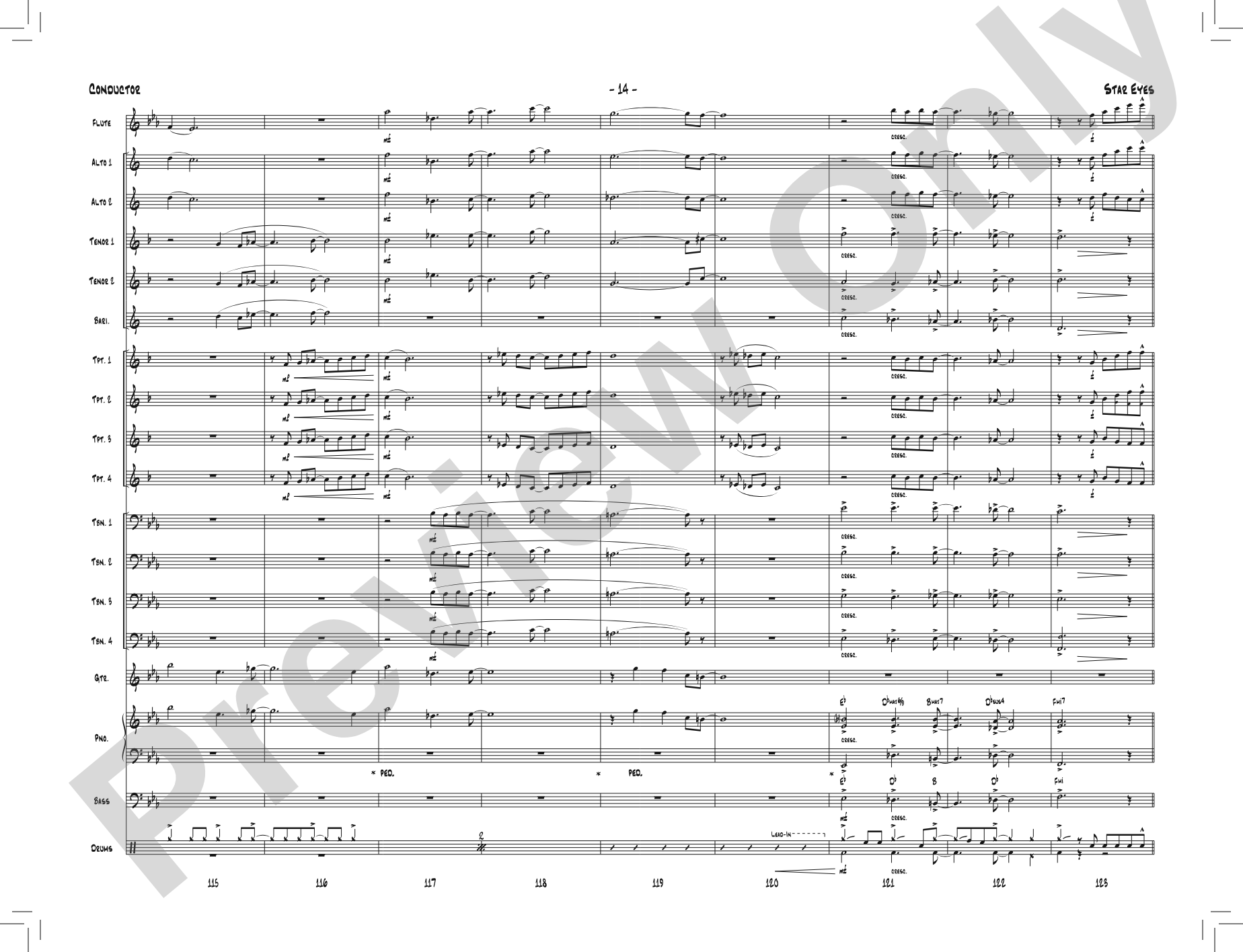
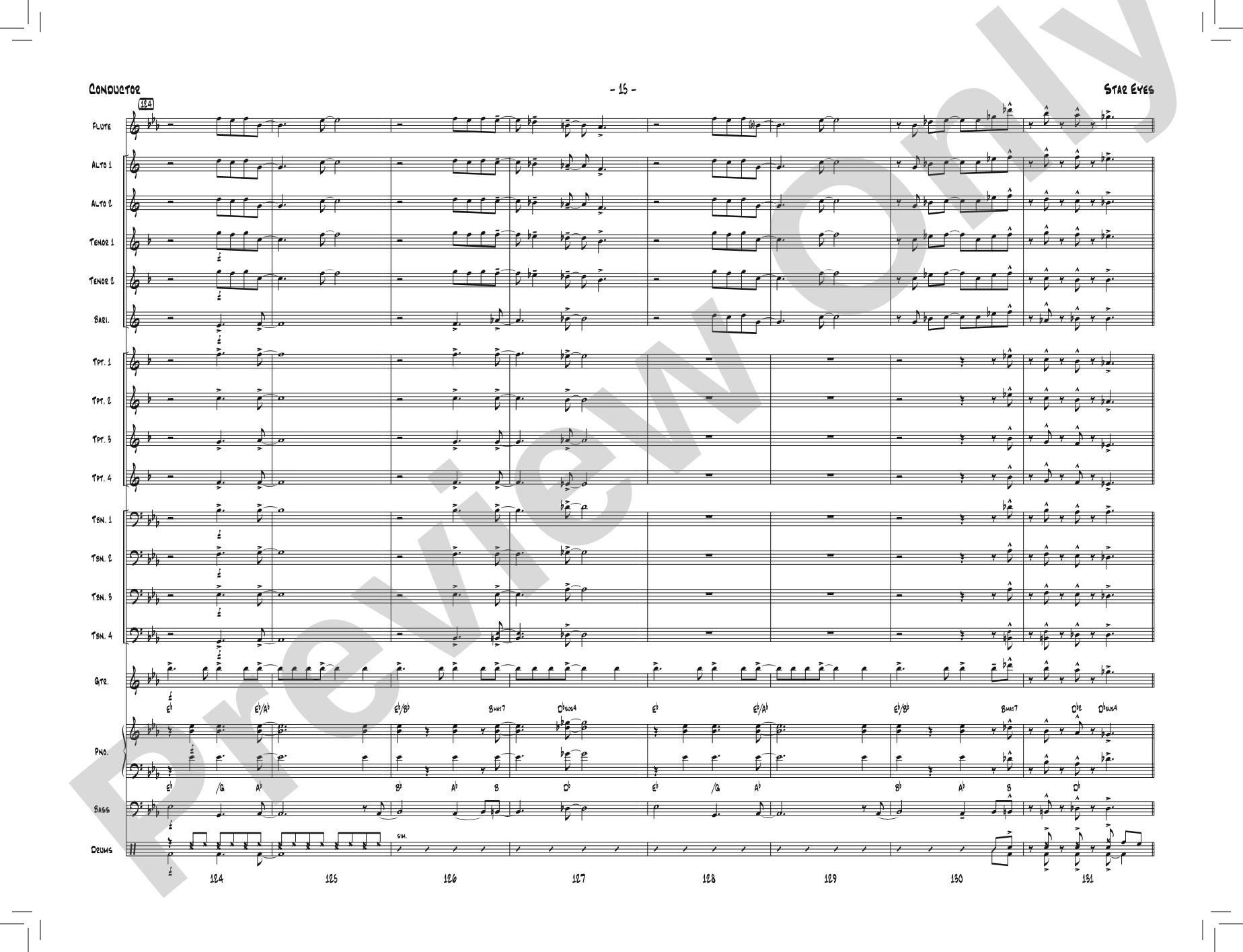
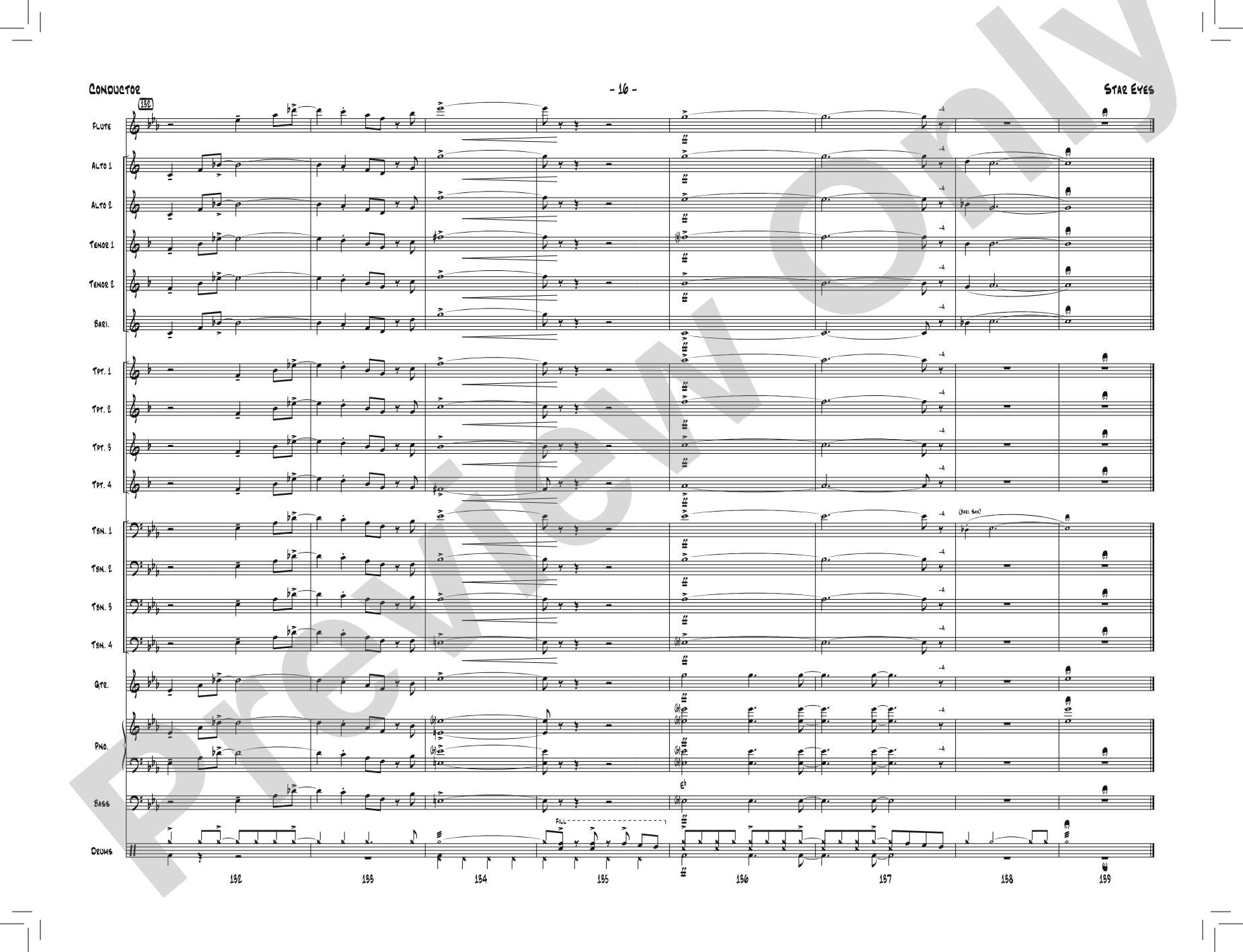

Star Eyes: Jazz Ensemble Conductor Score & Parts
Words by Don Raye, music by Gene DePaul / arr. Rick Hirsch
Grade: 2.5
Item: 00-PK-0008550

$48.00
One moment…
Description
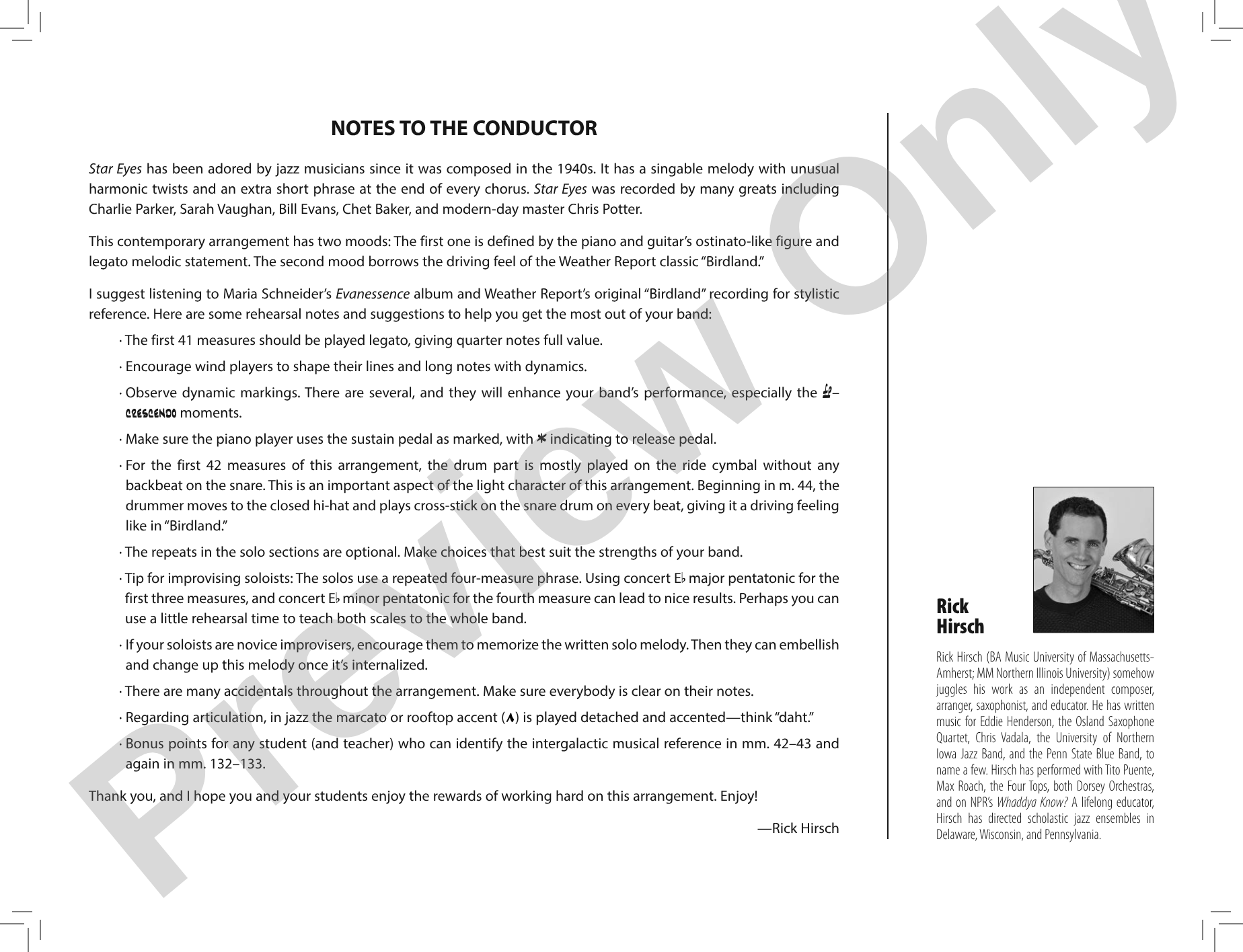
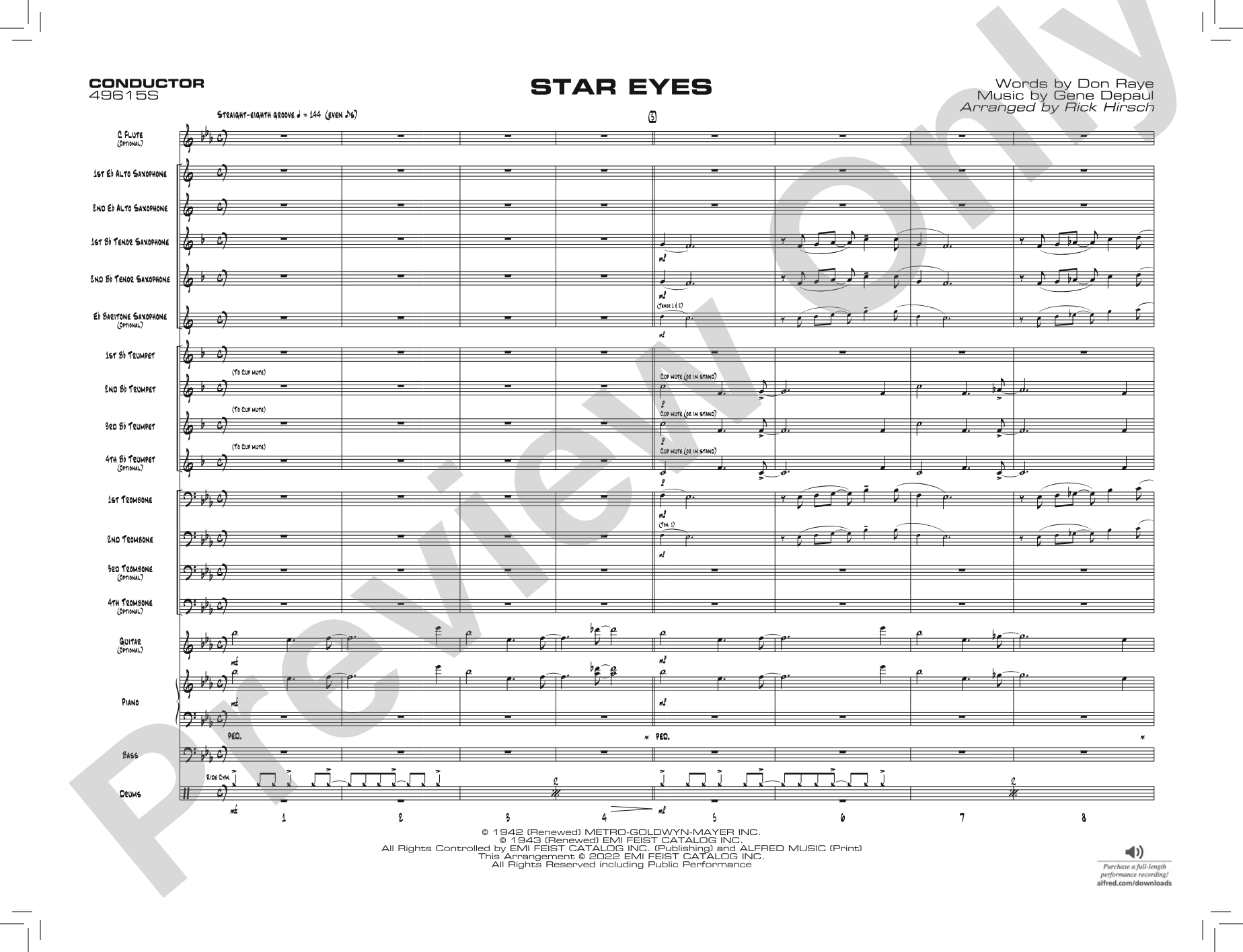
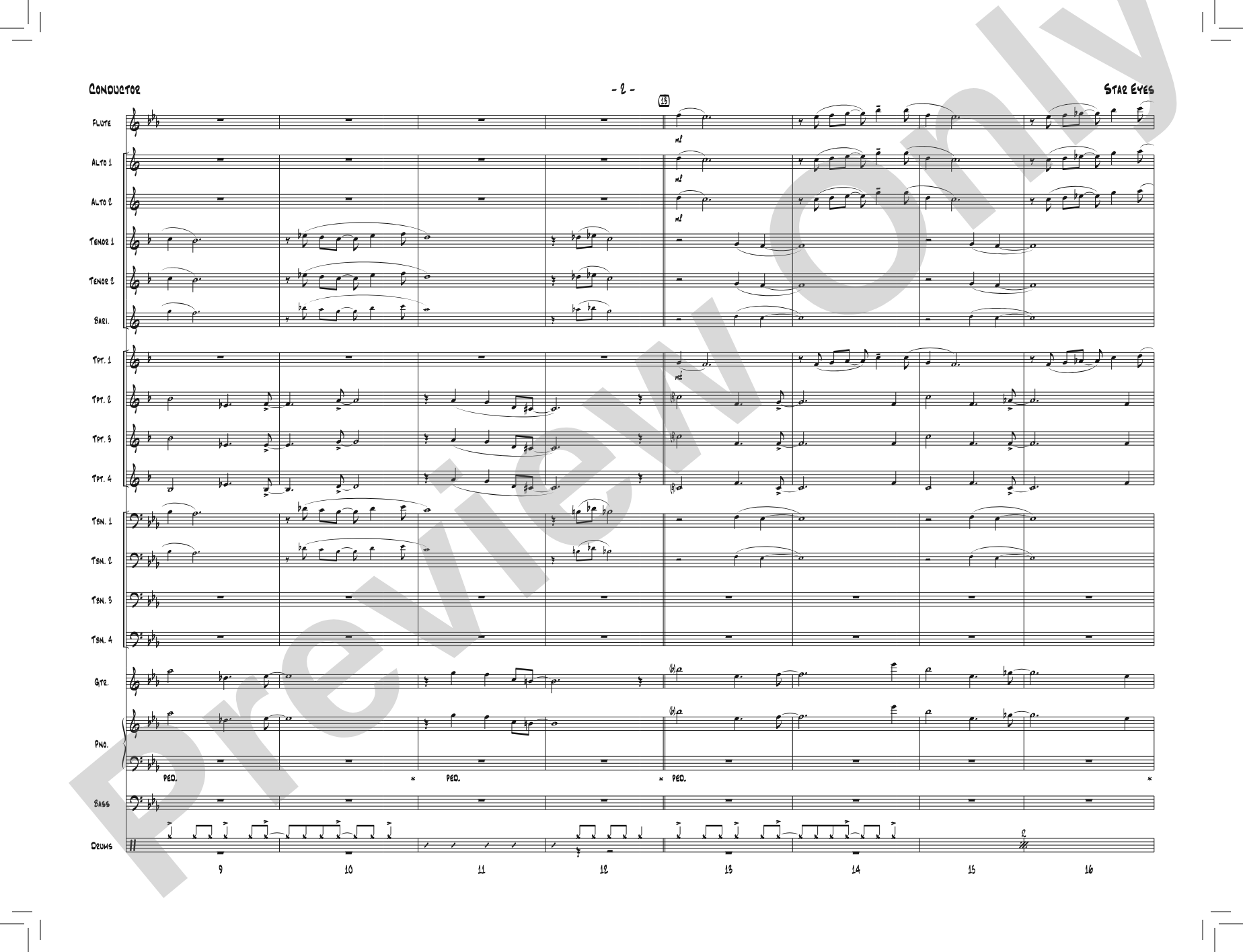
Star Eyes arranged by Rick Hirsch is a finely crafted chart with a straight-eighth groove. The tempo is around 148 BPM, and it features written out 8-bar solos for alto 1, tenor 1, trumpet 1, and trombone 1. The lead trumpet range is to written A above the staff. Optional instruments are included, too. This is a wonderful arrangement of a great standard tune. (4:20) This title is available in MakeMusic Cloud.


Don't just read it, hear it, play along with it, and watch your students grow with it. In MakeMusic Cloud, Star Eyes: Jazz Ensemble Conductor Score & Parts comes alive with professional accompaniment, adjustable tempo, and built-in practice tools that turn solo practice into real progress.
Open in the Player
Jump straight in and assign it today.
Start Your Free Trial
Open this title and explore the full library in minutes.
Sample Audio
1
Audio File
--:--
0:00
0:00
Sample Video
Additional Details
Series:
Young Jazz Ensemble
Publisher:
Alfred Music
SKU:
00-PK-0008550
More about this title
About the Composer: Gene DePaul
Gene DePaul (1919-1988) was a prolific composer who bridged film, theater, and jazz throughout his career. He wrote the scores for major Hollywood musicals including Seven Brides for Seven Brothers and contributed songs to countless productions, leaving behind a catalog rich with melodic sophistication and harmonic interest that jazz musicians continue to interpret decades later.
Why we love this
Rick Hirsch's voicing captures the warmth of the original melody while keeping the ensemble writing clean and accessible. The eight-bar solo sections give each featured player room to develop ideas at a tempo that supports thoughtful improvisation without rushing, making this an excellent vehicle for developing soloists in a group context.
What to expect
Star Eyes opens with a straightforward, accessible melody that feels like stepping into a classic jazz room. The moderate tempo and steady groove create space for intimate solo statements, building energy gradually as each player takes their moment.
Who it's for
This chart works for jazz ensembles at the Grade 2.5 level with enough sectional strength to handle written solos. Directors seeking a contest or festival selection that sits comfortably within student technical range while maintaining musical substance will find this arrangement particularly useful.
How to get the most out of it
- Lock the rhythm section into the straight-eighth groove from the start of rehearsal. The feel depends on consistent eighth-note articulation rather than swing subdivision, so establish that foundation before adding the horns.
- Prepare soloists to work within their eight bars with intentional phrasing. This length demands economy of ideas and clear musical storytelling rather than busy playing.
- Balance the lead trumpet range carefully around written A. Ensure the lead doesn't overshadow the ensemble voicings underneath, especially during tutti sections.
- Use the optional instrument parts strategically based on your section sizes. Test different doublings in rehearsal to find the blend that serves the arrangement best.
How to use it
Program this in the middle of a set where it can shine between higher-energy numbers and ballads. Its 4:20 length and contest-appropriate difficulty make it ideal for festival submissions or showcase concerts where you want to feature developing soloists in a standards-based setting.
Skills your students will build
- Straight-eighth rhythm articulation and phrasing
- Improvisation over a defined harmonic progression within a structured solo length
- Ensemble balance with featured soloists and accompaniment textures
- Reading lead lines in a jazz context with attention to range management