
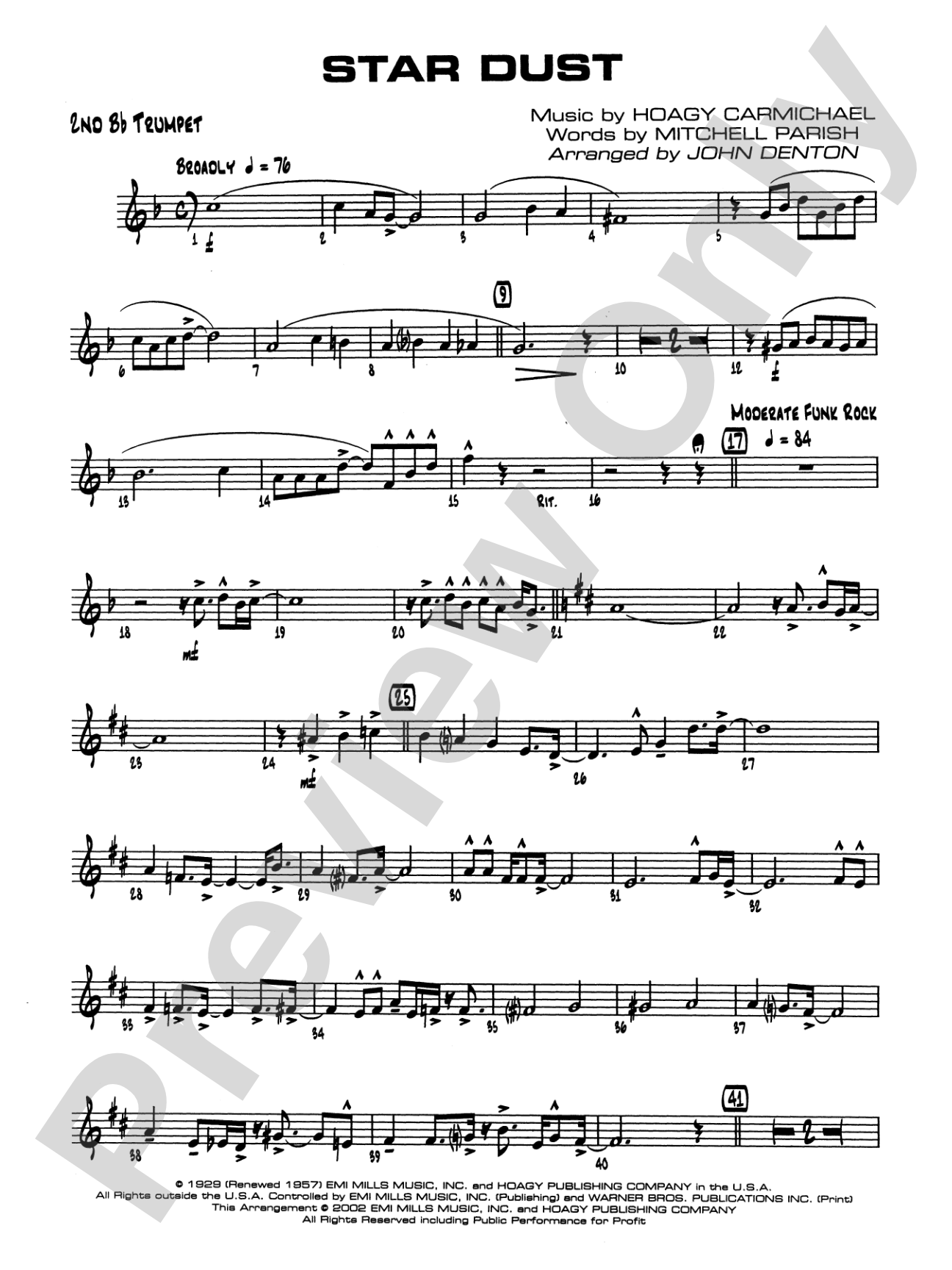

Star Dust: 2nd B-flat Trumpet
Music by Hoagy Carmichael, words by Mitchell Parish / arr. John Denton
Grade: 3 (Medium)
Item: 00-PC-0015619_T2
$3.00
Pickup currently not available
Description
This is a superb treatment of Hoagy Carmichael's Star Dust. Beginning as a traditional ballad with unaccompanied brass, the full ensemble comes together for the verse. Then this chart heats up witha funk rock groove. Arranger John Denton pulled out all the stops with a double time feel and a unison sax soli based on Artie Shaw's original solo. There is also solo space for tenor saxophone with an optional written solo provided. The brass range is modest. The chart closes witht he versed in ballad style. An exceptional chart! (5:00)


Don't just read it, hear it, play along with it, and watch your students grow with it. In MakeMusic Cloud, Star Dust: 2nd B-flat Trumpet comes alive with professional accompaniment, adjustable tempo, and built-in practice tools that turn solo practice into real progress.
Open in the Player
Jump straight in and assign it today.
Start Your Free Trial
Open this title and explore the full library in minutes.
Sample Audio
1
Audio File
--:--
0:00
0:00
Sample Video
No sample videos found.
Additional Details
Series:
Jazz Band Series
Publisher:
Alfred Music
Page Count:
94
SKU:
00-PC-0015619_T2
More about this title
About the Composer: Hoagy Carmichael
Hoagy Carmichael (1899-1981) was an American composer and pianist who bridged popular song, jazz, and film music with uncommon sophistication. His melodic gift and harmonic sensibility made him one of the most recorded composers of the 20th century, with standards like "Georgia on My Mind," "Heart and Soul," and "Star Dust" entering the permanent repertoire of American music.
Carmichael understood how a great melody could be reimagined across genres and instrumental combinations. His work has inspired countless jazz arrangements, from bebop interpretations to big band treatments, making his compositions ideal vehicles for teaching ensemble musicianship and interpretive flexibility.
Why we love this
John Denton's arrangement transforms Star Dust across multiple moods in a single performance, giving your ensemble the chance to demonstrate control in ballad voicing, precision in funk-groove sections, and confidence in a unison sax feature. The optional tenor solo and written alternative keep the spotlight flexible while the modest brass range ensures accessibility at Grade 3, making this a showpiece that doesn't overextend your section leaders.
What to expect
Star Dust unfolds as a journey from intimate ballad reverie into a propulsive funk groove that honors the melody even as it transforms it. The unison sax passages recall the golden age of swing while the double-time energy and written solo option give the chart a contemporary confidence, all within five minutes that feel both fresh and timeless.
Who it's for
Jazz ensembles at the Grade 3 level who are ready for stylistic flexibility and ensemble maturity. Players need solid time feel and section blend rather than advanced technical facility, making this accessible to student groups while remaining engaging and substantial enough for accomplished high school or college jazz bands.
How to get the most out of it
- Shape the opening brass ballad section with genuine lyricism; this unhurried statement sets up the energy shift that follows, so resist rushing into the groove despite knowing what's coming.
- Lock the rhythm section (piano, bass, drums) into the funk feel before rehearsing the full ensemble over it; once that groove is solid, the horns can commit confidently to the written rhythms and syncopations.
- On the unison sax soli, treat it as a collective melodic statement with unified articulation and phrase breathing, not as individual soloists; this clarity will highlight the Artie Shaw reference without losing ensemble cohesion.
- For the tenor solo section, rehearse both the written solo and the open space separately so your soloist knows exactly how much time exists and the band knows precisely where to come back in.
How to use it
Program this as a centerpiece for a jazz concert or as part of a set that contrasts standard reharmonization with groove-based modern arranging. Its balanced length and varied emotional terrain make it an ideal choice for a mid-set moment that recaptures audience attention, or pair it with a screamer and a ballad to showcase your ensemble's dynamic range.
Skills your students will build
- Ballad phrasing and sus-tained tone in brass ensemble voicing
- Funk groove time feel with syncopated horn rhythms
- Unison ensemble cohesion and collective articulation
- Tenor saxophone solo preparation and space management
- Dynamic contrast and stylistic transition within a single arrangement