

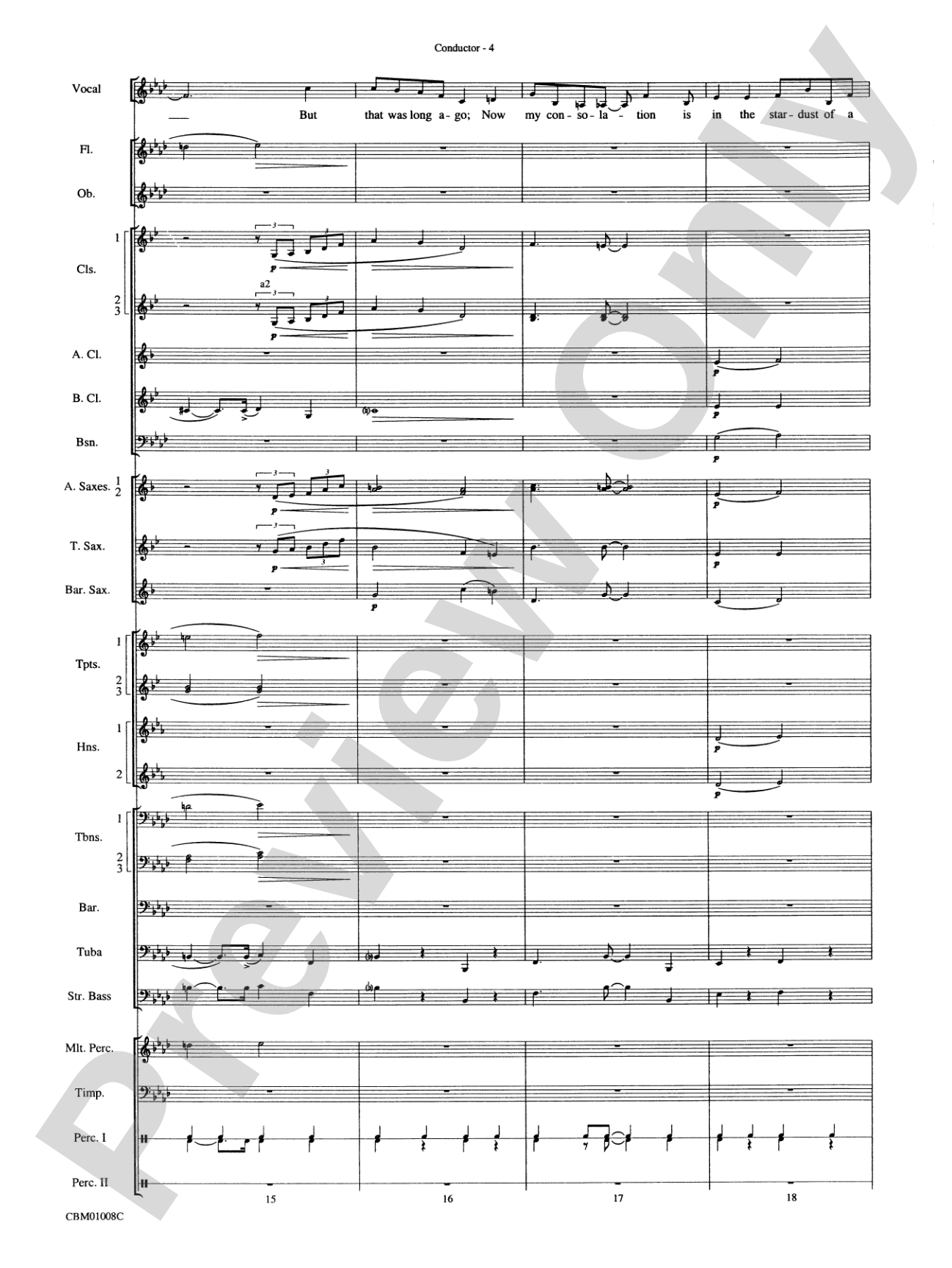
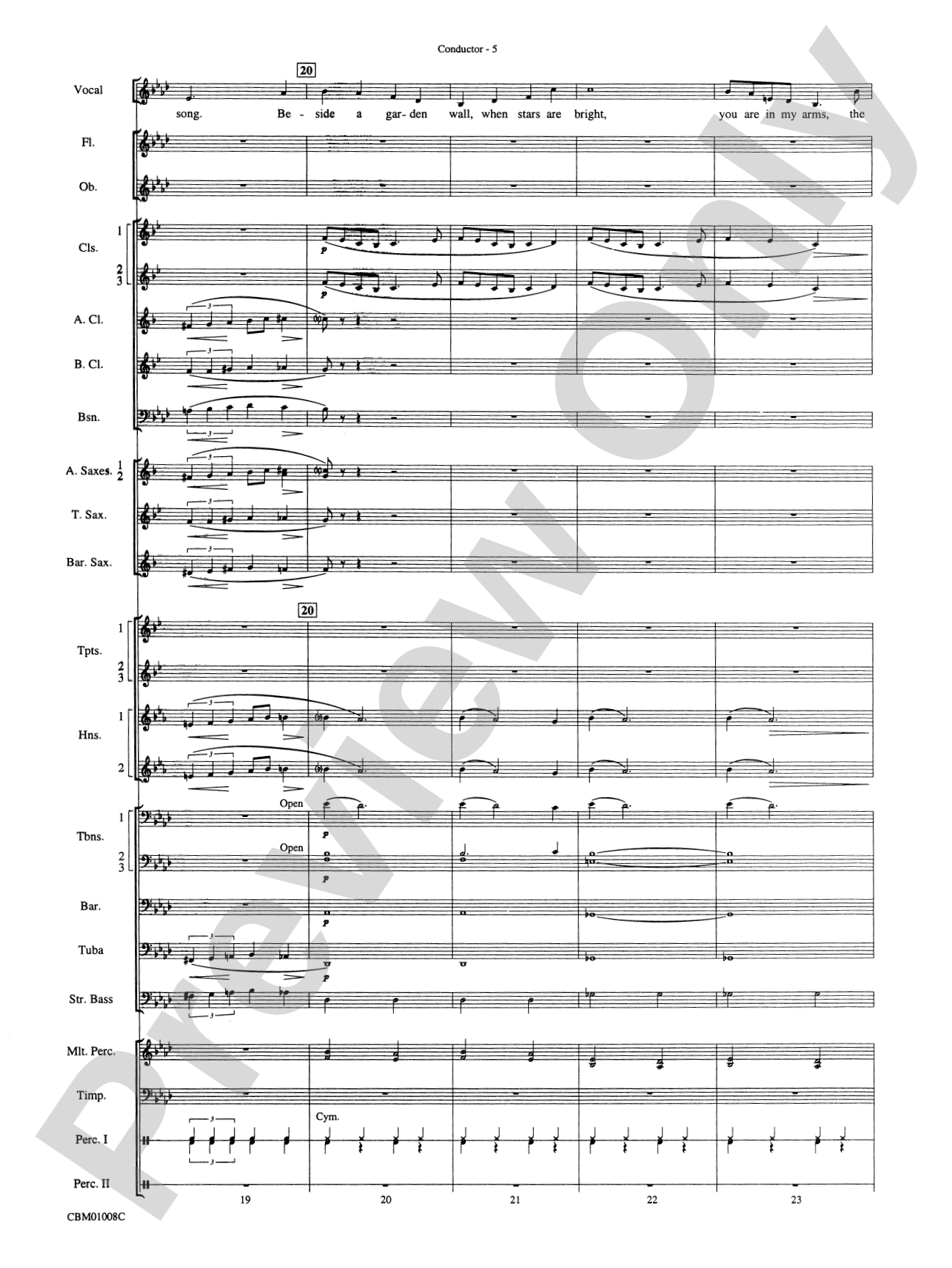
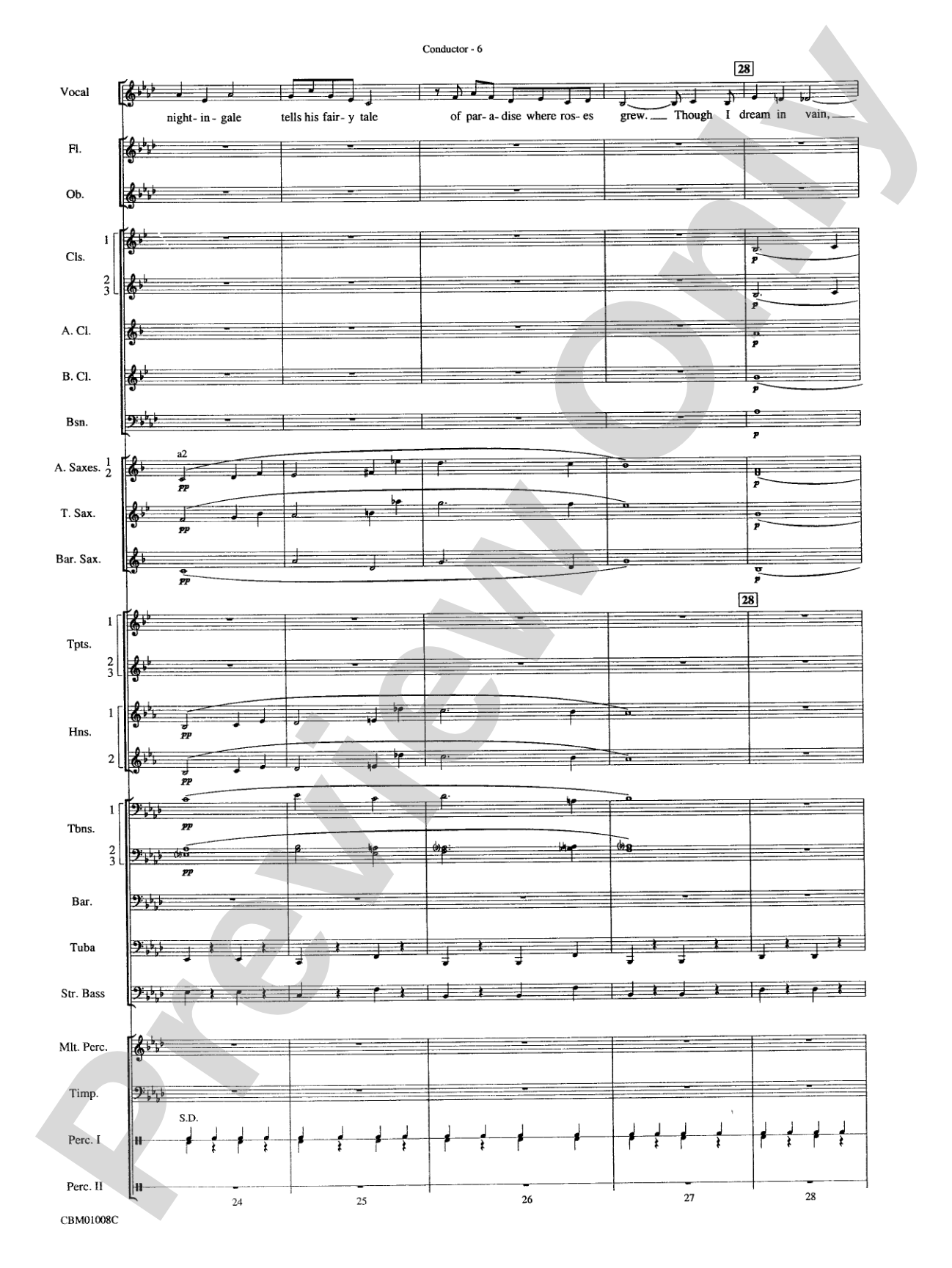
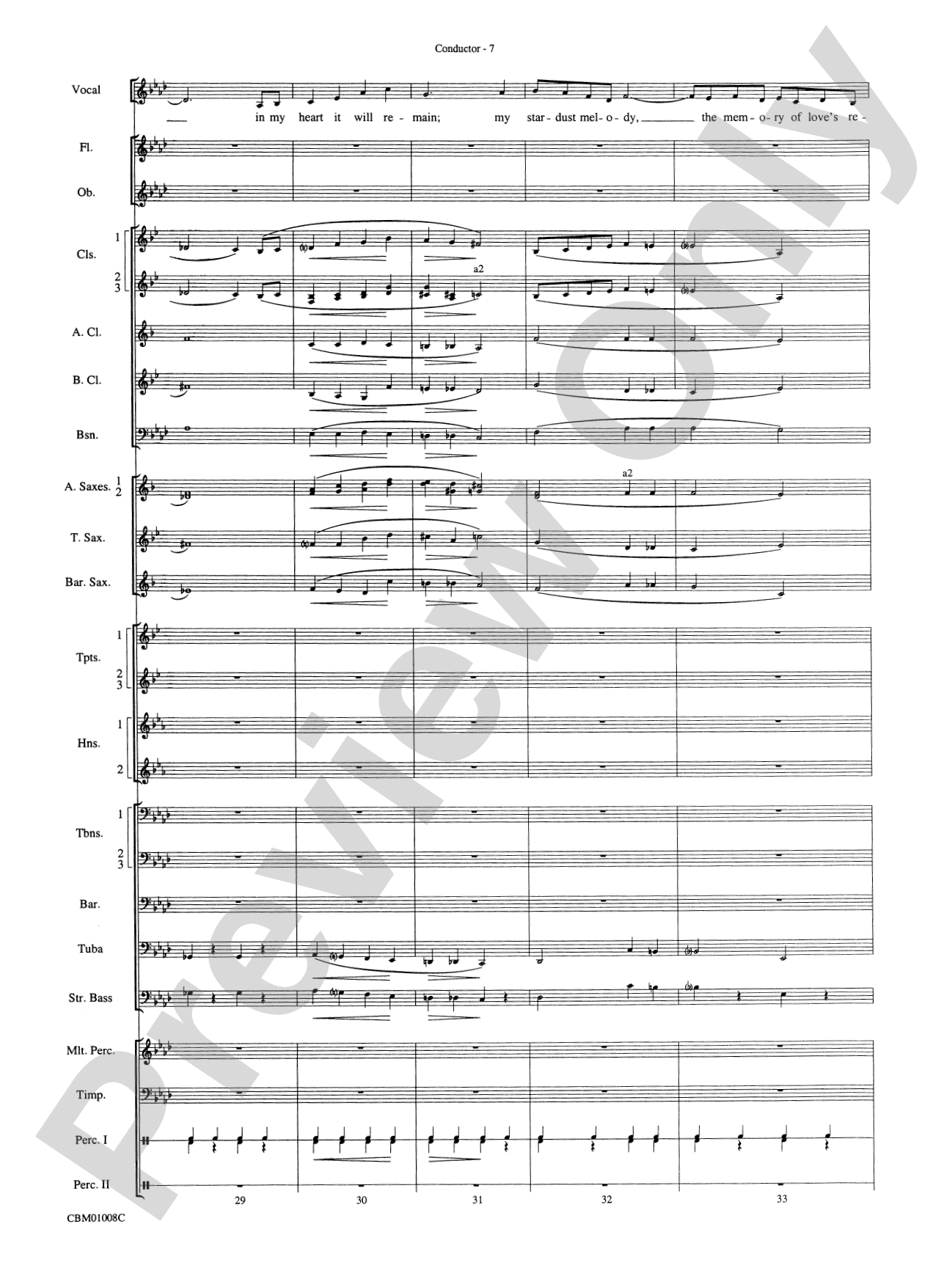
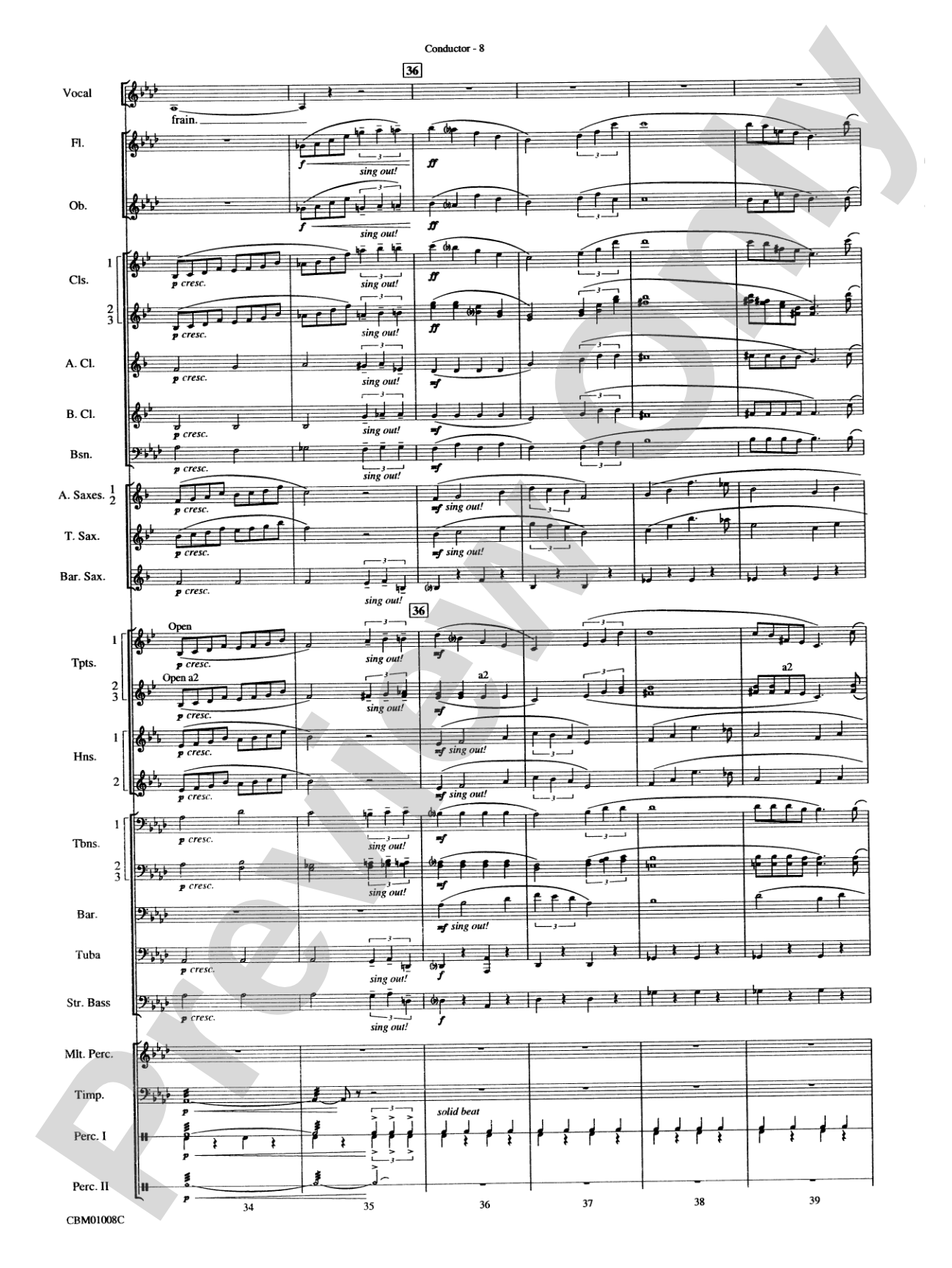
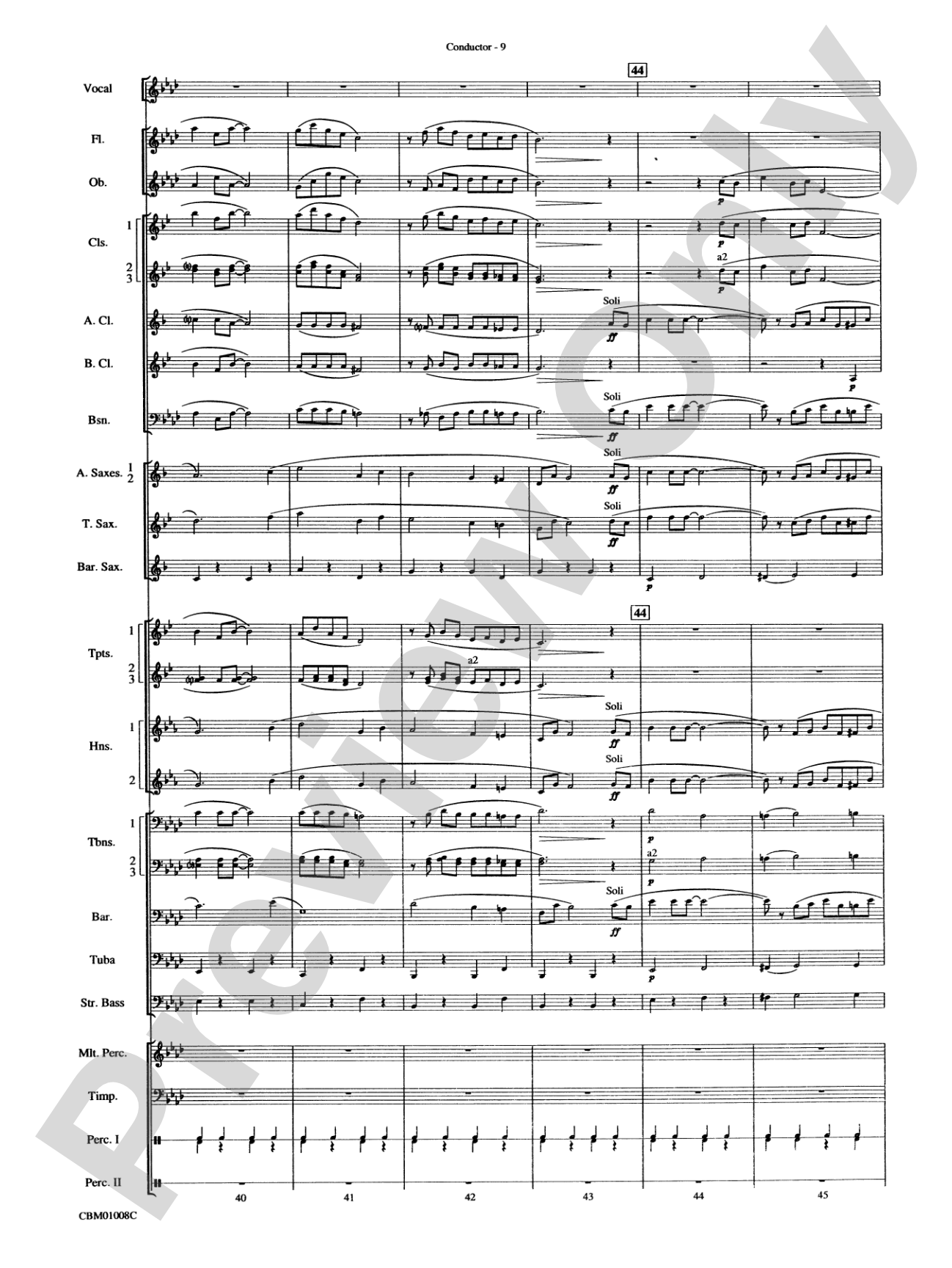
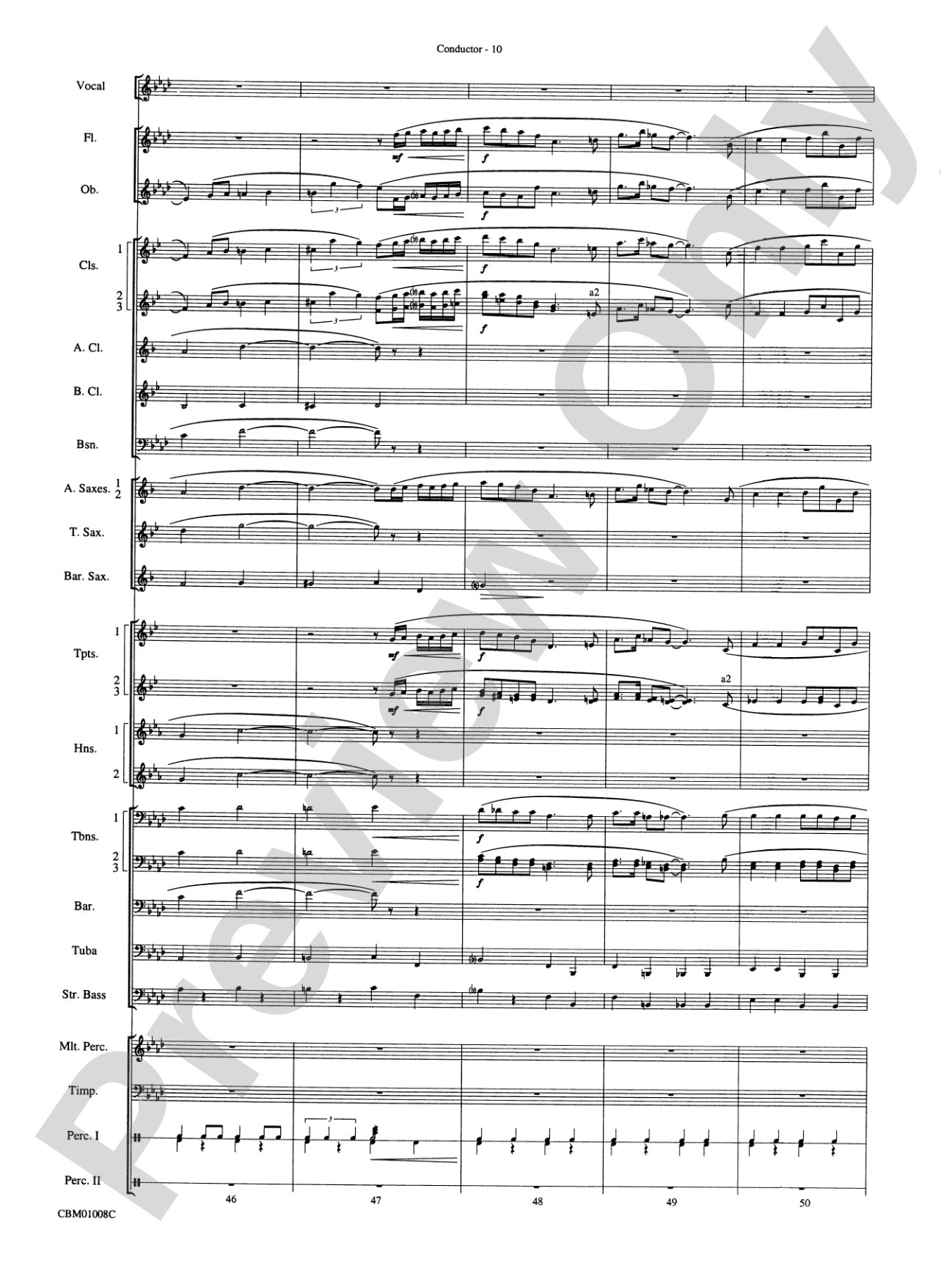
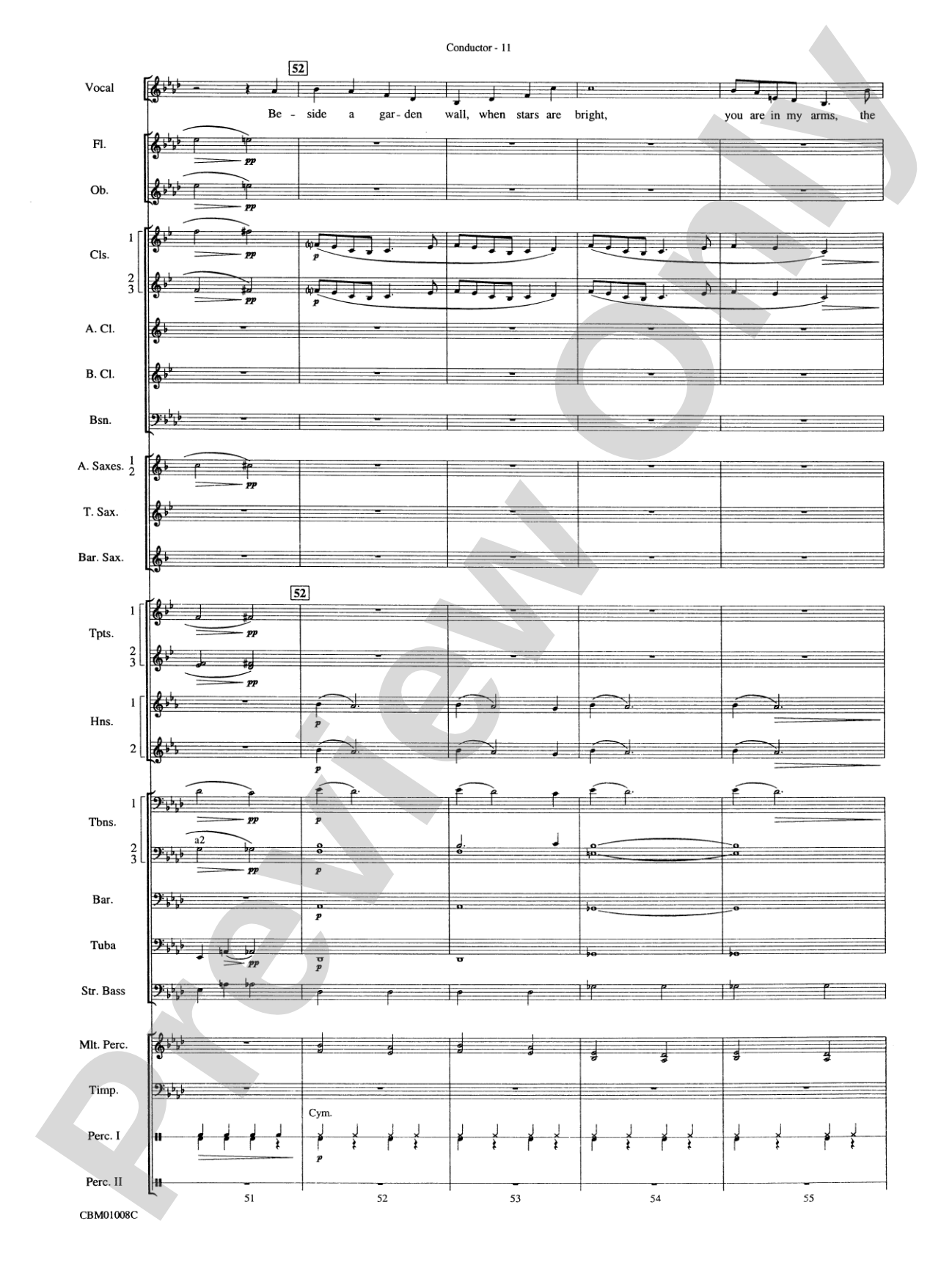
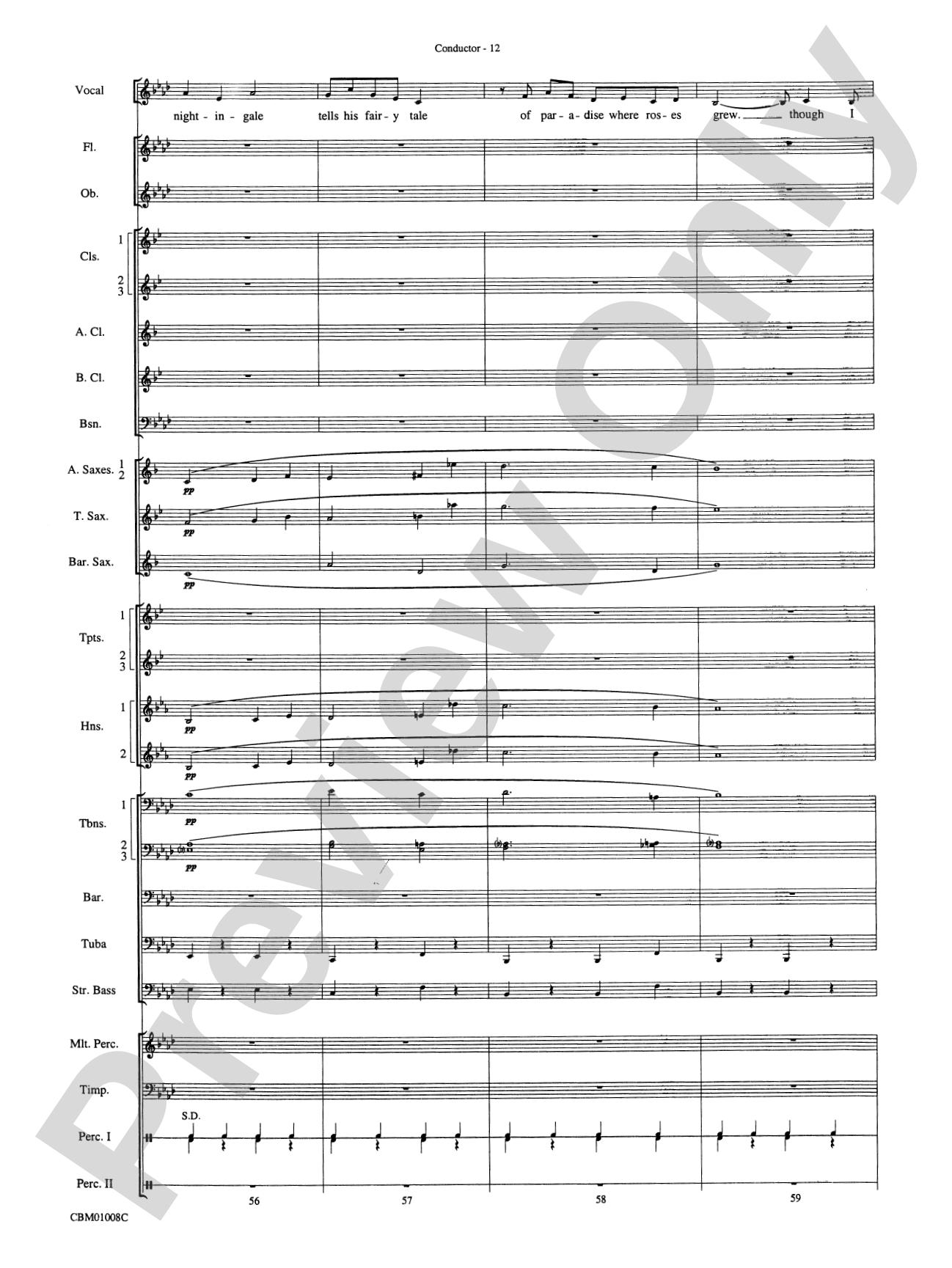
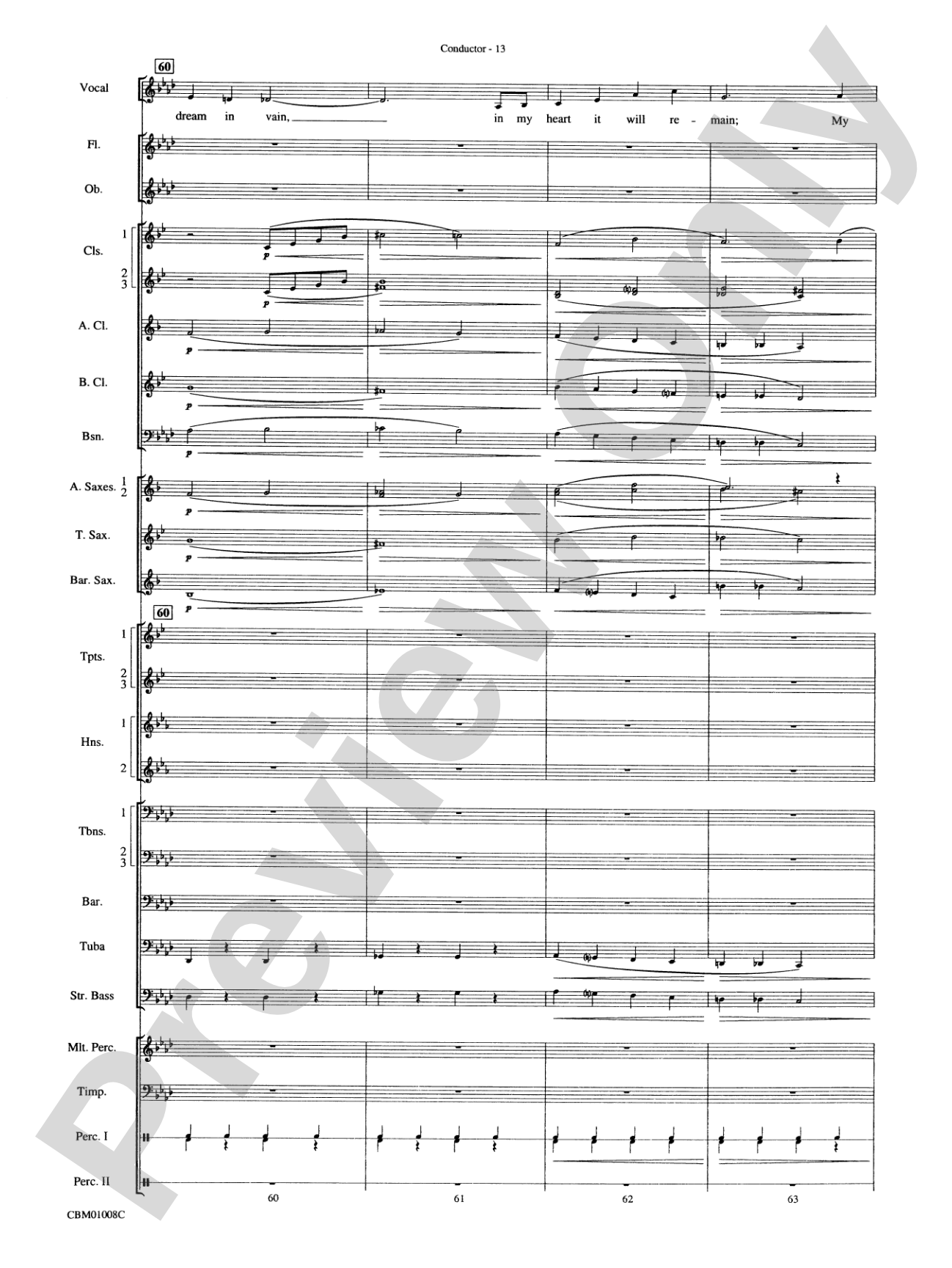
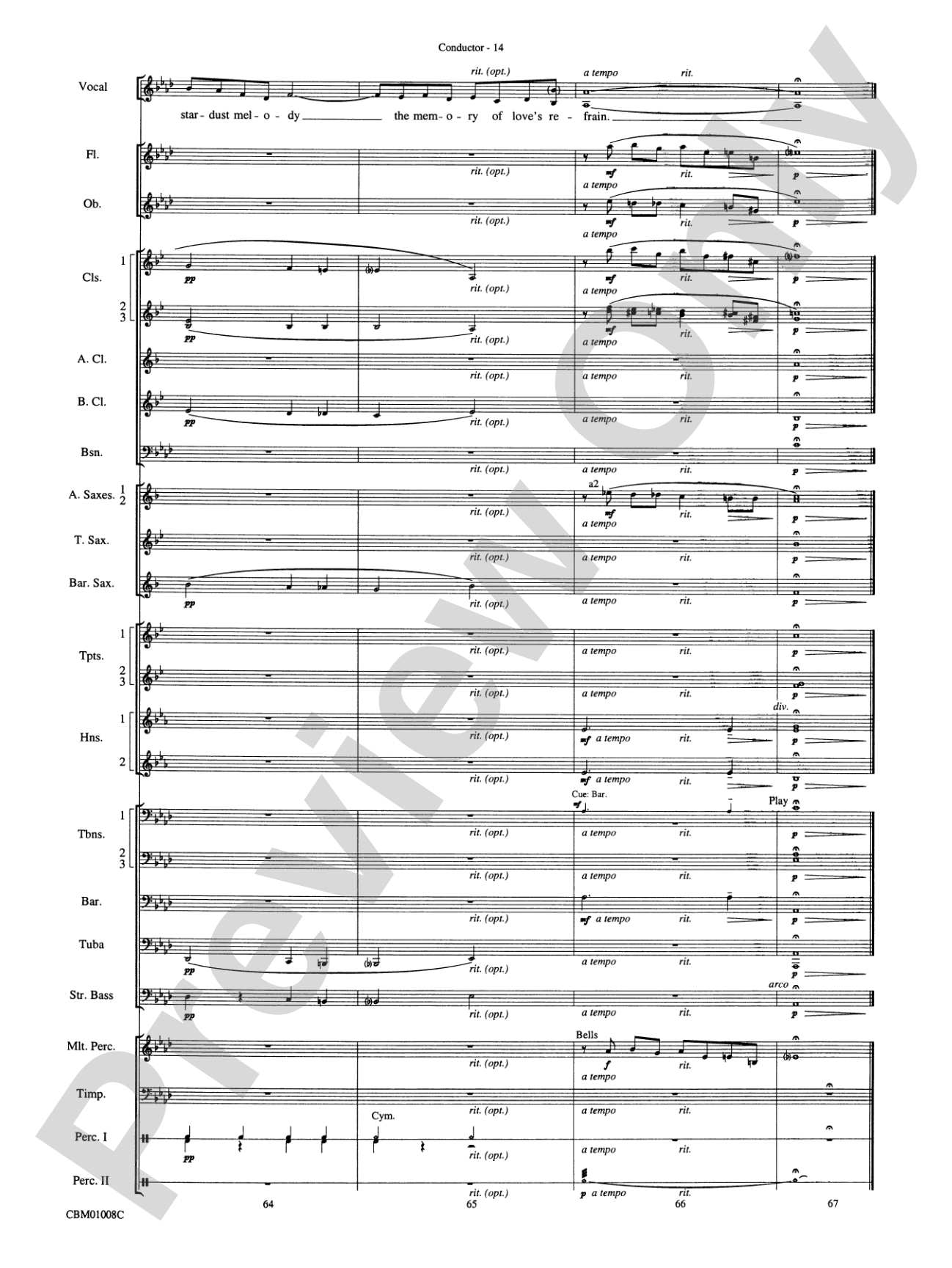

Star Dust: Concert Band Conductor Score & Parts
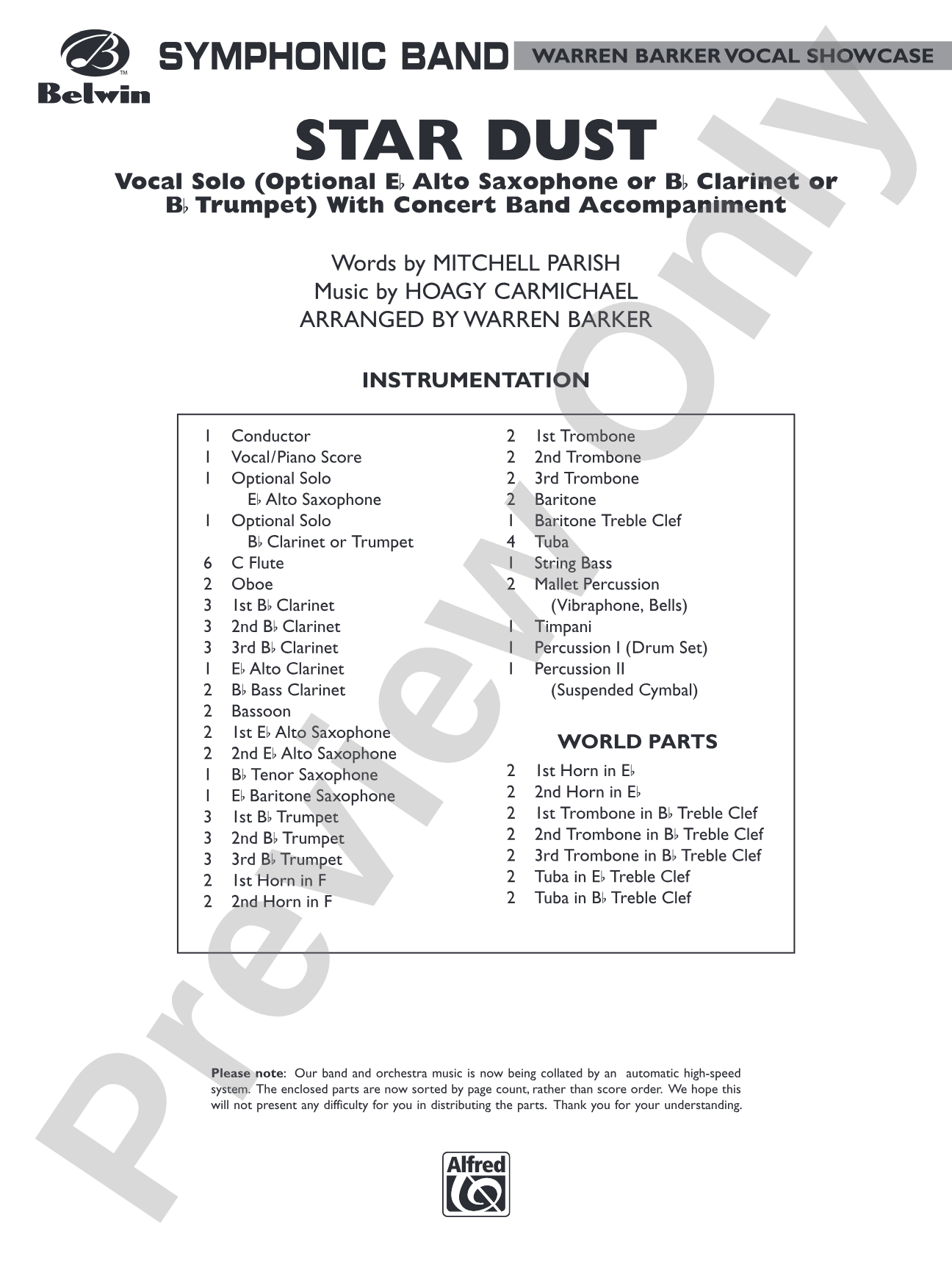
Vocal Solo (Optional E-Flat Alto Saxophone or B-Flat Clarinet or B-Flat Trumpet) with Concert Band Acc.
Words by Mitchell Parish, music by Hoagy Carmichael / arr. Warren Barker
Grade: 4 (Medium)
Item: 00-PK-0002347

$87.00
Pickup currently not available
Buy Extra Parts (Digital PDF Download)
Parts Added to Cart!
Description
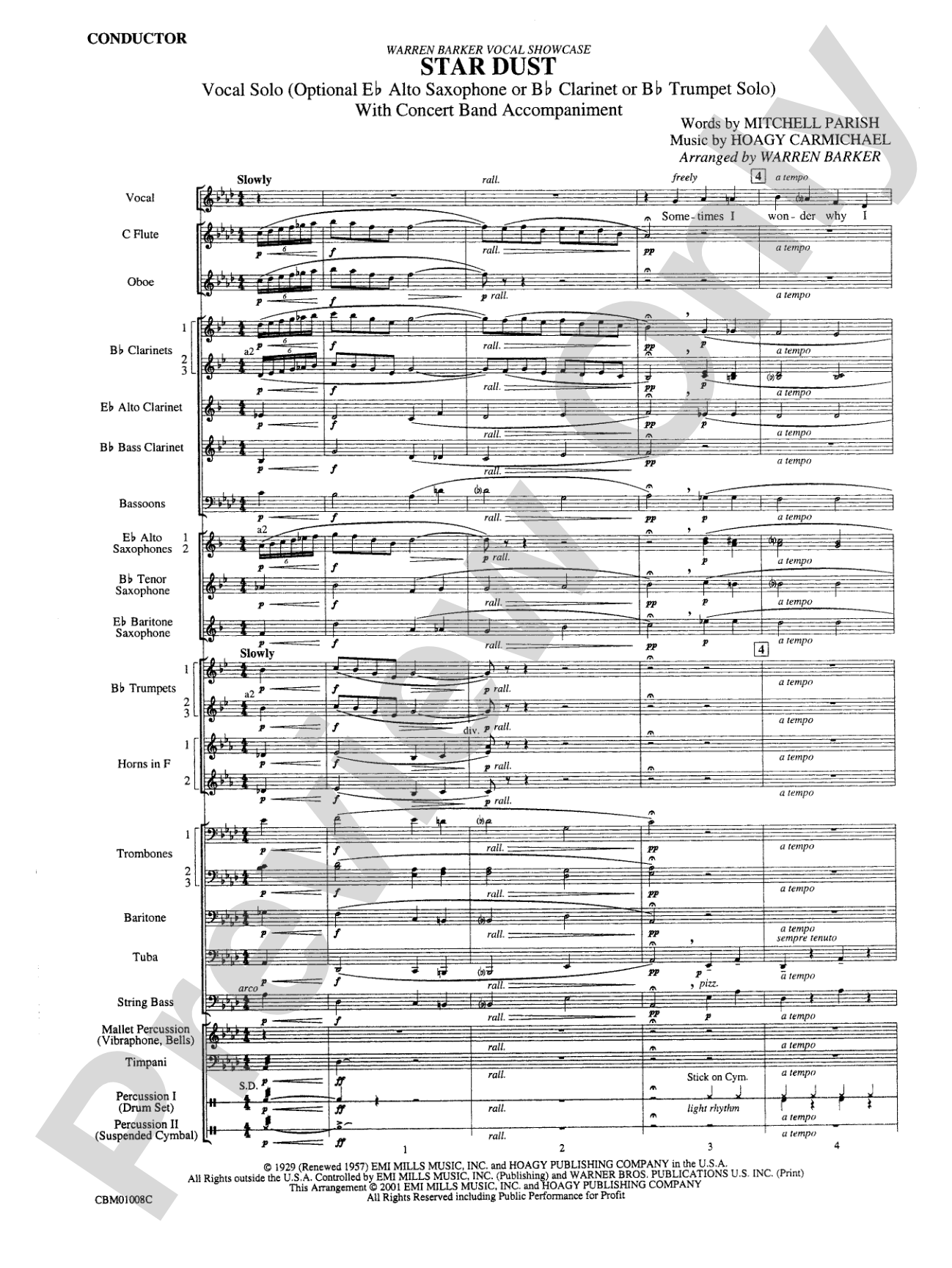
This lush melody has been added to the Warren Barker Vocal Showcase Series. Charming and distinct, the vocal part for any vocalist, male or female, can also be performed as an instrumental solo. Extremely versatile and highly musical, you just can't go wrong.


Don't just read it, hear it, play along with it, and watch your students grow with it. In MakeMusic Cloud, Star Dust: Concert Band Conductor Score & Parts comes alive with professional accompaniment, adjustable tempo, and built-in practice tools that turn solo practice into real progress.
Open in the Player
Jump straight in and assign it today.
Start Your Free Trial
Open this title and explore the full library in minutes.
Sample Audio
No sample audio found.
Sample Video
No sample videos found.
Additional Details
Series:
Pop Symphonic Band
Publisher:
Alfred Music
Page Count:
166
SKU:
00-PK-0002347
Instrumentation:
Optional E-flat Alto Saxophone or B-flat Clarinet or B-flat Trumpet with Concert Band Acc.
More about this title
About the Composer: Hoagy Carmichael
Hoagy Carmichael (1899-1981) stands among America's most prolific and versatile songwriters, composing jazz standards and popular songs that remain central to American musical culture. His gift for melody was matched by his skill as a pianist and performer, and his compositions have been recorded thousands of times across multiple genres and generations.
Why we love this
Warren Barker's arrangement captures the sophisticated warmth of this beloved standard while making it genuinely singable for a soloist over a full concert band. The flexibility to feature a vocalist or trumpet, clarinet, or alto saxophone soloist means you can program this piece multiple ways across a season, and the lush orchestration never overshadows the melody.
What to expect
Sophisticated and unhurried, with the gentle swing and harmonic richness that made this standard endure. The melody floats over warm jazz-influenced voicings, creating an intimate atmosphere even in a concert hall filled with a full band.
Who it's for
Bands at the Grade 4 level with a skilled vocalist or capable solo instrumentalist who can carry a melody with maturity and sensitivity. This arrangement works equally well for a band director seeking a memorable concert moment or a vocal soloist whose teacher wants to add a large ensemble experience to their recital.
How to get the most out of it
- Balance the solo voice or instrument so it rides above the band without requiring the player to force; Barker's scoring naturally supports this when dynamics are shaped by section.
- Shape the opening phrases with subtle rubato to honor the song's lyrical character; the ensemble should follow the soloist's breath and phrasing rather than lock rigidly to pulse.
- Let the harmony underneath breathe; this is not a march or a driving number, so resist the urge to push tempo or tighten articulation in the accompaniment parts.
- Rehearse the soloist with the full ensemble early and often; a Grade 4 band can execute Barker's parts cleanly, but ensemble blend and responsiveness require intentional rehearsal.
How to use it
Program this as a centerpiece for a pops or standards concert, or as a refined solo feature that contrasts with more rhythmically driven concert band repertoire. It also pairs beautifully with other Great American Songbook selections and gives bands working at this level a chance to cultivate the musicianship required for lyrical, song-like playing.
Skills your students will build
- Accompaniment musicianship and restraint (supporting rather than dominating a soloist)
- Lyrical phrasing and expression in ensemble context
- Jazz-influenced voicing and harmonic color (section balance in smooth chords)
- Flexibility with tempo and rubato while maintaining ensemble cohesion