
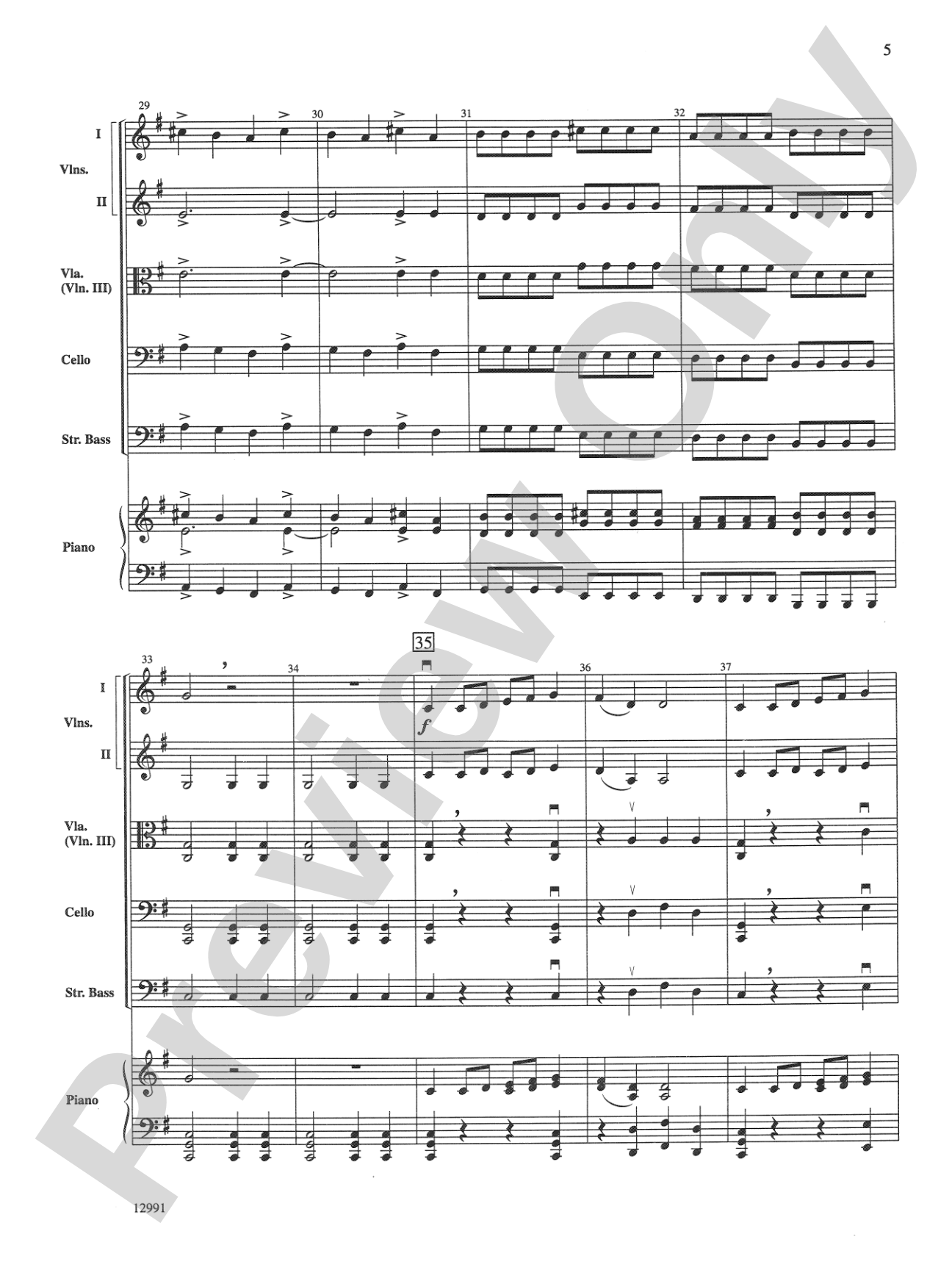
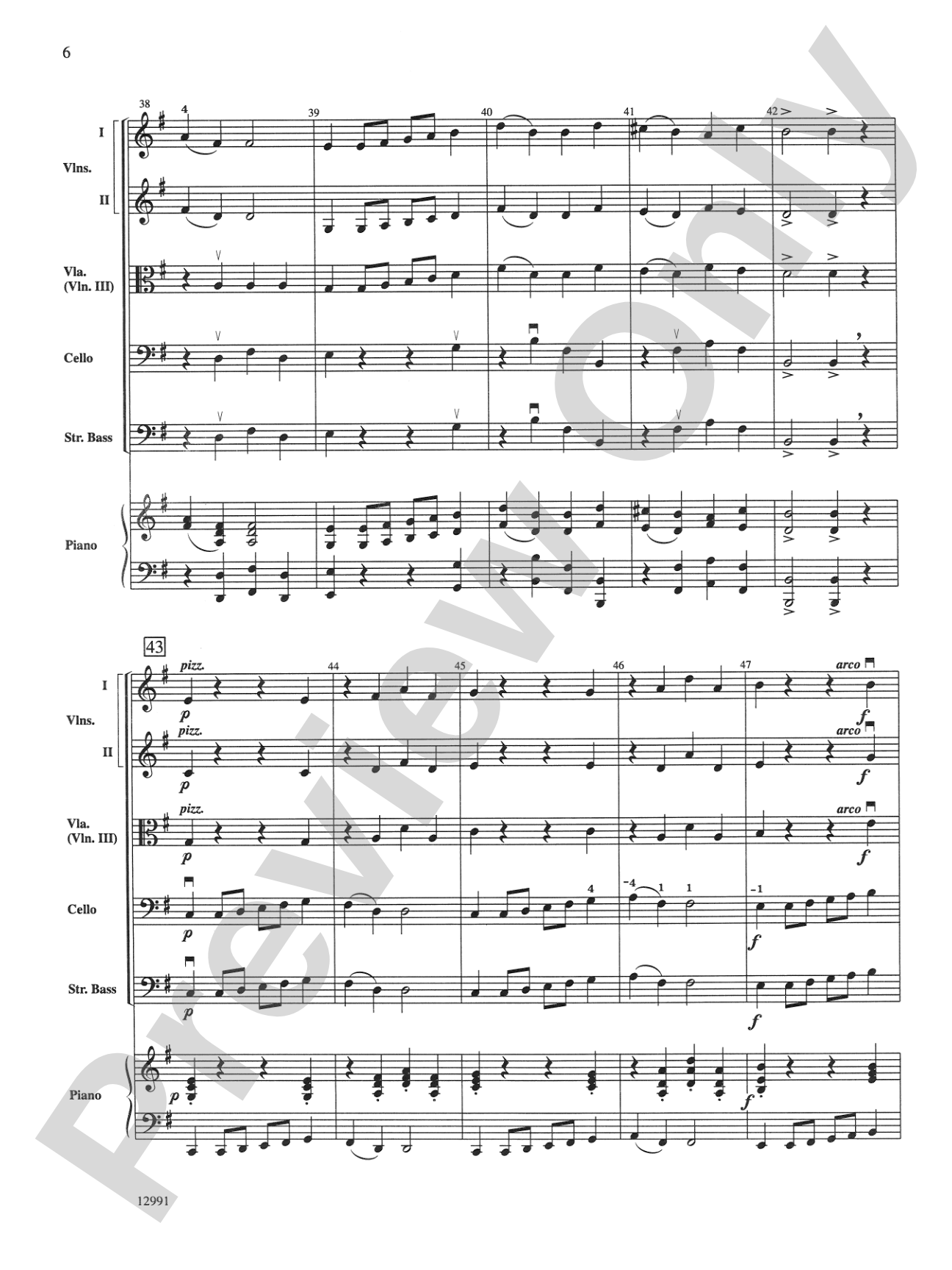
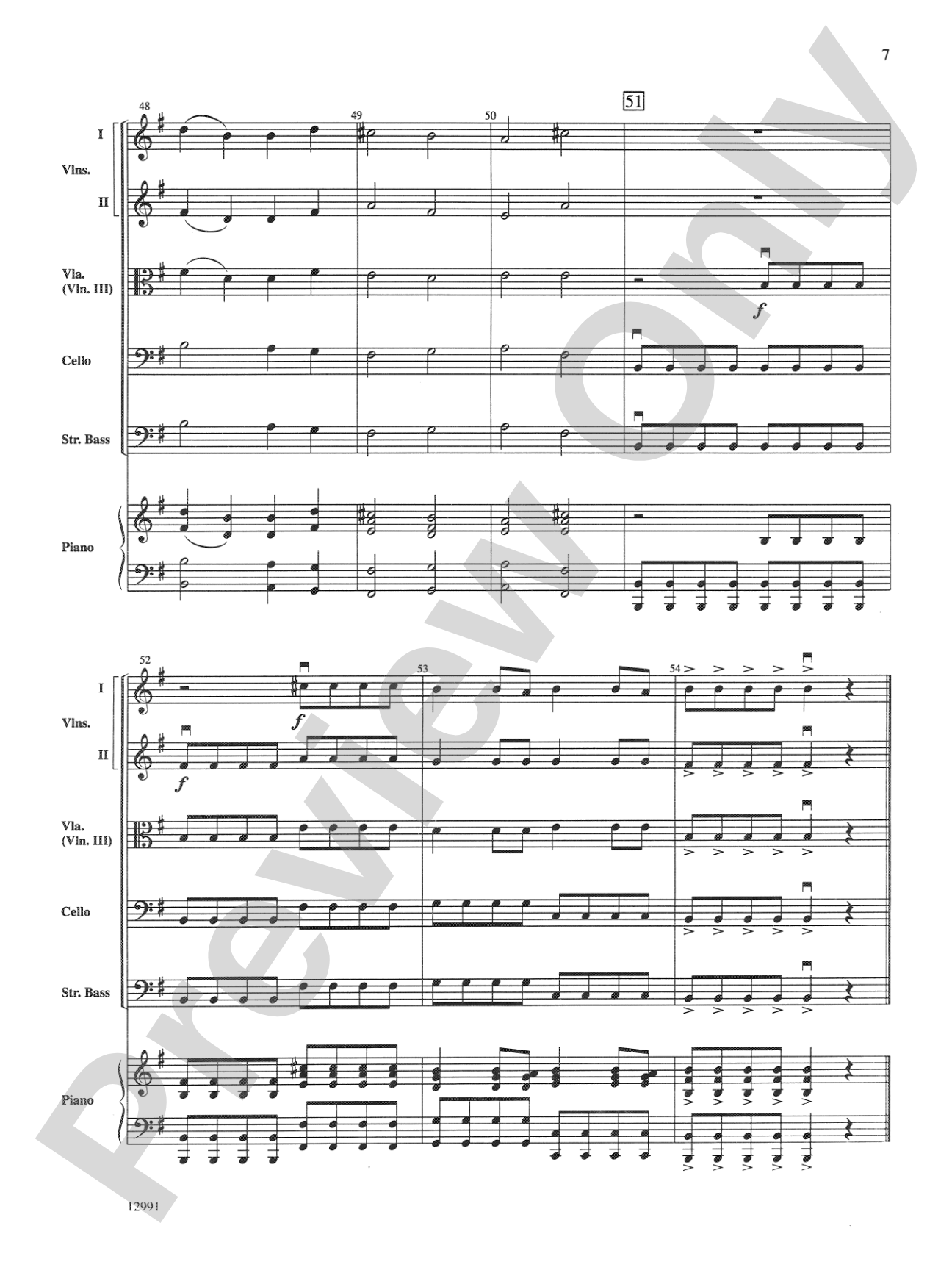


Star Dancer: Score
By Mark Williams
Grade: 1
Item: 00-PR-0000138
$10.00
Pickup currently not available
Description
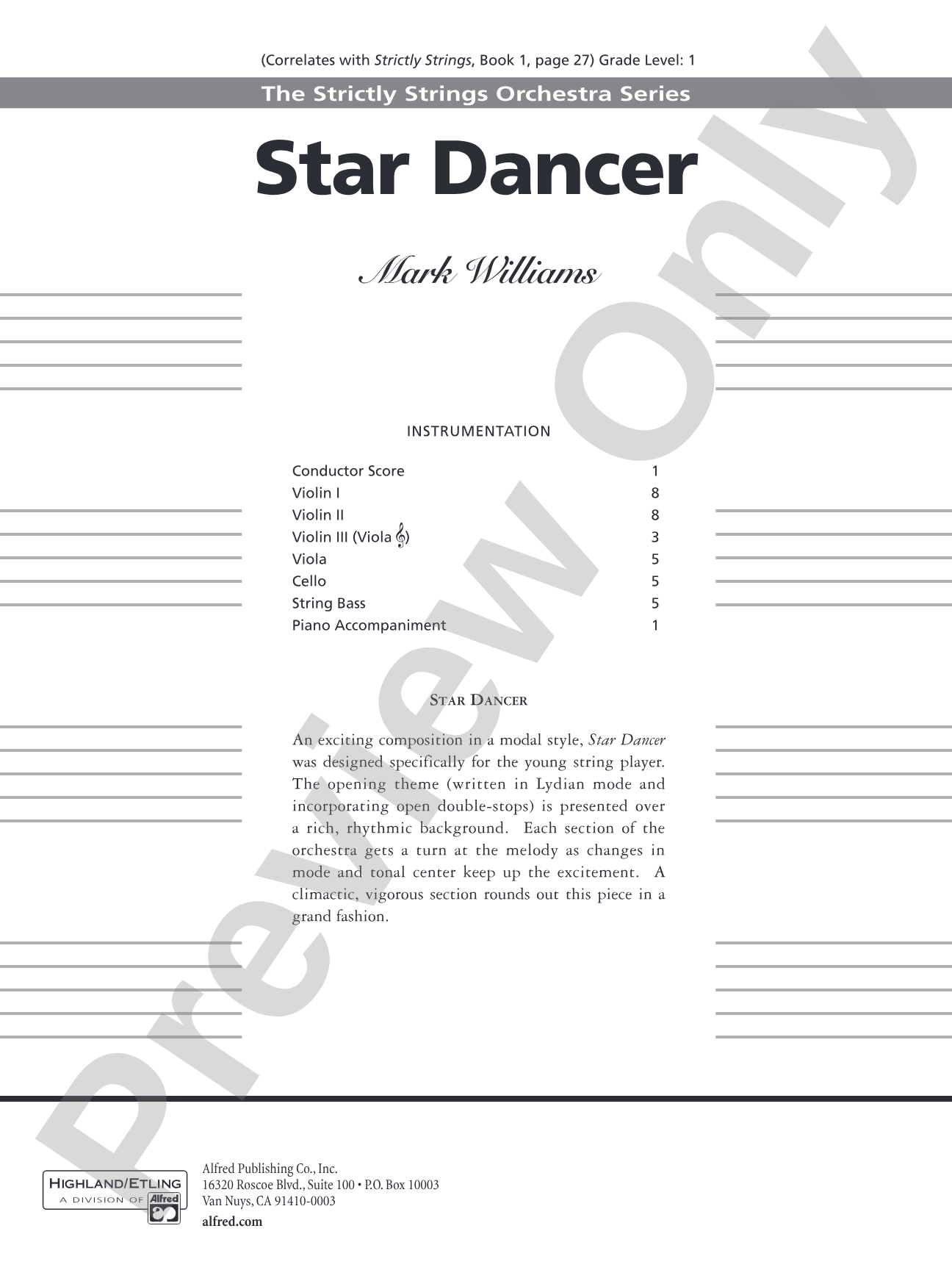
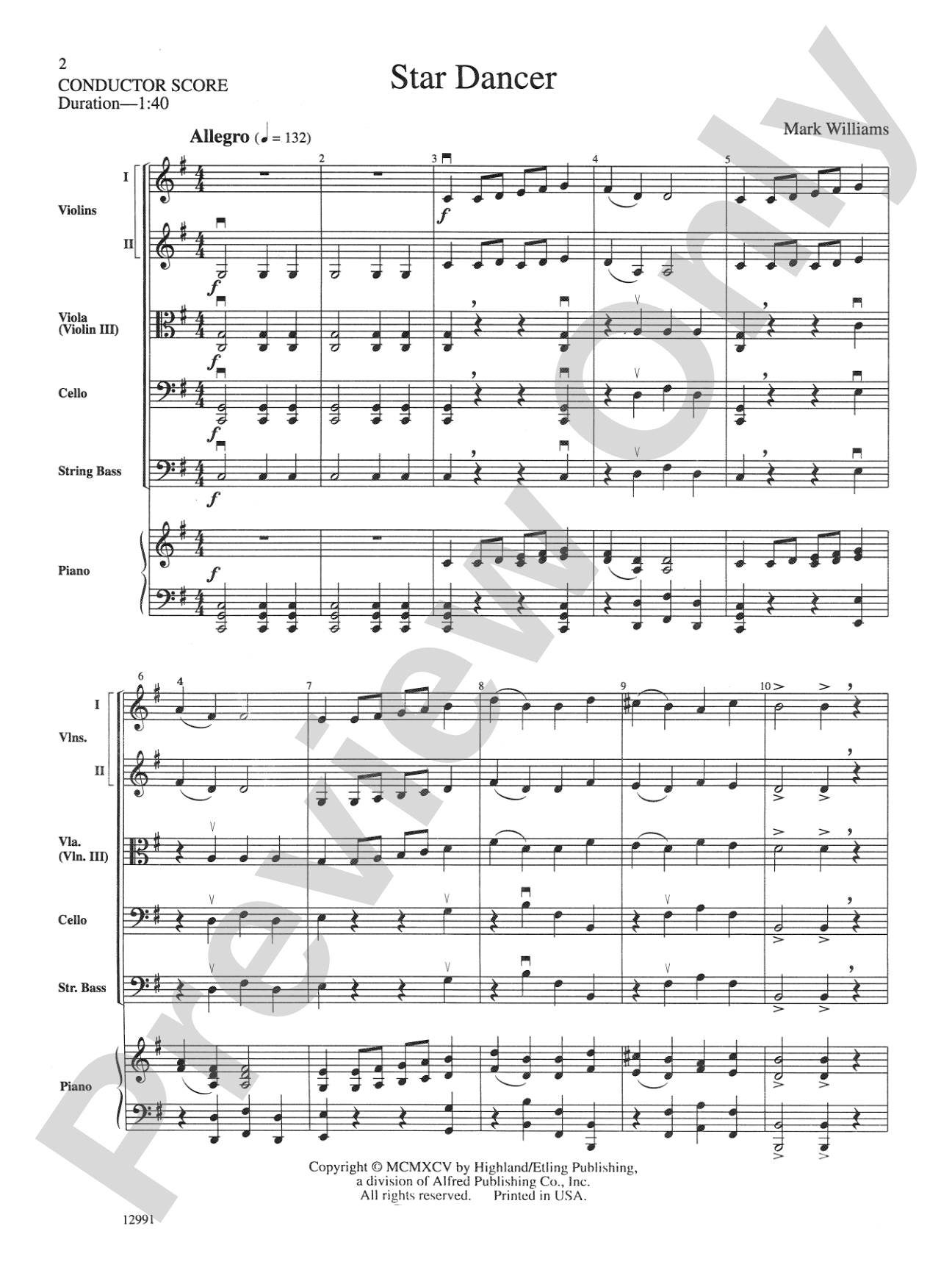
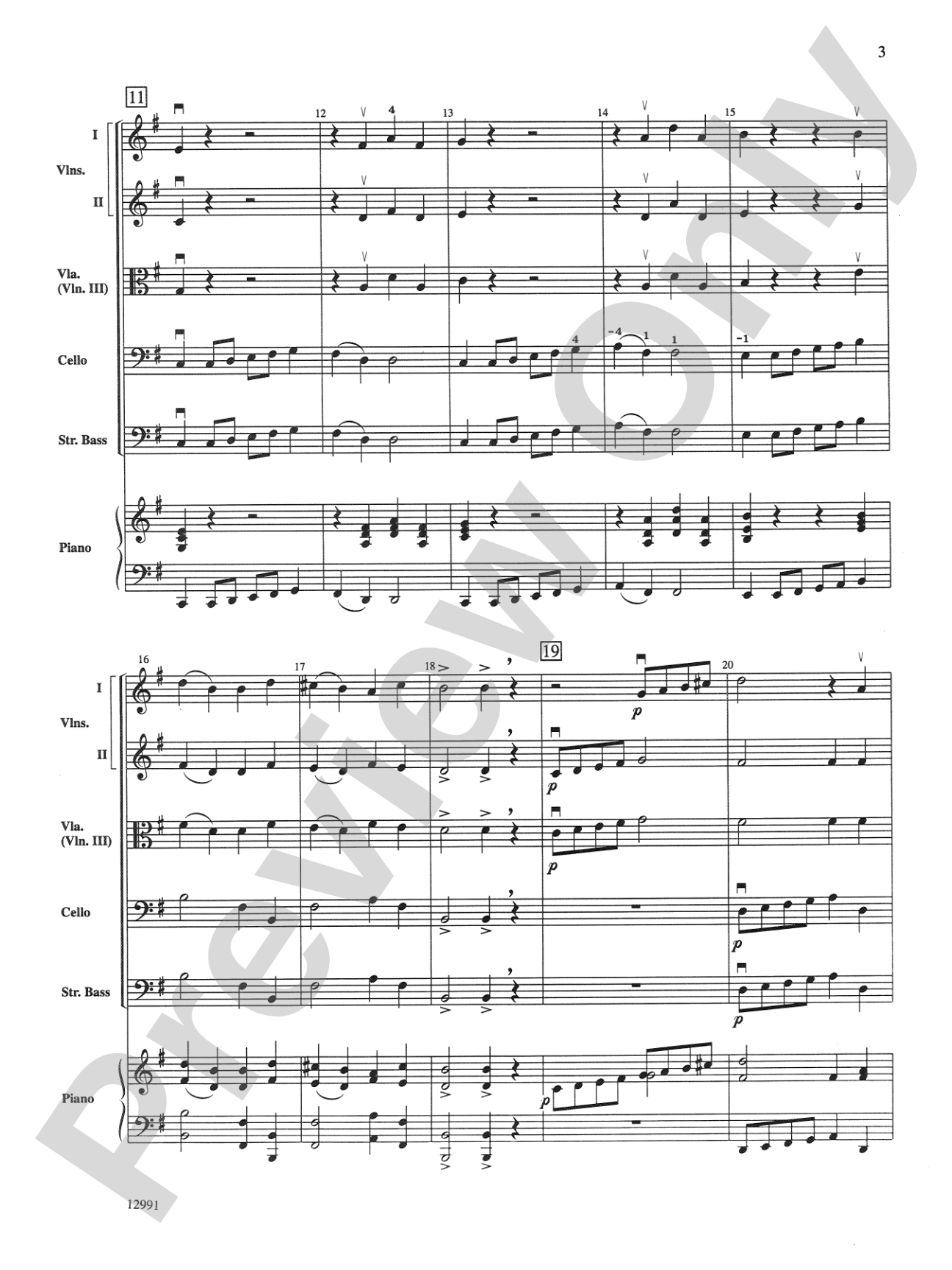
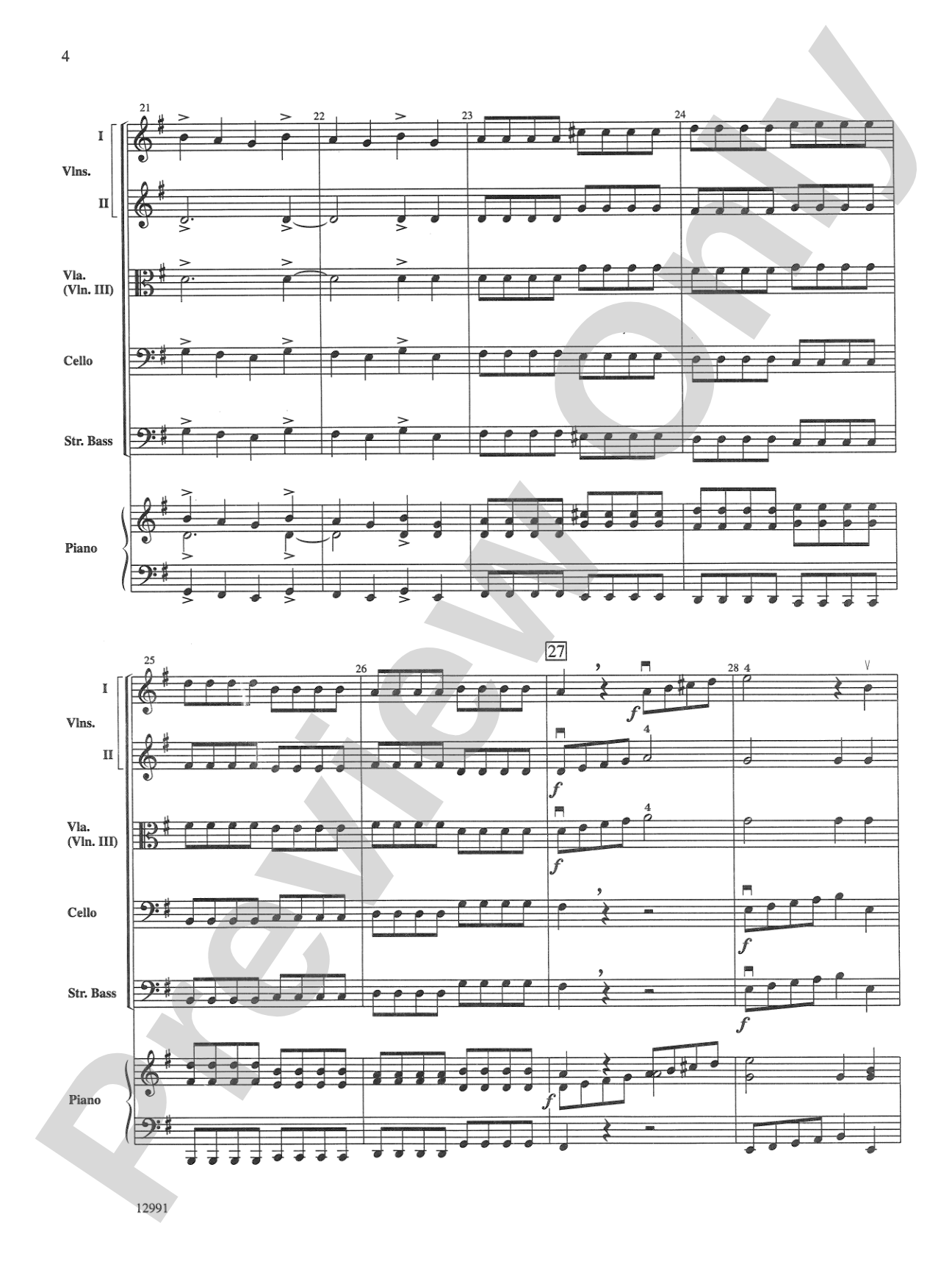
This fresh, contemporary-sounding work by Mark Williams allows your young string players to experience the changing modes and tonalities of 20th-century music within an extremely easy format. Featuring interesting parts for all instruments, Star Dancer is certain to be a favorite with your students. (Grade 1 - Correlates with Strictly Strings Book 1, page 27) This title is available in MakeMusic Cloud.


Don't just read it, hear it, play along with it, and watch your students grow with it. In MakeMusic Cloud, Star Dancer: Score comes alive with professional accompaniment, adjustable tempo, and built-in practice tools that turn solo practice into real progress.
Open in the Player
Jump straight in and assign it today.
Start Your Free Trial
Open this title and explore the full library in minutes.
Sample Audio
1
Audio File
--:--
0:00
0:00
Sample Video
No sample videos found.
Additional Details
Series:
Highland/Etling Strictly Strings
Publisher:
Alfred Music
Page Count:
72
SKU:
00-PR-0000138
More about this title
About the Composer: Mark Williams

Mark Williams built his reputation as a prolific composer for school ensembles, with over 200 published works spanning band, orchestra, and choir. Beyond the page, he was an active clinician and guest conductor who traveled extensively throughout North America and Australia, bringing his pedagogical approach directly to music programs across 34 states, five Canadian provinces, and beyond.
A Chicago native who spent formative years in Spokane, Washington, Williams combined classroom teaching experience with formal training from Eastern Washington University (BA in Education, MA in Education). His credentials included woodwind performance and arranging work with the 560th Air Force Band, and he earned recognition through the Western International Band Clinic's Gralia Competition and multiple ASCAP Special Awards. He remained active as a bassoon performer and served as conductor and artistic director for the Spokane British Brass Band throughout his career.
Why we love this
Williams writes string parts that actually sing. Young players often find themselves stuck in unison or simple doublings at this level, but here every section has something engaging to do. The contemporary harmonic language introduces modes and shifting tonalities without overwhelming beginners, making this an excellent bridge toward more sophisticated musical thinking.
What to expect
Star Dancer has the energy and clarity of contemporary music without sounding academic or cold. The shifting modes create a sense of motion and light, with harmonic color doing much of the work that melody might carry in a traditional piece. It feels fresh and accessible at once.
Who it's for
This work sits perfectly for young string orchestras at the earliest performance level. It works especially well for programs using Strictly Strings Book 1, offering students their first encounter with 20th-century harmonic language without technical demands that distract from musical understanding.
How to get the most out of it
- Rehearse the modal shifts in isolation before running full sections. Young string players respond well to understanding the "why" behind the changing harmonic color rather than simply playing the notes.
- Balance the parts carefully during tutti passages. Since interest is distributed across all voices, watch for any line that recedes; it should sing with the same commitment as the melody.
- Use the score to highlight where tonality changes occur. Mark those moments in your players' parts so they recognize the structural points that give the piece its contemporary flavor.
How to use it
Pair this with more traditional repertoire on a concert to show how musical language has evolved. It also works well as a festival or contest piece for Grade 1 ensembles, since judges appreciate seeing young orchestras tackle contemporary idioms with confidence.
Skills your students will build
- Reading and hearing modal interchange (major, minor, and other modal areas within a single piece)
- Understanding 20th-century tonality and harmonic color as structural elements
- Balancing independent parts where no single voice carries the entire melodic interest
- Ensemble intonation in non-traditional harmonic contexts