
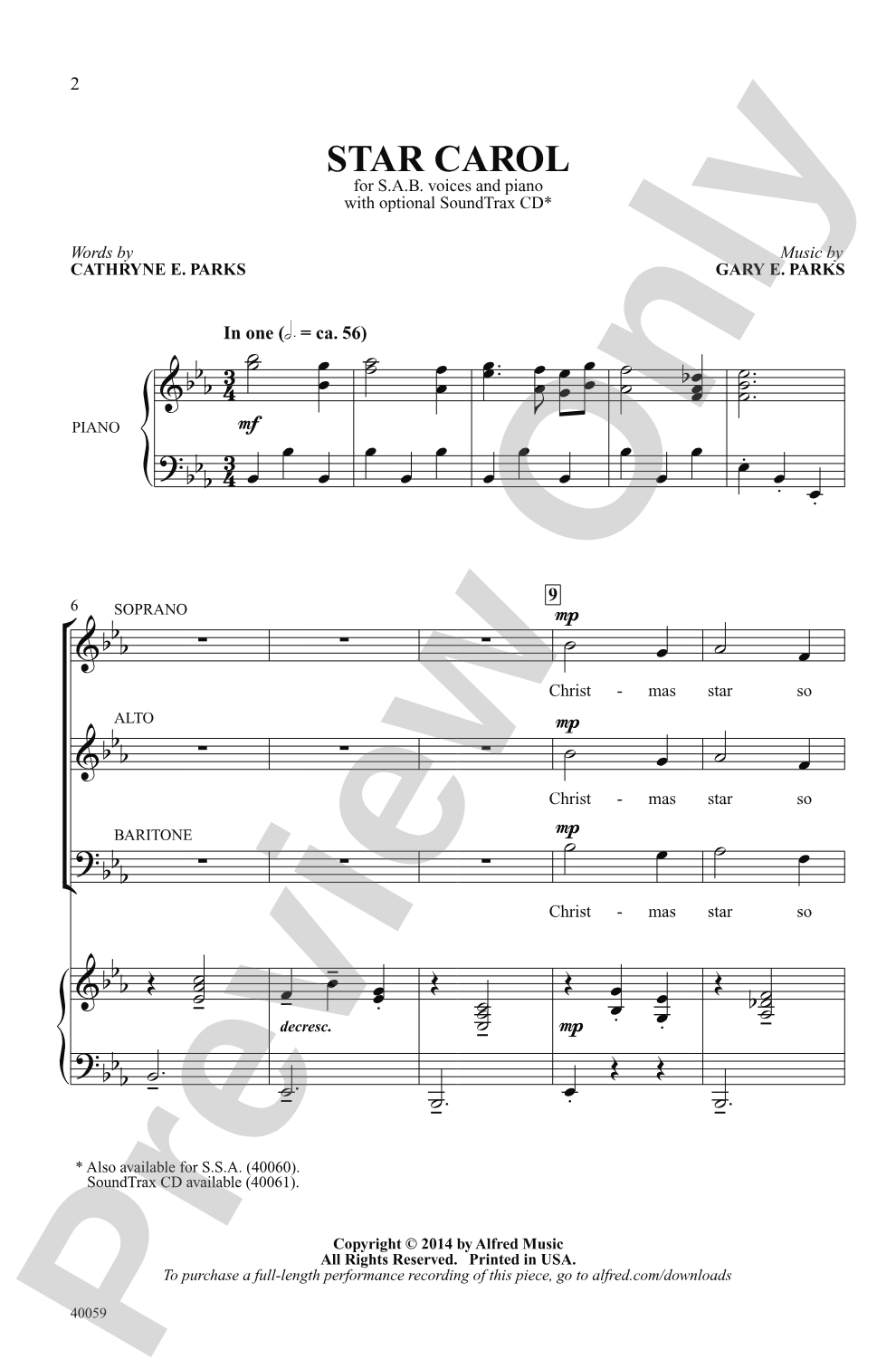

Star Carol: SAB Choral Octavo
Words by Cathryne E. Parks, music by Gary E. Parks
Item: 00-PO-0001772

$1.85
Minimum order quantity: 20 copies
Pickup currently not available
Description
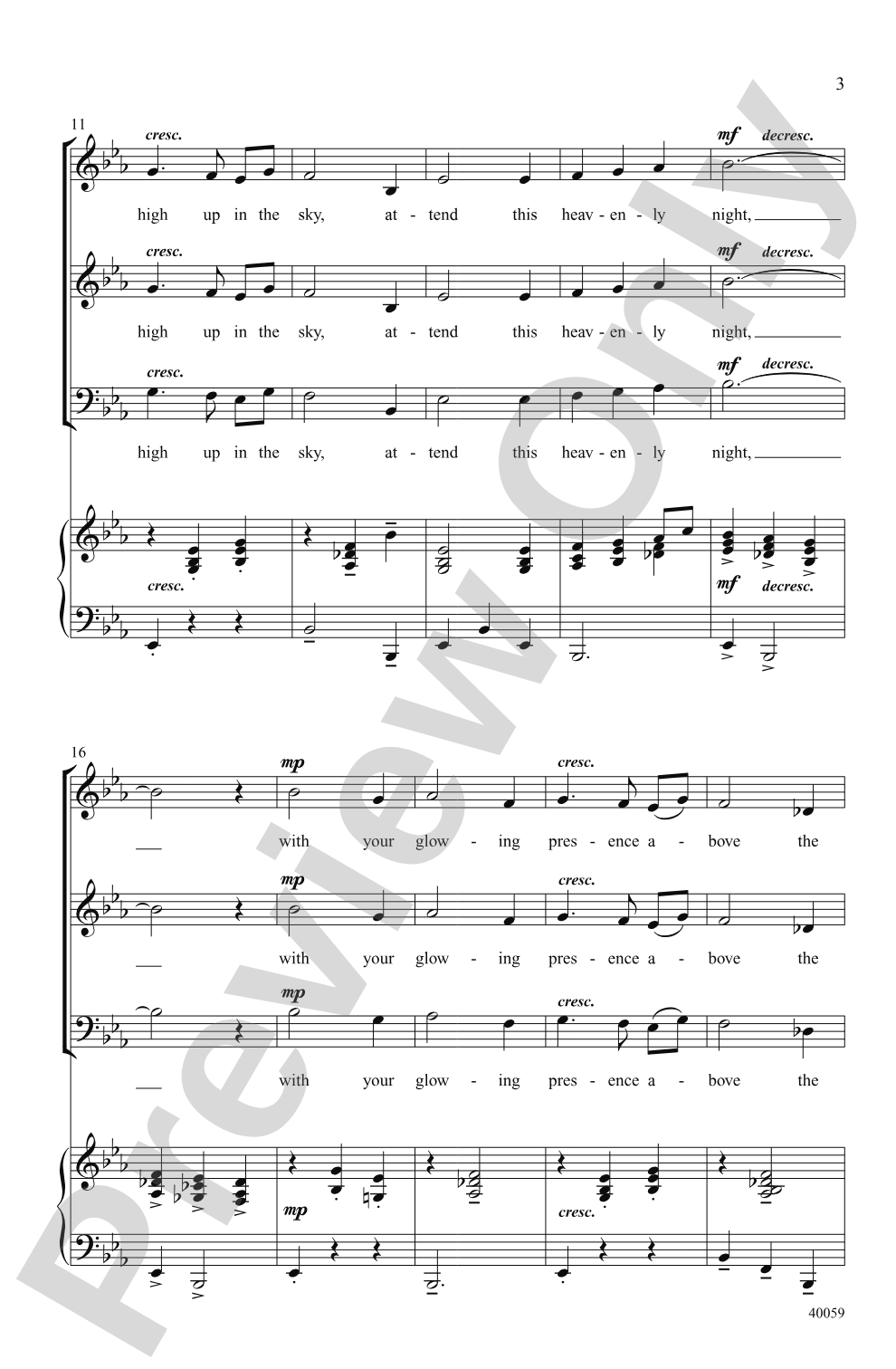
As brilliant as the Christmas star itself, this intriguing three-part mixed or treble piece shines. Sparkling modal harmonies dance over a shimmering 3/4 accompaniment. A verse-chorus form allows us to sing the captivating "Gloria . . . Alleluia" refrain not once, but twice before crescendoing to a glorious coda.


Don't just read it, hear it, play along with it, and watch your students grow with it. In MakeMusic Cloud, Star Carol: SAB Choral Octavo comes alive with professional accompaniment, adjustable tempo, and built-in practice tools that turn solo practice into real progress.
Open in the Player
Jump straight in and assign it today.
Start Your Free Trial
Open this title and explore the full library in minutes.
Sample Audio
1
Audio File
--:--
0:00
0:00
Sample Video
No sample videos found.
Additional Details
Series:
Alfred Choral Designs
Publisher:
Alfred Music
Page Count:
12
SKU:
00-PO-0001772
More about this title
About the Composer: Gary E. Parks
Gary E. Parks is a composer and arranger with deep roots in choral music education. His work spans sacred and secular repertoire, consistently prioritizing accessibility without sacrificing musical sophistication. Parks understands what works in the rehearsal room and what singers actually enjoy performing.
Why we love this
Parks writes with a keen ear for what makes a Christmas piece sing without oversaturating the texture. The modal harmonies feel fresh and unexpected, and the verse-chorus form gives your choir a natural architectural framework that builds momentum toward a satisfying coda. You'll find this strikes the right balance between accessibility and musicianship.
What to expect
Like watching candlelight refracted through crystal. The sparkling accompaniment and modal harmonies create a sense of wonder without sentimentality, and the repeated refrain builds an almost hypnotic quality of joy that crests into celebration by the final coda.
Who it's for
Directors programming Christmas concerts for mixed or treble choirs seeking repertoire that moves beyond conventional harmonic language. The SAB voicing makes it accessible to developing ensembles while remaining musically substantive for more experienced groups.
How to get the most out of it
- Bring out the shimmer of the 3/4 accompaniment in rehearsal by having the piano or keyboard player emphasize the rhythmic lilt rather than playing metronomically. This dance-like quality is essential to the piece's character.
- When the 'Gloria...Alleluia' refrain returns the second time, explore a marked dynamic lift to signal the arrival of the coda. The repetition earns a crescendo.
- Balance your SAB lines carefully in the modal passages. Since modal harmonies can blur traditional chord function, precise intonation and voice independence keep the harmonies translucent rather than muddy.
How to use it
Nest this in a Christmas concert's second half, where audiences have settled into the season's mood. Its luminous character pairs well before or after quieter sacred pieces, allowing you to create emotional variety without losing thematic coherence.
Skills your students will build
- Reading and singing modal harmonies (particularly raised scale degrees that shift harmonic color)
- Balancing three independent voice parts in close harmony
- Interpreting rhythm within 3/4 time with lyrical sensitivity
- Building intensity through a repeating refrain structure across multiple verses
- Responding to dynamic shaping and textural cues in accompaniment