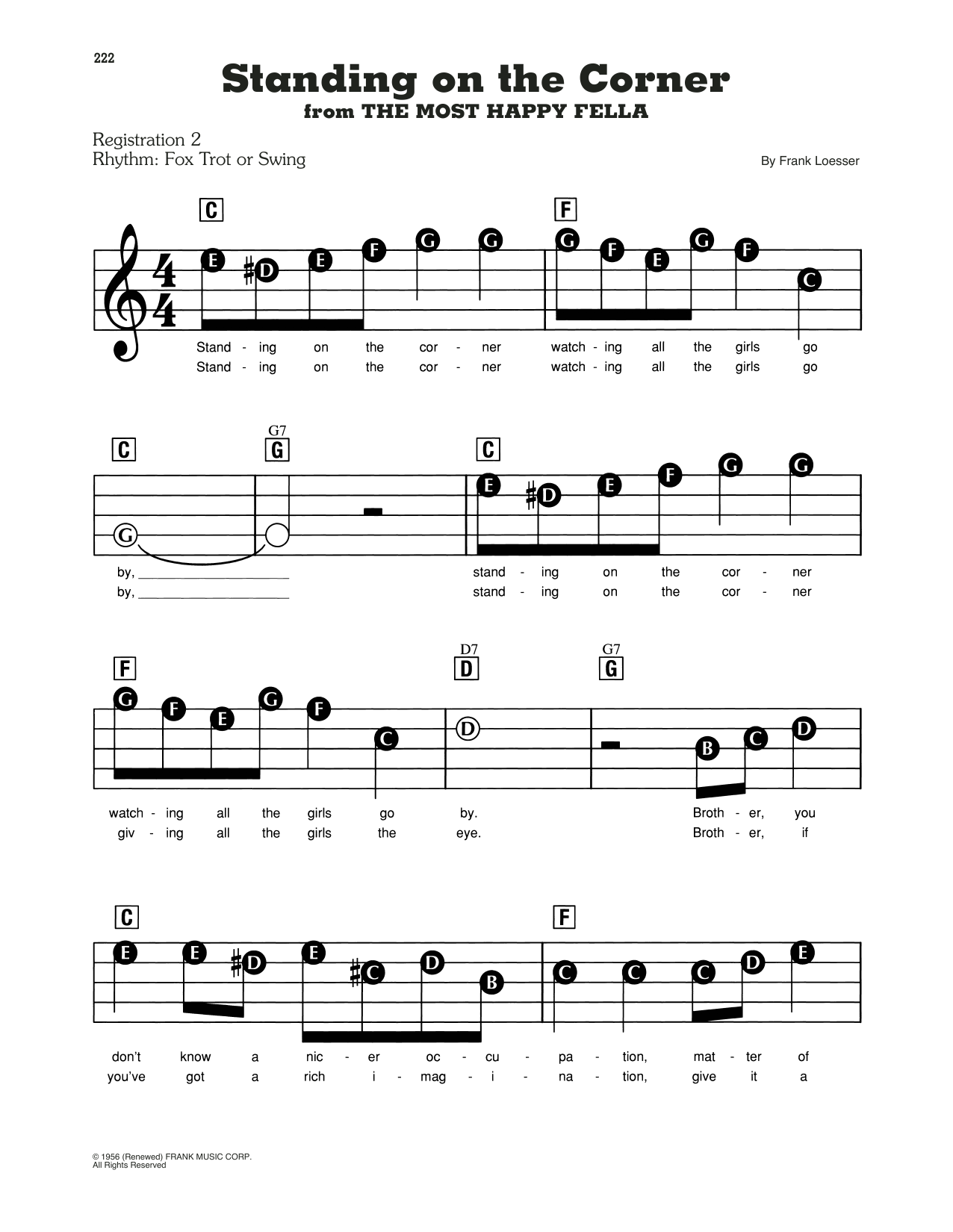
Standing On The Corner (from The Most Happy Fella) Sheet Music Preview

Standing On The Corner (from The Most Happy Fella): E-Z Play Today

As performed by The Four Lads

Item: 35-DS01827250

Digital Download
$4.99
Description

Standing On The Corner (from The Most Happy Fella): E-Z Play Today isn't in MakeMusic Cloud just yet...but it could be. Let us know you'd like to see it, and you'll help shape what comes next. In the meantime, start a free trial and dive into thousands of interactive titles your students can play along with today.

Sample Audio
No sample audio found.
Sample Video
Additional Details
Publisher: Hal Leonard
Page Count: 3
SKU: 35-DS01827250

More about this title

About the Artist: The Four Lads

The Four Lads rose to prominence in the 1950s as one of North America's most successful vocal quartets, known for their polished harmonies and interpretive sensitivity. Their recordings spanned pop standards, novelty numbers, and show tunes, earning them multiple chart hits and establishing them as reliable interpreters of mid-century American song.

Why we love this

This arrangement captures the relaxed charm of a barbershop moment without requiring a full vocal ensemble. The piano writing sits comfortably for intermediate players while preserving the warmth and humor of Loesser's original, making it an accessible way to bring a beloved Broadway standard into your rehearsals or recitals.

What to expect

Warm and conversational, like settling onto a bench to chat with a friend. The music has a gentle swing and an almost wry affection for its subject matter, combining straightforward melody with gentle harmonic color that feels both familiar and quietly sophisticated.

Who it's for

Piano students who enjoy Broadway material and singers preparing a solo or ensemble number. It works equally well as a solo piano piece for recitals or as an accompaniment for vocal performance.

How to get the most out of it

  • Keep the tempo conversational, almost spoken. Resist rushing; let the lyrical content breathe beneath the music.
  • Shape each phrase as if you're telling a story rather than simply playing notes. The humor comes from timing and emphasis, not speed.
  • Balance the melody line so it sits slightly forward in the texture, allowing singers or listeners to follow the narrative clearly.

How to use it

Pair it with other Loesser selections for a Broadway-focused recital set, or feature it as a solo piano interlude between choral numbers. It also works beautifully as an opener, setting a genial, accessible tone for an evening of entertainment.

Skills your students will build

  • Interpreting swing rhythms and jazz inflections in a Broadway context
  • Balancing accompaniment texture with melodic prominence
  • Shaping phrasing through harmonic awareness rather than obvious dynamic changes
  • Working with a straightforward but warm harmonic language typical of mid-century American song

You May Also Like