

Standin' in the Need of Prayer: SATB a cappella Choral Octavo
(Ni Mimi, Oh, Bwana)
Traditional Spiritual / arr. Stacey V. Gibbs
Item: 00-PO-0007478
$2.30
Minimum order quantity: 20 copies
Pickup currently not available
Related Items
Standin' in the Need of Prayer: SATB a cappella Choral Octavo |
$2.30
|
View |
Description
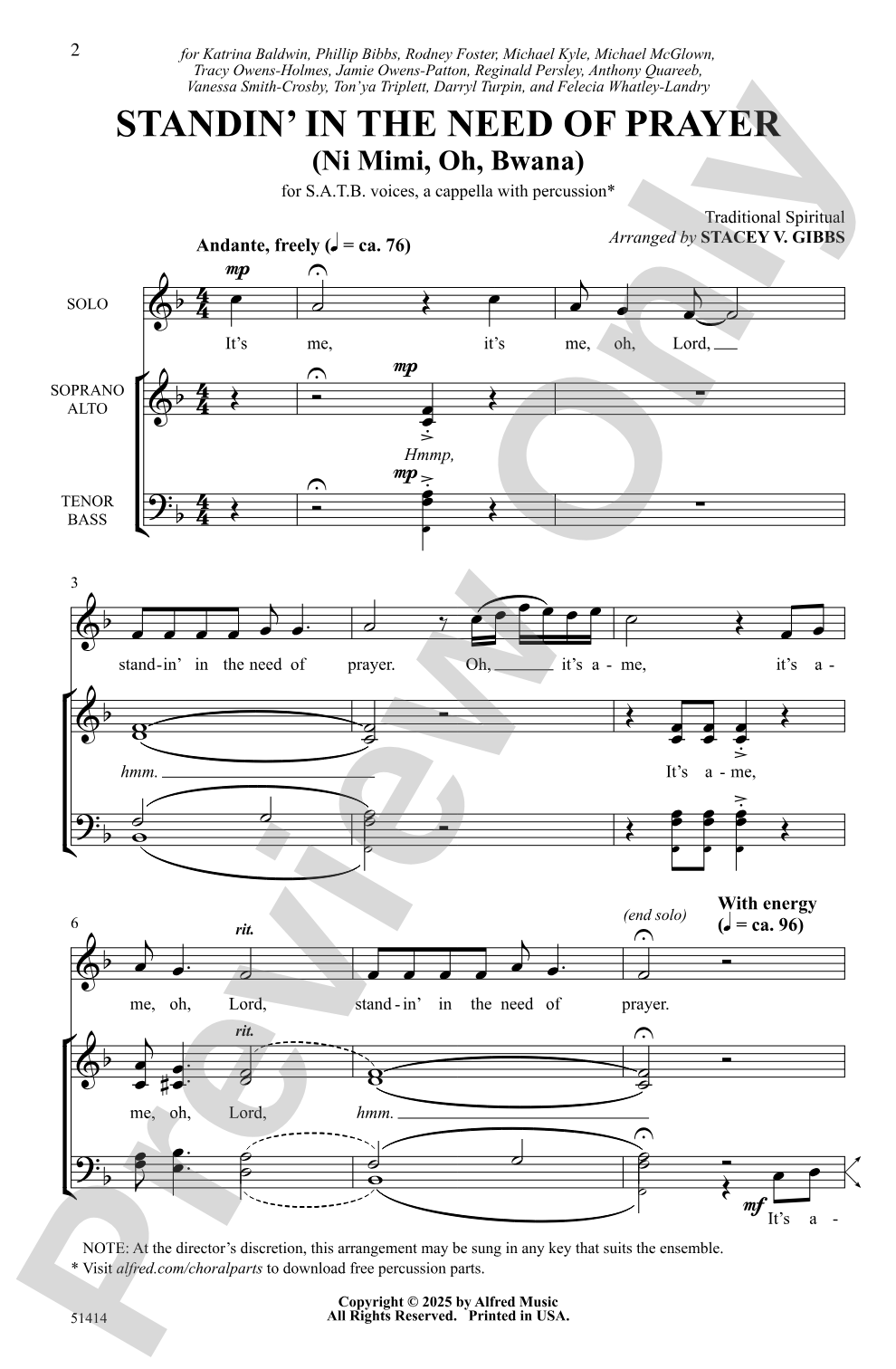
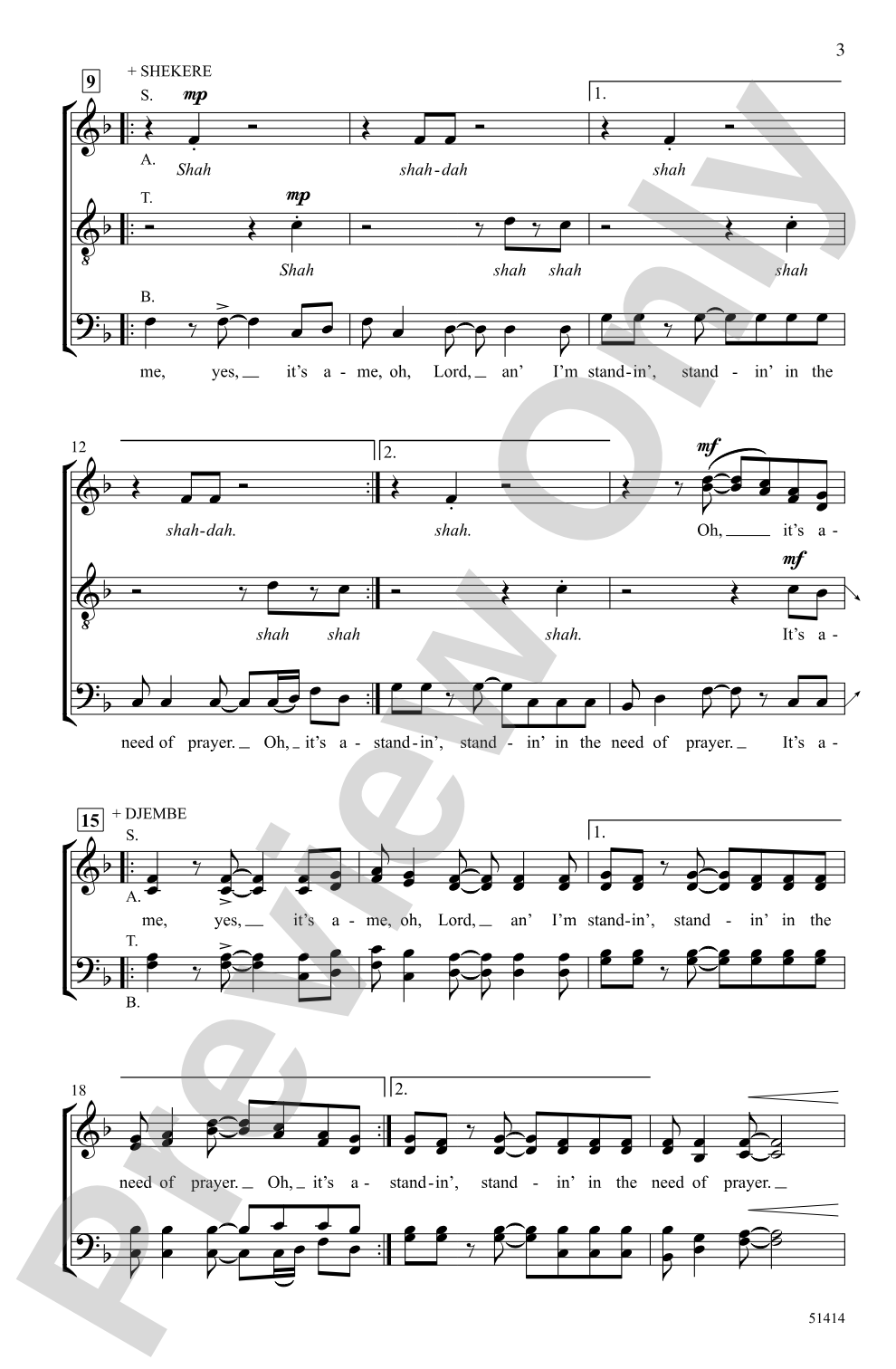
Renowned choral arranger Stacey V. Gibbs offers a vibrant a cappella setting of the beloved spiritual. Opening with a short and expressive solo, the piece quickly breaks into a rhythmic groove featuring lively African percussion with no-nonsense vocal harmonies. One Swahili phrase meaning "It's me, oh, Lord" punctuates the arrangement, which includes a soaring treble trio in the middle, and concludes with an optional mixed-voice descant. Highly recommended for concert, festival, or church use.


Standin' in the Need of Prayer: SATB a cappella Choral Octavo isn't in MakeMusic Cloud just yet...but it could be. Let us know you'd like to see it, and you'll help shape what comes next. In the meantime, start a free trial and dive into thousands of interactive titles your students can play along with today.
Request This Title
Tell us you want it.
Start Your Free Trial
Explore everything that's ready to play right now.
Sample Audio
1
Audio File
--:--
0:00
0:00
Sample Video
Additional Details
Series:
Lawson-Gould
Publisher:
Alfred Music
Page Count:
8
SKU:
00-PO-0007478
More about this title
About the Arranger: Stacey V. Gibbs

Stacey V. Gibbs has built a reputation as one of today's most inventive arrangers of spirituals, known for breathing fresh vitality into these essential works while preserving their emotional core and cultural weight. His arrangements have been performed by ensembles ranging from The King's Singers to the St. Olaf Choir, programmed at ACDA conventions and state festivals nationwide, and featured at the 57th Presidential Inaugural Service. With over 100 published arrangements to his name, Gibbs demonstrates a gift for honoring tradition while making these pieces speak powerfully to contemporary audiences.
Beyond the concert hall, Gibbs serves as a clinician and collaborator on projects addressing social themes through music. His work has appeared on Billboard Classical charts, been commissioned by world-class foundations, and contributed to major choral events including Carnegie Hall's Harmonic Convergence Concert. He continues to shape the landscape of American choral music through both his compositions and his mentorship within the choral community.
Why we love this
Gibbs takes a spiritual that lives in most singers' muscle memory and makes it irresistible to sing again. The rhythmic momentum, the Swahili text moment, and the optional descant give your ensemble multiple entry points for interpretation, while the opening solo and the treble trio spotlight those singers who need a moment in the sun. This is the rare arrangement that works equally well in concert, festival competition, or Sunday service.
What to expect
Energy and authenticity collide. The arrangement opens with an intimate moment of vulnerability, then surges into a driving, grooved celebration that never feels artificial or overstuffed. There's joy in the percussion vocabulary and genuine warmth in the harmonies, all built on the unshakeable foundation of a spiritual that audiences recognize immediately.
Who it's for
This arrangement serves ensembles with solid rhythmic confidence and at least one capable solo vocalist. Community choirs, college and high school groups, and church choirs will find this piece accessible yet musically rewarding.
How to get the most out of it
- Lock the groove early. The rhythmic pocket is what drives this piece, so establish the pulse in rehearsal before worrying about blend or balance. Once the rhythm section (inner voices) owns the foundation, the soloists and treble trio will sit naturally on top.
- Give the opening soloist room to breathe and shape the phrase expressively. This moment sets the emotional tone before the ensemble enters with energy.
- Shape the Swahili phrase with intention. It's a lyrical hinge in the arrangement, so treat it as a moment of reflection rather than momentum.
- Balance the optional descant carefully in the final section. If you include it, the upper voices need to support it without swallowing the main harmonic material below.
How to use it
Program this as a second-half opener when you need to shift the emotional temperature, or use it as a finale that sends people out of the concert with momentum. Festival adjudicators respond well to arrangements that balance accessibility with genuine artistry, making this a strong choice for competition as well as concert.
Skills your students will build
- Singing a cappella with precise intonation in rhythmically complex settings
- Balancing solo and ensemble roles within a single piece
- Navigating syncopated rhythms and grooved vocal lines
- Interpreting text across languages and cultural contexts
- Building ensemble cohesion when no instrumental support is present