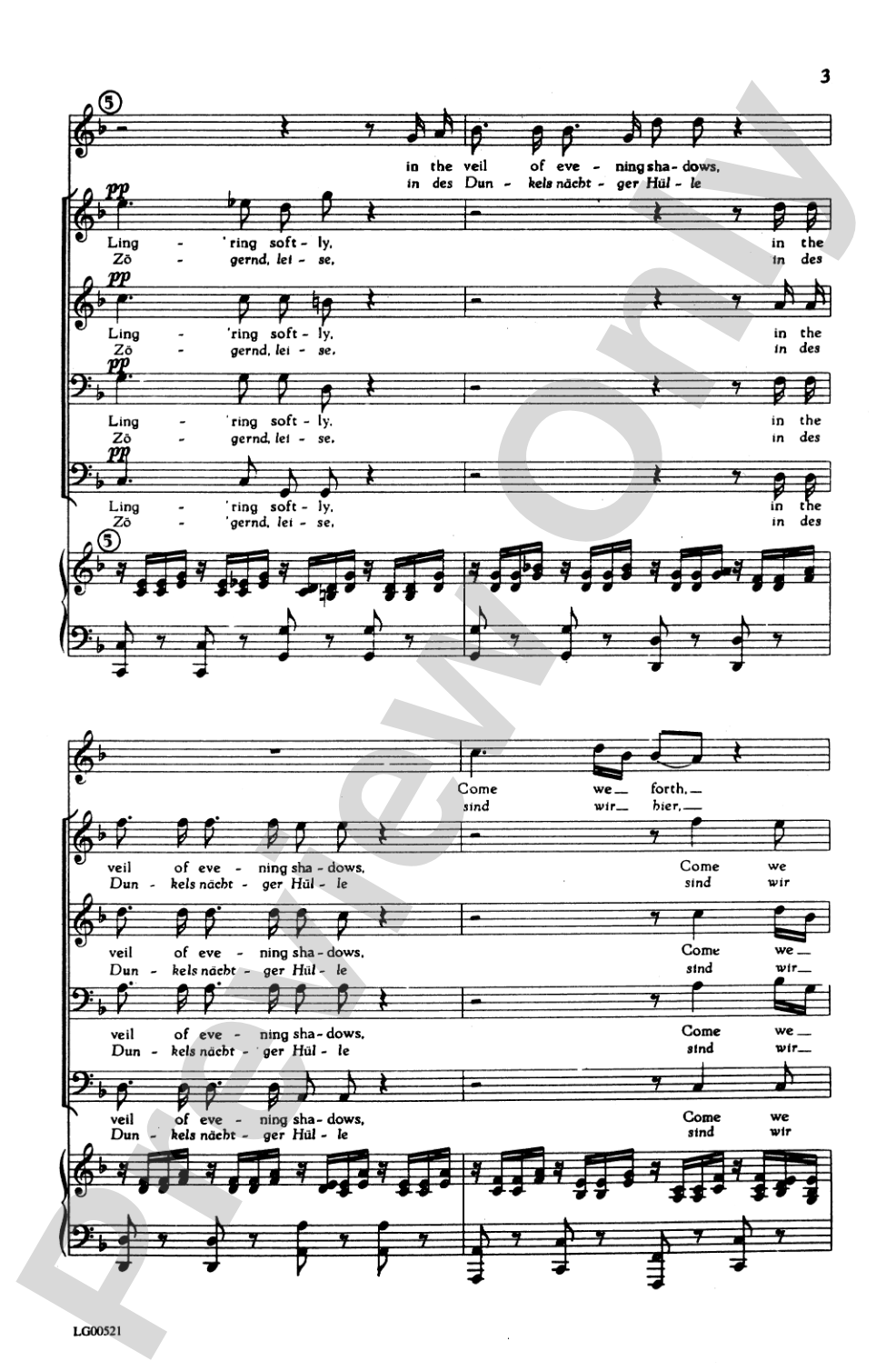
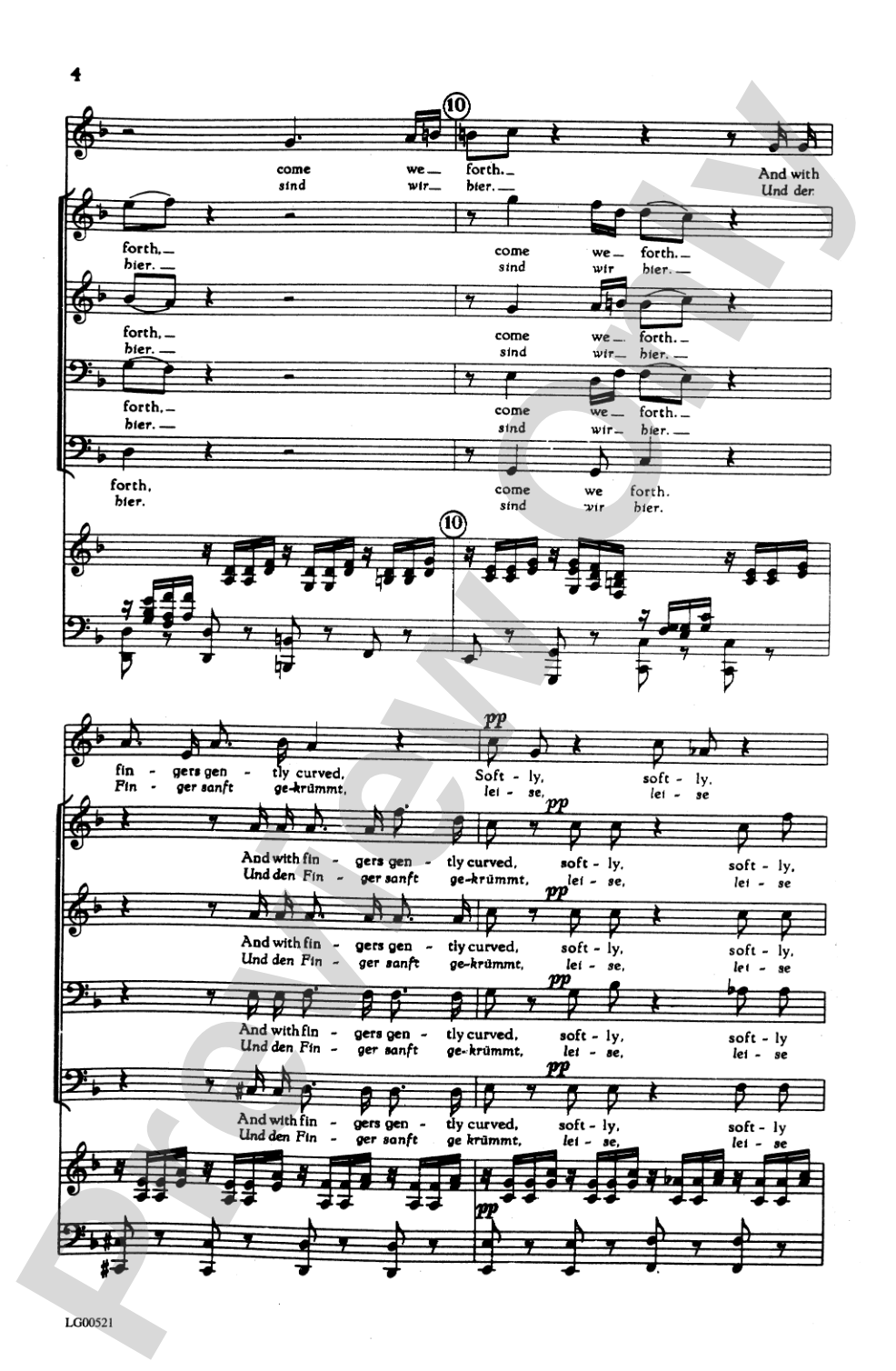
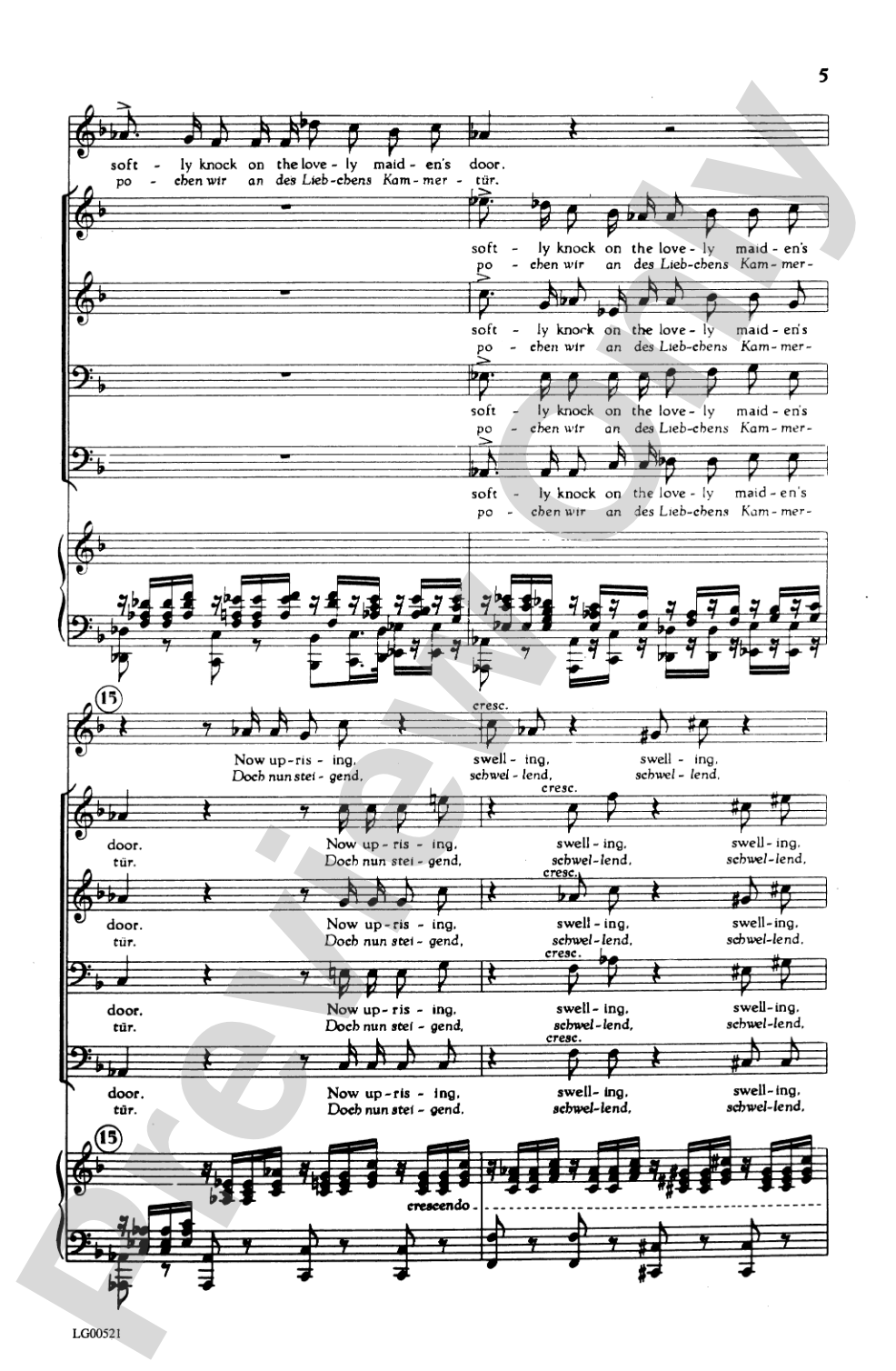
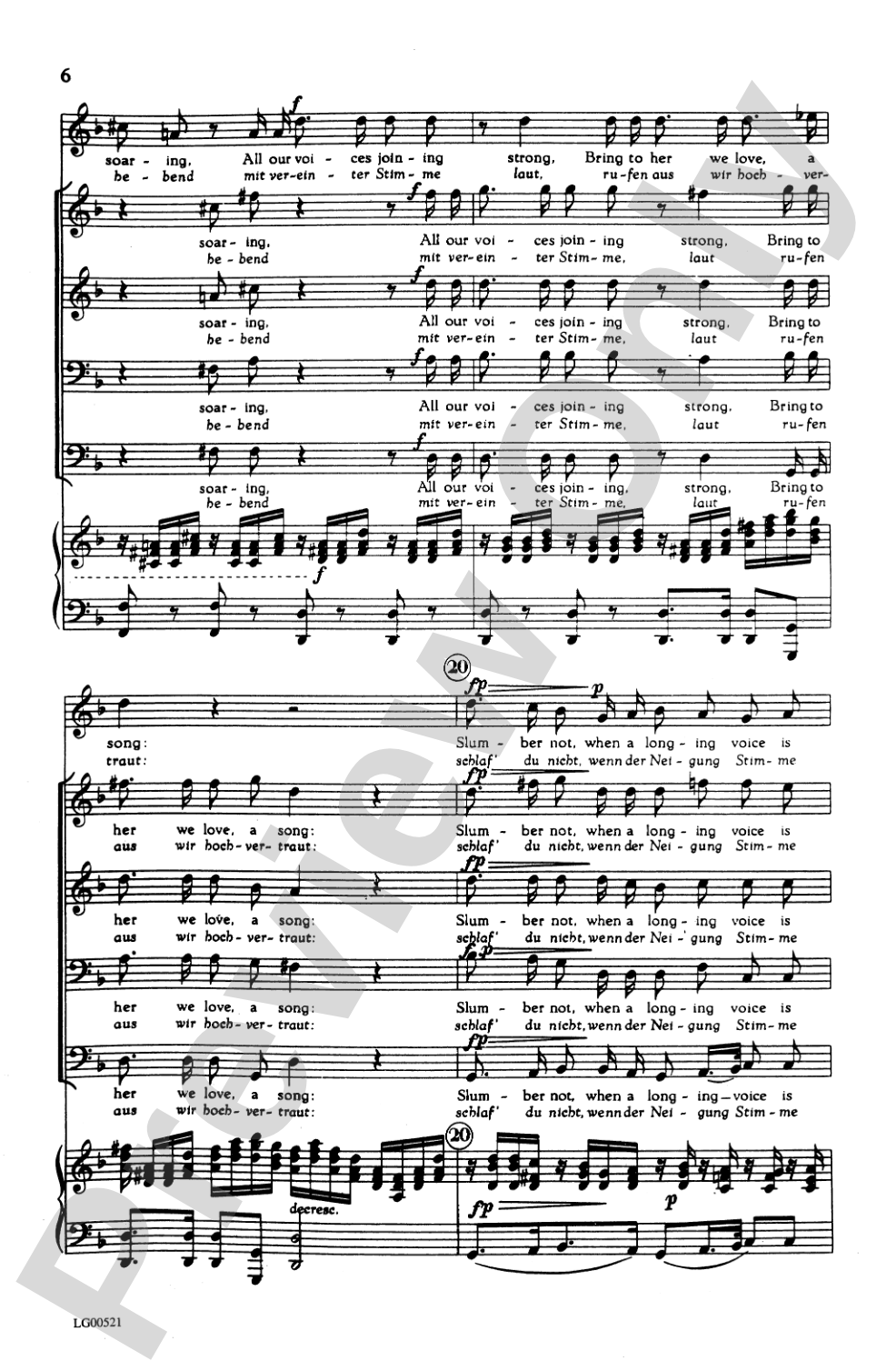
Ständchen (Serenade) Sheet Music Preview

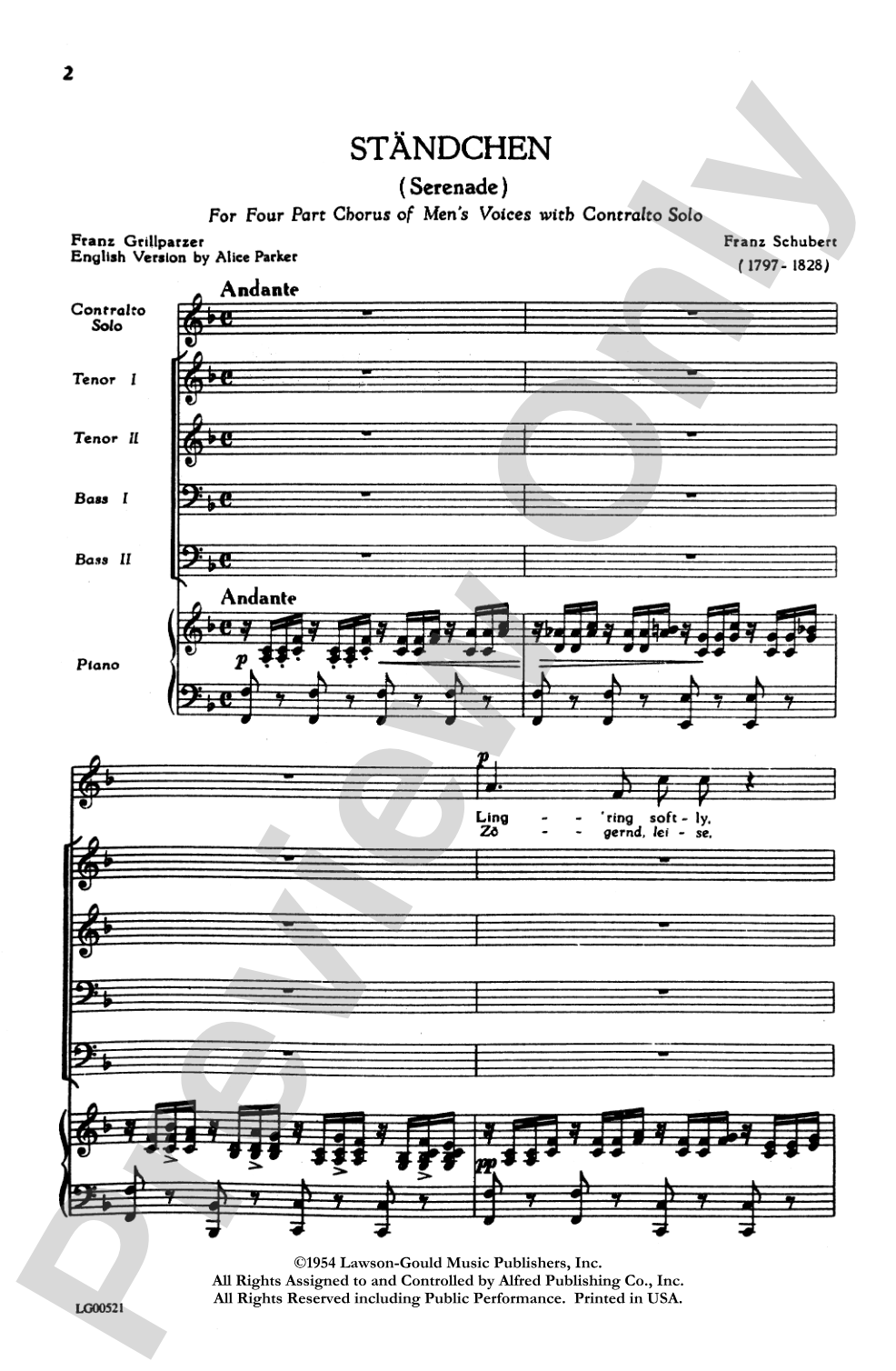
Ständchen (Serenade): TTBB Choral Octavo

By Franz Schubert / ed. Robert Shaw and Alice Parker

Item: 00-PO-0004923

Digital Download
$4.25

Minimum order quantity: 20 copies

Description

Ständchen (Serenade): TTBB Choral Octavo isn't in MakeMusic Cloud just yet...but it could be. Let us know you'd like to see it, and you'll help shape what comes next. In the meantime, start a free trial and dive into thousands of interactive titles your students can play along with today.

Sample Audio
No sample audio found.
Sample Video
Additional Details
Series: Alfred Archive Edition: Lawson-Gould Music Publishers
Publisher: Alfred Music
Page Count: 24
SKU: 00-PO-0004923

More about this title

About the Composer: Franz Schubert

Franz Schubert (1797-1828) was an Austrian composer who bridged the Classical and Romantic eras, writing across nearly every musical genre despite his short life. He composed over 600 works, including nine symphonies, 15 string quartets, and more than 700 songs (Lieder), many of which became foundational to the vocal repertoire.

Schubert's gift for melody and harmonic invention made him one of the most prolific and influential composers in Western music. His choral works, written for both professional and amateur singers, remain central to ensemble literature because they balance accessibility with genuine artistic depth. Many of his pieces have endured for nearly two centuries as staples of concert and educational programming.

Why we love this

Ständchen sits at the intersection of lyrical beauty and dramatic restraint. Schubert's text setting and harmonic language here reward singers who can shape phrases with intention, making it ideal for tenors and basses who want to explore the Romantic sensibility without requiring operatic range or elaborate arranging tricks.

What to expect

Intimate yet assured, this serenade evokes a moment of quiet devotion. Schubert's four-part writing moves with understated elegance, allowing the text to float over shifting harmonies that feel both inevitable and surprising. There is nobility in restraint here.

Who it's for

This octavo suits intermediate to advanced TTBB choirs with solid blend and intonation. It works equally well for collegiate ensembles, community choirs with trained singers, and high school groups with strong tenor and bass sections.

How to get the most out of it

  • Shape the opening phrases with subtle dynamic contours rather than singing at a consistent mezzo-forte; the piece gains depth when each voice part follows its own gentle rise and fall.
  • Balance the four parts so that the lyrical melody remains audible while lower voices provide harmonic weight. Schubert's voice writing is transparent, not thick, so avoid doubling down on bass heaviness.
  • Attend to text clarity, particularly in repeated passages. Enunciate consonants across the full ensemble so that words land together, preventing the serenade from becoming mushy.
  • Work the harmonic rhythm in sectional rehearsals. Schubert's chord changes sometimes move in unexpected ways; when each part understands the harmonic progression independently, intonation stabilizes quickly.

How to use it

Program this as a centerpiece in a concert devoted to Schubert's choral works, or pair it with other 19th-century part-songs to create a thematic block on serenades and love songs. Its moderate length and accessible character also make it valuable for demonstrating Romantic-era male chorus repertoire to students new to this period.

Skills your students will build

  • Sustaining legato lines across phrase boundaries
  • Reading four independent voice parts with secure intonation
  • Shaping Romantic-era harmonic progressions expressively
  • Balancing lyrical melody with supporting harmonic voices
  • Text painting and poetic interpretation in German language singing

You May Also Like