Stand By Me (arr. Ben See) Sheet Music Preview

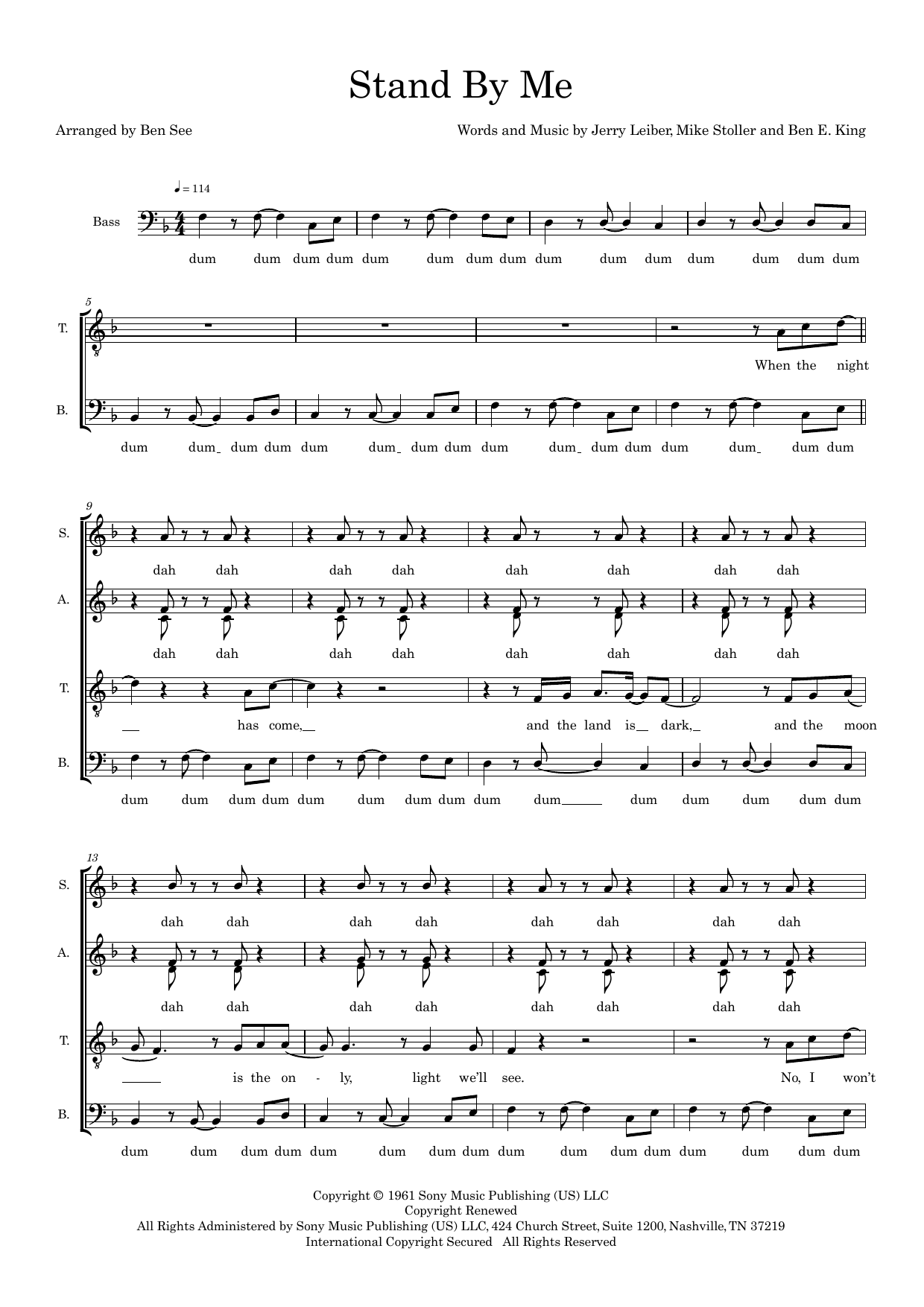
Stand By Me (arr. Ben See): SATB Choral Octavo

As performed by Ben E. King / Arranged by Ben See

Item: 35-DS01322846

Digital Download
$1.99
Description

Stand By Me (arr. Ben See): SATB Choral Octavo isn't in MakeMusic Cloud just yet...but it could be. Let us know you'd like to see it, and you'll help shape what comes next. In the meantime, start a free trial and dive into thousands of interactive titles your students can play along with today.

Sample Audio
No sample audio found.
Sample Video
Additional Details
Publisher: Hal Leonard
Page Count: 7
SKU: 35-DS01322846

More about this title

About the Artist: Ben E. King

Ben E. King rose to prominence in the 1950s and 1960s as the lead vocalist of The Drifters, where his smooth baritone defined the sound of early rhythm and blues. He later established himself as a solo artist, bringing emotional depth and accessibility to every performance. His signature composition, "Stand By Me," became a cross-generational anthem that endures in popular culture and educational settings alike.

Why we love this

Ben See's arrangement respects the timeless melody while creating genuine four-part writing that gives each voice meaningful material. This is a piece your singers will recognize instantly, which means they arrive already invested in nailing the performance. Programming this alongside spirituals or other folk-rooted classics shows how a pop standard sits comfortably within a thoughtful choral narrative.

What to expect

Warm, grounded, and deeply human. The arrangement preserves the song's quiet confidence while deepening it with harmonic support that feels earned rather than ornamental. Singing this together creates the sense of solidarity the lyric promises.

Who it's for

This arrangement serves choirs at all levels, from community groups to high school and college ensembles. It works equally well for groups seeking accessible contemporary material with emotional weight and those wanting to bridge pop and choral traditions without compromising musicianship.

How to get the most out of it

  • Shape the phrases around the original melody's contour rather than measure-by-measure harmonic changes. The song breathes through longer musical thoughts, not frequent shifts in articulation or dynamics.
  • Balance the bass line carefully so it propels the harmony without overwhelming the soprano melody. A supported but never aggressive bass keeps the arrangement transparent.
  • Let the familiarity of the tune work for you. Your singers already know how this should feel, so direct their focus toward blend and intonation rather than learning the basic shape.

How to use it

Consider placing this in a spring concert that celebrates standards and timeless songs, pairing it with other pieces rooted in American popular song or folk traditions. Its modest length and emotional clarity make it an effective anchor piece that audiences connect with immediately, and it programs well alongside either lighter pop arrangements or more formal repertoire.

Skills your students will build

  • Singing sustained, lyrical lines with consistent tone quality
  • Balancing four-part homophonic harmony while maintaining phrase direction
  • Connecting to familiar material while maintaining musical independence within the ensemble
  • Managing vibrato and resonance in a modern harmonic context

You May Also Like