Stand By Me Sheet Music Preview

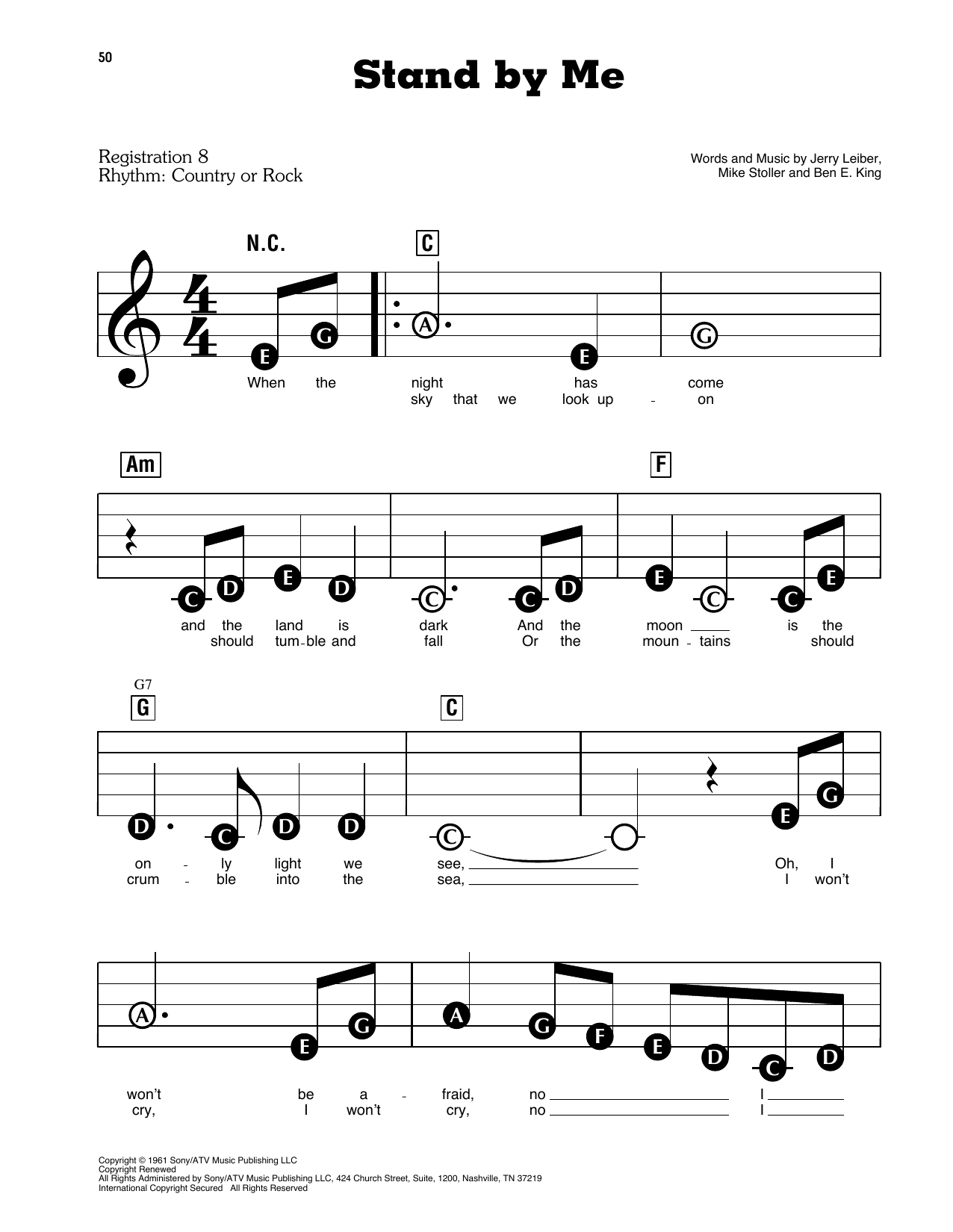
Stand By Me: E-Z Play Today

As performed by Ben E. King

Item: 35-DS01040669

Digital Download
$4.99
Description

Stand By Me: E-Z Play Today isn't in MakeMusic Cloud just yet...but it could be. Let us know you'd like to see it, and you'll help shape what comes next. In the meantime, start a free trial and dive into thousands of interactive titles your students can play along with today.

Sample Audio
No sample audio found.
Sample Video
Additional Details
Publisher: Hal Leonard
Page Count: 2
SKU: 35-DS01040669

More about this title

About the Artist: Ben E. King

Ben E. King (1938-2015) was an American singer and songwriter whose deep, soulful baritone defined the sound of 1960s soul and R&B. Born Benjamin Earl Nelson, he rose to prominence as the lead voice of The Drifters before launching a successful solo career that produced some of the era's most enduring ballads. His influence extends across genres, with his compositions covered by everyone from classic soul singers to contemporary pop and rock artists.

In music education, King's work serves as a touchstone for understanding vocal phrasing, emotional restraint, and the power of a simple, strong melody. "Stand By Me" exemplifies his gift for writing songs that sound effortless but require genuine musicality to perform well.

Why we love this

This arrangement captures the emotional directness that makes the original so teachable. Students immediately grasp the song's architecture because King's melody does the heavy lifting, leaving room for pianists to focus on developing touch, phrasing, and accompaniment texture rather than wrestling with technical complexity.

What to expect

Warm, grounded, and thoroughly human. The song settles into your hands like a conversation between old friends, asking nothing flashy and delivering everything essential. There's a gentle urgency here, a reassurance wrapped in minor key restraint.

Who it's for

Student pianists exploring pop and soul repertoire, particularly those ready to move beyond simplified lead sheets but not yet equipped for jazz voicings. Teachers building programs that connect classical piano technique to contemporary music and cultural context.

How to get the most out of it

  • Sit back into the accompaniment figure rather than rushing it; the groove depends on slight space between your hand positions.
  • Build dynamics gradually across the verse to suggest the vocal line's natural arc without playing the melody itself.
  • Keep the left hand consistent in feel even when moving between chord shapes; this underpins the song's emotional stability.
  • Resist adding embellishment to the melody if you play it. King's original performance gains power through restraint.

How to use it

Pair this with other soul standards to create a cohesive set exploring how melody and accompaniment interact across genres. It works equally well in a casual student recital, a pop music unit, or a program celebrating African American musical contributions to modern songwriting.

Skills your students will build

  • Sustaining a steady accompaniment groove while maintaining musical forward motion
  • Navigating chord changes smoothly in a soul/R&B harmonic context
  • Balancing melody and accompaniment textures to support a vocalist
  • Developing touch and tone control within a limited dynamic range

You May Also Like