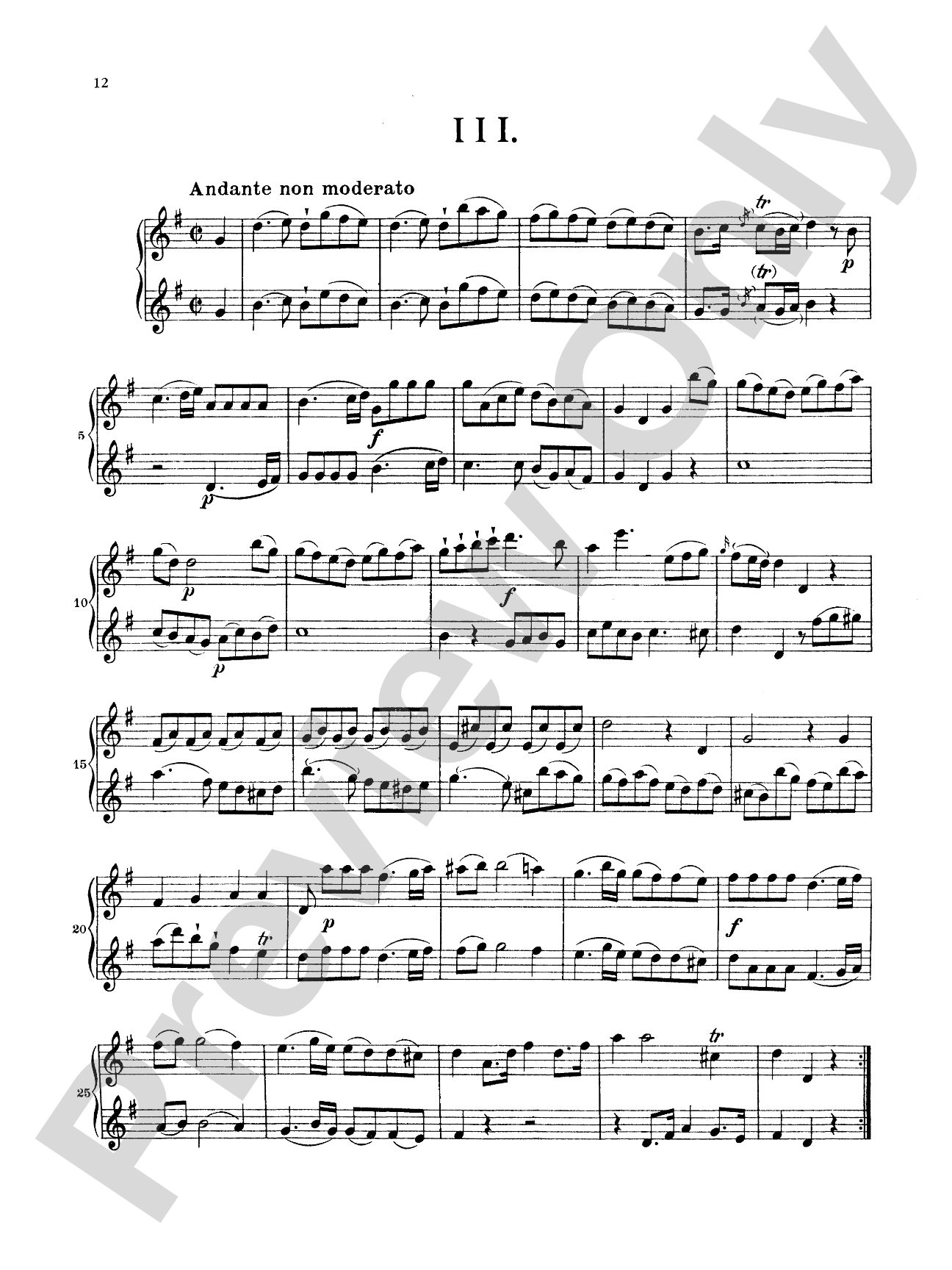
Stamitz: Three Duets, Op. 27 (for two violins or two flutes) Sheet Music Preview

Stamitz: Three Duets, Op. 27 (for two violins or two flutes)

By Johann Stamitz

Item: 00-PC-0010832

Digital Download
$0.99
Description
A collection of string duets for two Violins or two Flutes, composed by Johann Stamitz.

Don't just read it, hear it, play along with it, and watch your students grow with it. In MakeMusic Cloud, Stamitz: Three Duets, Op. 27 (for two violins or two flutes) comes alive with professional accompaniment, adjustable tempo, and built-in practice tools that turn solo practice into real progress.

Sample Audio
No sample audio found.
Sample Video
Additional Details
Series: Kalmus Edition
Publisher: Alfred Music
Page Count: 16
SKU: 00-PC-0010832
Instrumentation: 2 Violins or 2 Flutes

More about this title

About the Composer: Johann Stamitz

Johann Stamitz (1717-1757) was a Bohemian violinist and composer who fundamentally shaped the early Classical symphony and string writing. As concertmaster at the Mannheim court, he led one of Europe's most influential orchestras and pioneered techniques that would define instrumental music for decades: dynamic contrasts, sustained melodic lines, and virtuosic passagework that challenged performers to balance technical display with musical expression.

Stamitz's chamber works, including these duets, distill the elegance and clarity of his larger compositions into intimate settings. His writing for strings combines the harmonic sophistication of the Classical period with the pedagogical clarity that made his music essential training for professional musicians of his era. Teachers and students valued his duets as models of balanced writing where both parts remain equally engaging.

Why we love this

These duets offer genuine dialogue rather than first-part-dominance writing. Each player gets a chance to lead, accompany, and engage with material that sits comfortably on the instrument while still sounding cultivated and compositionally purposeful. They work beautifully in studio lessons, chamber coaching, or contests because they demand listening and partnership without requiring advanced students to tackle concerto-level complexity.

What to expect

Stamitz's duets breathe with the refined courtesy of 18th-century court music. Elegant phrases unfold at a conversational pace, with moments of gentle brilliance that never overwhelm the line. There's a quality of natural ease here, as though two practiced musicians are thinking aloud together rather than performing for an audience.

Who it's for

These duets suit intermediate students who have solid intonation and can manage Classical-era articulation without struggling through the notes. They're equally valuable for advancing players preparing for chamber music festivals or seeking engaging repertoire for lesson recitals. Flutists and violinists can pair these duets as part of the same practice sequence, expanding the available repertoire for each instrument.

How to get the most out of it

  • Balance the texture so that whoever carries the melody feels supported by the other part rather than shadowed. Stamitz's accompaniment figures are often as important as the melody they frame.
  • Shape phrases with attention to harmonic rhythm. Classical-era duets often reveal their structure through how chords move; emphasizing these moments clarifies the music's forward motion.
  • Align vibrato carefully between players. These intimate textures show any mismatch in tone production immediately, so discuss vibrato speed and intensity early in rehearsal.
  • Take time with the ornaments. Stamitz used trills, mordents, and appoggiaturas as compositional statements, not decoration. Their placement often controls the phrasing.

How to use it

These work excellently in chamber concerts or student recitals where you want to showcase maturity without demanding the virtuosity of later Romantic duets. Pair them with a single-line Bach sonata and a modern duet to show historical range, or build an entire early music recital around Stamitz and his contemporaries. They're also ideal for youth orchestra or chamber group sectional warm-ups, offering meaningful repertoire that builds ensemble skill.

Skills your students will build

  • Leading and accompanying fluidly (trading melodic roles mid-phrase)
  • Harmonic listening and voice independence
  • Classical articulation and phrasing (period-appropriate style)
  • Intonation accuracy in diverse harmonic contexts
  • Ornament execution (trills, mordents, appoggiaturas)
  • Ensemble balance and blend at the intimate duet scale

You May Also Like