
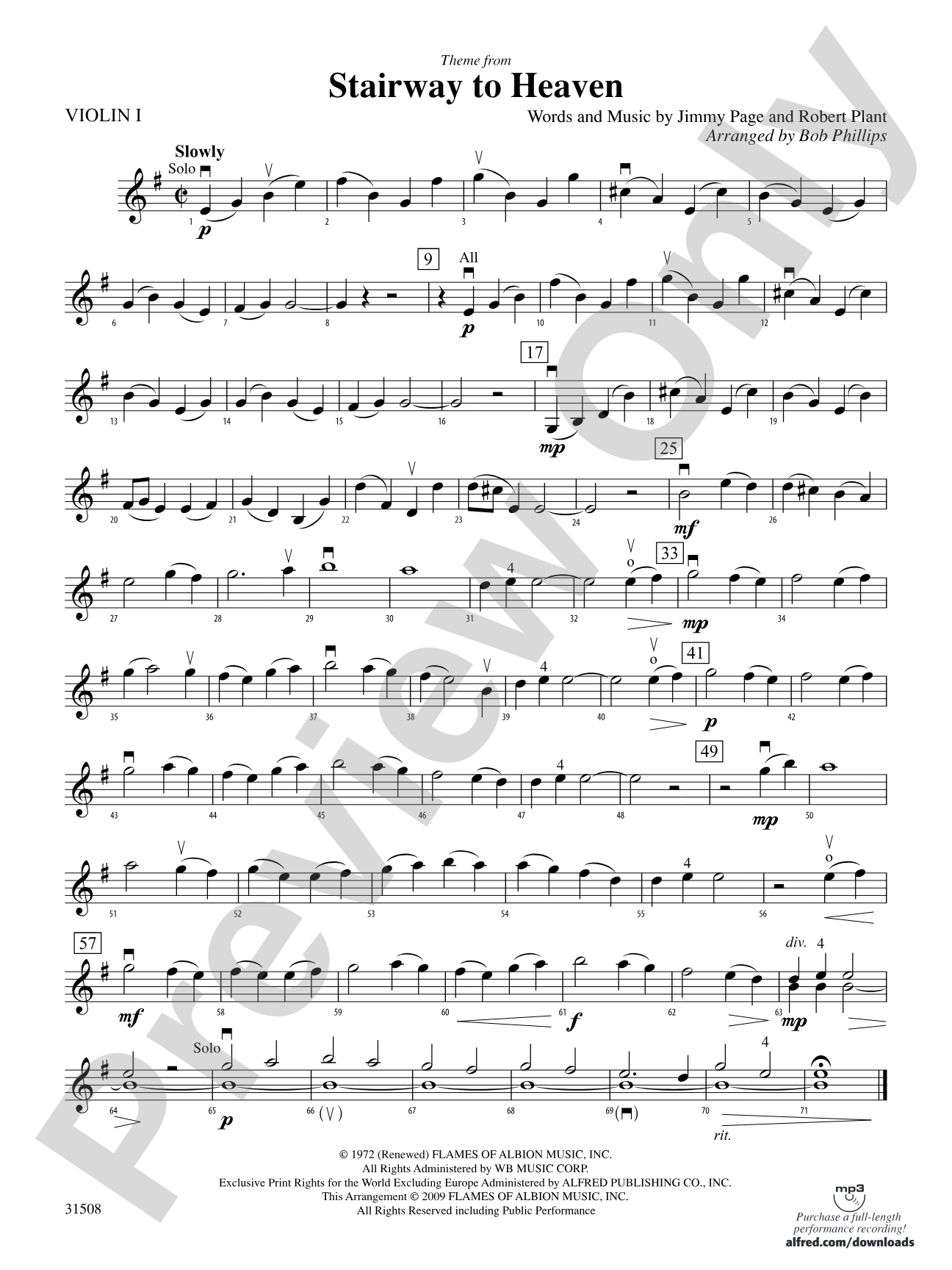

Stairway to Heaven, Theme from: 1st Violin
As performed by Led Zeppelin
Words and music by Jimmy Page and Robert Plant / arr. Bob Phillips
Grade: 2
Item: 00-PC-0014840_VN1
$5.99
Pickup currently not available
Description
Simple rock! The essence of this timeless classic, perfectly set for young players or an easy play-down by a more advanced group. The bass section sets the stage with the familiar haunting descending bass line while the other sections trade the melody and a cool accompaniment part. In G Major, with no shifting, this piece provides a great opportunity to practice slurs and string crossings. (2:34) This title is available in MakeMusic Cloud.


Don't just read it, hear it, play along with it, and watch your students grow with it. In MakeMusic Cloud, Stairway to Heaven, Theme from: 1st Violin comes alive with professional accompaniment, adjustable tempo, and built-in practice tools that turn solo practice into real progress.
Open in the Player
Jump straight in and assign it today.
Start Your Free Trial
Open this title and explore the full library in minutes.
Sample Audio
1
Audio File
--:--
0:00
0:00
Sample Video
No sample videos found.
Additional Details
Series:
Pop Beginning String Orchestra
Publisher:
Alfred Music
Page Count:
72
SKU:
00-PC-0014840_VN1
More about this title
About the Artist: Led Zeppelin
Led Zeppelin fundamentally reshaped rock music in the 1970s, blending blues, folk, and mystical themes into a sound that defined an era. Their influence extends far beyond the recording studio into music education, where their compositions have become touchstones for engaging young musicians in contemporary repertoire.
Jimmy Page's innovative guitar work and compositional vision, combined with Robert Plant's distinctive vocal presence, created songs that transcend genre boundaries. For student musicians, Zeppelin's catalog offers accessible entry points into rock music history while building appreciation for sophisticated arranging and dynamic arrangement structures.
Why we love this
This arrangement captures the iconic opening that students immediately recognize, which builds genuine excitement about coming to rehearsal. Bob Phillips strips away the complexity while preserving what makes the piece unmistakable, giving Grade 2 players real substance to sink their teeth into rather than a simplified knockoff.
What to expect
From the opening moment, this piece establishes a moody, hypnotic energy through its descending bass pattern. The melody floats mysteriously above a rock foundation, creating a sonic landscape that feels both intimate and powerful, drawing listeners into the haunting character that made the original unforgettable.
Who it's for
String orchestras at the Grade 2 level will find this arrangement exactly calibrated for their abilities, but advanced groups can use it as a quick win that keeps energy high during programming. Directors seeking repertoire that genuinely excites young string players while building fundamental skills will return to this repeatedly.
How to get the most out of it
- Balance the descending bass line so it anchors the entire texture without overwhelming the melody sections above it. This foundational element deserves clarity and control from your lowest strings.
- Shape the slurs with intention; resist rushing through them. Let students feel how the legato connects phrases while maintaining the rock groove underneath.
- Mark where melody passes between sections (violin to viola to cello) in rehearsal so the handoffs feel seamless and the tune never sounds fragmented.
- Keep the accompaniment parts energized and rhythmically locked. The magic happens when support voices maintain steady pulse and allow the melody to breathe on top.
How to use it
Program this early in a concert to hook the audience immediately with a recognizable classic, or use it as a palate cleanser between heavier classical works to demonstrate your ensemble's versatility. It pairs beautifully with other contemporary titles in the Pop Beginning String Orchestra series or stands alone as a crowd-pleasing anchor piece.
Skills your students will build
- String crossing between adjacent voices while maintaining line integrity
- Legato slurs with rhythmic precision in a rock context
- Bass line independence and foundational support role awareness
- Melodic trading between sections with clear entrances and phrase ownership
- Simultaneous rhythm section coordination with lyrical melody parts