
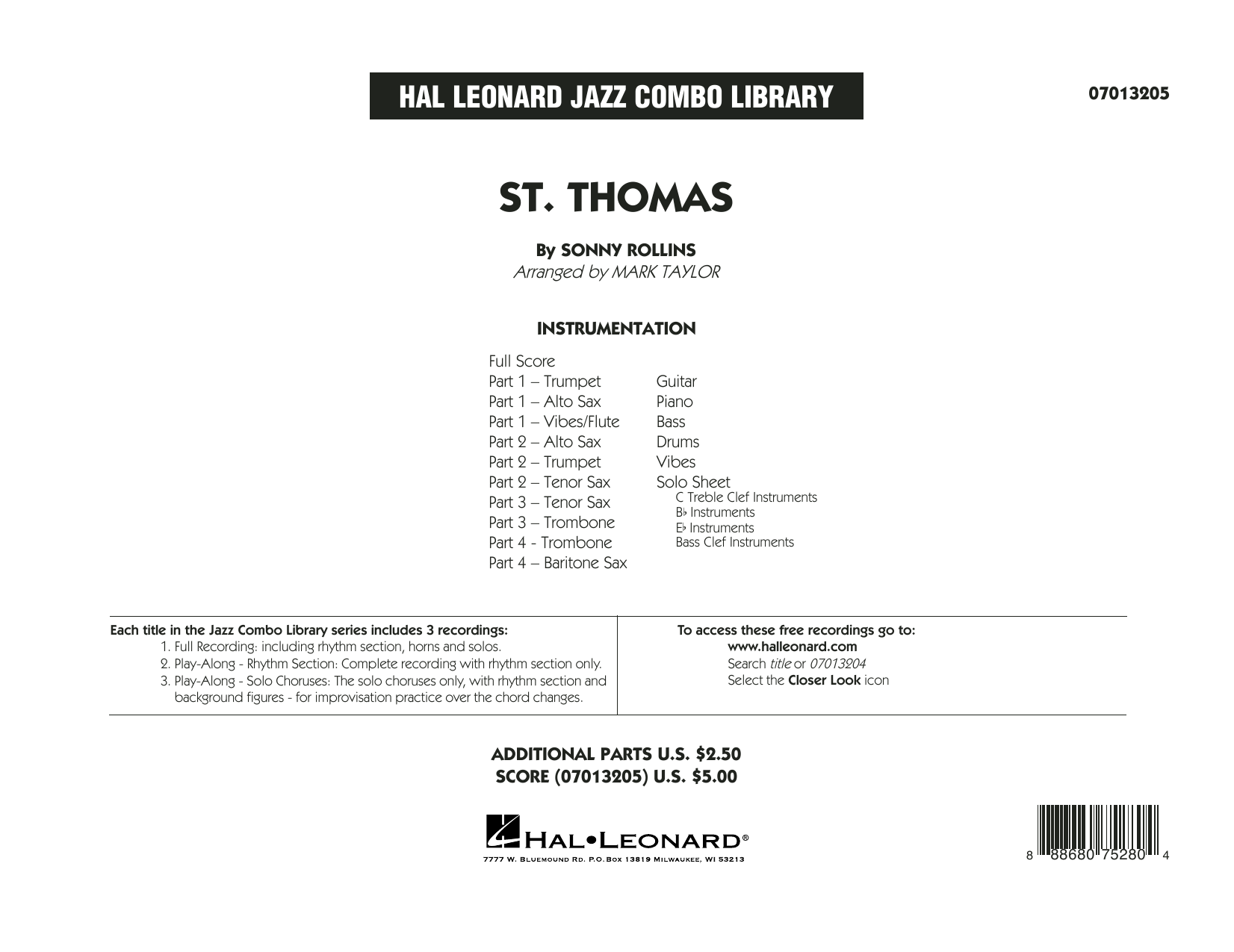

St. Thomas (arr. Mark Taylor): Jazz Ensemble Conductor Score & Parts
As performed by Sonny Rollins / Arranged by Mark Taylor
Grade: 4
Item: 35-PK00430011
$40.00
Pickup currently not available
Buy Extra Parts (Digital PDF Download)
Parts Added to Cart!
Description
Uptempo Latin style.
Scored for 4 horns with flexible instrumentation, plus rhythm section. Background figures and ensemble soli section more than just "head charts"
Recordings include separate "rhythm section only" tracks


St. Thomas (arr. Mark Taylor): Jazz Ensemble Conductor Score & Parts isn't in MakeMusic Cloud just yet...but it could be. Let us know you'd like to see it, and you'll help shape what comes next. In the meantime, start a free trial and dive into thousands of interactive titles your students can play along with today.
Request This Title
Tell us you want it.
Start Your Free Trial
Explore everything that's ready to play right now.
Sample Audio
No sample audio found.
Sample Video
No sample videos found.
Additional Details
Publisher:
Hal Leonard
SKU:
35-PK00430011
More about this title
About the Artist: Sonny Rollins
Sonny Rollins stands as one of jazz's most formidable tenor saxophonists, a musician whose improvisational command and harmonic sophistication shaped the language of modern jazz. His career, spanning from the 1940s forward, established him as a bandleader and composer whose themes became standards in the jazz repertoire, performed and reinterpreted by ensembles at every level.
For educators, Rollins matters because his compositional voice is direct and memorable. His melodies sit comfortably in the jazz ensemble idiom, giving student players access to authentic material that rewards focused rehearsal and invites genuine interpretation.
Why we love this
Mark Taylor's arrangement transforms this standard into genuine ensemble writing rather than a lead sheet backdrop. The horn section voicings sit logically for young players, the rhythm section parts include recorded cues that make independence easier to build, and the separate rhythm-only tracks let you lock the ensemble groove before adding solo figures.
What to expect
Propulsive and buoyant. The uptempo Latin feel creates immediate forward motion, drawing the ensemble into the kind of groove that makes rehearsal contagious. Solos pop against the steady, confident backgrounds, and the written figures give everyone something real to play rather than vamp rhythms.
Who it's for
Grade 4 jazz ensembles with developing section cohesion and at least one capable tenor or alto soloist. This works equally well for advancing high school groups or community college ensembles who want a straightforward, swinging vehicle that doesn't require extensive harmonic sophistication from the ensemble.
How to get the most out of it
- Start with the rhythm section recordings as your foundation. Run the piano, bass, and drums independently until they lock the shuffle feel convincingly, then layer in the horn section.
- The horn voicings benefit from balance work in sectionals. Ensure the fourth horn sits in the ensemble without overpowering the top line.
- Emphasize the Latin pocket over strict metronomic clicking. Rollins's music breathes, so allow your rhythm section to anticipate and lean into the groove naturally.
- Soloist preparation should focus on motivic development rather than scalar running. Have soloists listen to the original and identify which phrases Rollins returns to across his choruses.
How to use it
Perfect for a winter or spring concert where you want to showcase your ensemble's rhythmic maturity without shifting into a different stylistic world. Pair it with slower ballads to demonstrate range, or stack it alongside other Taylor-arranged standards to build a cohesive set.
Skills your students will build
- Reading and executing Latin rhythms in ensemble context
- Voice leading within jazz chord changes
- Balancing ensemble soli against background figures
- Listening to and responding to soloist phrasing
- Maintaining a consistent groove under tempo changes and soloist liberties
- Dynamics and tone color within a jazz ensemble sound