
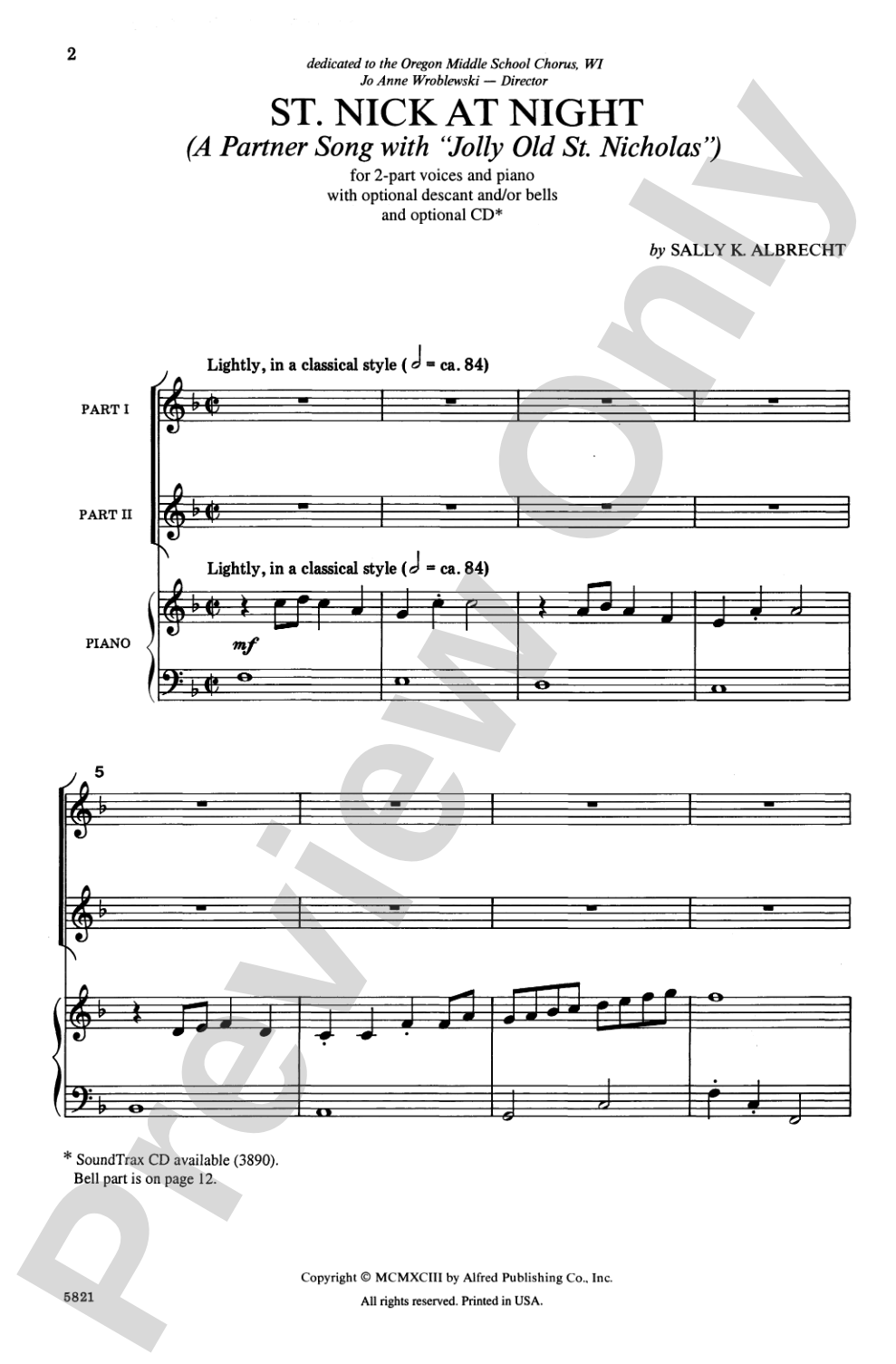
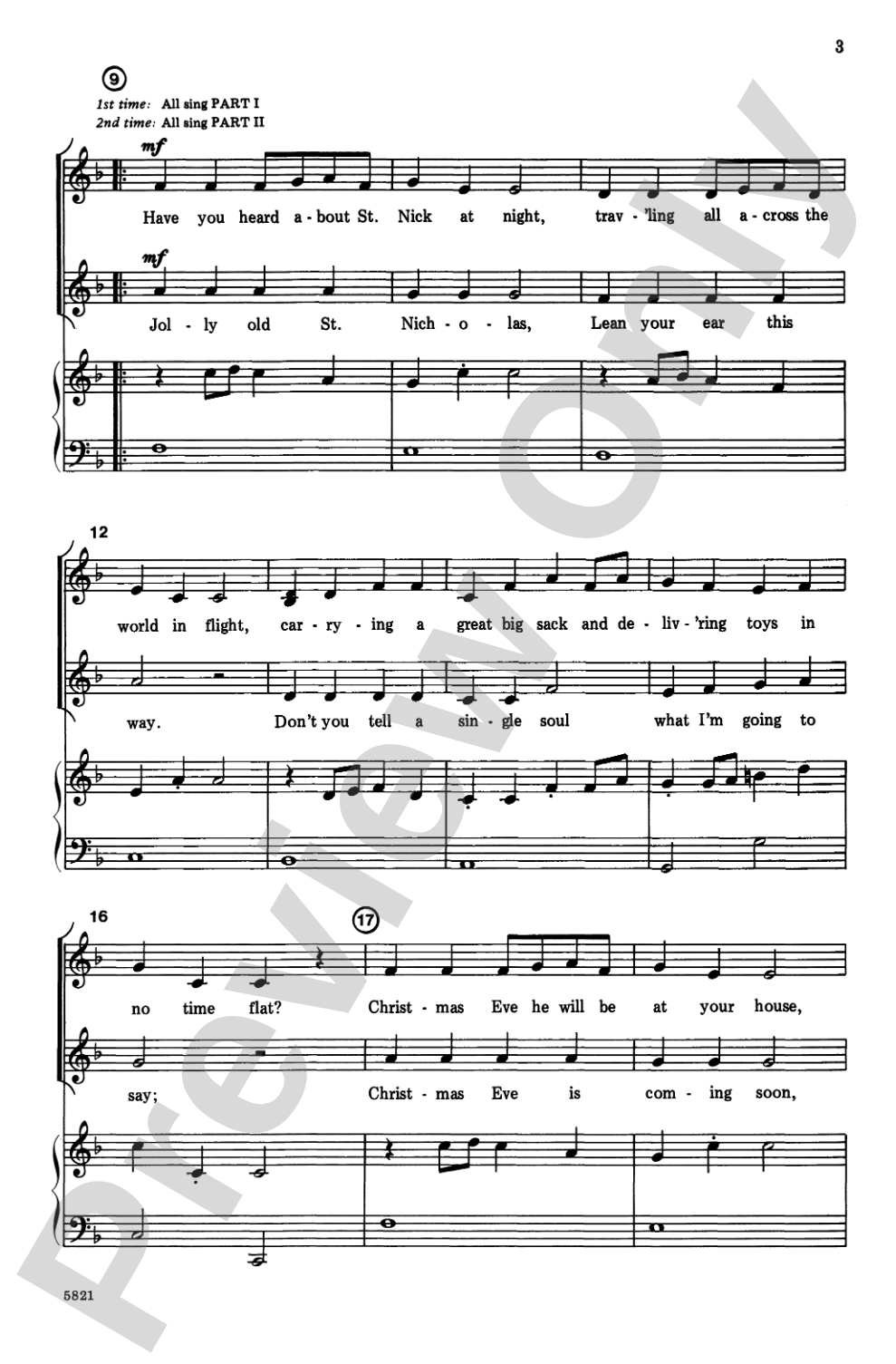
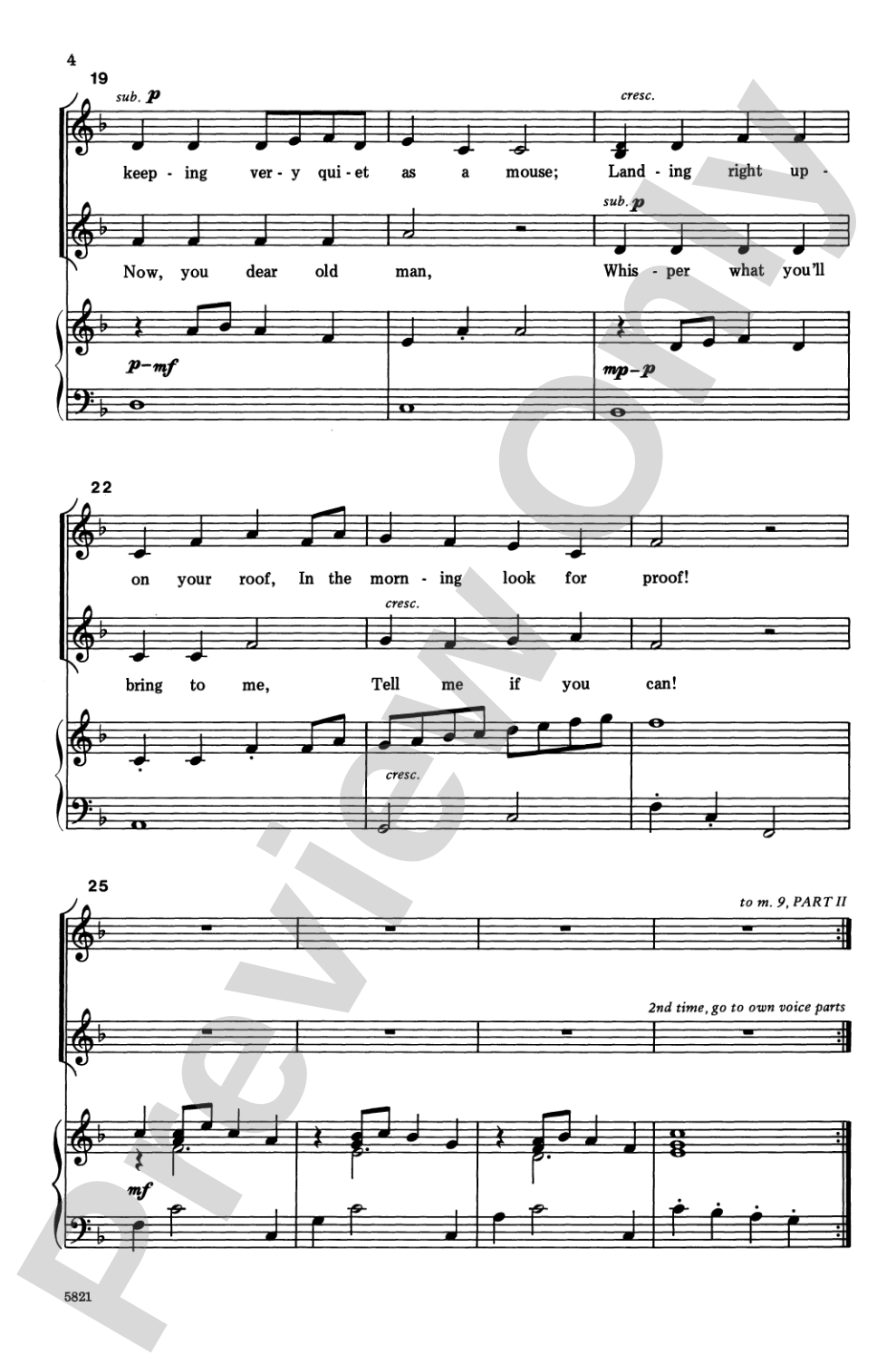

St. Nick at Night (Jolly Old St. Nicholas): 2-Part Choral Octavo
Arr. Sally K. Albrecht
Item: 00-PO-0004495
$2.25
Minimum order quantity: 20 copies
Pickup currently not available
Description
It's a partner song with "Jolly Old St. Nicholas" featuring optional bells and a"ding dong" descant. The easy accompaniment is written in a light classical style. (We used harpsichord and cello on the SoundTrax cassette. ) Like all of Sally Albrecht's 2-part chorals, it's easy to learn and fun to sing. A super choice for young choirs.


St. Nick at Night (Jolly Old St. Nicholas): 2-Part Choral Octavo isn't in MakeMusic Cloud just yet...but it could be. Let us know you'd like to see it, and you'll help shape what comes next. In the meantime, start a free trial and dive into thousands of interactive titles your students can play along with today.
Request This Title
Tell us you want it.
Start Your Free Trial
Explore everything that's ready to play right now.
Sample Audio
1
Audio File
--:--
0:00
0:00
Sample Video
No sample videos found.
Additional Details
Series:
Alfred Archive Edition: Alfred Choral Designs
Publisher:
Alfred Music
Page Count:
12
SKU:
00-PO-0004495
Instrumentation:
Opt. Bells
More about this title
About the Arranger: Sally K. Albrecht

Sally K. Albrecht has shaped American choral music for over four decades as a composer, conductor, and clinician with particular expertise in movement and staging. Since 1987, she has received the ASCAP Special Music Award annually and maintains over 600 published choral works in print, along with 75 full-length songbooks and musicals. She spent more than thirty years as Director of School Choral, Vocal, and Elementary Publications for major educational music publishers, including Alfred Music, and has conducted honor choirs at Lincoln Center, Carnegie Hall, and The Kennedy Center.
Albrecht holds degrees from Rollins College (B.A. in Music and Theater, 1976), the University of Miami (M.A. in Drama, 1977; M.M. in Accompanying, 1979), and has taught at Oakland University, Jersey City State College, and Meredith College. In 2021, she received the Distinguished Alumna Award from both the University of Miami Frost School of Music and Rollins College, where she serves on the Board of Trustees. She is also a past Chair of the Board of Trustees for the Omicron Delta Kappa National Leadership Honor Society.
Why we love this
Albrecht's arrangement transforms a familiar carol into an interactive partner song that keeps young singers engaged with the novelty of singing two melodies simultaneously. The optional bells and descant add texture and festive sparkle without overwhelming singers still developing their sight-reading skills, while the light classical accompaniment written for harpsichord and cello suggests elegant holiday pageantry without demanding high sophistication from accompanists.
What to expect
Cheerful and approachable, with a sense of musical fun that comes from hearing two familiar melodies blend together in unexpected ways. The light classical instrumentation keeps the mood elegant rather than cartoonish, creating a sophisticated holiday moment that still feels age-appropriate and joyful.
Who it's for
Young choral ensembles with singers who have foundational sight-reading skills and are ready for the challenge of singing a second part independently. This octavo works particularly well for elementary or middle school choirs, as well as community youth choirs seeking accessible holiday repertoire with playful staging potential.
How to get the most out of it
- Balance the two melodic lines by having singers mark their own part distinctly during early rehearsals; once secure, remind them to listen across the room to hear how the parts weave together.
- If adding bells, assign them to confident singers or recruit a musician outside the choir to handle the part, ensuring the bell line doesn't distract from vocal entrances.
- Use the recorded accompaniment to establish tempo and harmonic foundation during sectional work, then transition to live piano or keyboard so singers adjust to their actual rehearsal setting.
How to use it
Slot this into a holiday concert where you want to showcase your ensemble's ability to balance two parts without the complexity of three or four-part writing. The built-in movement and staging possibilities make it ideal for schools programming a winter concert that mixes concert selections with more theatrical moments, and the optional bells invite creative collaboration with your instrumental program.
Skills your students will build
- Singing a stable melodic line while listening to a different melody in another part
- Independence in vocal entry and rhythm when singing as a smaller section of the ensemble
- Coordinate movement with singing while maintaining intonation and text clarity
- Blend with optional instrumental parts (bells) in a mixed ensemble context