
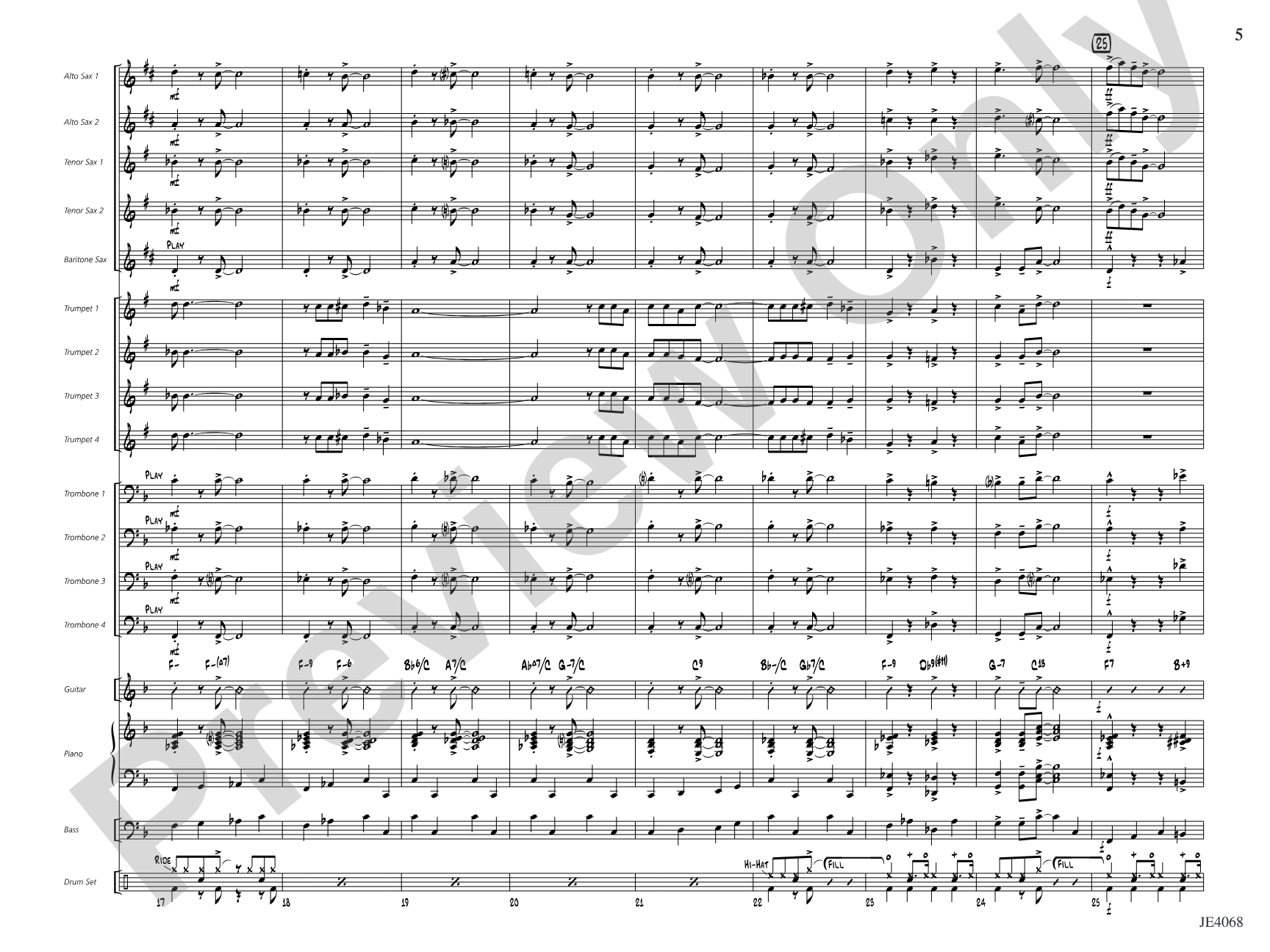
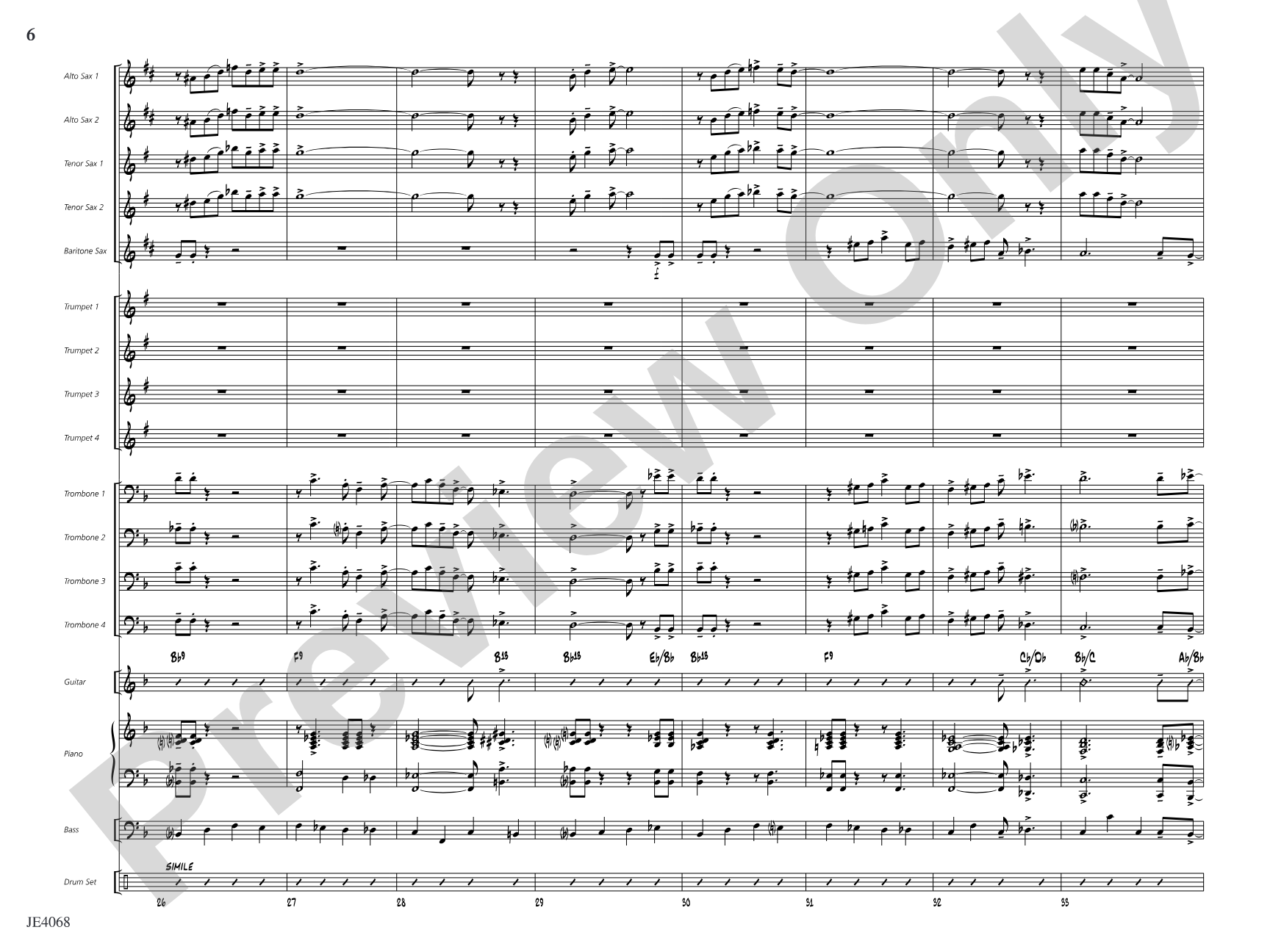
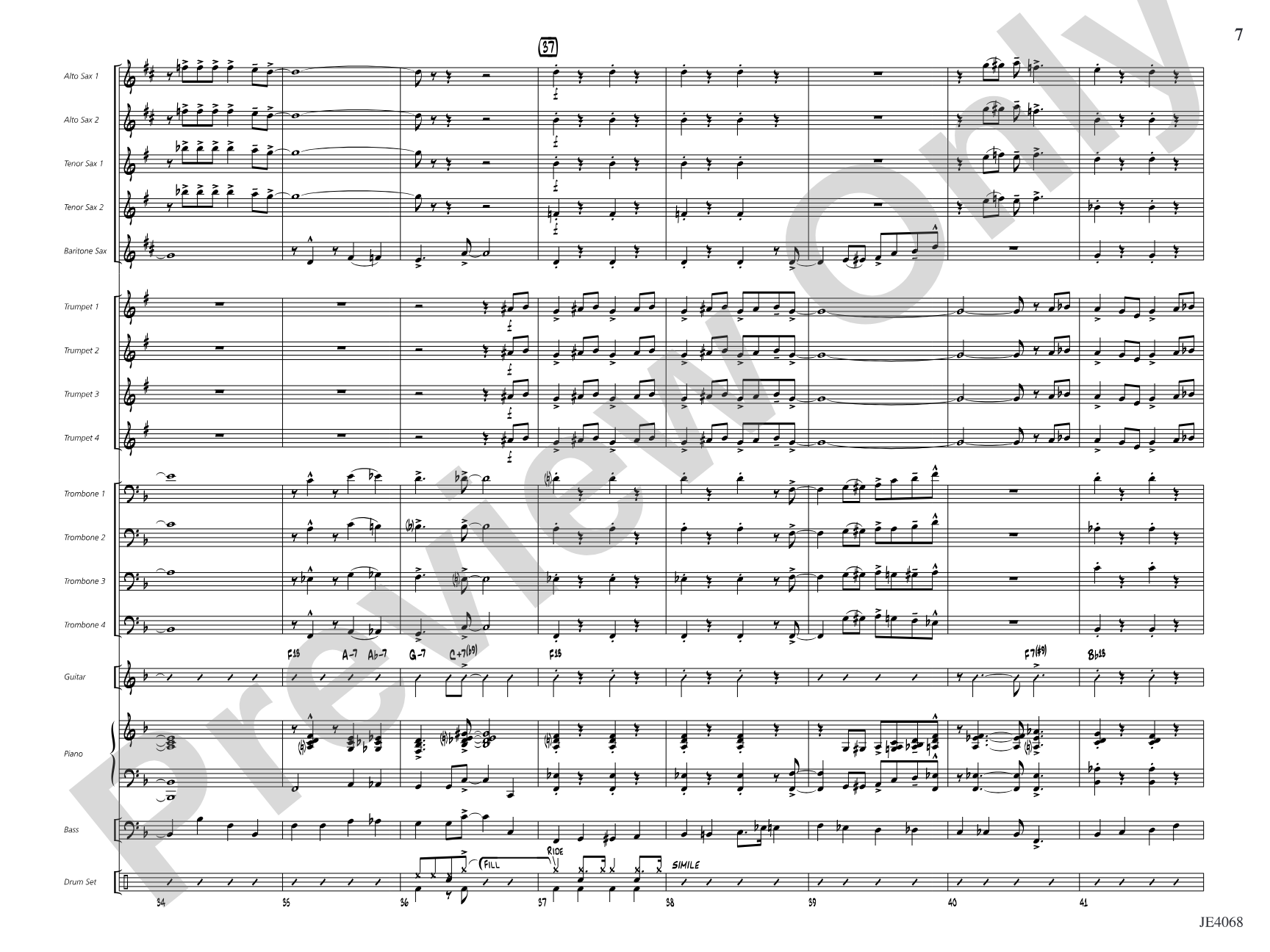
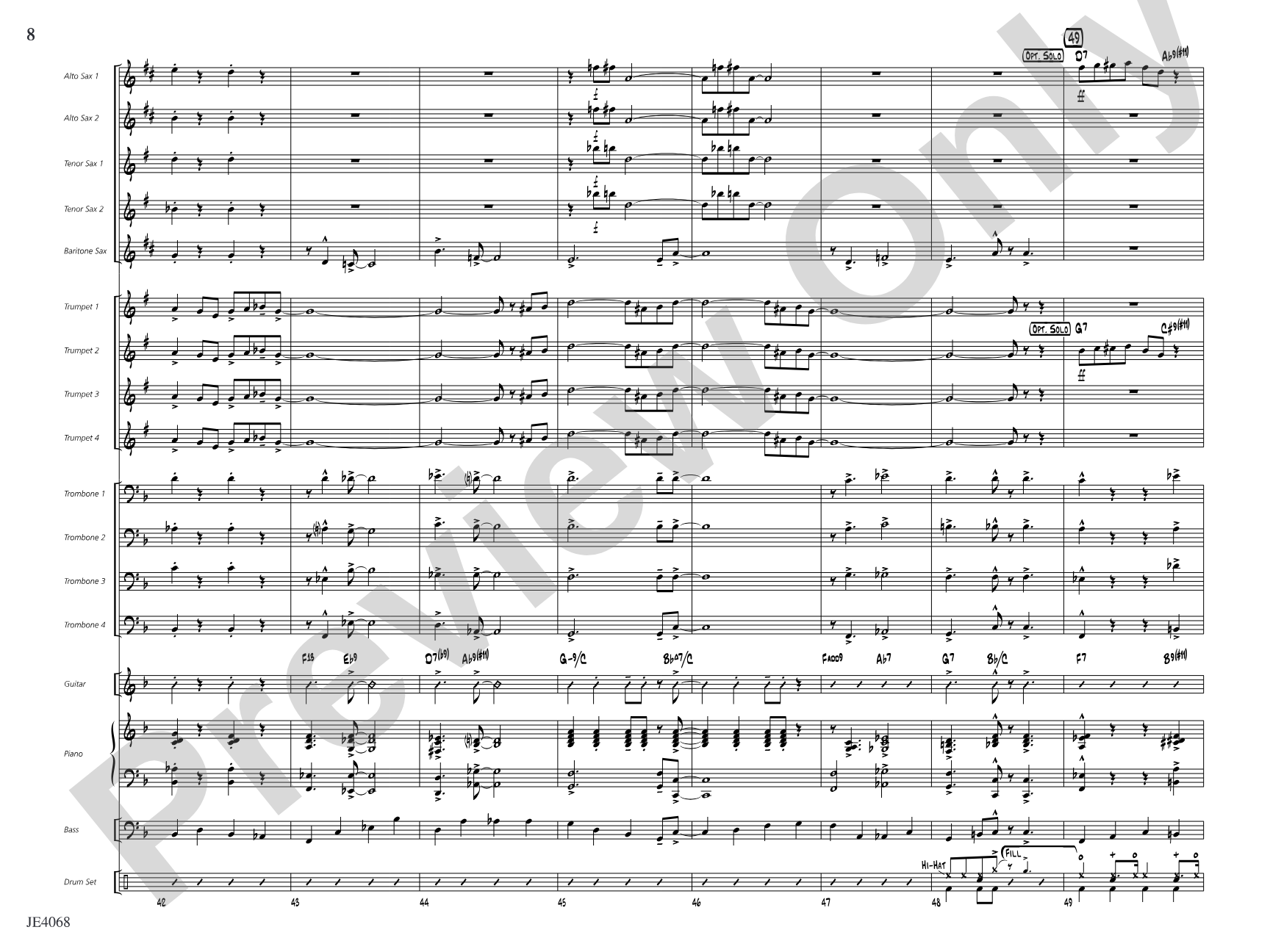
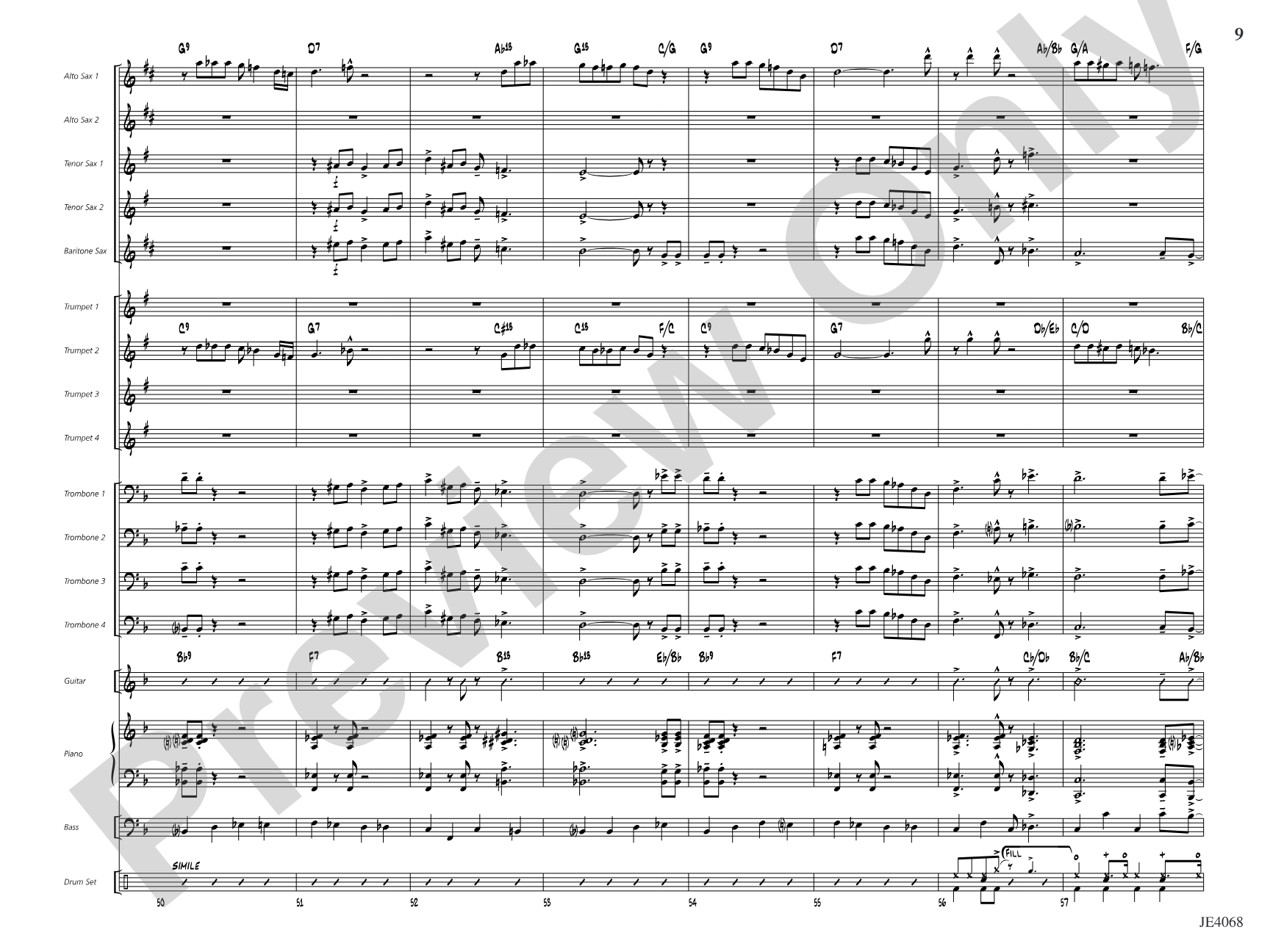
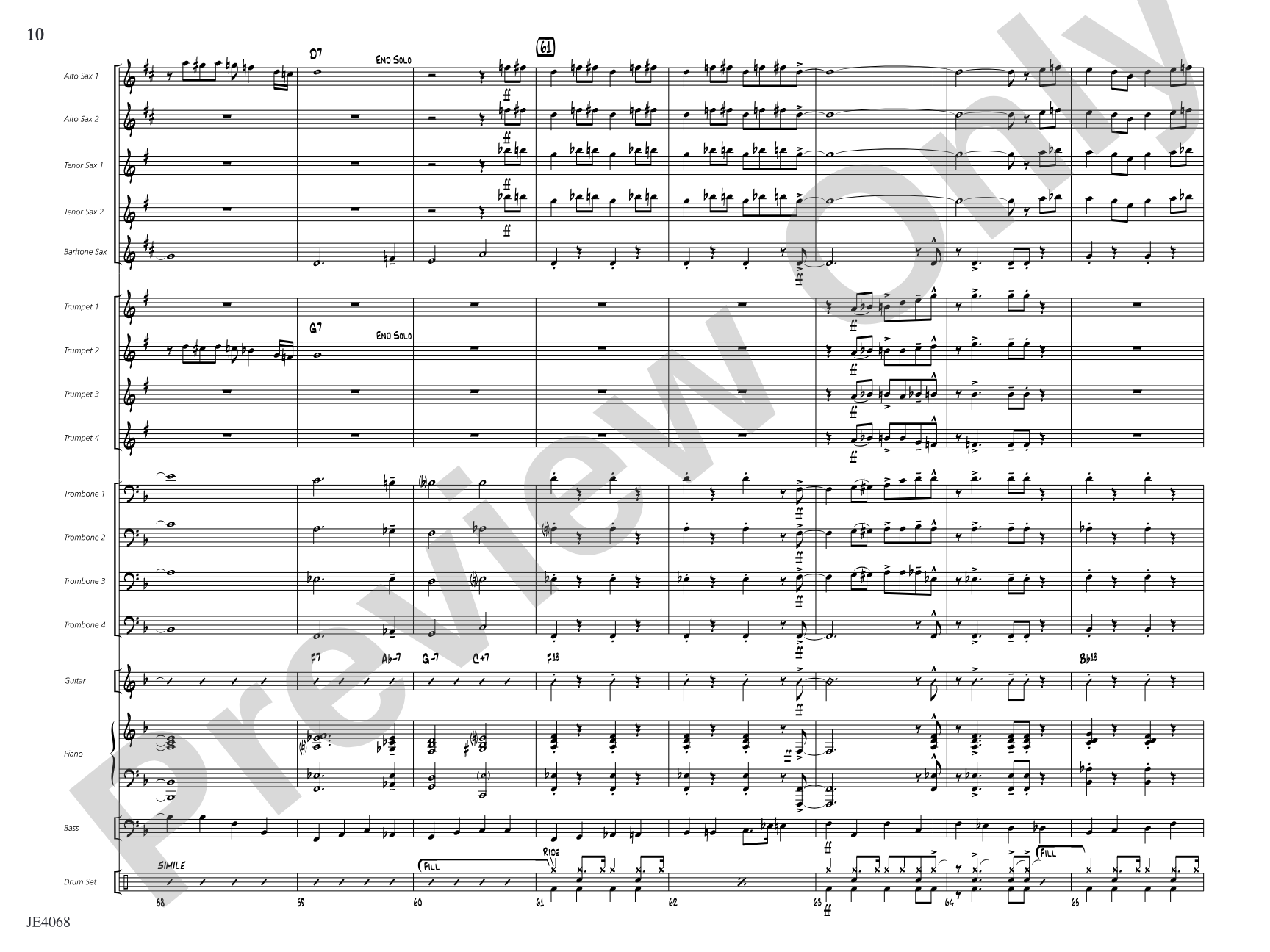
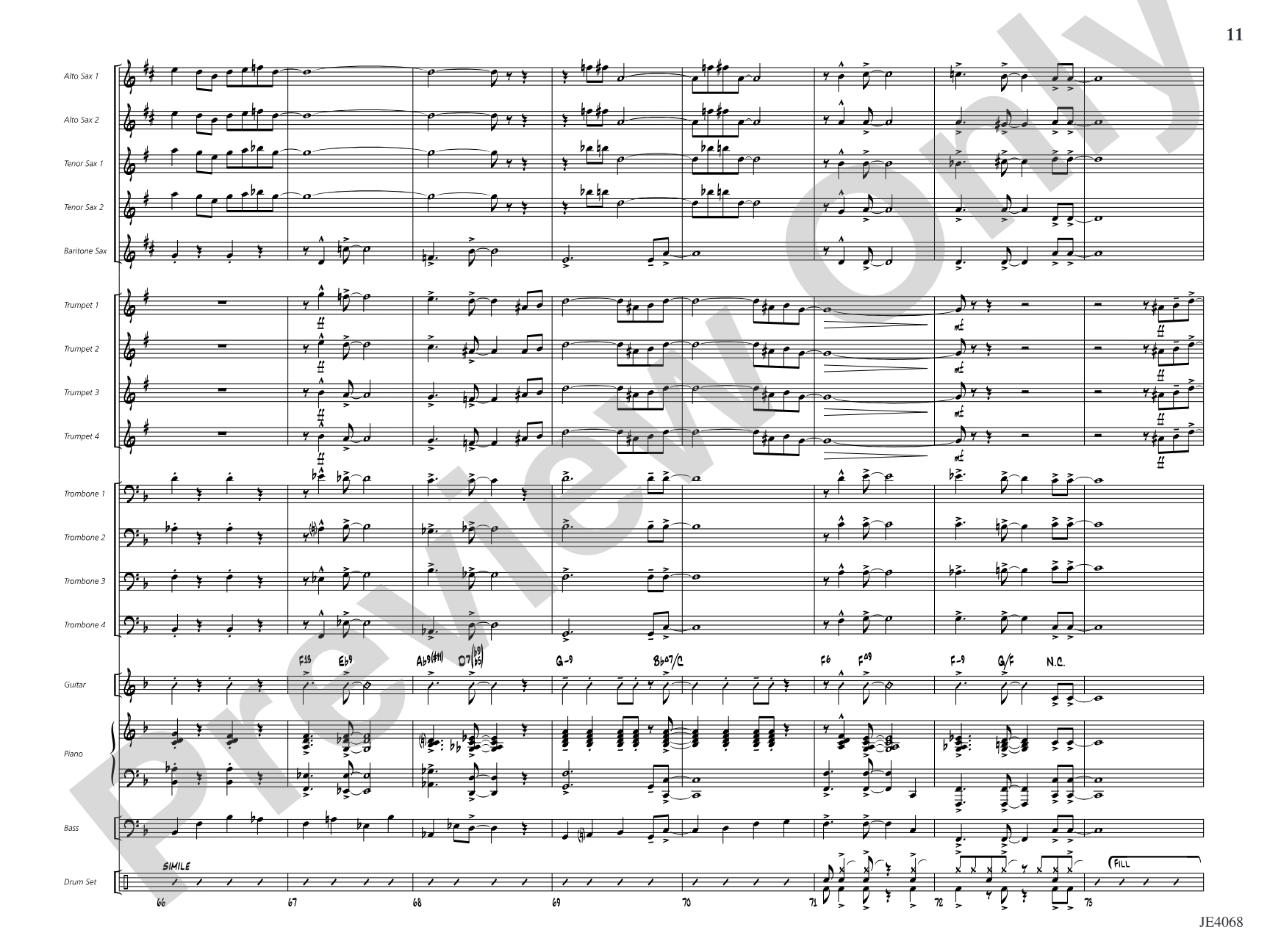
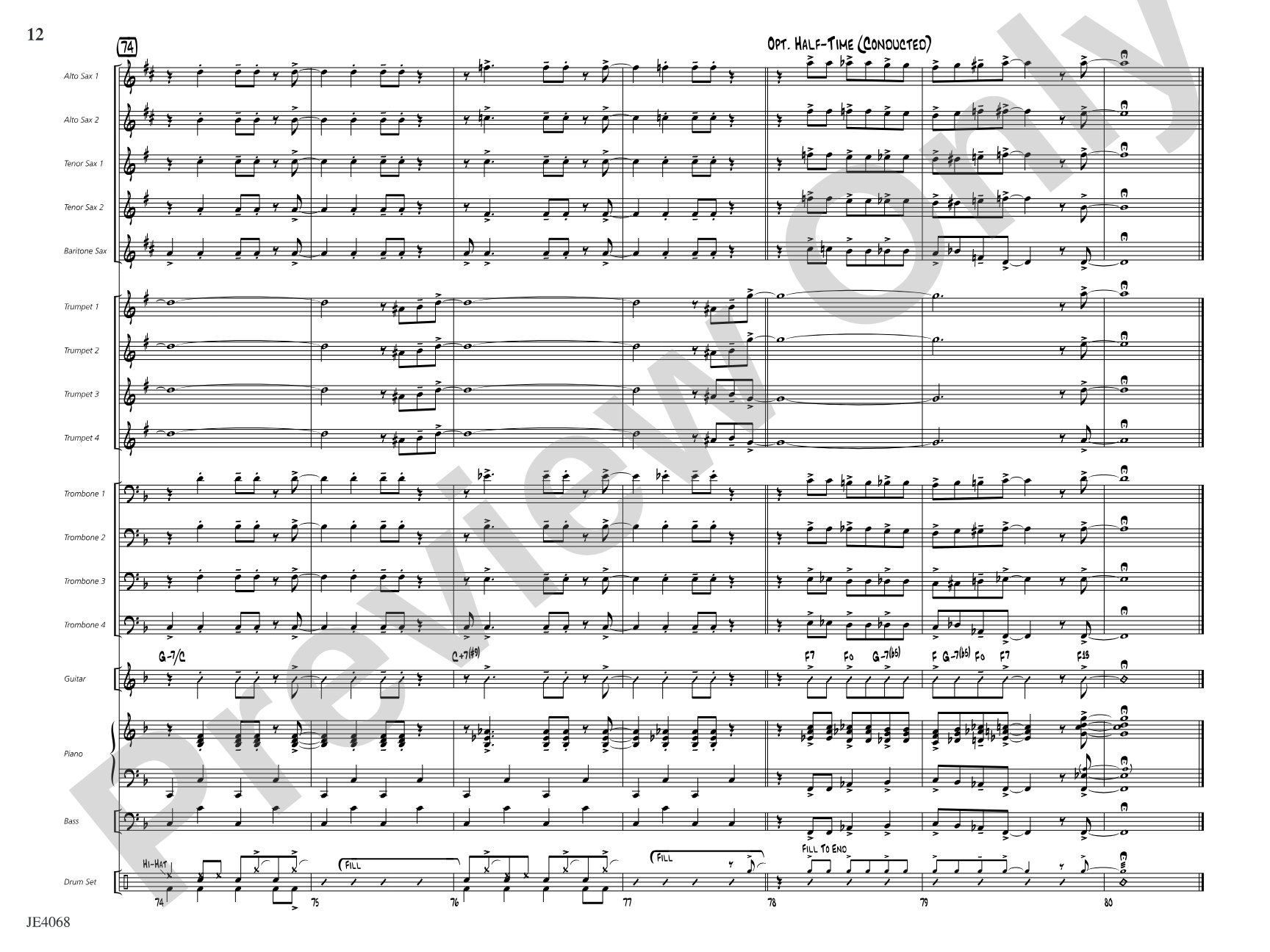

St. Louis Blues: Score
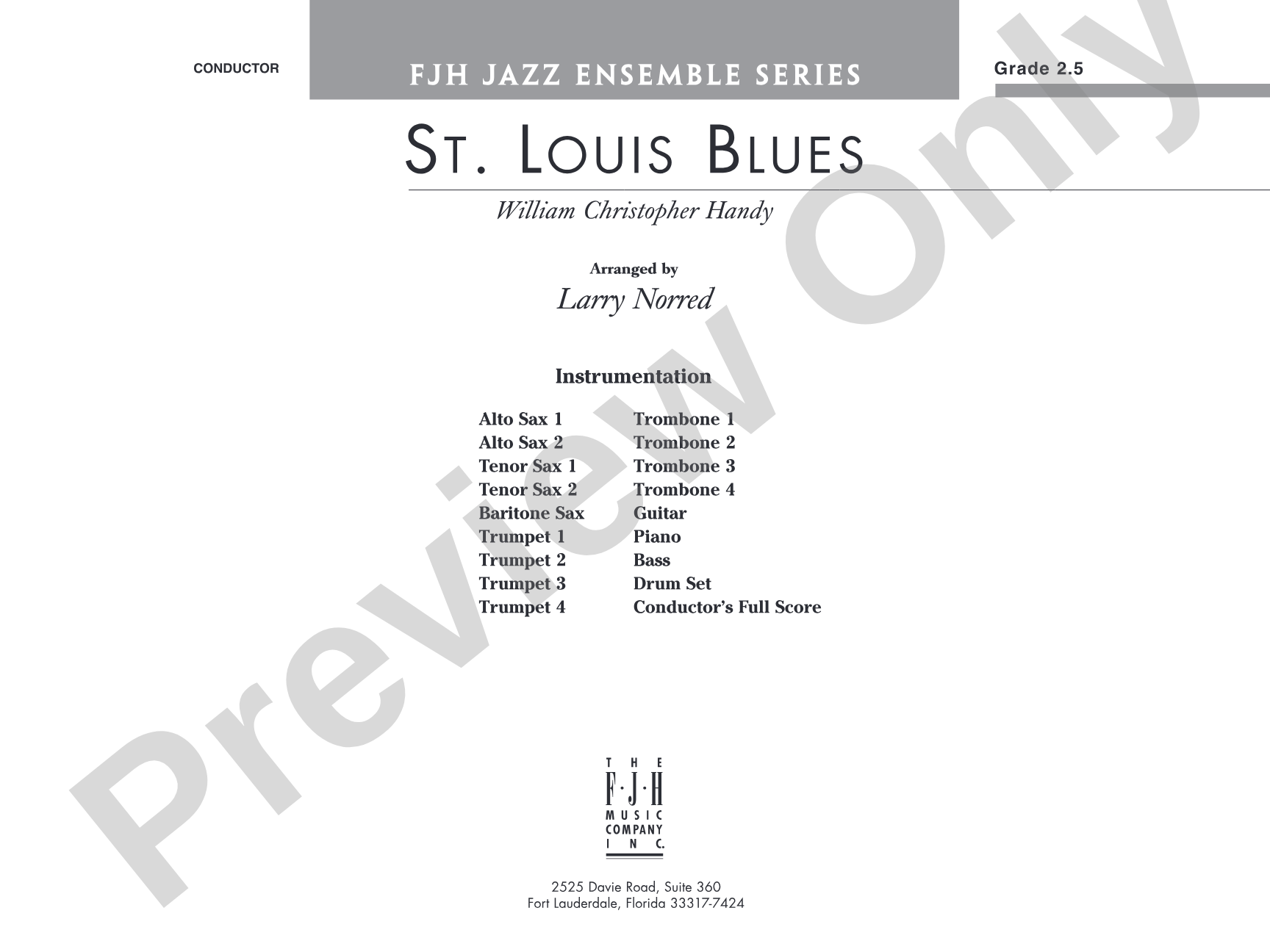
By W.C. Handy / arr. Larry Norred
Grade: 2.5
Item: 98-DJE4068S
$5.00
Pickup currently not available
Description
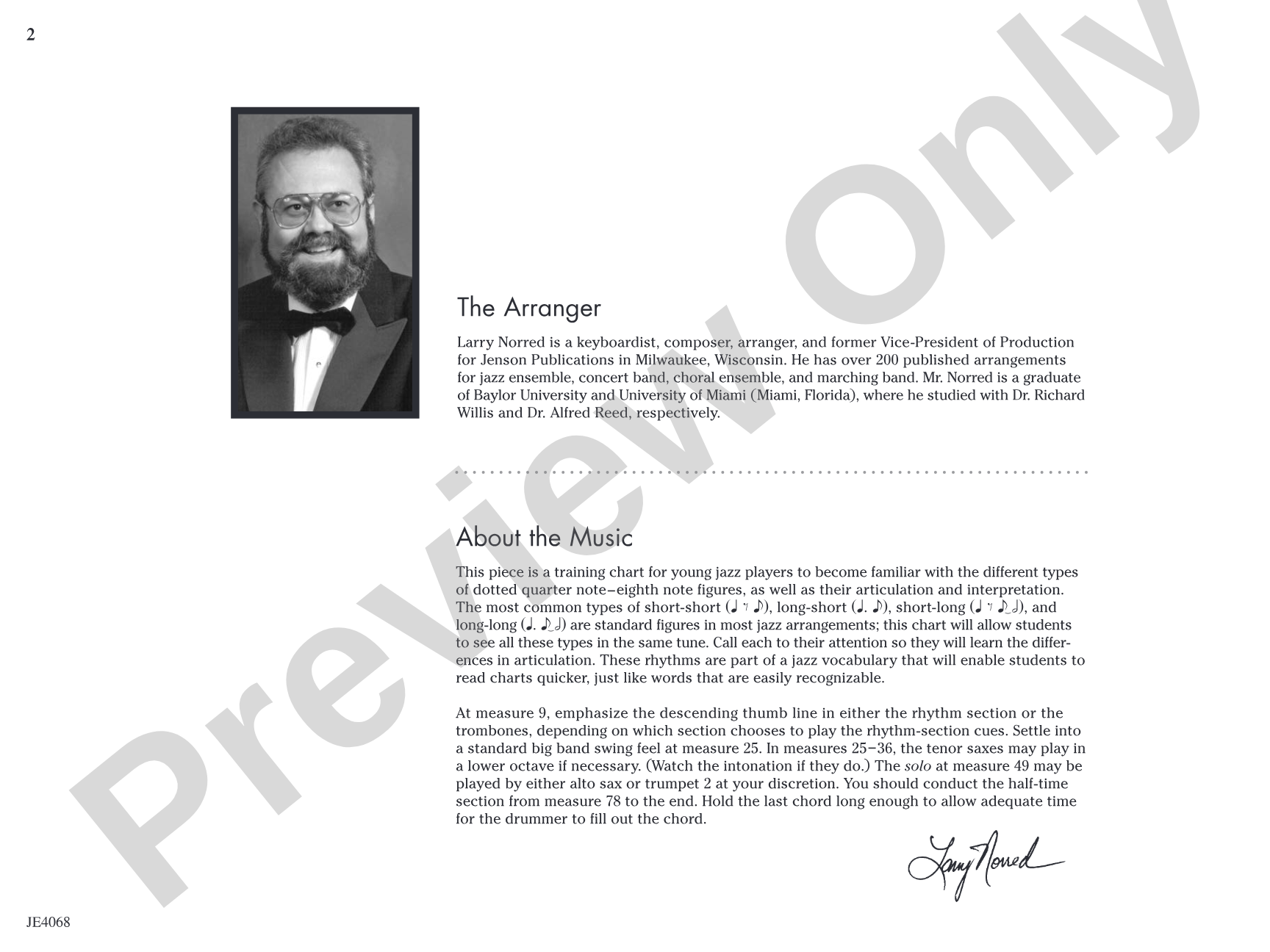
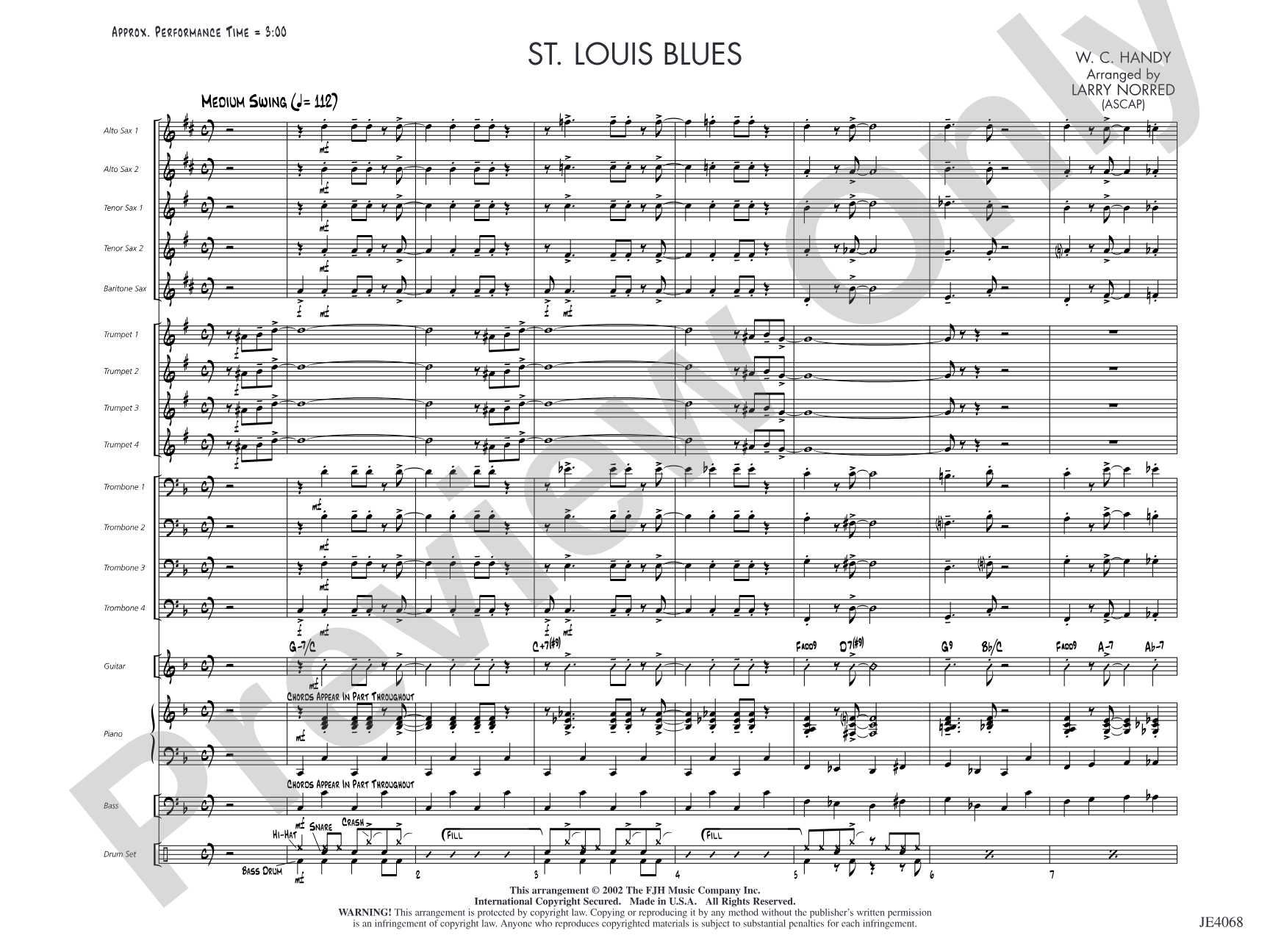
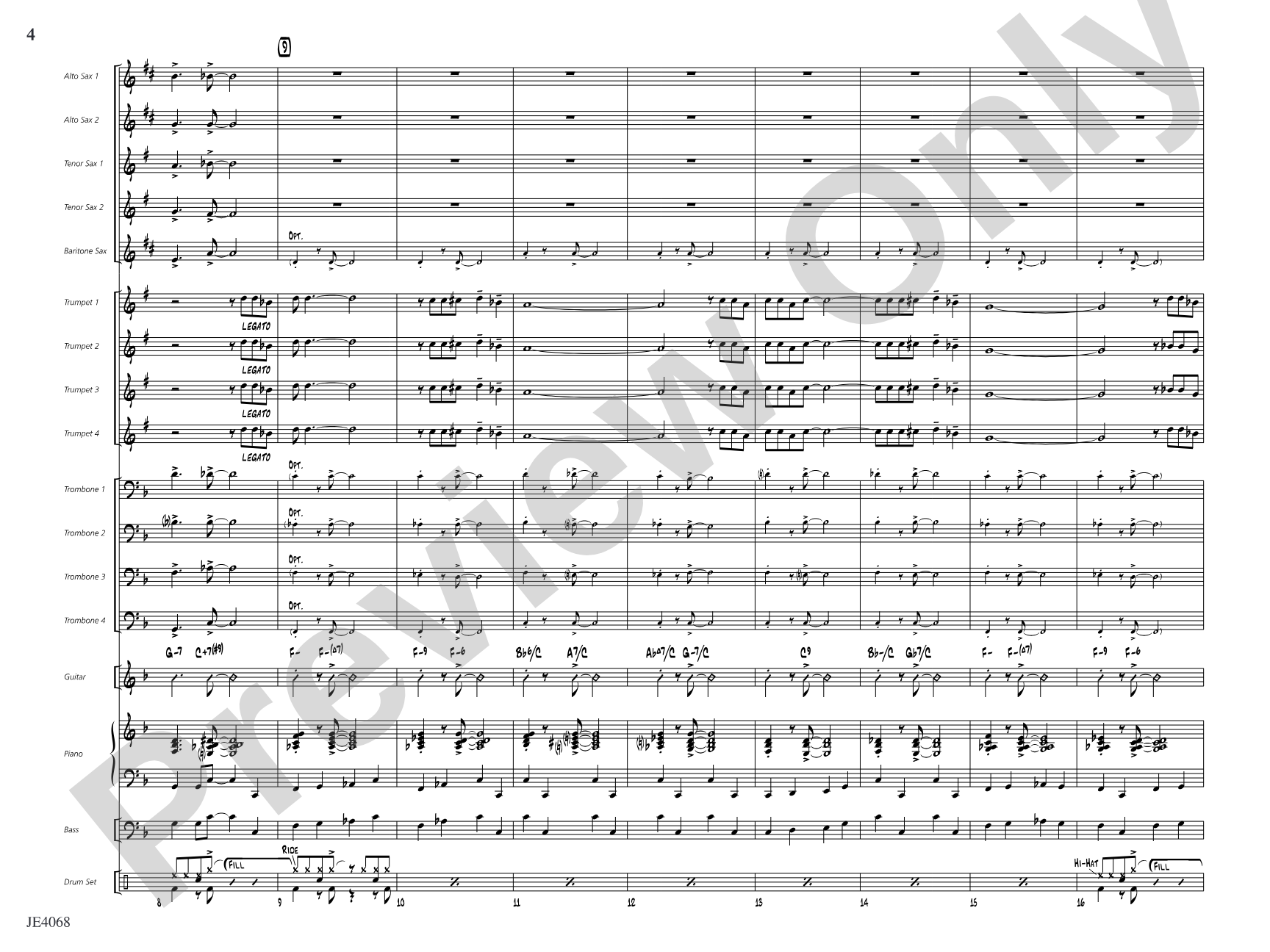
W.C. Handy's immortal classic is reborn in this solid arrangement. It includes a piano and bass part completely written out for the young or developing player. Solos are also provided with optional changes above the written part. As usual, Larry has provided helpful rehearsal suggestions for the director as well.


St. Louis Blues: Score isn't in MakeMusic Cloud just yet...but it could be. Let us know you'd like to see it, and you'll help shape what comes next. In the meantime, start a free trial and dive into thousands of interactive titles your students can play along with today.
Request This Title
Tell us you want it.
Start Your Free Trial
Explore everything that's ready to play right now.
Sample Audio
1
Audio File
--:--
0:00
0:00
Sample Video
No sample videos found.
Additional Details
Series:
FJH Developing Jazz Ensemble
Publisher:
The FJH Music Company, Inc.
SKU:
98-DJE4068S
More about this title
About the Composer: W.C. Handy
W.C. Handy (1873-1958) was an African American composer and bandleader who fundamentally shaped American music by synthesizing blues, ragtime, and European harmonic structures into compositions that reached both concert halls and dance floors. His "Memphis Blues" (1912) and "St. Louis Blues" (1914) became standards that defined the early twentieth-century jazz and popular music landscape, and his willingness to publish and promote blues music as serious compositions helped establish the genre's legitimacy in American culture.
For music educators, Handy's work offers a direct connection to foundational American musical identity. His melodies remain instantly recognizable, his harmonic language teaches blues form and voice leading, and his compositions bridge classical training with vernacular expression in ways that resonate with students across all levels.
Why we love this
Larry Norred's arrangement respects the melody and harmonic integrity of Handy's original while making it genuinely playable for developing ensembles. The fully written piano and bass parts remove the barrier that young players often face with jazz interpretation, and the optional solo variations give students permission to explore without requiring advanced improvisation skills from the outset.
What to expect
St. Louis Blues carries the unhurried sway of a slow blues, with a melody that sits in the middle of the range and invites warm, open phrasing. There's both melancholy and resilience in the harmonic movement; it feels introspective without being heavy, and the solos breathe room for personal expression while staying grounded in Handy's elegant original.
Who it's for
This arrangement serves developing jazz ensembles at the middle school or early high school level, as well as community bands and adult learners encountering jazz repertoire for the first time. The fully realized rhythm section parts make it accessible for pianists and bass players who are still building jazz comping skills, while the optional solo changes allow sections to participate at their own level of readiness.
How to get the most out of it
- Shape the melody with attention to the blues inflections in the phrasing; Norred's notation will guide you, but encourage players to listen to classic recordings to hear how the form breathes.
- Balance the written solos against the ensemble; since younger players may not yet feel secure with jazz articulation, use rehearsal time to establish which sections are full ensemble and which are true solos.
- Anchor the rhythm section early and thoroughly. The piano and bass parts are written out for accessibility, so lock those in first, then layer the horns over a solid foundation.
- Let the blues feel develop gradually across rehearsals rather than trying to nail the swing and phrasing in one sitting. This piece is forgiving enough to reward incremental work.
How to use it
This piece works well as a bridge between straight concert music and full jazz programming, offering audiences immediate recognition while introducing students to authentic blues form. Consider programming it alongside other standard-based arrangements or as a centerpiece for a concert that celebrates American musical traditions.
Skills your students will build
- Reading and performing blues form and harmonic structure
- Jazz articulation and phrasing in an ensemble context
- Interpreting written-out solos and optional melodic variations
- Listening to and balancing a rhythm section within an ensemble
- Swing feel and rhythmic coordination without relying on improvisation