
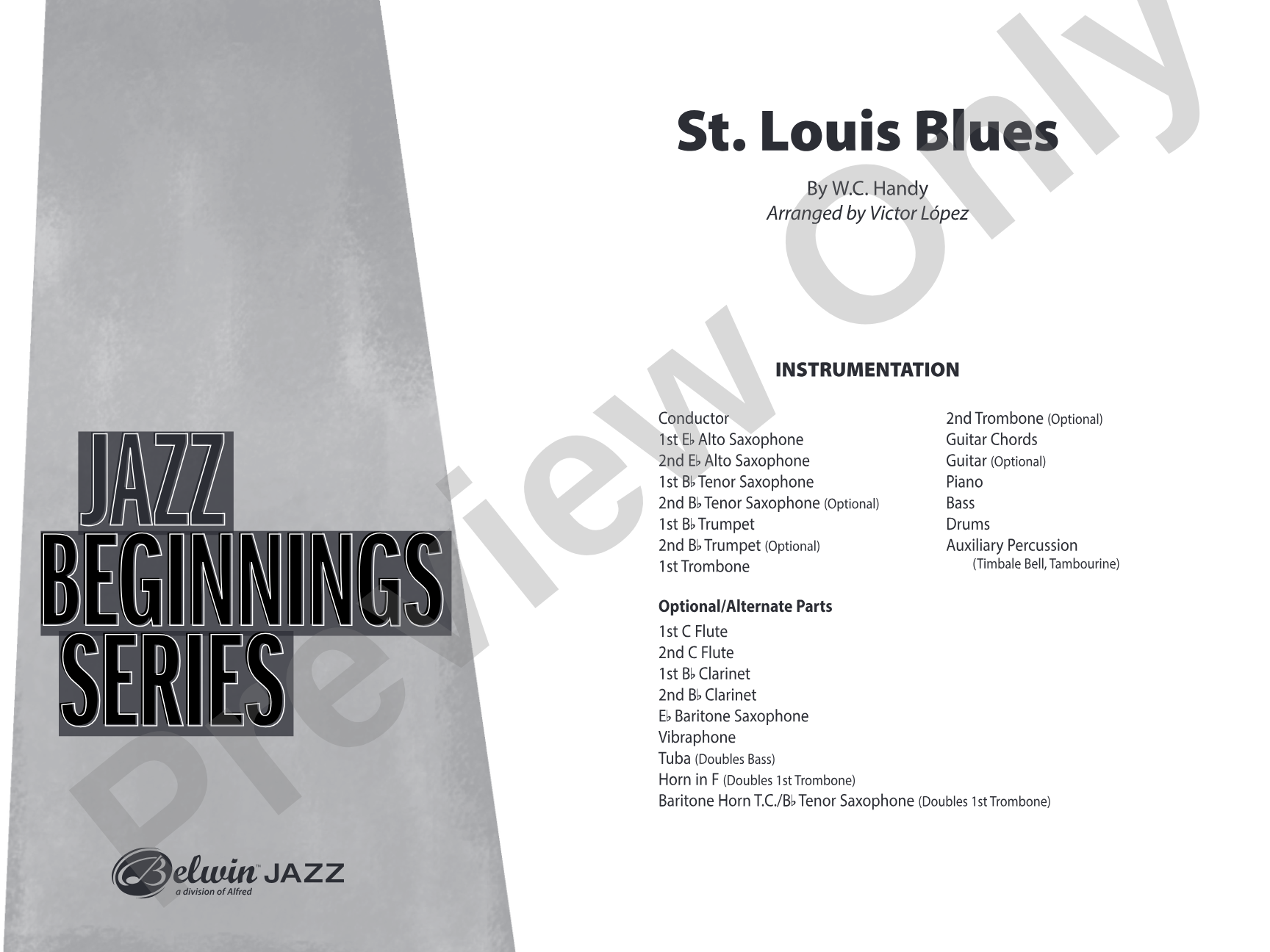
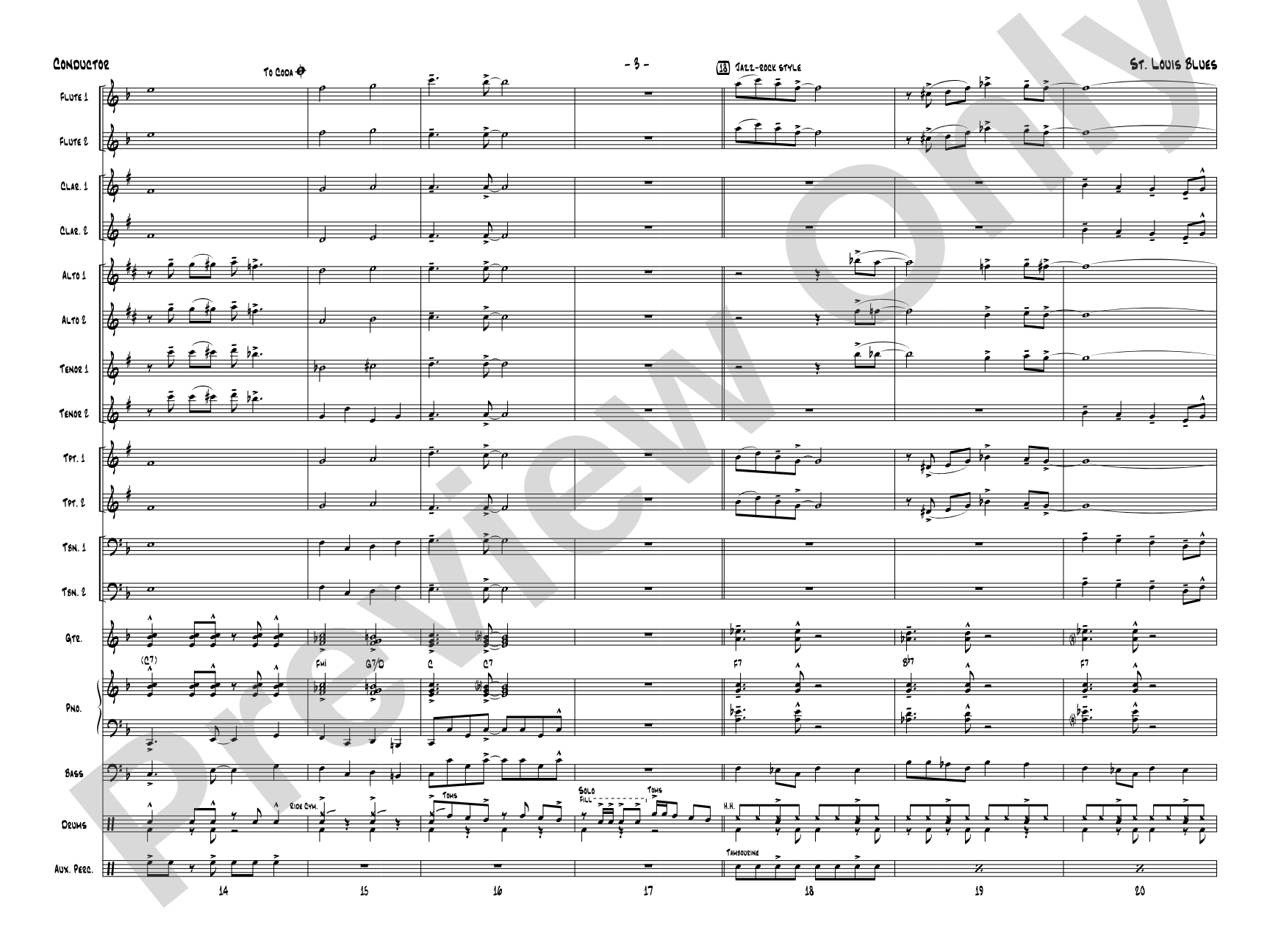
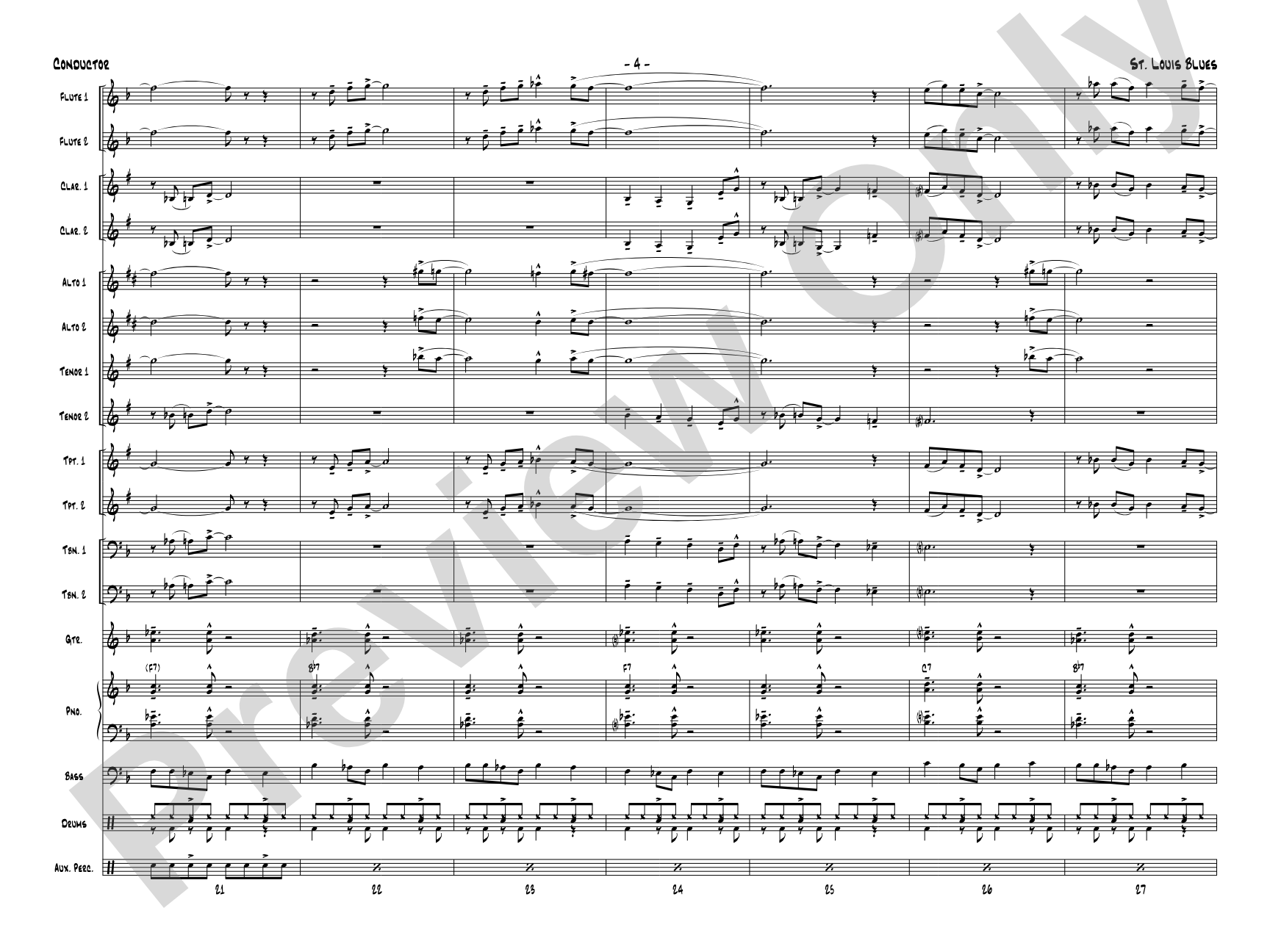
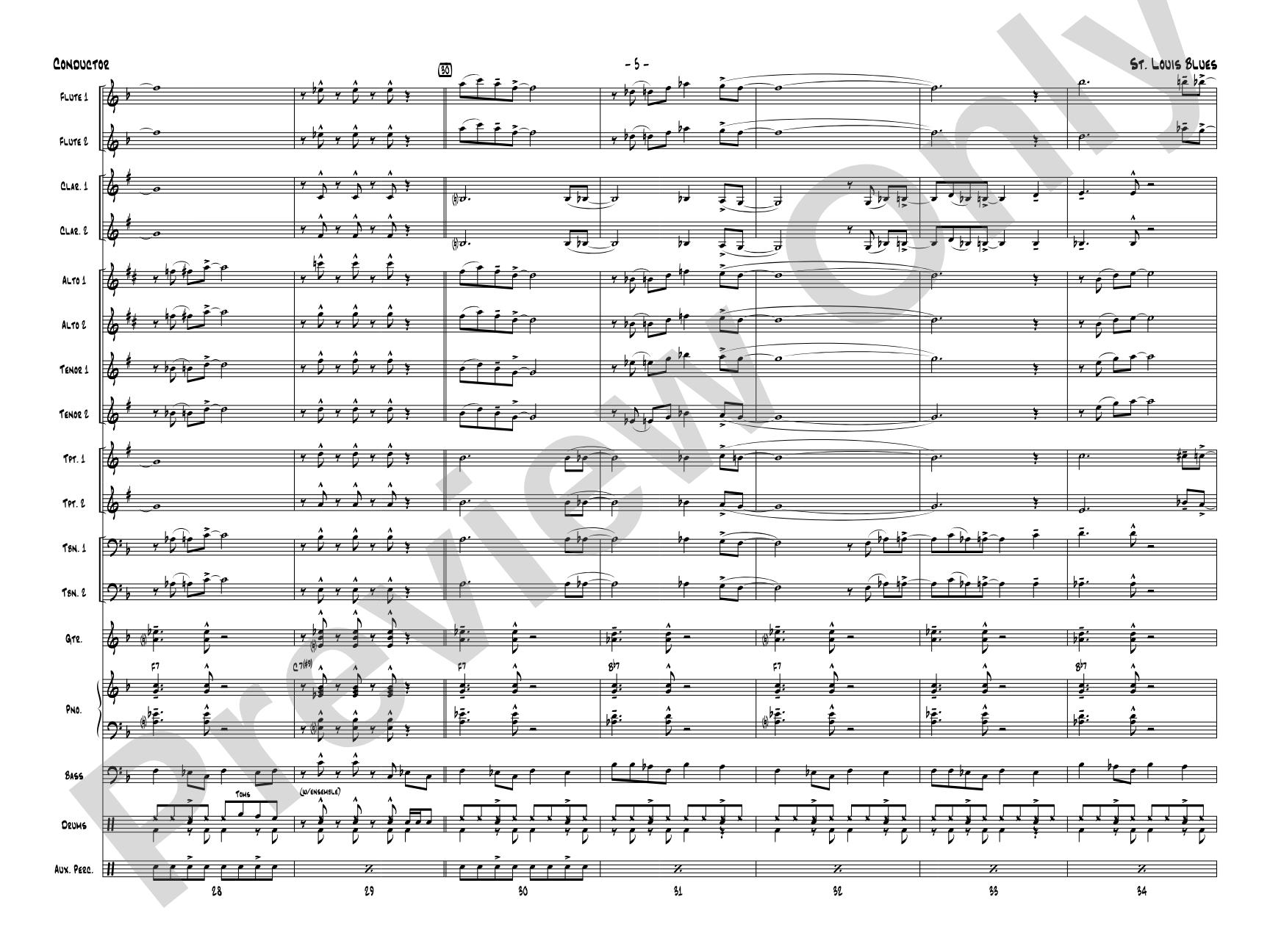
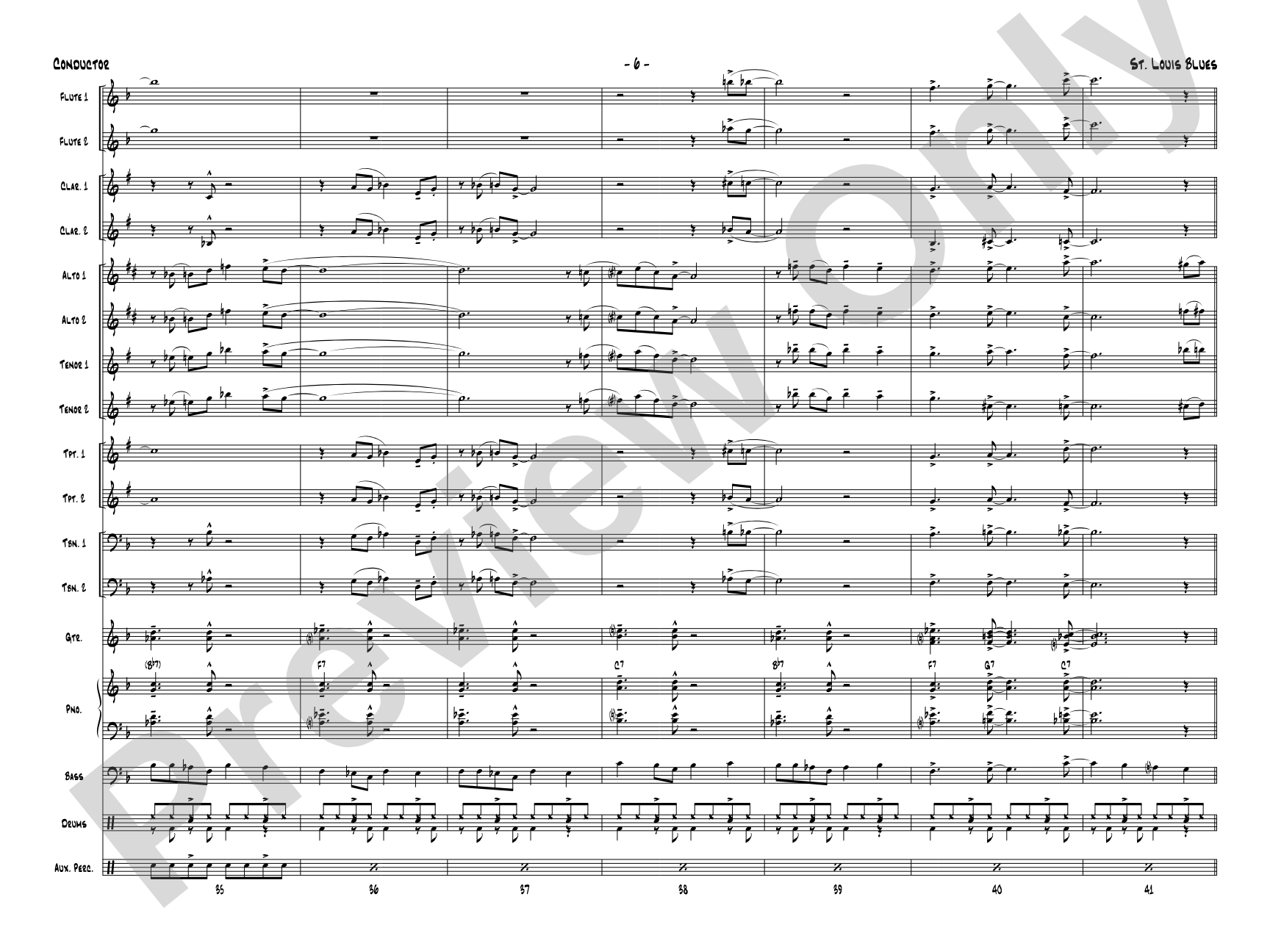
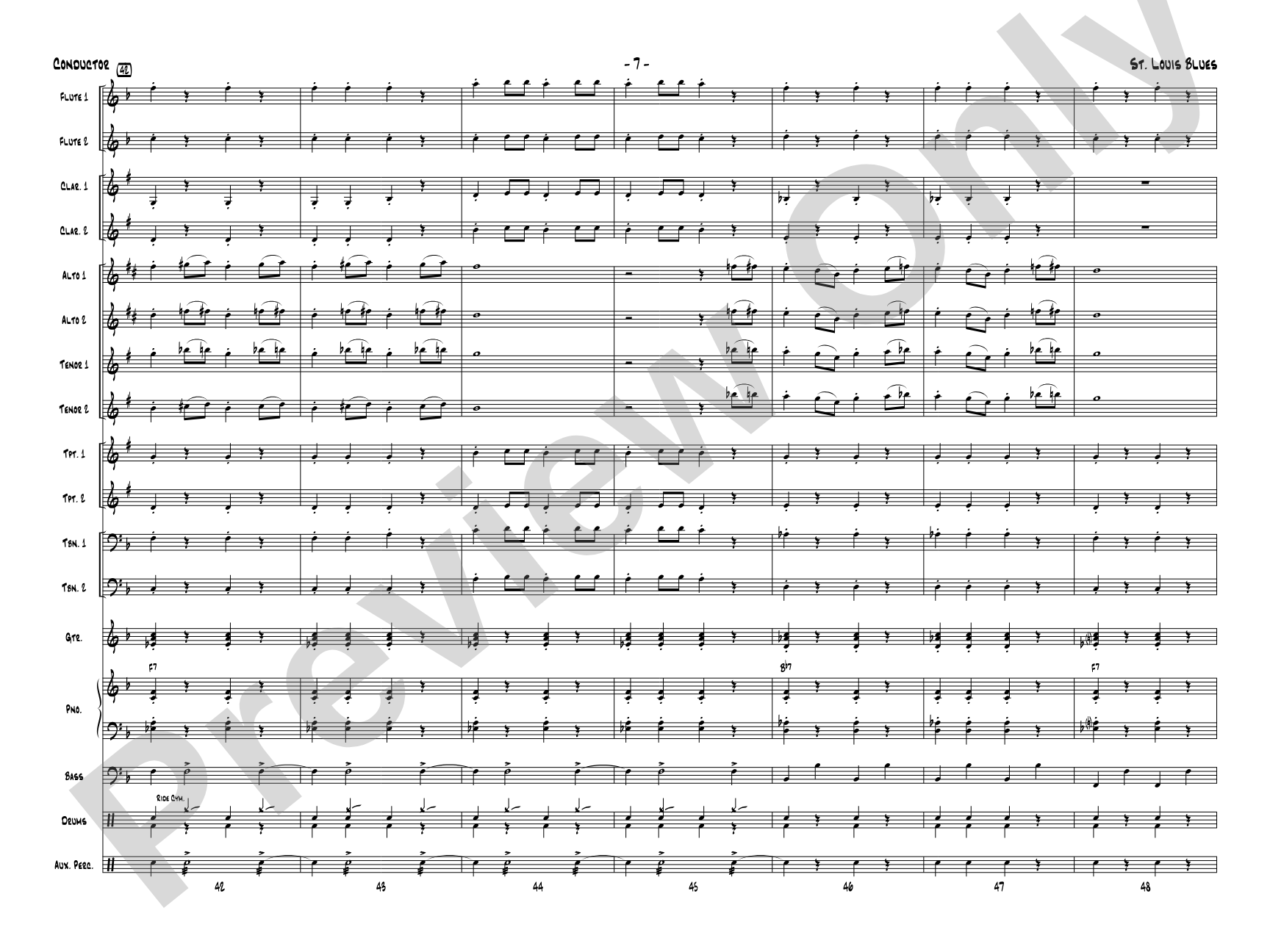
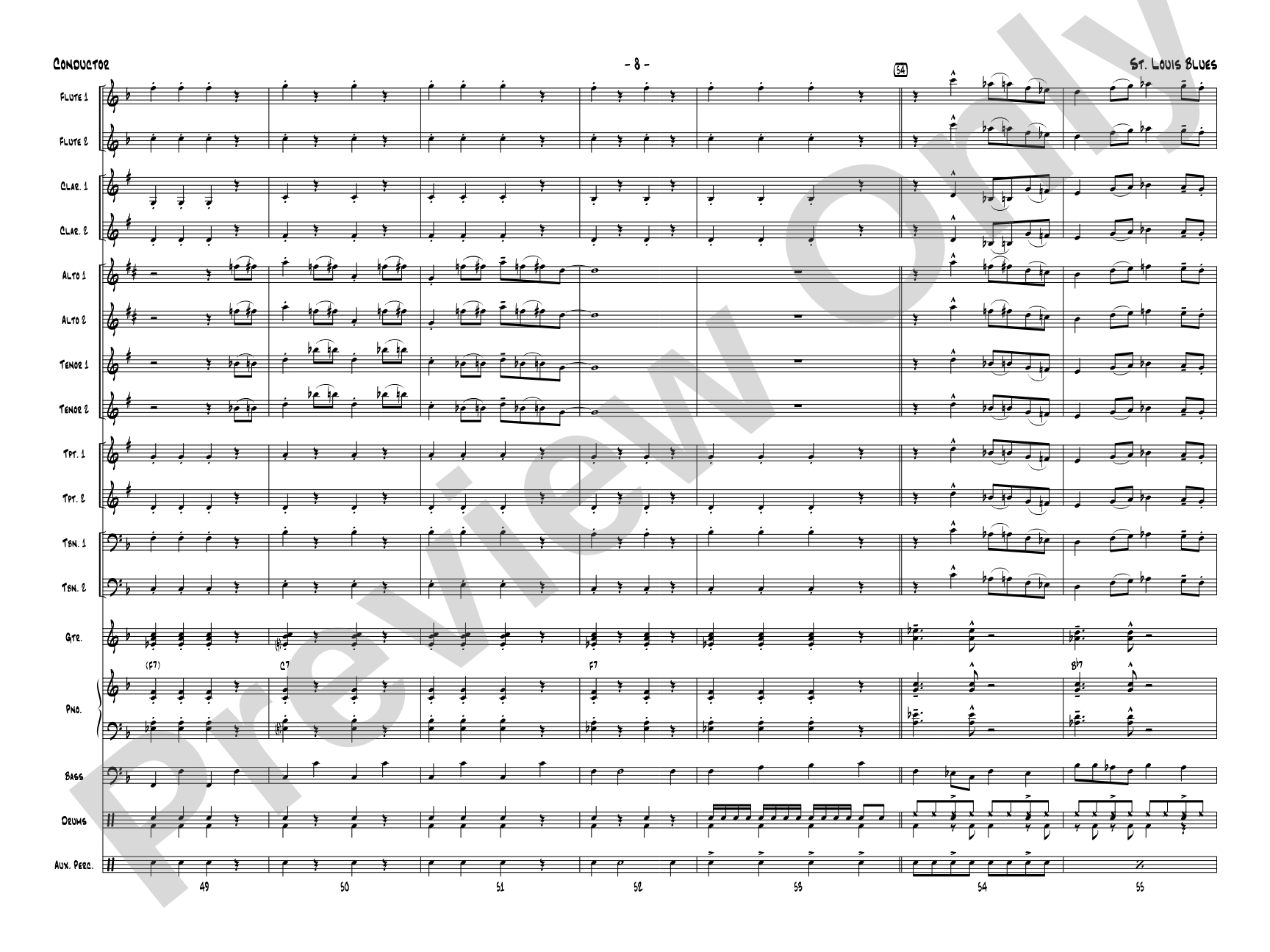
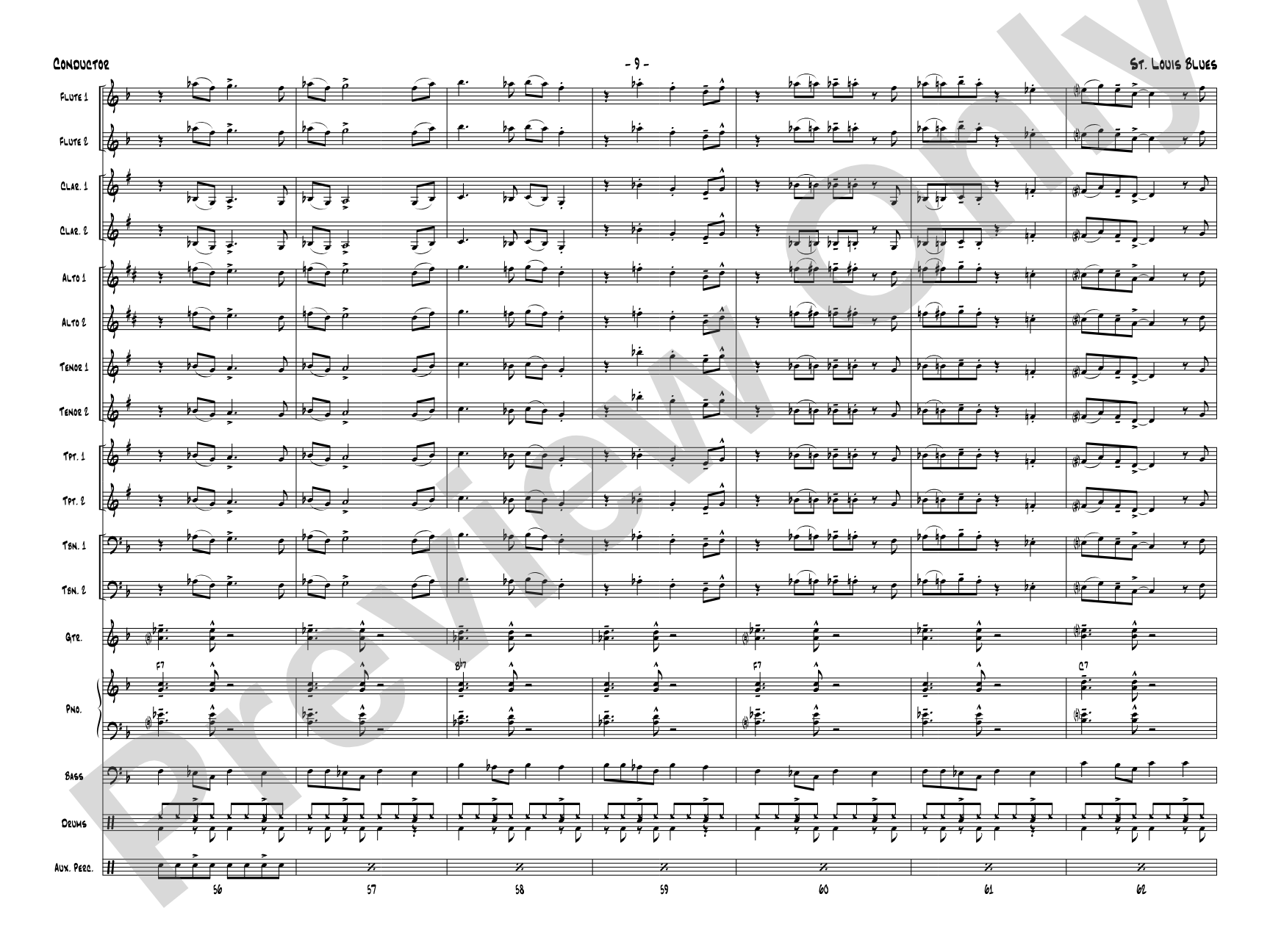
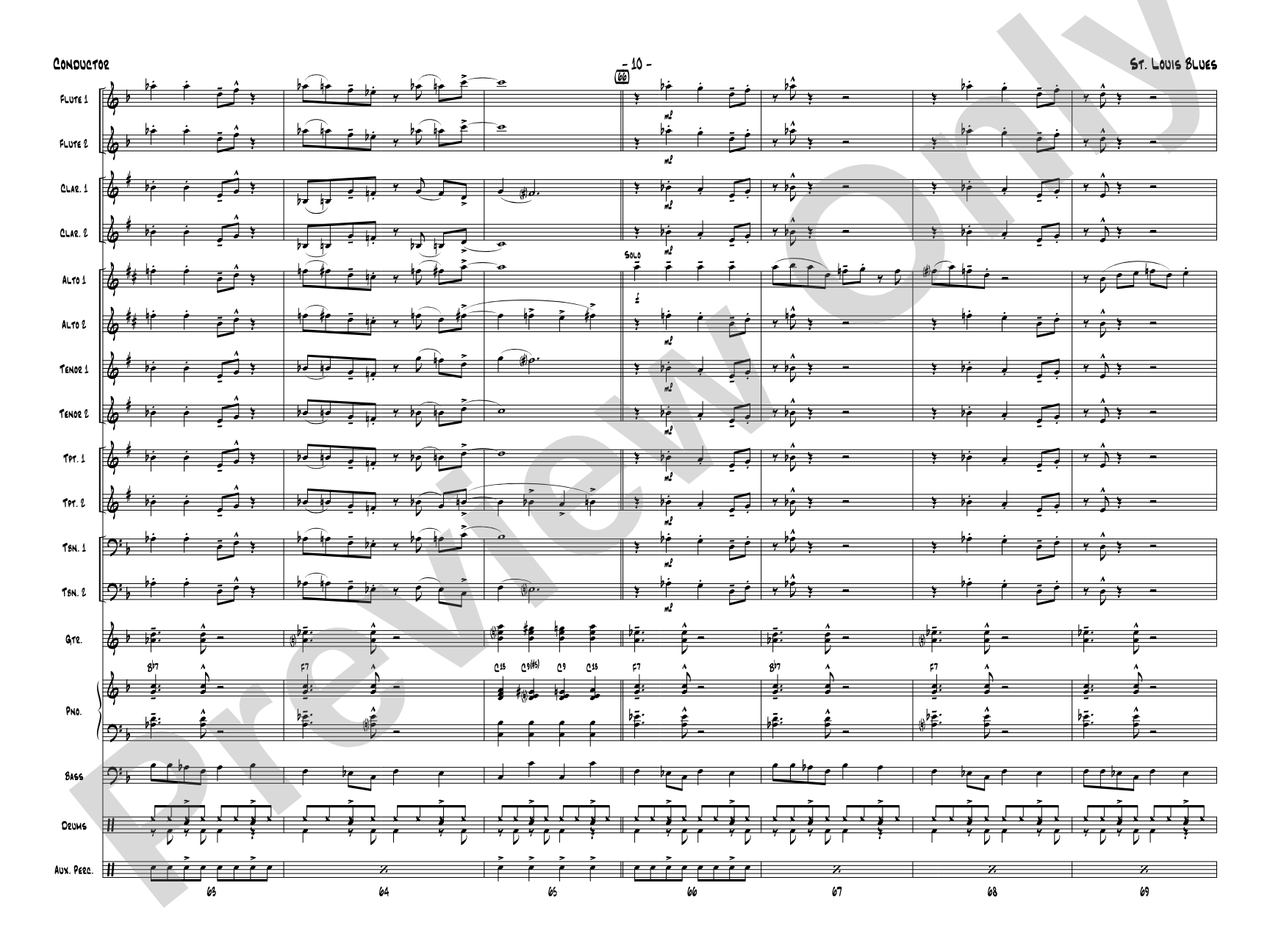

St. Louis Blues: Jazz Ensemble Conductor Score & Parts
By W.C. Handy / arr. Victor López
Grade: 0.5 (Very Easy)
Item: 00-PK-0008320

$42.00
One moment…
Description
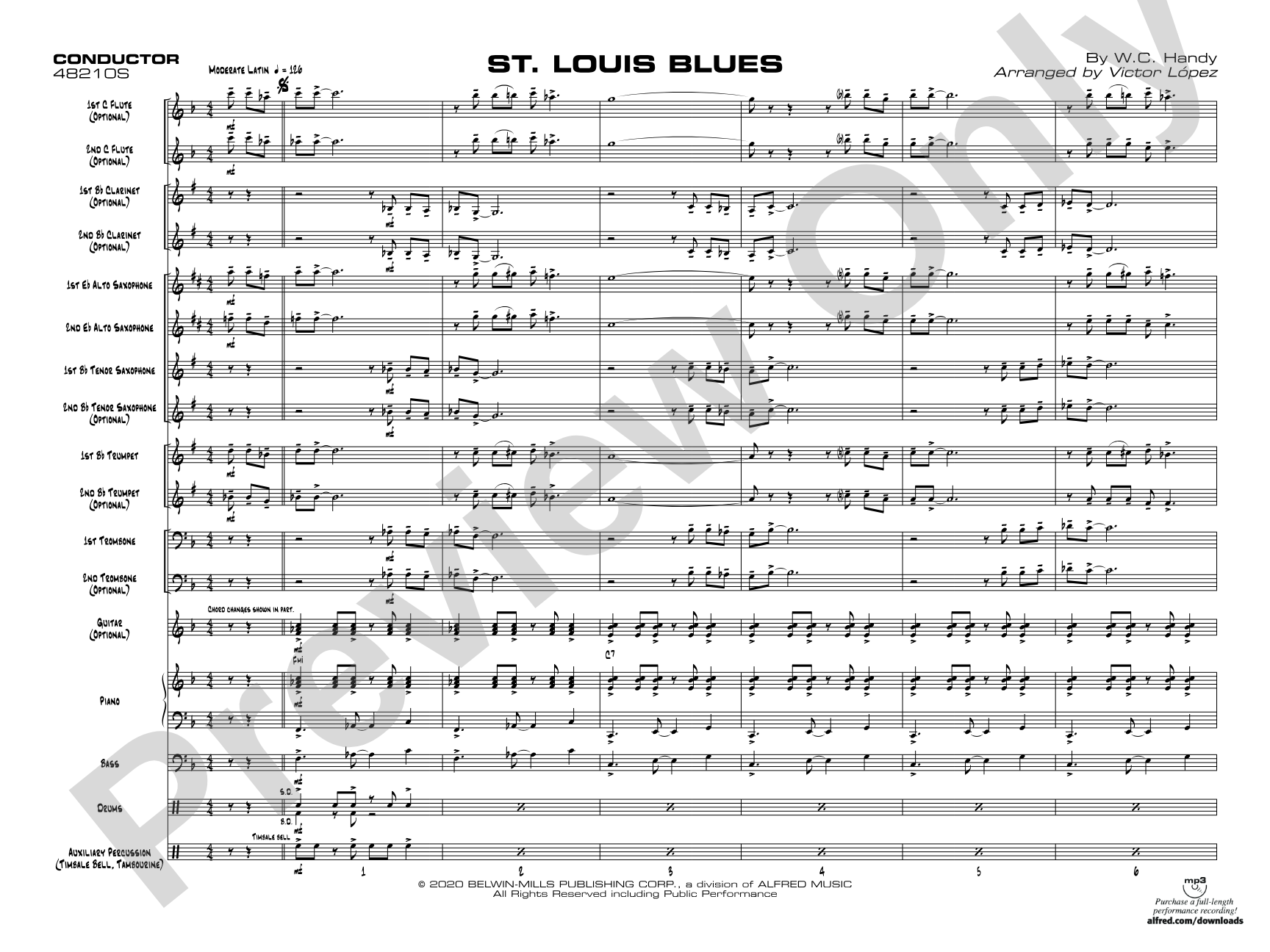
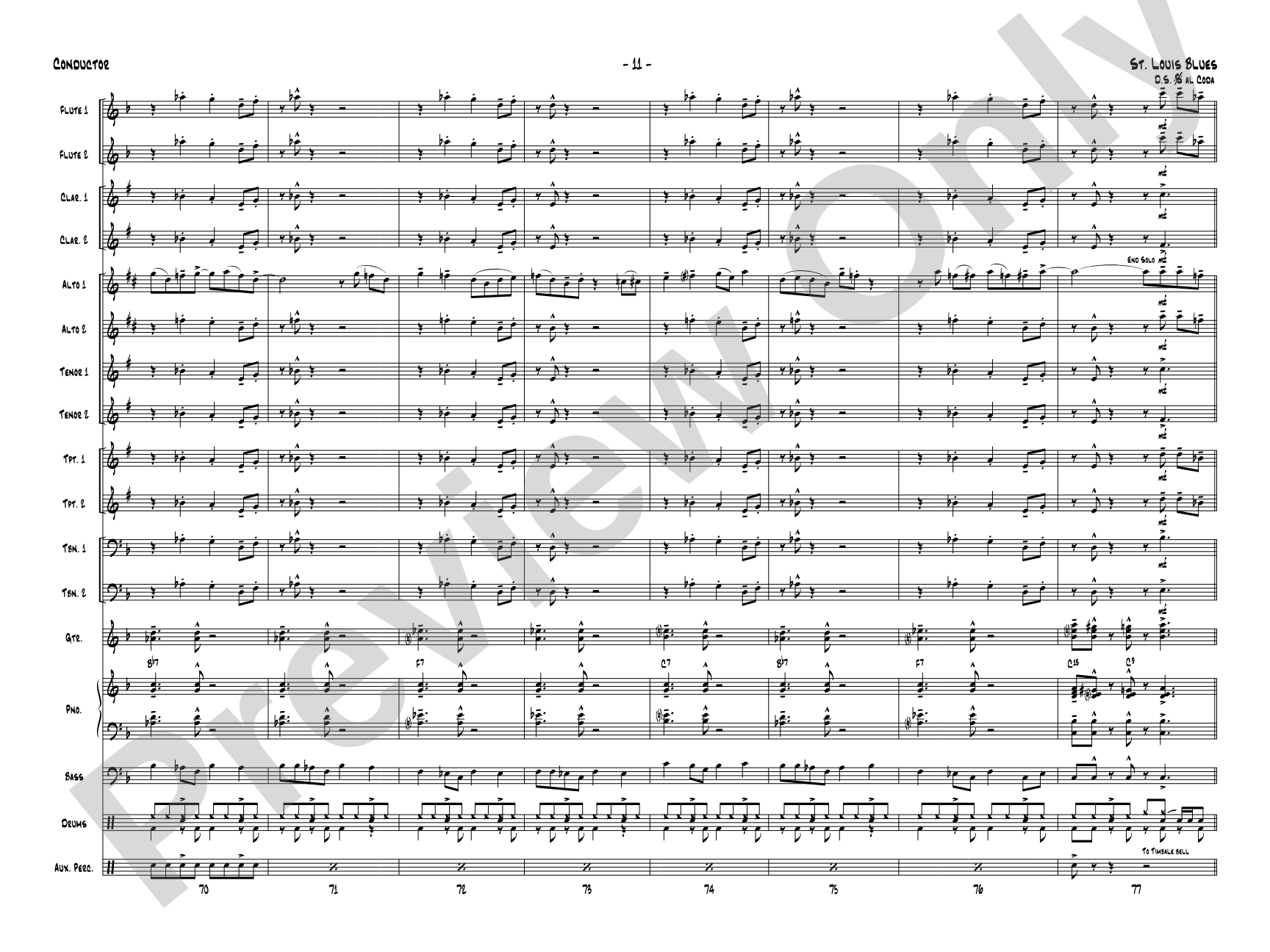
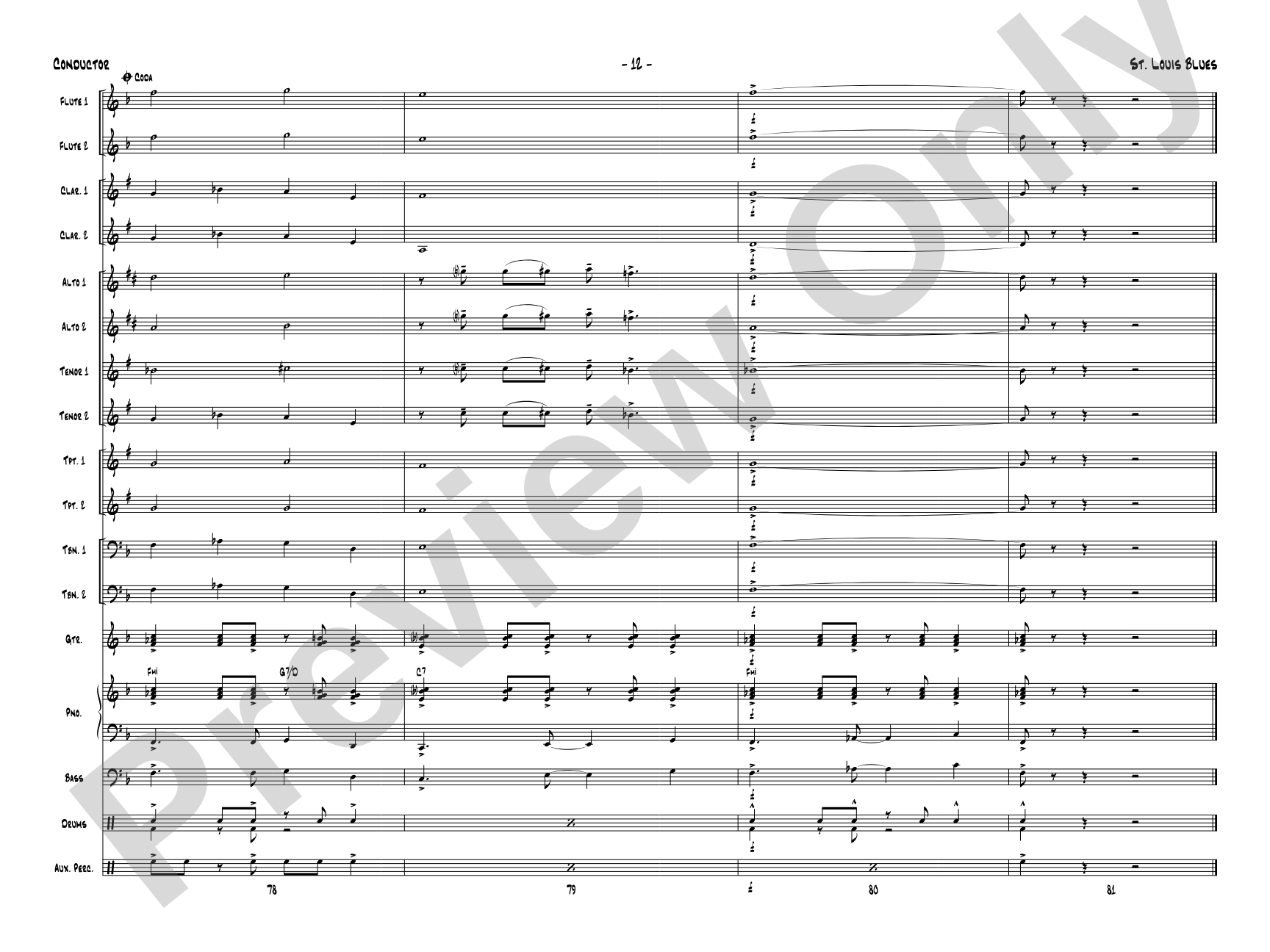
This well-known melody begins with a moderate Latin feel around 126 BPM then the groove changes into an accessible rock beat. St. Louis Blues arranged by Victor López is easy to teach and play with trumpet 1 range up to written D fourth line. Add the written alto solo, auxiliary percussion, optional flutes, clarinets, and vibes and you've got a winner. (3:02) This title is available in MakeMusic Cloud.


Don't just read it, hear it, play along with it, and watch your students grow with it. In MakeMusic Cloud, St. Louis Blues: Jazz Ensemble Conductor Score & Parts comes alive with professional accompaniment, adjustable tempo, and built-in practice tools that turn solo practice into real progress.
Open in the Player
Jump straight in and assign it today.
Start Your Free Trial
Open this title and explore the full library in minutes.
Sample Audio
1
Audio File
--:--
0:00
0:00
Sample Video
Additional Details
Series:
Jazz Beginnings Series
Publisher:
Alfred Music
Page Count:
90
SKU:
00-PK-0008320
More about this title
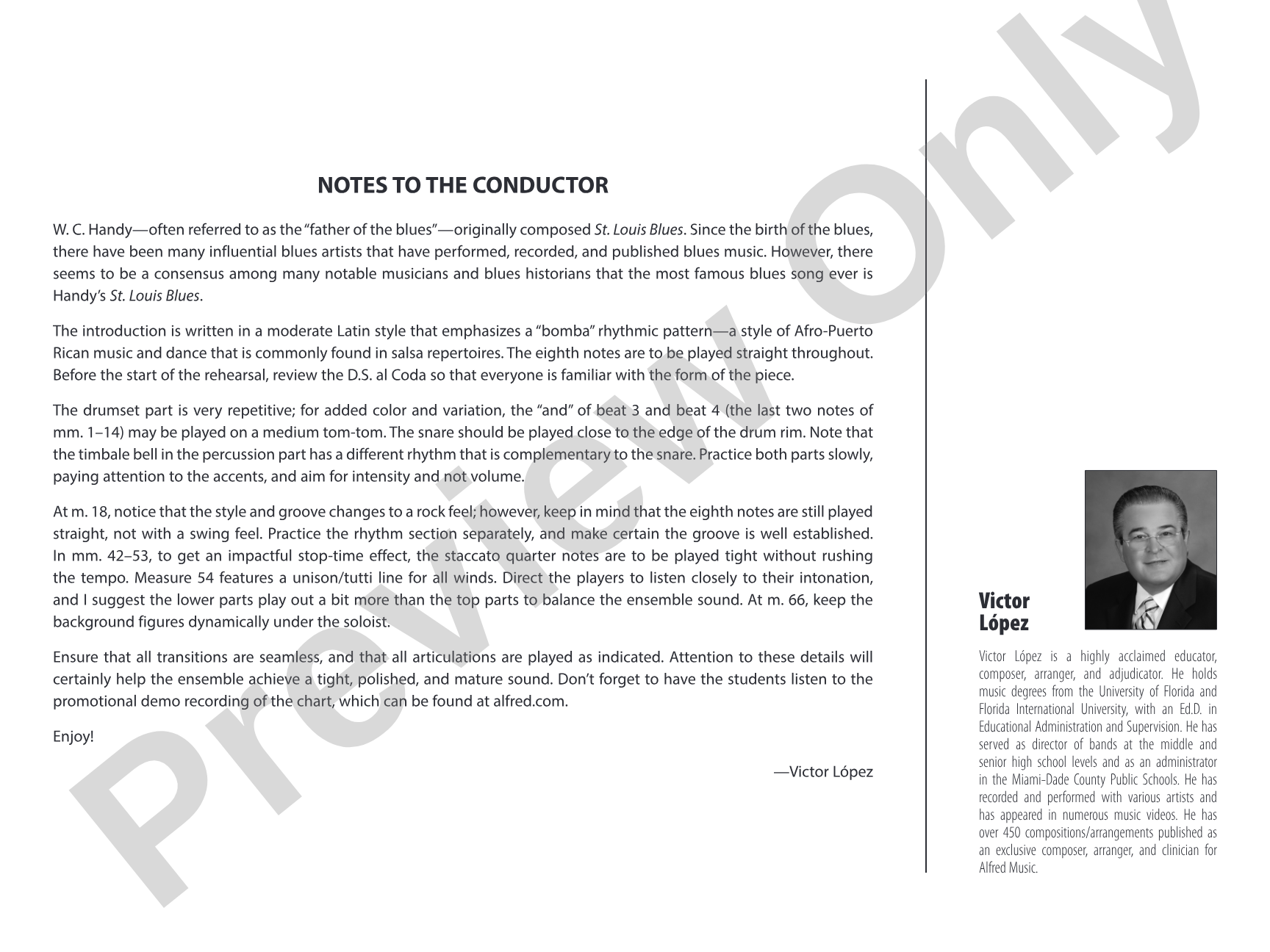
About the Composer: W.C. Handy
W.C. Handy (1873-1958) transformed American music by legitimizing the blues as serious artistic expression. A trained musician and bandleader, he composed some of the most enduring standards in the American repertoire, including 'Memphis Blues' and 'St. Louis Blues,' and established himself as a publisher and advocate for Black musicians during an era when the blues was often dismissed by classical institutions.
Handy's genius lay in his ability to bridge vernacular and formal musical traditions. His compositions combine the emotional depth of blues idiom with the structural clarity of composed song form, making them accessible to players and listeners across backgrounds. For music educators, his work remains essential repertoire that teaches students the foundational vocabulary of American jazz and popular music.
Why we love this
Victor López's arrangement strips away nothing essential while making this jazz standard genuinely playable for young ensembles. The Latin-to-rock transition keeps energy high and gives students a concrete lesson in groove shifting without requiring virtuosic chops. At grade ½, this delivers an immediate sense of accomplishment because even beginning players sound great on a tune this culturally important.
What to expect
The piece opens with understated sophistication: a moderate Latin groove that feels unhurried and cool. When the rock beat arrives, the energy lifts without losing control, creating a momentum that keeps listeners and players engaged. Throughout, there's a sense of ease and confidence, the mark of a melody so strong and an arrangement so well-judged that even young ensembles sound poised.
Who it's for
Jazz ensemble directors teaching grades ½ and up who want their students playing a legitimate American standard without editorial compromise. This works equally well for school jazz combos needing accessible full-ensemble material and for community ensembles introducing newer players to the language of swing and rock grooves.
How to get the most out of it
- Lock the rhythm section tight on the Latin feel transition at measure 1. The tempo stays at 126 BPM, but the feel shifts from swing to straight eighths. Have the bassist and drummer practice this handoff separately before the full section sits down.
- Feature the alto soloist generously. The written solo is a core element of the arrangement, so give that player space to breathe and time to prepare. Consider running multiple rehearsals focused just on the solo section so accompaniment parts can respond musically rather than just keeping time.
- Use the auxiliary percussion to punctuate, not overwhelm. The arrangement includes optional parts that add color; if you have players for them, encourage light touch and rhythmic precision so they enhance rather than clutter the groove.
- Balance the optional flutes and clarinets carefully in the ensemble texture. These doublings sweeten the sound but can blur articulation if not kept clean and aligned with the written parts.
How to use it
Open a concert with this to establish that jazz is intelligent, historical, and fun. The short runtime (3:02) pairs well with a longer art-song arrangement or a more demanding contemporary piece, letting audiences reset and preventing fatigue. Alternatively, use it mid-program as a palate cleanser between a classical work and something more experimental.
Skills your students will build
- Distinguishing and executing Latin swing feel versus straight-eighth rock grooves
- Reading and responding to sectional texture changes
- Balancing ensemble sound across full instrumentation with optional doublings
- Understanding blues form and melody as foundation for jazz interpretation
- Supporting an improvised solo within arranged ensemble context