
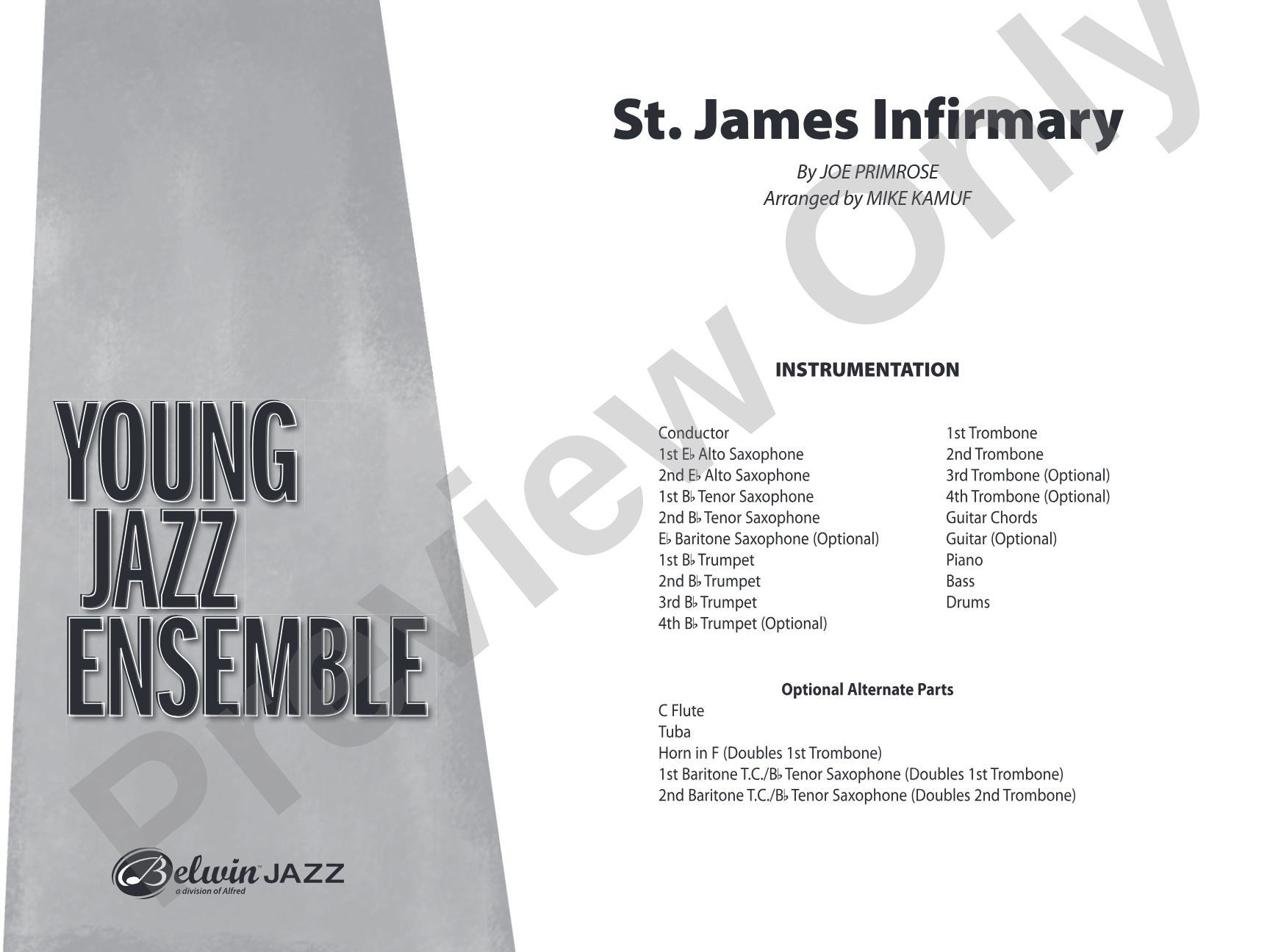
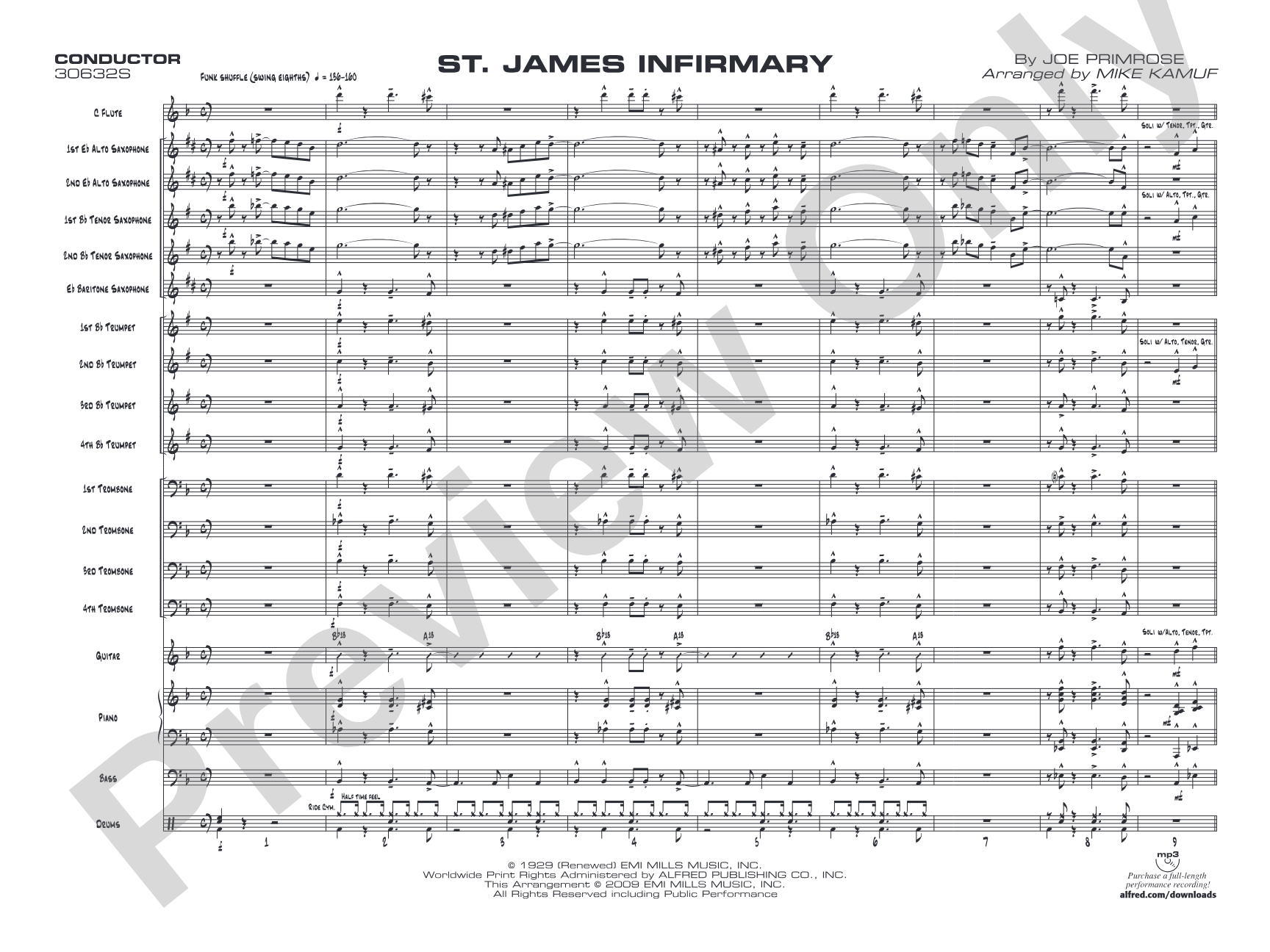
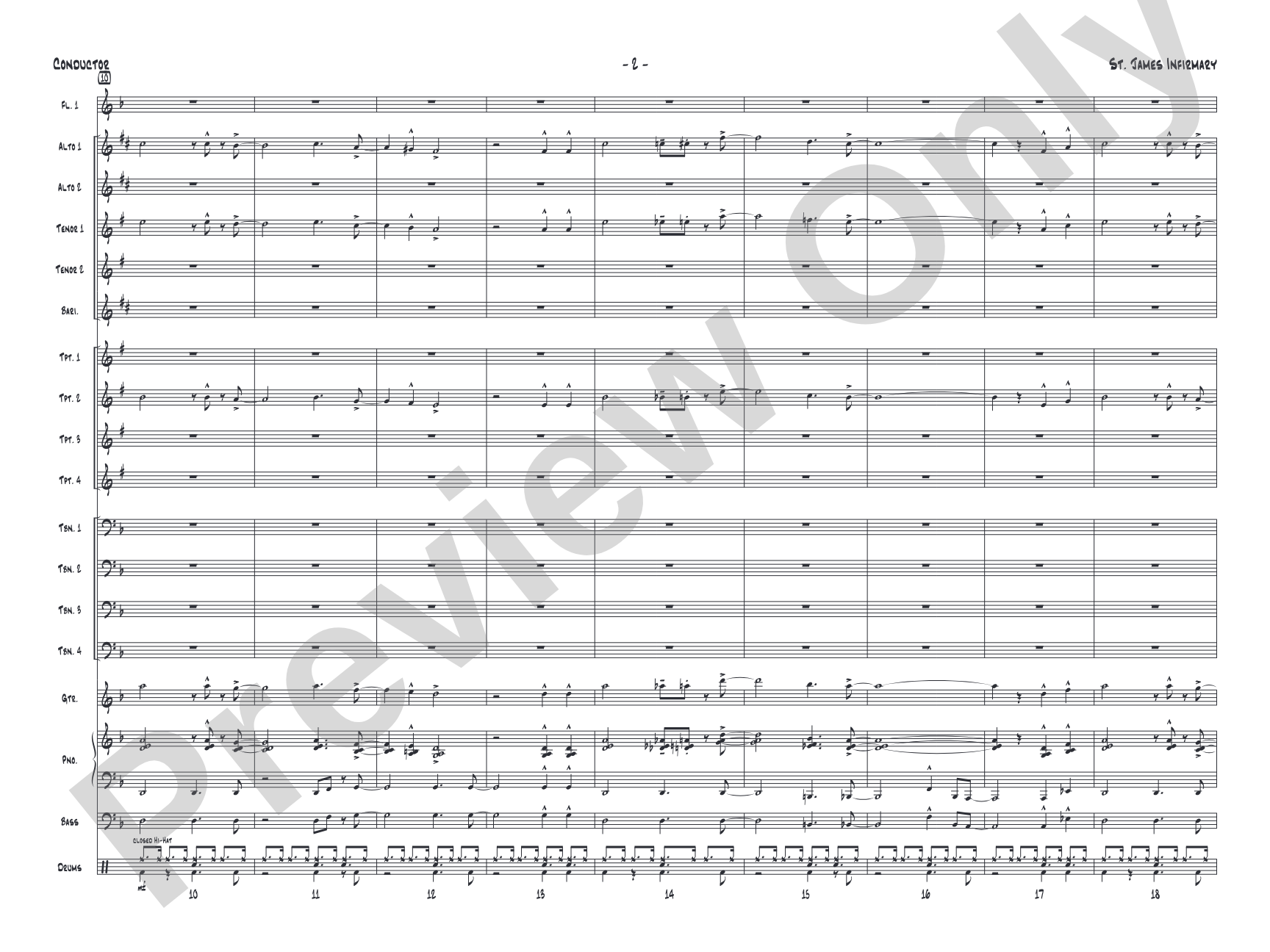
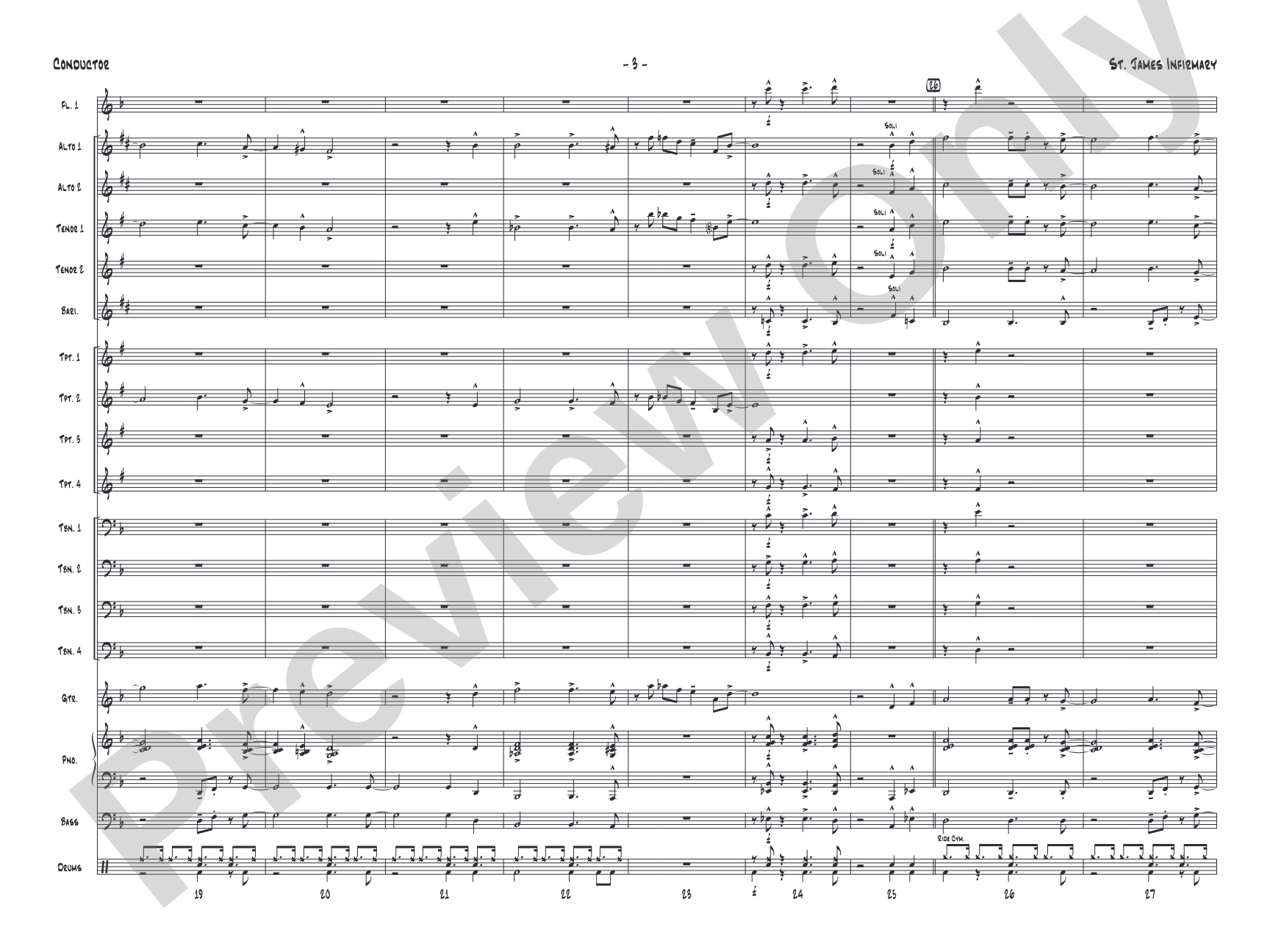
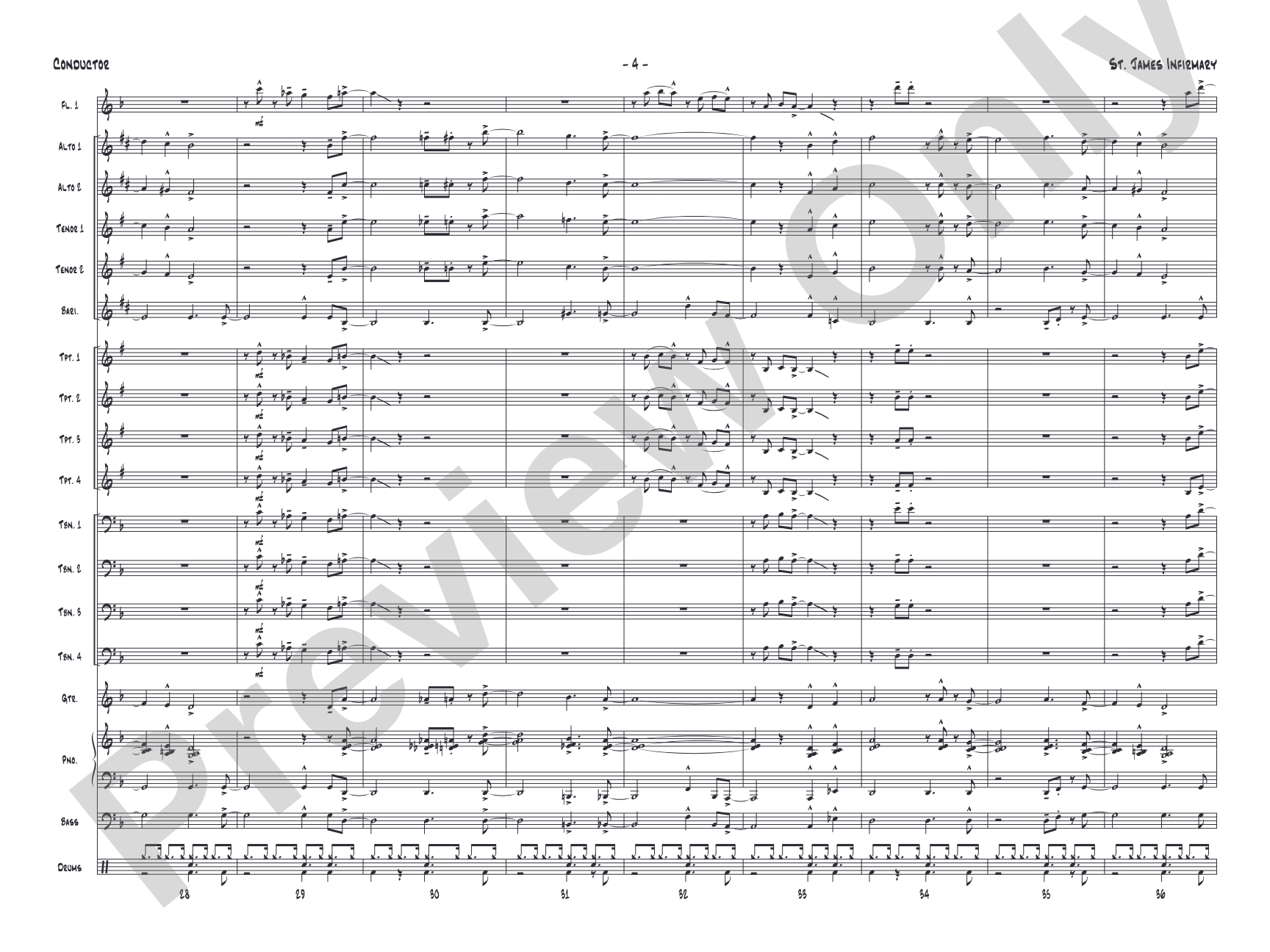
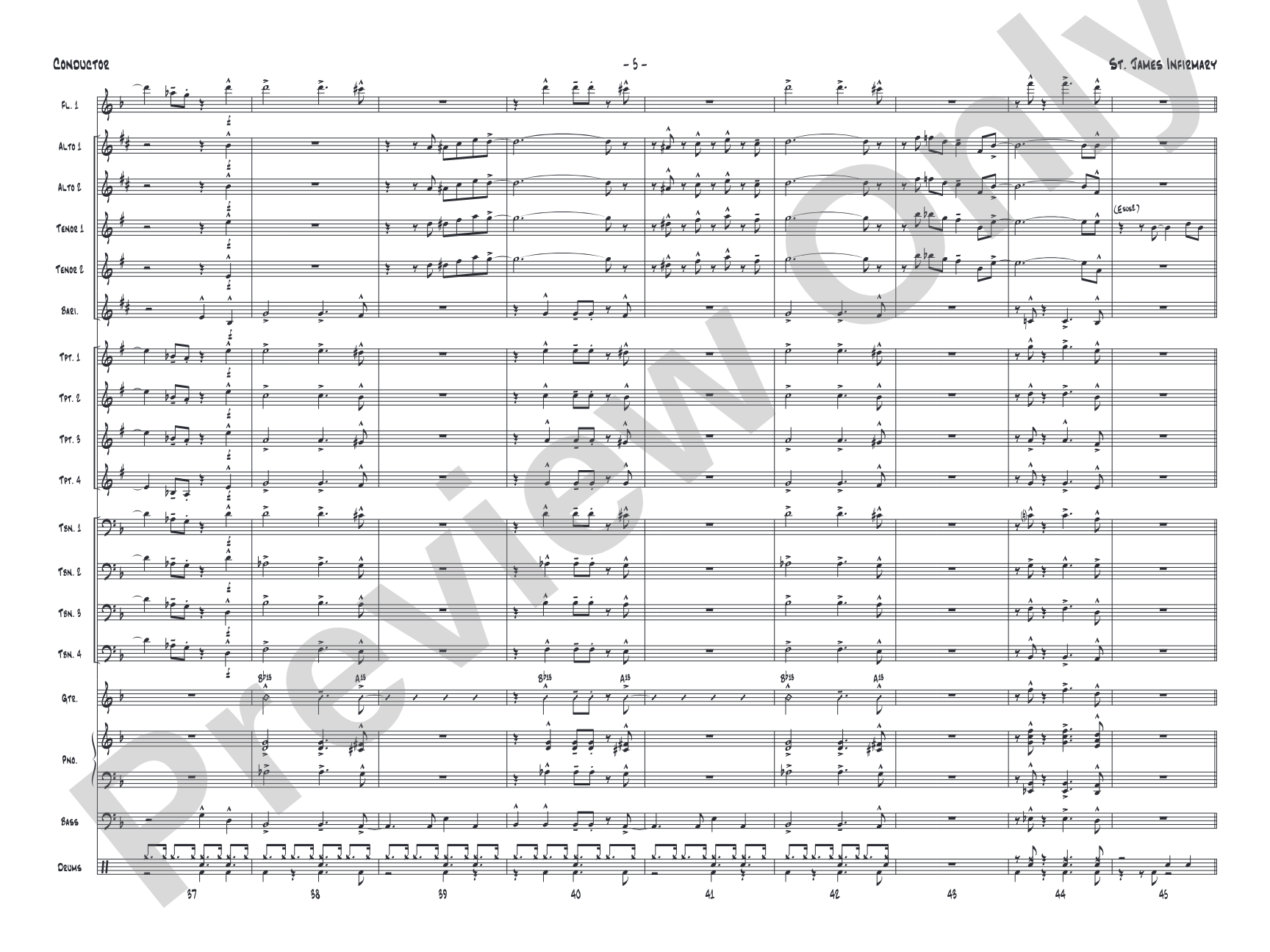
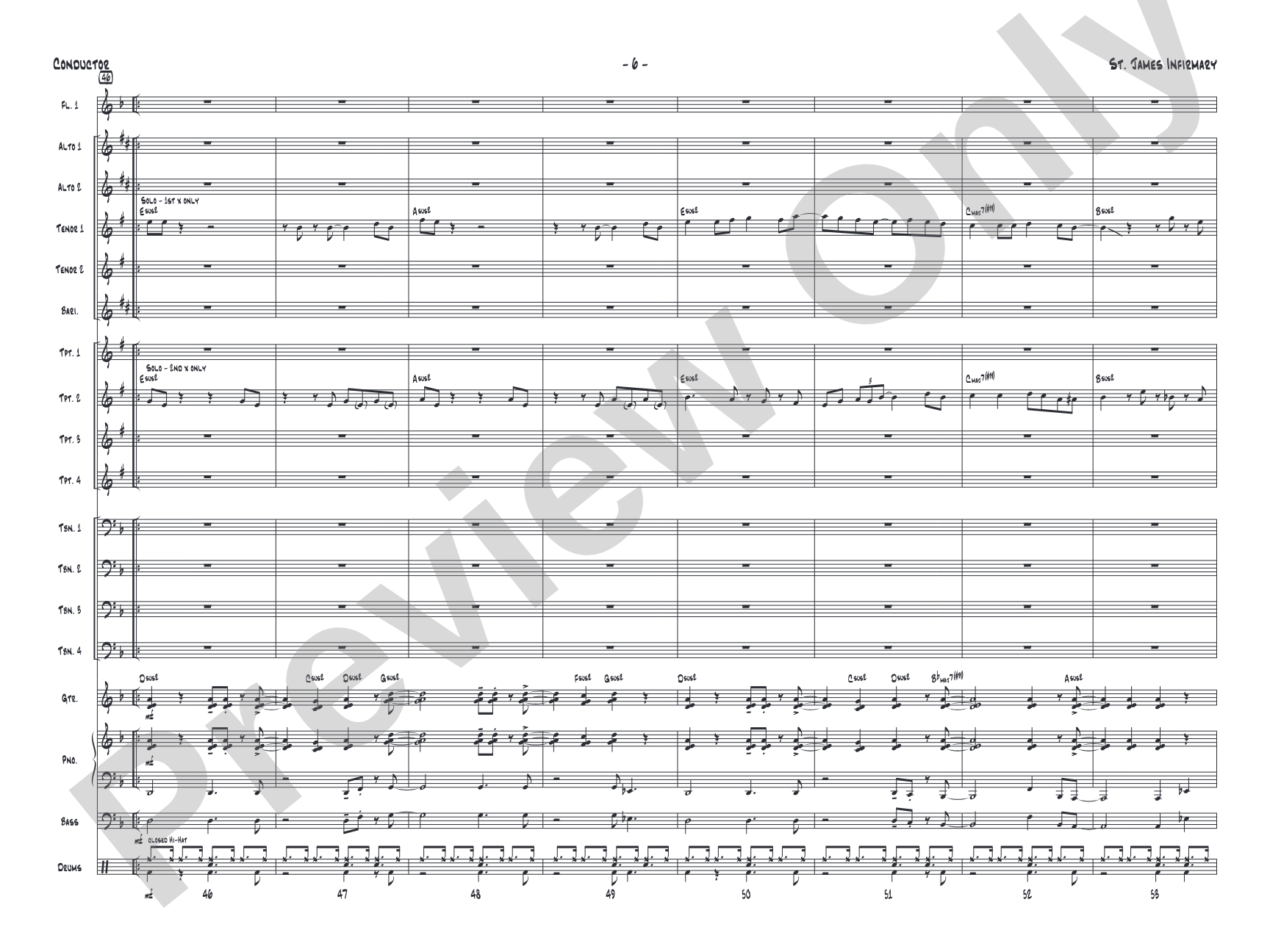
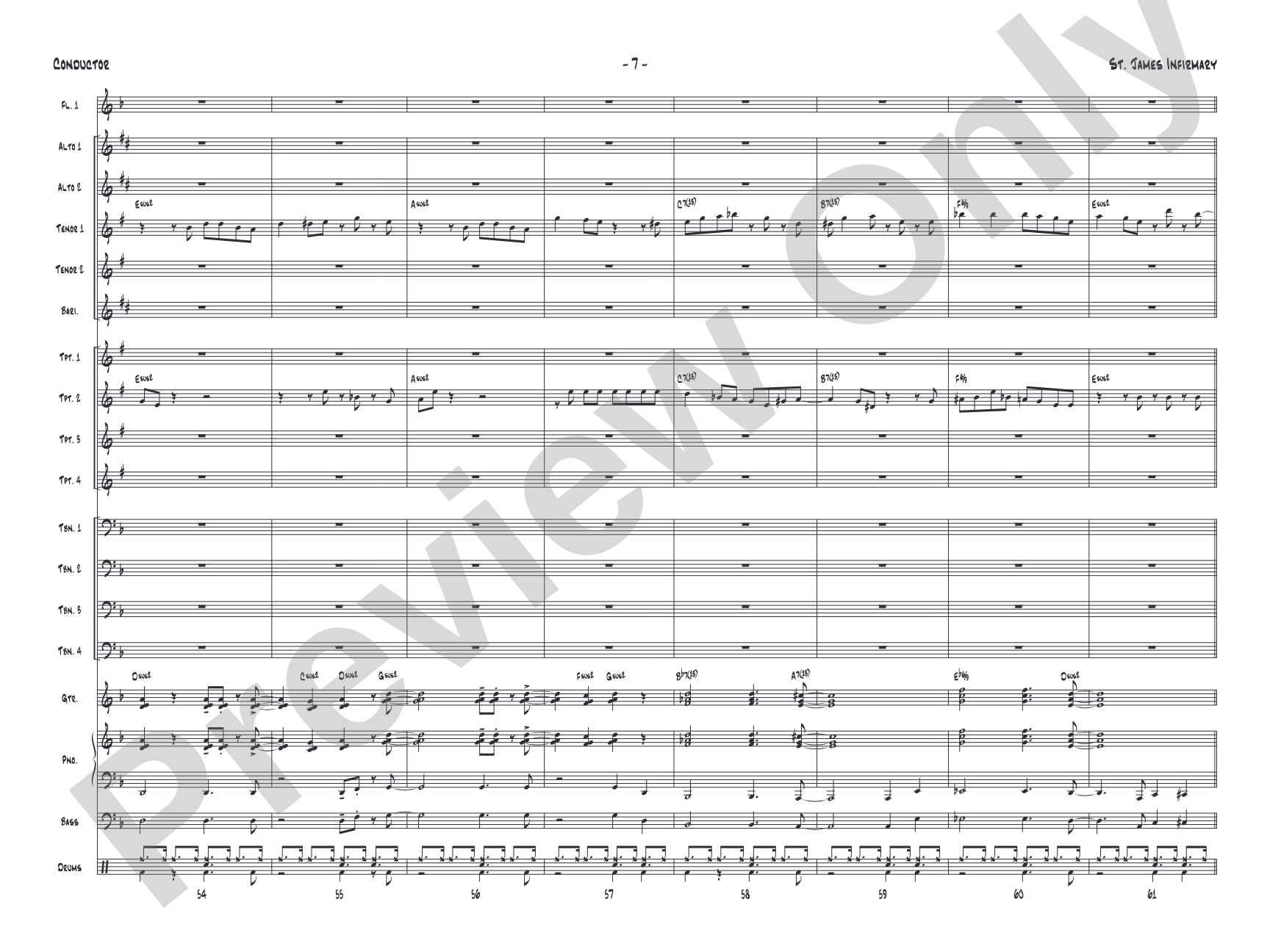
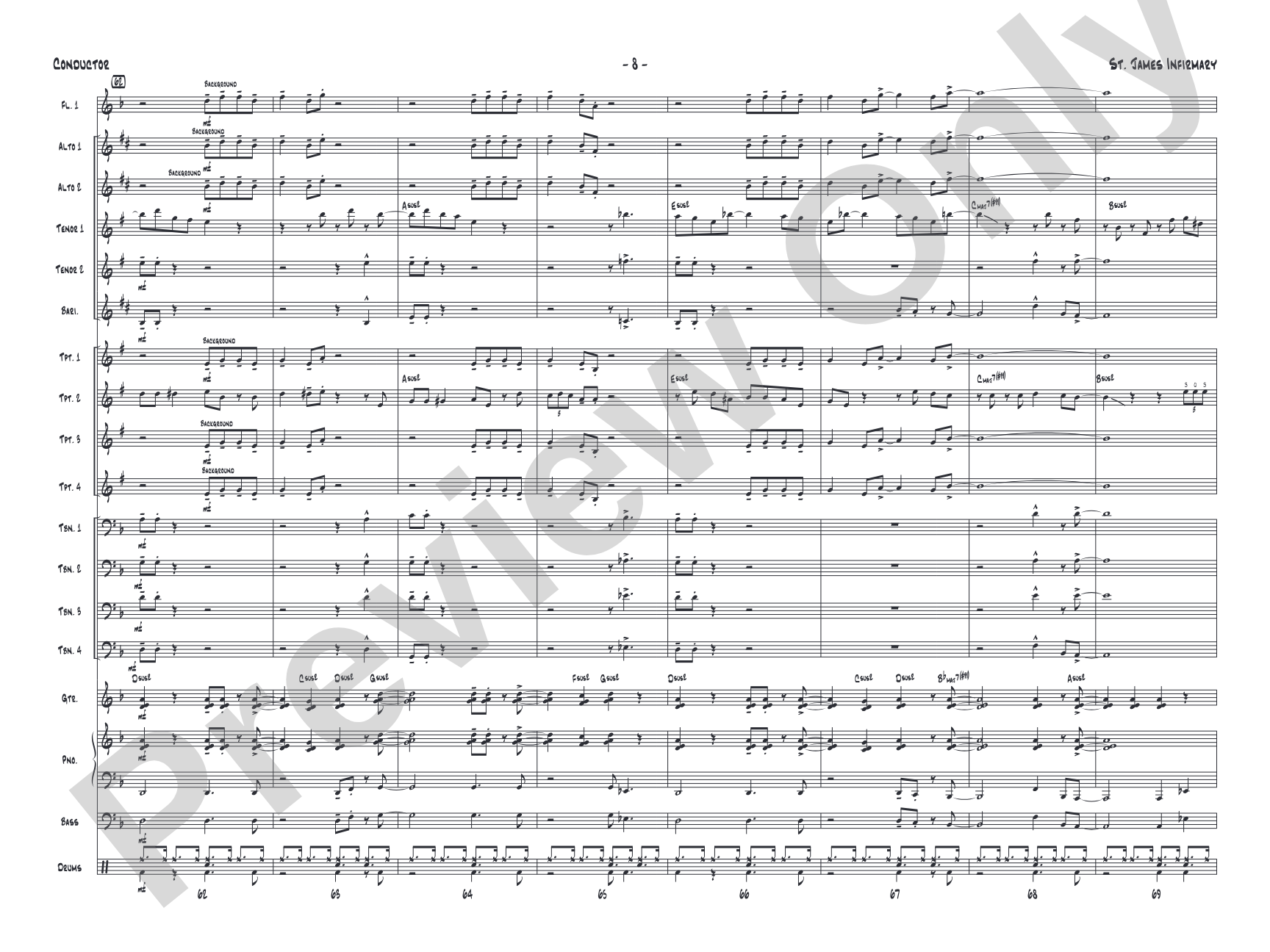
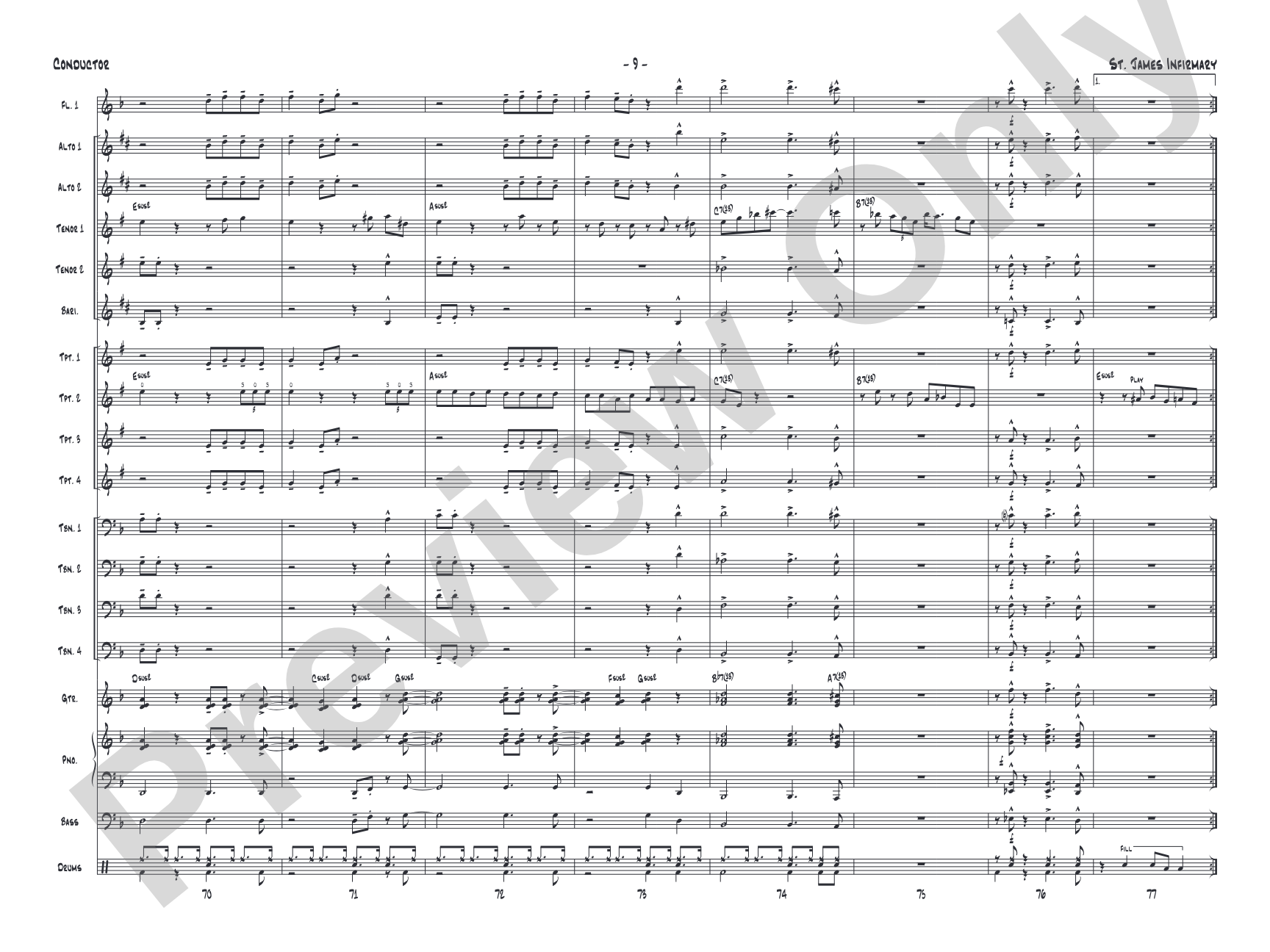
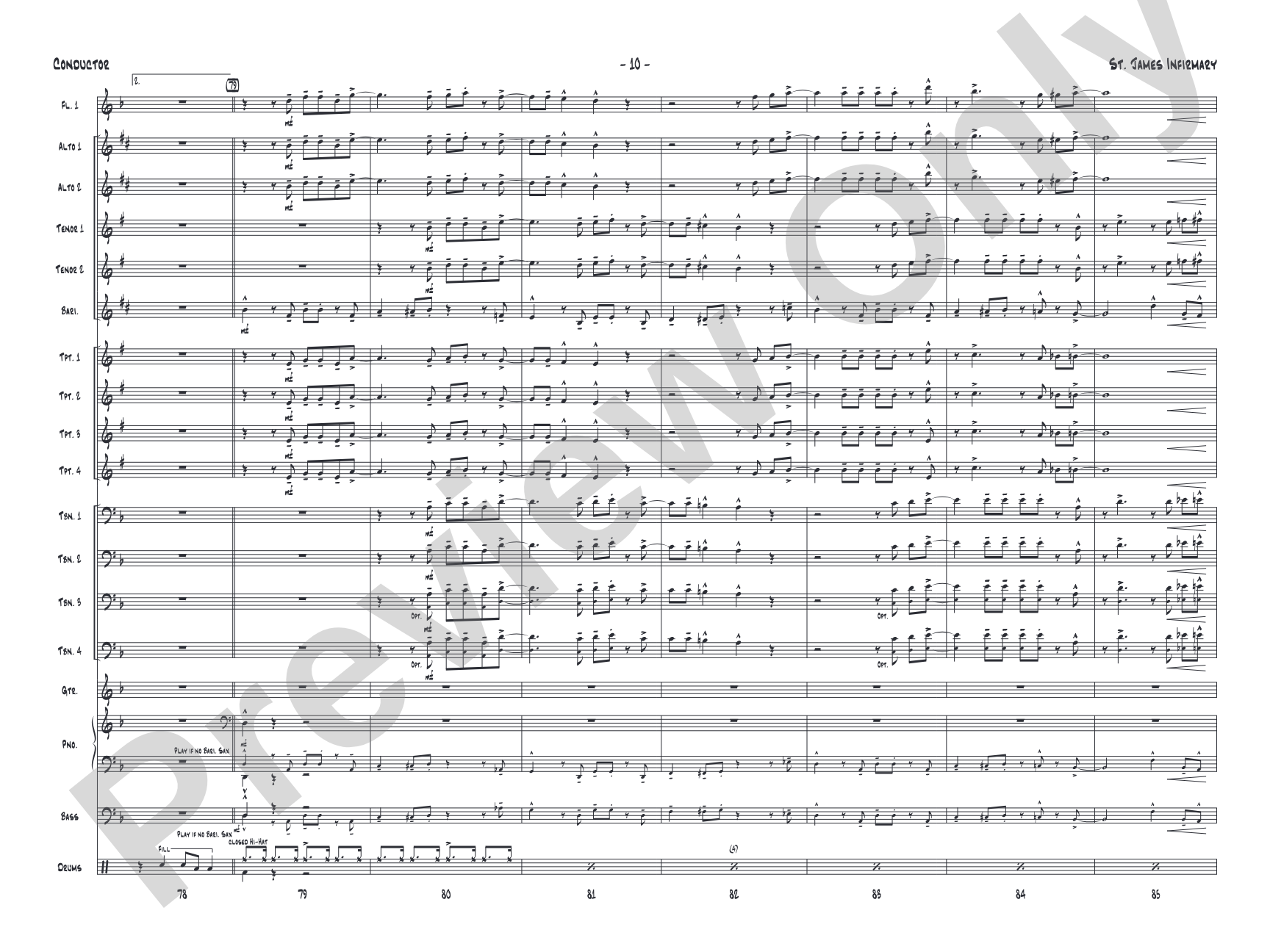
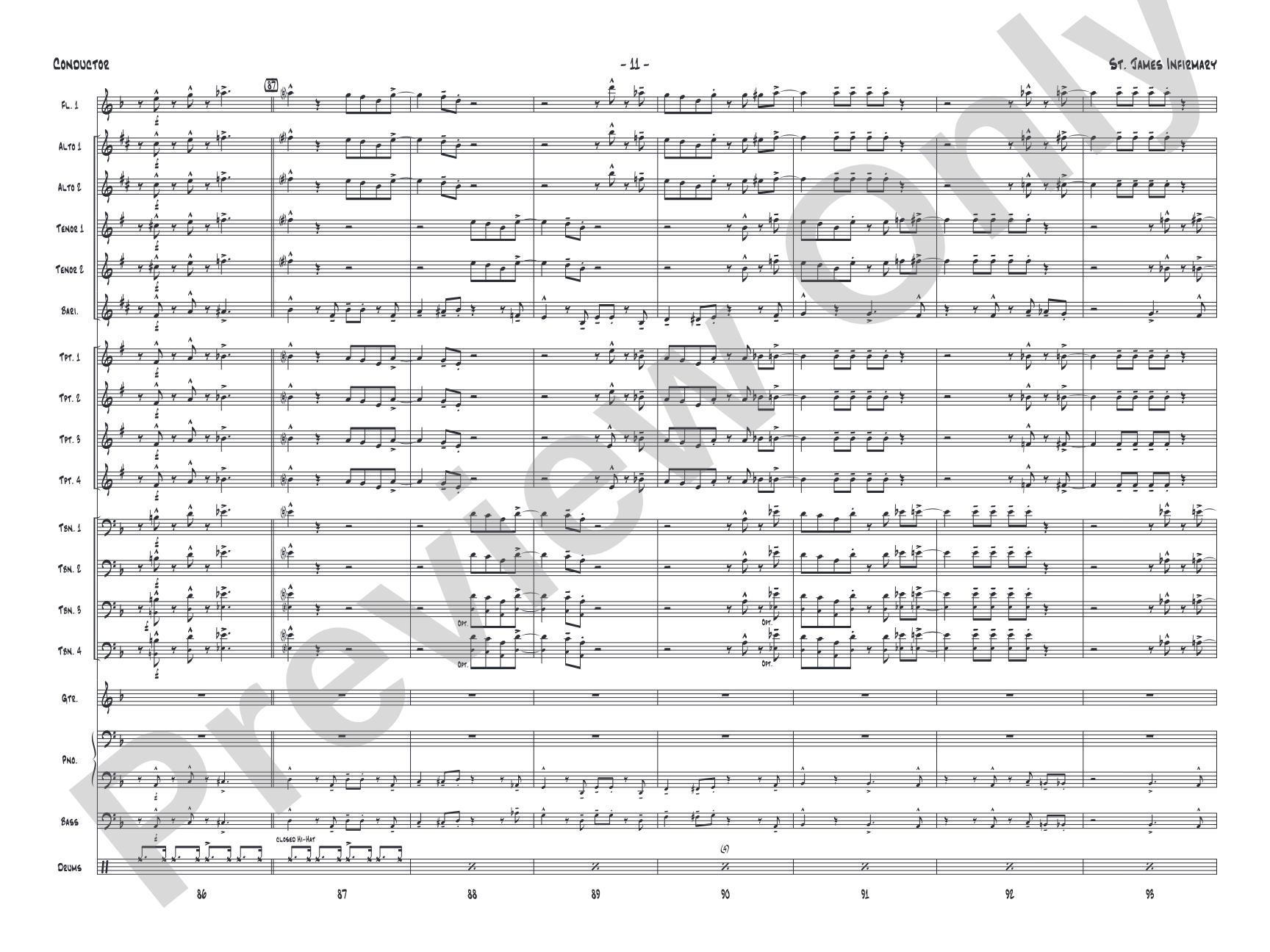

St. James Infirmary: Jazz Ensemble Conductor Score & Parts
Arr. Mike Kamuf
Grade: 2 (Medium Easy)
Item: 00-PK-0006907

$47.00
Pickup currently not available
Buy Extra Parts (Digital PDF Download)
Parts Added to Cart!
Description
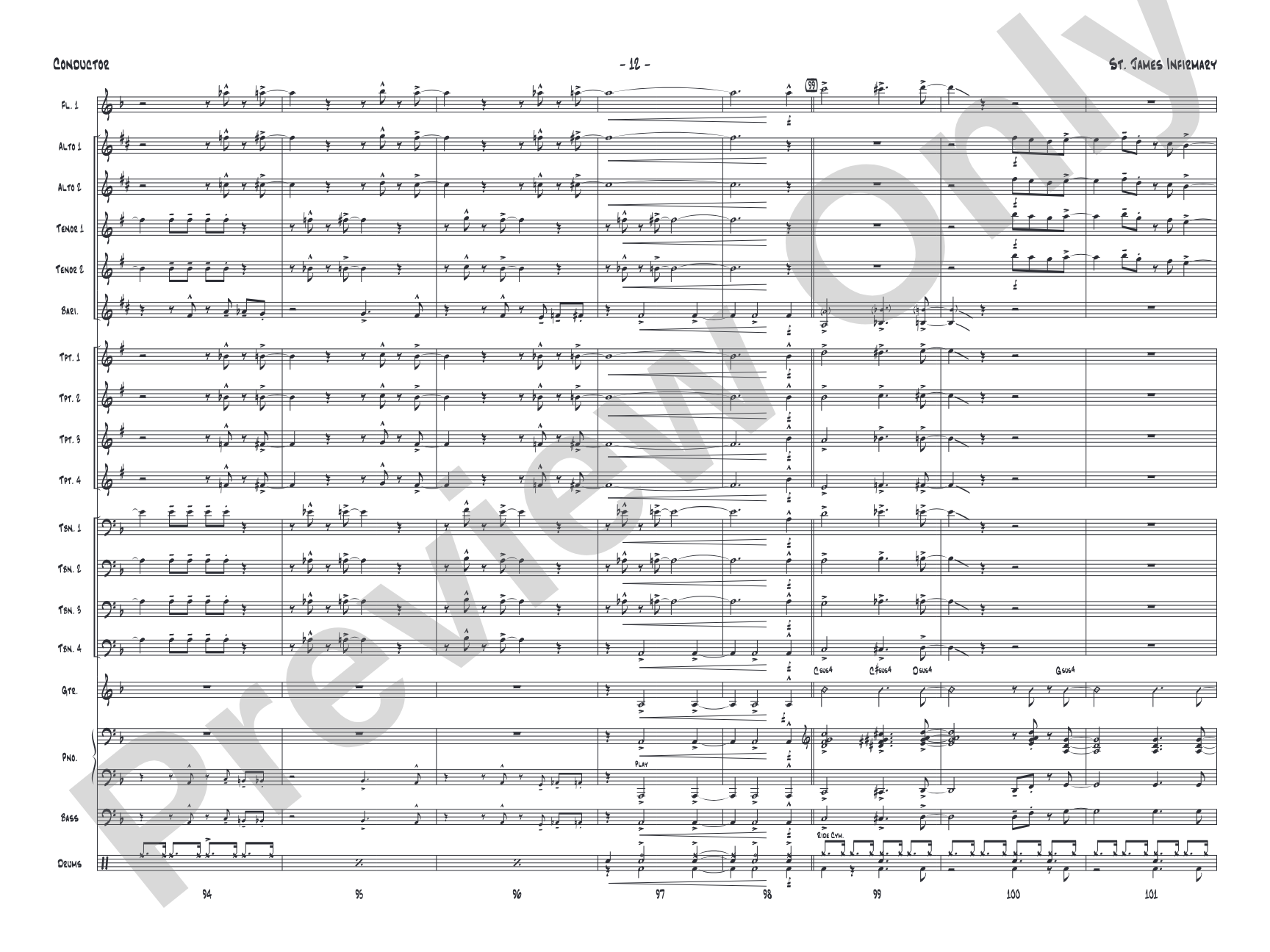
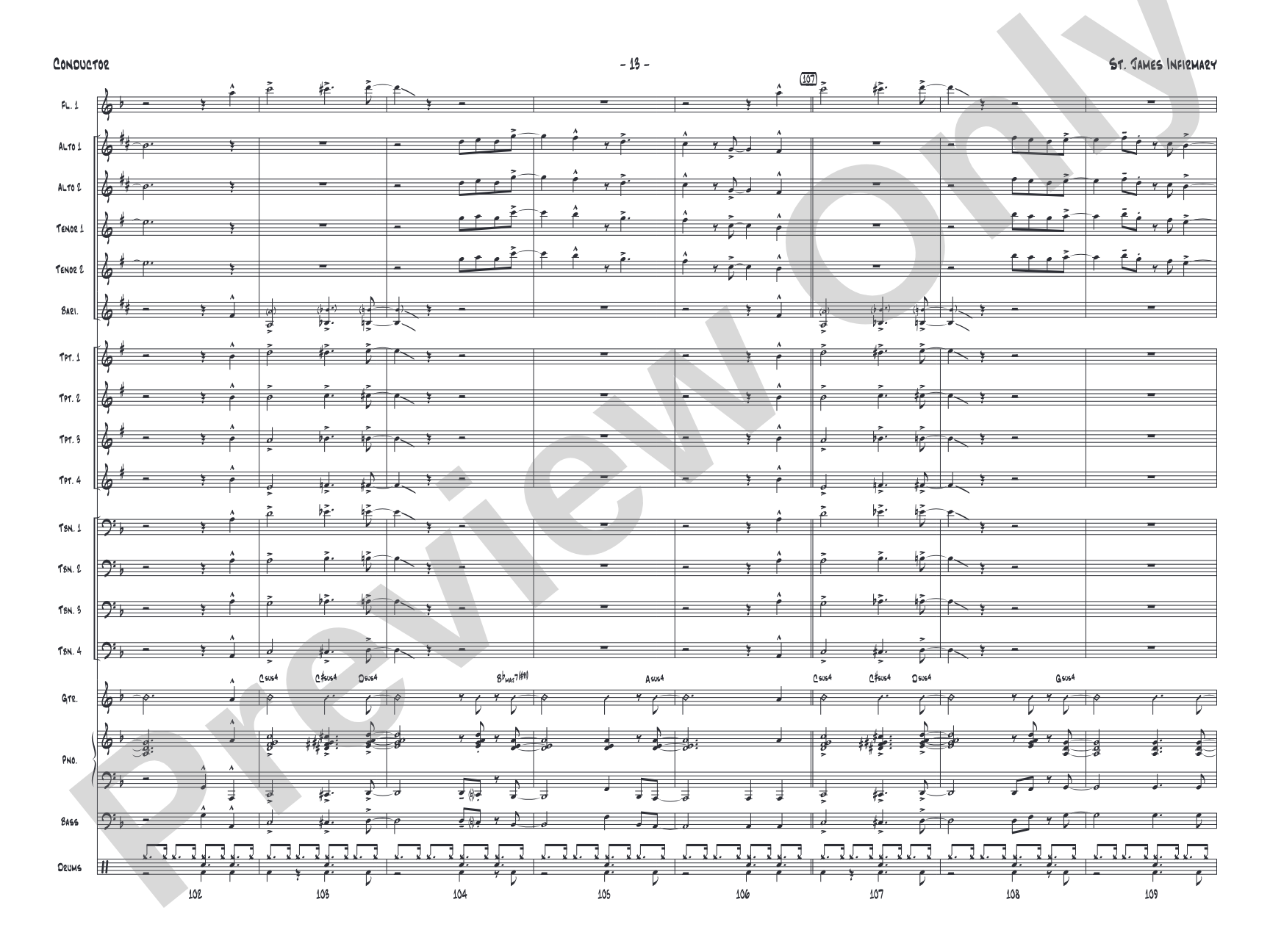
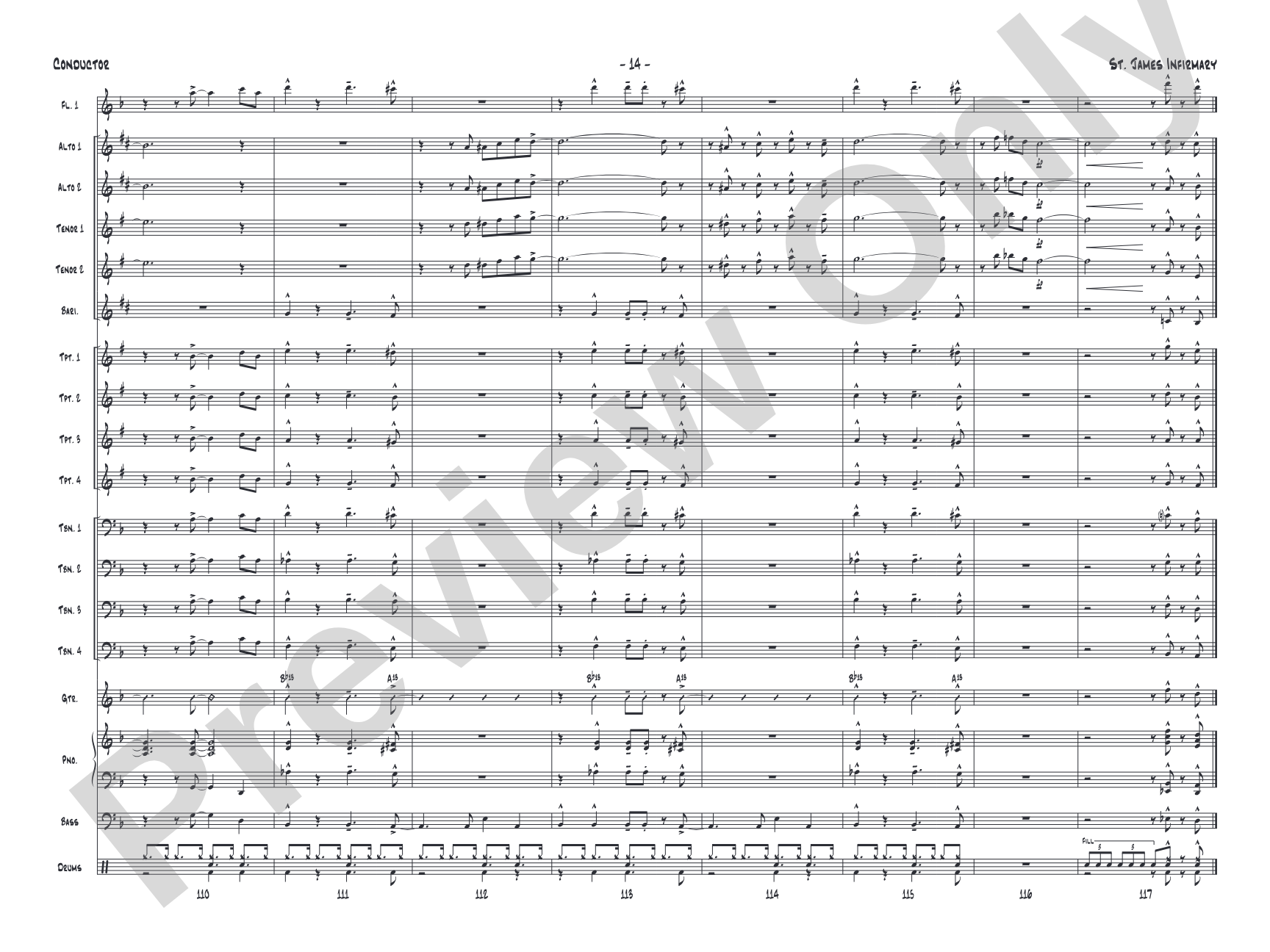
A contemporary treatment of this traditional jazz tune, arranger and band director Mike Kamuf combines multiple generations in one chart. With a shuffle groove, the opening melody is stated by alto, tenor, trumpet and optional guitar in fourths. Some countermelody development, solo space (written) for tenor and trumpet, then an interlude that builds big time into a powerful shout chorus to bring it home. It's a happening chart. (4:04) This title is available in MakeMusic Cloud.
"This chart gives the New Orleans classic a funk treatment. The piece starts with a great introduction, and a vamp based on the melody follows each chorus. Written solos for the tenor sax and trumpet are in D minor and use some nice stylistic elements."
-The Instrumentalist


"This chart gives the New Orleans classic a funk treatment. The piece starts with a great introduction, and a vamp based on the melody follows each chorus. Written solos for the tenor sax and trumpet are in D minor and use some nice stylistic elements."
-The Instrumentalist
Don't just read it, hear it, play along with it, and watch your students grow with it. In MakeMusic Cloud, St. James Infirmary: Jazz Ensemble Conductor Score & Parts comes alive with professional accompaniment, adjustable tempo, and built-in practice tools that turn solo practice into real progress.
Open in the Player
Jump straight in and assign it today.
Start Your Free Trial
Open this title and explore the full library in minutes.
Sample Audio
1
Audio File
--:--
0:00
0:00
Sample Video
No sample videos found.
Additional Details
Series:
Young Jazz Ensemble
Publisher:
Alfred Music
Page Count:
100
SKU:
00-PK-0006907
More about this title
About the Arranger: Mike Kamuf
Mike Kamuf has built his reputation on arrangements that connect student ensembles to the living tradition of jazz. His work as both arranger and band director gives him insight into what works in the rehearsal room, what engages young musicians, and how to honor a tune's roots while making it speak to contemporary ears.
Why we love this
Kamuf takes a standard that could feel dusty and makes it swing with real groove and energy. The arrangement builds logically from a clean statement of the melody through solo space to a shout chorus that lands hard, giving your students both a musical journey and a moment to feel genuinely powerful onstage.
What to expect
Hip and accessible. The tune carries its New Orleans DNA, but Kamuf's funk treatment pushes it forward; there's a swagger here that feels modern without losing the blues. It's the kind of chart that makes students feel like they're playing real jazz, not just reading it.
Who it's for
Grade 2 ensembles ready to dig into jazz language beyond simple swing. Your students need basic jazz fundamentals, but this arrangement rewards groups that are beginning to understand groove, texture, and the difference between playing notes and playing with intent.
How to get the most out of it
- Lock the shuffle feel early in rehearsal. The groove sits underneath everything; if the rhythm section isn't locked, the countermelody and solos will float.
- Give your tenor and trumpet soloists time to internalize the D minor tonality and the stylistic vocabulary Kamuf has written. These aren't ad-lib spaces; the solo lines teach sound and phrasing.
- Build the shout chorus gradually in rehearsal. Don't hit full volume on day one. Let it grow so the payoff in performance feels earned and the audience hears the ascent.
How to use it
Program this at a jazz festival or concert where you want to showcase both your ensemble's musicality and its ability to handle groove-based writing. The four-minute duration and contest-appropriate energy make it ideal for festival competitions, or use it mid-set to lift the energy between ballads and faster material.
Skills your students will build
- Shuffle rhythm and swing feel articulation
- Harmonic thinking in D minor with blues-based voicing
- Reading written solos with stylistic interpretation
- Countermelody development and textural layering
- Ensemble balance and dynamic control through a building form