Spy Games: 1st Percussion Sheet Music Preview

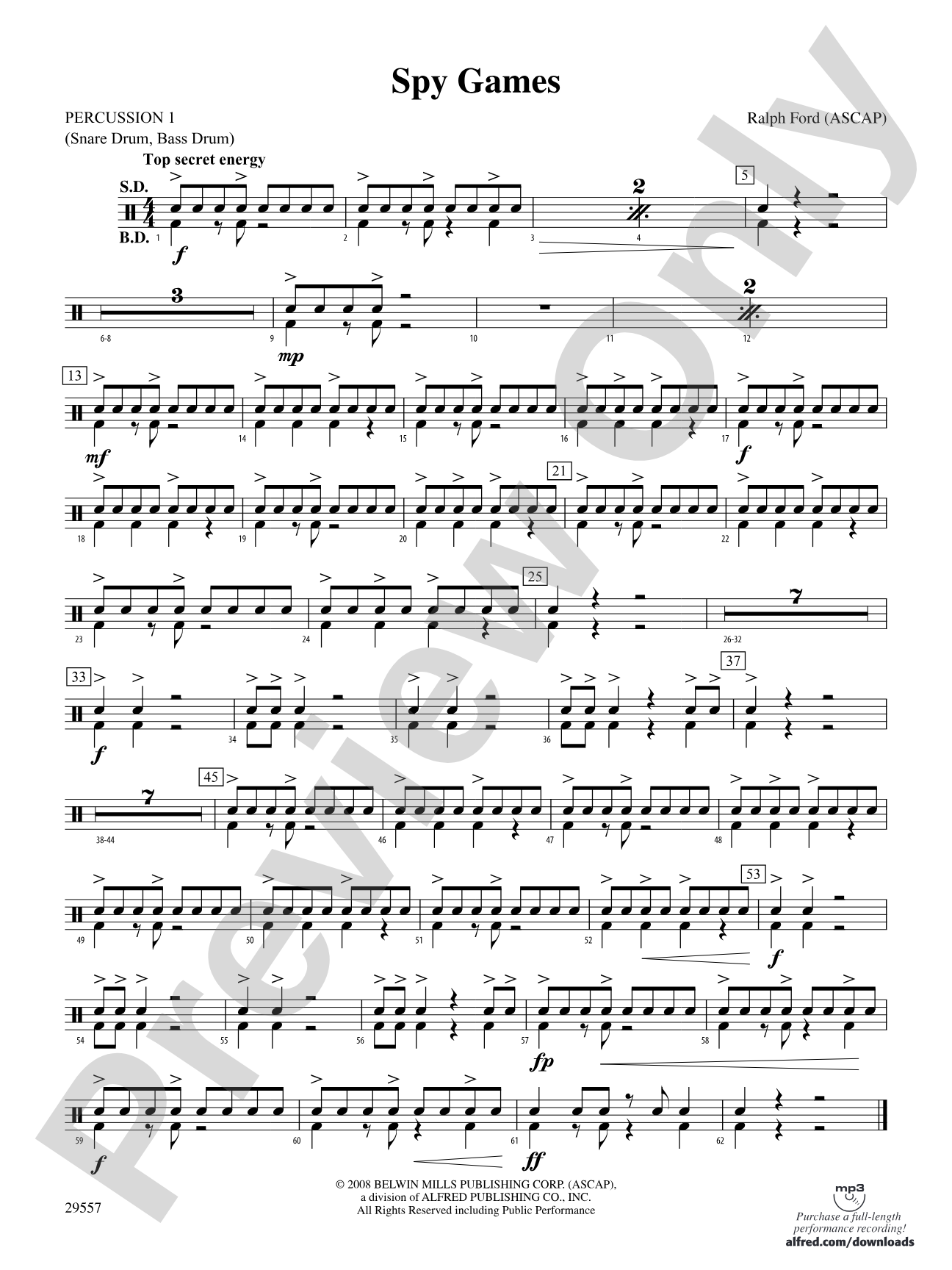
Spy Games: 1st Percussion

By Ralph Ford

Grade: 1 (Very Easy)

Item: 00-PC-0001460_PC1

Digital Download
$3.00
Description
Experience the action and adventures of an international agent in Spy Games! This "thriller" will have your students and audience members alike on the edge of their seats. A high-energy choice but solidly scored and very playable at the beginning level. (1:58)

Don't just read it, hear it, play along with it, and watch your students grow with it. In MakeMusic Cloud, Spy Games: 1st Percussion comes alive with professional accompaniment, adjustable tempo, and built-in practice tools that turn solo practice into real progress.

Sample Audio
0:00
0:00
Sample Video
Additional Details
Series: Belwin Beginning Band
Publisher: Alfred Music
Page Count: 132
SKU: 00-PC-0001460_PC1

More about this title

About the Composer: Ralph Ford

Ralph Ford

Ralph Ford brings together composition, orchestration, and real-world media experience in his work for young ensembles. Born in 1963, he spent 29 years teaching at the university level while simultaneously building a prolific career as a composer and arranger. His musical training began early; he worked as a professional arranger starting at age fifteen and later served as Director of Jazz Ensemble I during his undergraduate years at Troy State University, eventually joining that institution's faculty as staff arranger and orchestration instructor.

Ford has written over 250 titles for Belwin/Alfred Music, ranging from concert band and orchestra to jazz ensemble and marching band. His compositional voice draws from his diverse background in broadcast media, jingles, television production, and live musical direction. His music is performed regularly by school, university, military, and professional ensembles worldwide, and his work in media and advertising has earned both national recognition and international awards.

Why we love this

Spy Games delivers genuine theatrical energy without sacrificing playability. Ford writes clearly for beginning bands, which means no awkward doublings, transparent orchestration, and parts that sit well in each section's range. The programming hook is real too: a novelty piece that genuinely engages young musicians and audiences without winking condescendingly at either one.

What to expect

A cinematic spy thriller compressed into under two minutes. Sharp rhythmic stabs, forward momentum, and orchestral color create genuine tension and adventure without complexity. The piece feels like a movie trailer scored for young musicians: propulsive, dramatic, and utterly straightforward.

Who it's for

Beginning concert bands looking for a concert opener or novelty feature that actually challenges musicianship rather than relying on gimmick alone. This works equally well for first-year and second-year programs seeking to build ensemble confidence with engaging material.

How to get the most out of it

  • Keep the articulation crisp and intentional, especially in the rhythm section. Clear tonguing in the percussive figures drives the thriller atmosphere.
  • Balance the main melody between sections so no single voice disappears. At Grade 1, spread memorable lines across flutes, clarinets, and trumpets rather than isolating one part.
  • Establish a steady tempo from the downbeat. Young ensembles often rush novelty pieces; use the conductor's clear beat to anchor the rhythm throughout the 1:58 duration.
  • Let the percussion parts shine during the action sequences. These figures carry the excitement, so ensure they are heard distinctly without drowning out the winds.

How to use it

Open a concert with this to grab audience attention immediately, or program it as a palate-cleansing novelty between classical and contemporary works. Its compact length and high energy make it ideal for a spring concert finale or a show-stopper in a pops program aimed at family audiences.

Skills your students will build

  • Executing crisp articulation in rhythmic passages
  • Balancing individual lines within a multi-part ensemble texture
  • Responding to clear conducting beats and tempo control
  • Maintaining intonation and tone production under rhythmic intensity
  • Reading straightforward Grade 1 band parts with multiple instrumental doublings

You May Also Like