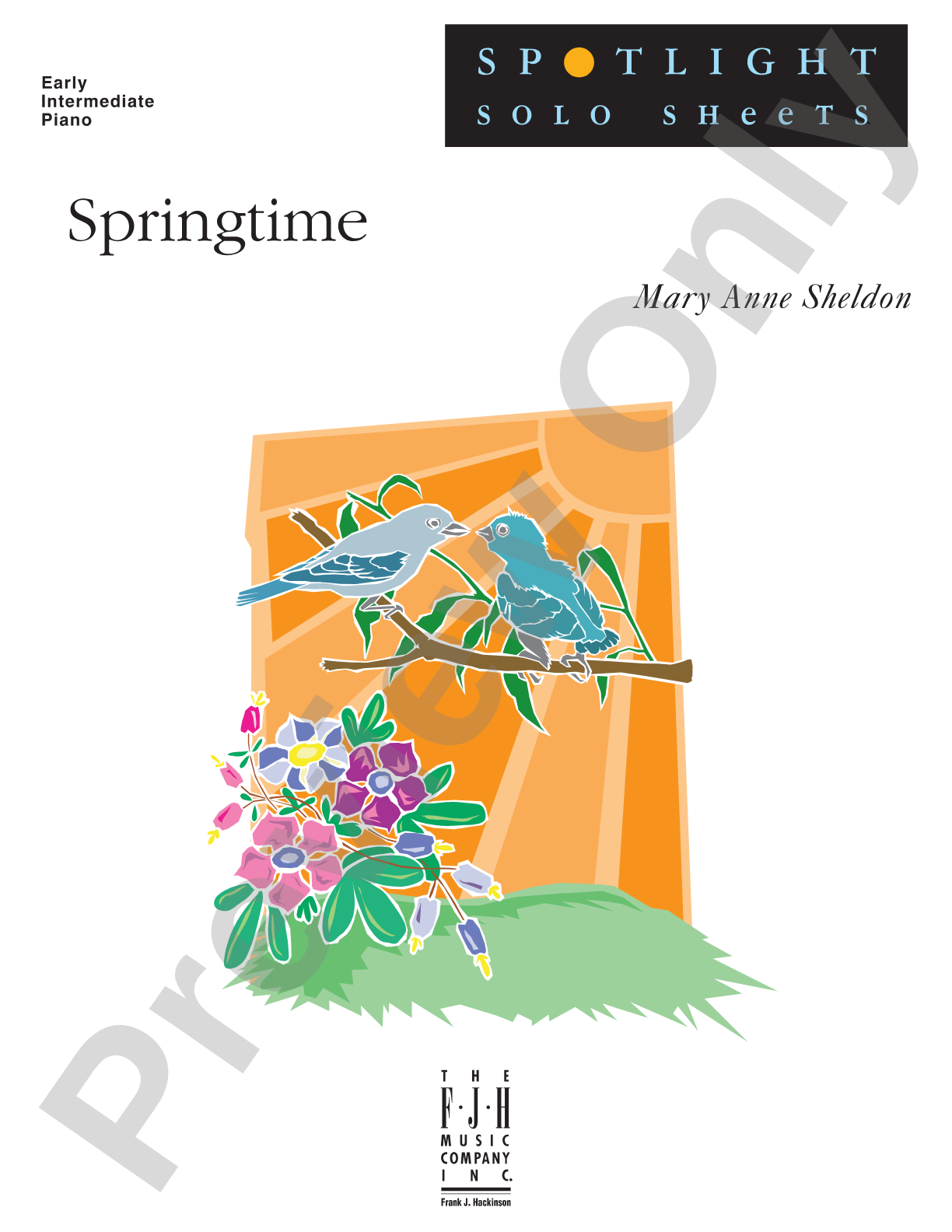
A charming waltz written in classical style, Springtime evokes the free and easy feel of the season. Features melodic echo effects that teach control of dynamics, and a left-hand Alberti bass accompaniment, written in quarter notes. An ideal spring recital choice!
Discover MakeMusic Cloud: thousands of interactive titles your students can play along with today.
Sheldon strikes the balance every spring recital needs: a piece that sounds elegant and mature without demanding technical fireworks. The melodic echo effects are compositionally honest—they genuinely teach pianists how to shape dynamics across phrases—rather than tacked on for pedagogical convenience.
What to expect
Springtime captures the unfussy elegance of a classical waltz, with a melody that floats gently over a dependable bass line. The echo effects give the piece a conversational quality—as if one voice is answering another—creating a sense of ease and natural unfolding that mirrors the season's renewal.
Who it's for
Intermediate pianists preparing for spring recitals or those strengthening their grasp of classical style and phrasing. This piece works well for students who have solid rhythm foundations and are ready to explore expressive dynamics without navigating complex fingerings or wide leaps.
How to get the most out of it
Shape the echoed melodic lines with intentional dynamic contrast. The first statement should feel full and open; the response should recede slightly, creating the illusion of distance without losing tone quality.
Keep the Alberti bass steady and even in quarter notes. This accompaniment pattern is deceptively easy to rush; tap your foot or practice hands separately to lock in the waltz pulse before combining.
Lean into the classical style's clarity. Avoid pedaling through chord changes in the left hand; let the bass articulation speak and support the melody's phrasing.
Use the repeats to refine your dynamic control. The second time through a section is your chance to deepen the echo effect and make the contrast between statements more pronounced.
How to use it
Position this as a lighter moment in a recital, perhaps between a Baroque prelude and a Romantic character piece. Its classical restraint and moderate length make it an excellent palate cleanser or a charming encore that leaves audiences with the warmth of spring rather than the intensity of a larger-scale work.
Skills your students will build
Dynamic control through melodic echo and question-and-answer phrasing
Steady pulse and rhythmic accuracy in Alberti bass accompaniment patterns
Classical style interpretation and phrase shaping
Hand independence (melody versus steady bass accompaniment)
Pedal discipline and selective use in accompaniment
You May Also Like
Scan to Complete Your Purchase
Use your phone's camera to scan the code below
You'll log in on your phone and the order will be added to your account