
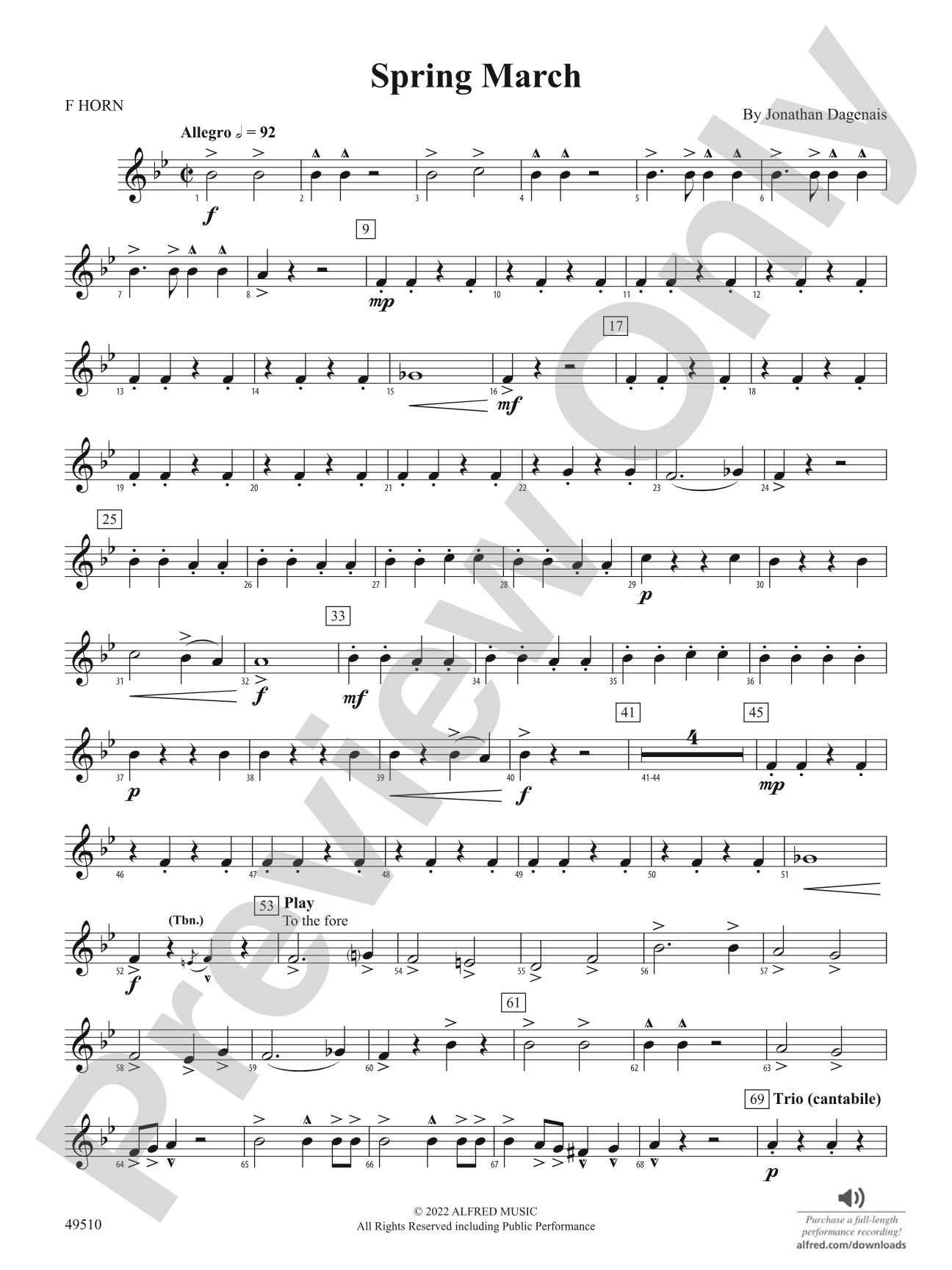

Spring March: 1st F Horn
By Jonathan Dagenais
Grade: 2
Item: 00-PC-0018803_H1
$3.00
Pickup currently not available
Description
Spring March by Jonathan Dagenais was written for the Saint-Edmond High School music program in Quebec, Canada. Spring March is a short, lively, and exciting concert march for beginner bands. With several thematic and humorous elements, this piece is a fun way to work on lightness of style, functional balance, tempo stability, and is perfect for teaching cut time and the traditional march form and structure. There are clear stylistic contrasts between all the different sections of the piece and the beautiful lyrical trio section offers a great opportunity to work on phrasing and support. With efficient and exciting percussion parts, the piece also offers interesting lines and melodies for every instrument. (3:00)


Don't just read it, hear it, play along with it, and watch your students grow with it. In MakeMusic Cloud, Spring March: 1st F Horn comes alive with professional accompaniment, adjustable tempo, and built-in practice tools that turn solo practice into real progress.
Open in the Player
Jump straight in and assign it today.
Start Your Free Trial
Open this title and explore the full library in minutes.
Sample Audio
1
Audio File
--:--
0:00
0:00
Sample Video
Additional Details
Series:
Developing Band Series
Publisher:
Alfred Music
SKU:
00-PC-0018803_H1
More about this title
About the Composer: Jonathan Dagenais

Jonathan Dagenais earned his Master's degree in Conducting from McGill University and his Bachelor's degree in Composition from the Université de Montréal. He maintains an active dual career as both educator and composer, teaching music theory, composition, ear training, and conducting at CEGEP and university levels while continuing to write and arrange for wind ensemble. His compositions appear regularly on North American concert band festival syllabi and have been recorded by professional ensembles across Canada.
Dagenais is a highly active conductor and artistic leader. He co-founded and directs the Orchestre à Vents Non Identifié (OVNI), a Montreal wind orchestra known for collaborative listening and refined interpretation. He has served as principal conductor of the Ottawa Pops Orchestra, artistic director of Musicfest Quebec, and conductor of multiple Canadian ensembles. He has adjudicated and conducted clinics at more than 25 North American music competitions and festivals and is regularly invited to lead honor bands and summer music camps across Canada.
Why we love this
Spring March delivers genuine musicality at Grade 2 without sacrificing substance. The piece balances accessibility with real teaching value: the march form structure is textbook clear, the lyrical trio genuinely showcases phrasing, and humorous touches keep students engaged rather than bored. Every instrument gets a moment to contribute something musical, not just rhythmic filler.
What to expect
Spring March captures the brightness and forward momentum of its title through clear sectional contrasts and a memorable lyrical interlude. The piece moves with the snap of a traditional march yet breathes with lighter touches and moments of genuine charm, creating an experience that feels both structured and alive.
Who it's for
Grade 2 concert bands with solid fundamentals and growing confidence in section balance. This work suits ensembles ready to tackle cut time and traditional march form, whether you're preparing for festival or building a concert that mixes styles. It's especially valuable for bands that need both an engaging piece and a teaching tool.
How to get the most out of it
- Keep the march tempo steady and energetic; this piece asks your section leaders to anchor the pulse, making it excellent for building rhythmic confidence across the band.
- Shape the trio section with clear dynamic support from the lower voices. This is where students learn that 'beautiful' means listening to each other, not just playing louder.
- Lighten the articulation in the lighter passages to match the piece's playful character. Teach the difference between march-style tonguing and the airiness needed for the more lyrical moments.
- Balance the percussion parts carefully. They drive the energy, but every melodic line (from flutes to low brass) deserves to be heard.
How to use it
Program this as a festival selection or as the opening work on a concert program where it can showcase your band's clarity and style range. The combination of march drive and lyrical warmth makes it an excellent bridge between a traditional march and more expressive repertoire. Its three-minute length also makes it ideal for building a diverse concert without overloading your rehearsal time.
Skills your students will build
- Reading and performing cut time with confidence
- Understanding traditional march form and sectional structure
- Maintaining steady tempo and functional balance across all instruments
- Phrasing and dynamic shaping in a lyrical section
- Playing with appropriate style and articulation contrast between march and lighter passages
- Ensemble precision with efficient but engaging percussion parts