Spring Is Here Sheet Music Preview

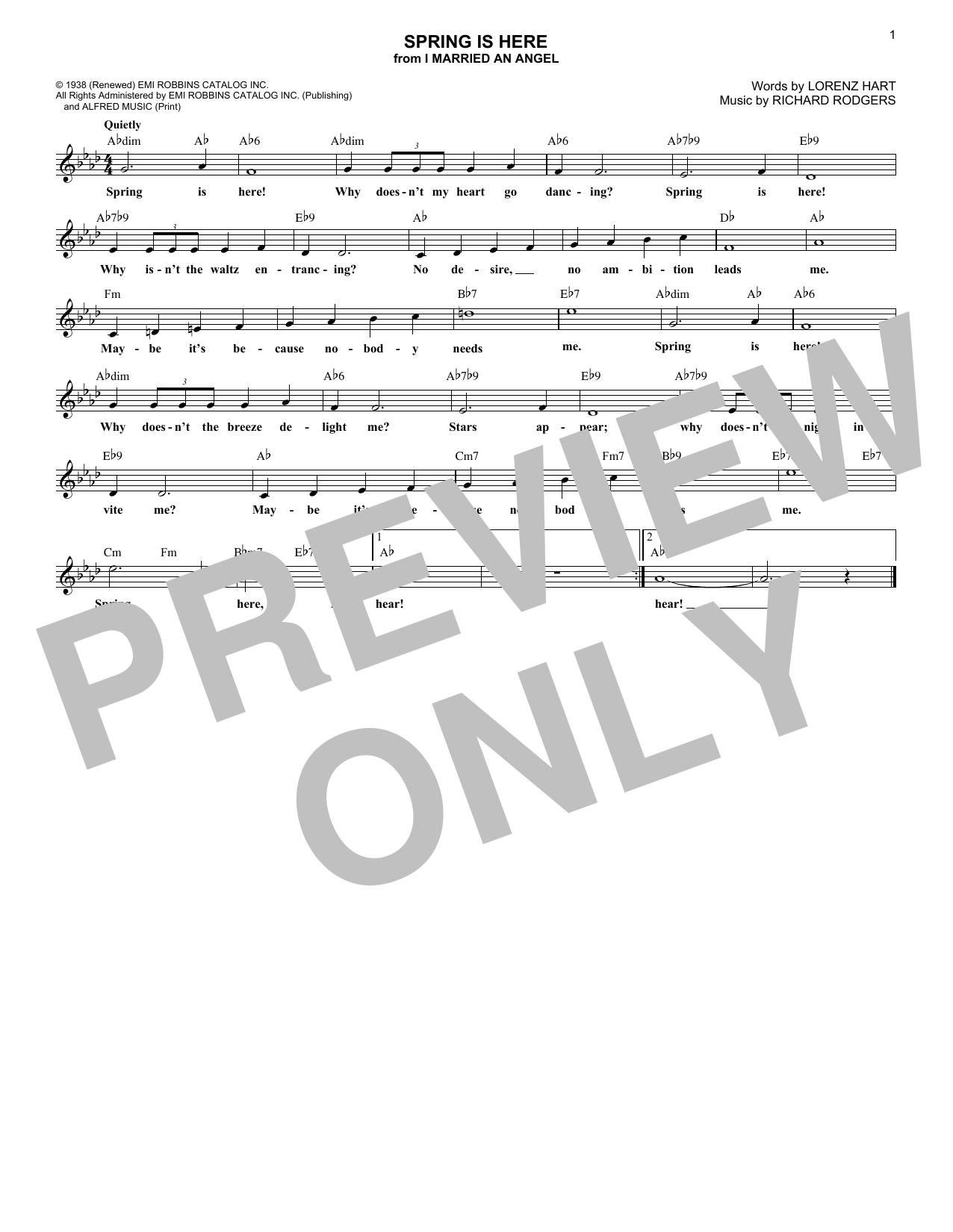
Spring Is Here: Lead Sheet / Fake Book

As performed by Rodgers & Hart

Item: 35-DS00380605

Digital Download
$3.99
Description

Spring Is Here: Lead Sheet / Fake Book isn't in MakeMusic Cloud just yet...but it could be. Let us know you'd like to see it, and you'll help shape what comes next. In the meantime, start a free trial and dive into thousands of interactive titles your students can play along with today.

Sample Audio
No sample audio found.
Sample Video
Additional Details
Publisher: Hal Leonard
Page Count: 1
SKU: 35-DS00380605

More about this title

About the Artist: Rodgers & Hart

Richard Rodgers and Lorenz Hart revolutionized American musical theater by elevating the sophistication of songs written for stage productions. Working together from the 1920s through the early 1940s, they crafted melodies of uncommon elegance paired with witty, conversational lyrics that made audiences hear theater music as genuine art rather than mere accompaniment.

Their compositions remain essential to the jazz standards repertoire and provide invaluable teaching material for musicians learning how to interpret melody, harmony, and lyrical phrasing with maturity and subtlety.

Why we love this

Spring Is Here belongs in every jazz pianist's essential collection. The melody unfolds with such natural grace that students immediately grasp how a strong tune carries itself, and the harmonic language (full of chromatic motion and unexpected resolutions) teaches voice leading principles that transfer directly to improvisation and arranging.

What to expect

Gentle, introspective, and touched with quiet longing. The melody moves with the natural cadence of speech, never forced, and the harmonic progressions create moments of delicate surprise that listeners instinctively lean into. This is music that asks for restraint and taste rather than virtuosity.

Who it's for

Pianists and vocalists working through jazz standards, whether in a combo setting, for solo recital, or as part of a jazz curriculum. This single-page lead sheet serves pianists who improvise, vocalists building their standard repertoire, and educators seeking repertoire that rewards repeated listening and study.

How to get the most out of it

  • Shape the melody phrase by phrase rather than measuring out eight-bar sections; Rodgers wrote this song to breathe, and artificial phrasing breaks kill its inherent lyricism.
  • Treat the harmony as conversational: each chord change should feel like a natural response to the previous one, not a predetermined harmonic plan.
  • Balance ensemble and soloist carefully if performing with others; this tune's strength lies in its intimacy, so resist the urge to oversaturate with accompaniment texture.
  • Pay close attention to chromatic passing tones and approach chords in the lead sheet, as they define the song's sophisticated character.

How to use it

Use this as a showcase for a jazz vocalist or pianist in a pops concert or jazz recital; its brevity and emotional directness make it an effective solo turn between larger ensemble pieces. It also works beautifully as part of a Rodgers and Hart theme concert, pairing well with other standards from the same era to demonstrate the range and consistency of their melodic invention.

Skills your students will build

  • Interpreting rubato and phrasing in melody-driven arrangements
  • Navigating chromatic harmony and secondary dominant relationships
  • Improvising over a jazz standard with proper harmonic awareness
  • Balancing lyrical sensitivity with rhythmic precision in a duo or group setting

You May Also Like