Spring Is Here: Piano Digital Sheet Music

Spring Is Here: Piano Digital Sheet Music

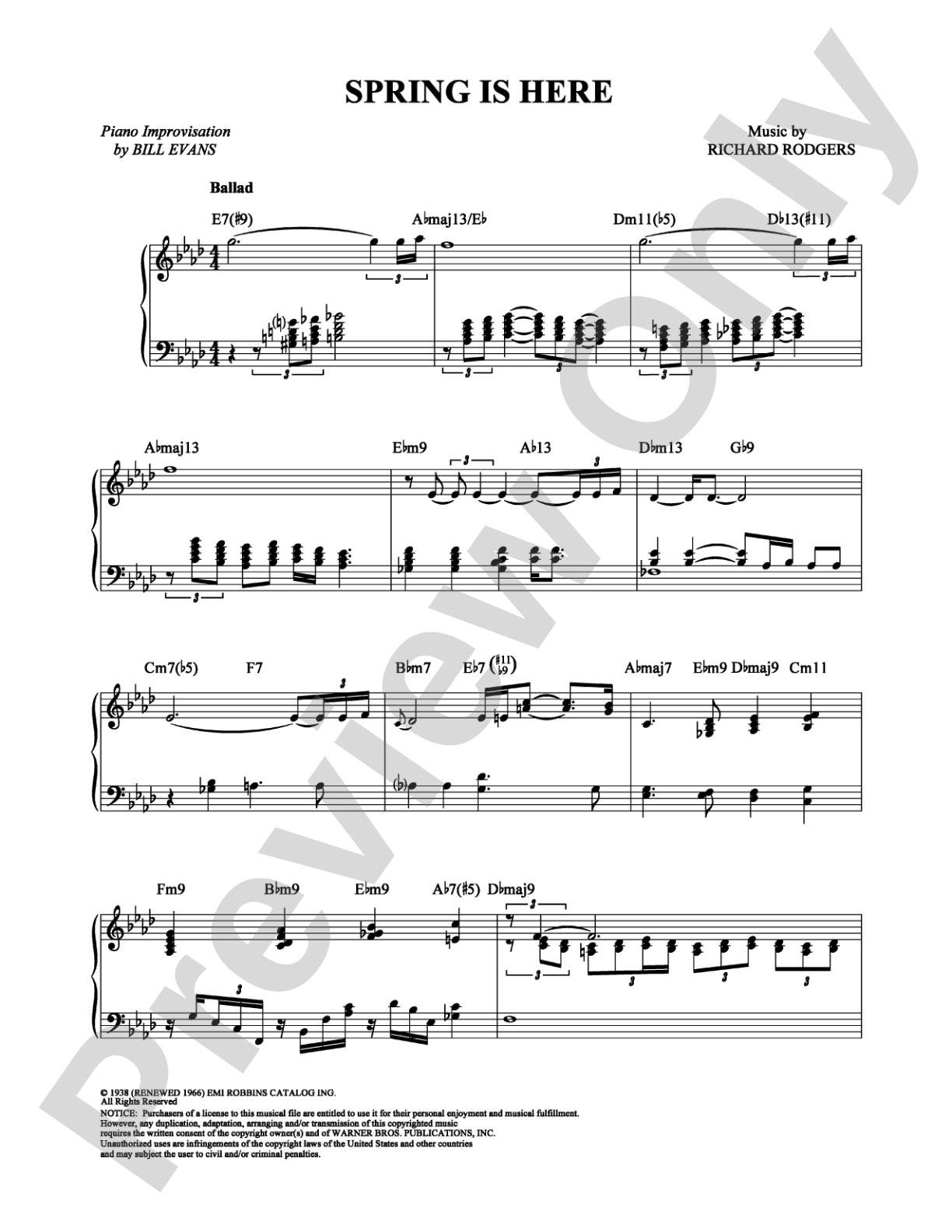
Richard Rodgers, Bill Evans

Item: 00-PS-0000700

Digital Download
$3.99
Description

Spring Is Here: Piano Digital Sheet Music isn't in MakeMusic Cloud just yet...but it could be. Let us know you'd like to see it, and you'll help shape what comes next. In the meantime, start a free trial and dive into thousands of interactive titles your students can play along with today.

Sample Audio
No sample audio found.
Sample Video
Additional Details
SKU: 00-PS-0000700

More about this title

About the Artist: Bill Evans

Bill Evans was a pianist and composer whose harmonic sophistication and introspective touch reshaped jazz piano. Working across trio settings, large ensembles, and solo performances from the 1950s onward, Evans developed a lyrical approach to standards and original compositions that emphasized subtle dynamics, block voicings, and conversational interplay between instruments. His interpretations of the American songbook became touchstones for jazz musicians seeking depth and musicality within the idiom.

Evans' recordings and performances remain essential listening for pianists studying jazz harmony, voice leading, and the art of accompaniment. His ability to inhabit a standard like "Spring Is Here" reveals how thoughtful reharmonization and sensitive phrasing can unlock new emotional dimensions in familiar material.

Why we love this

Evans' version of this standard showcases the lyrical voice-leading and harmonic subtlety that made him a model for generations of jazz pianists. Rather than displaying virtuosity for its own sake, his interpretation emphasizes the ballad's emotional core through carefully voiced comping and responsive soloing. Students and teachers benefit from a reading that demonstrates how restraint and harmonic awareness deepen a performance.

What to expect

Intimate and contemplative. Evans brings a hush to the opening, allowing each harmonic shift to register as a quiet revelation. The piece unfolds at a measured pace, with rubato that feels organic rather than mannered, creating space for reflection within the familiar melody.

Who it's for

Jazz pianists and serious students of the standard repertoire who want to study how a master interpreter approaches a ballad. Pianists preparing for recital programs that blend classical training with jazz literacy will find essential lessons in voice leading, harmony, and accompaniment texture. Teachers seeking a reference recording and corresponding score for ensemble or private study will appreciate having Evans' interpretation preserved in playable form.

How to get the most out of it

  • Listen actively to the recorded version multiple times before playing; Evans' phrasing and tempo rubato set the interpretive foundation for how the melody breathes.
  • Shape the melody with dynamic flexibility rather than steady volume; let quieter passages draw the listener closer and allow space for the harmony to resonate.
  • Explore the voicings Evans uses in his comping; examine how block chords and closed-position shells support and frame the melody without cluttering it.
  • Practice the left-hand movement independently to internalize the harmonic progression; this foundation will free your right hand to focus on phrasing and tone quality.

How to use it

Pair this with other jazz standards on a recital that explores different interpretive approaches to the American songbook. In a jazz history or piano repertoire course, use Evans' score and recorded version as a case study in how harmonic sophistication and melodic sensitivity complement each other. For advanced students studying jazz piano, this becomes both a listening assignment and a transcription resource.

Skills your students will build

  • Analyzing block voicings and extended jazz harmony
  • Understanding rubato and dynamic shaping in ballad interpretation
  • Voice leading across chord changes in four-part harmony
  • Listening for and imitating interpretive nuance in jazz standards
  • Balancing melody and accompaniment texture on a solo instrument

You May Also Like