
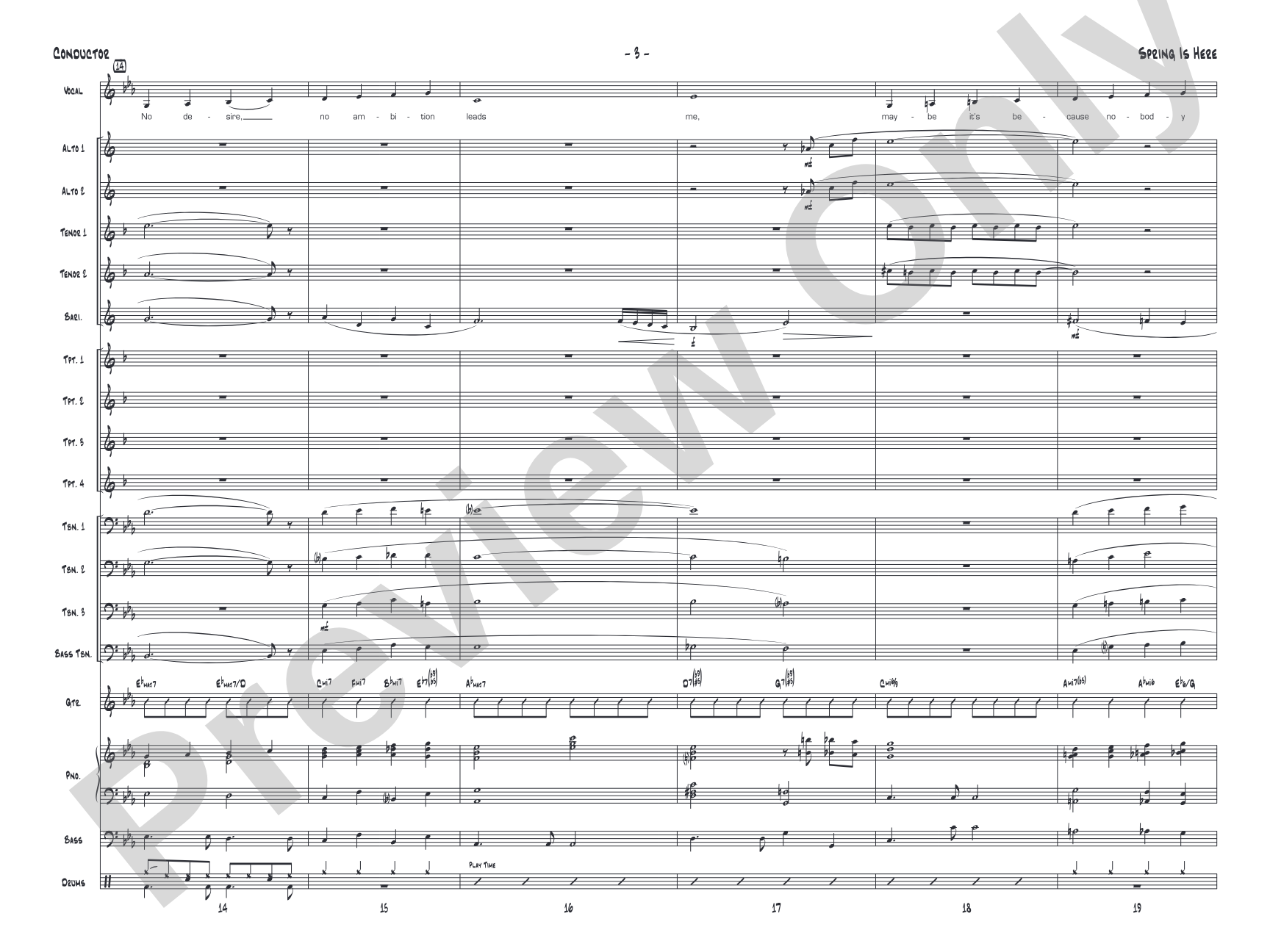
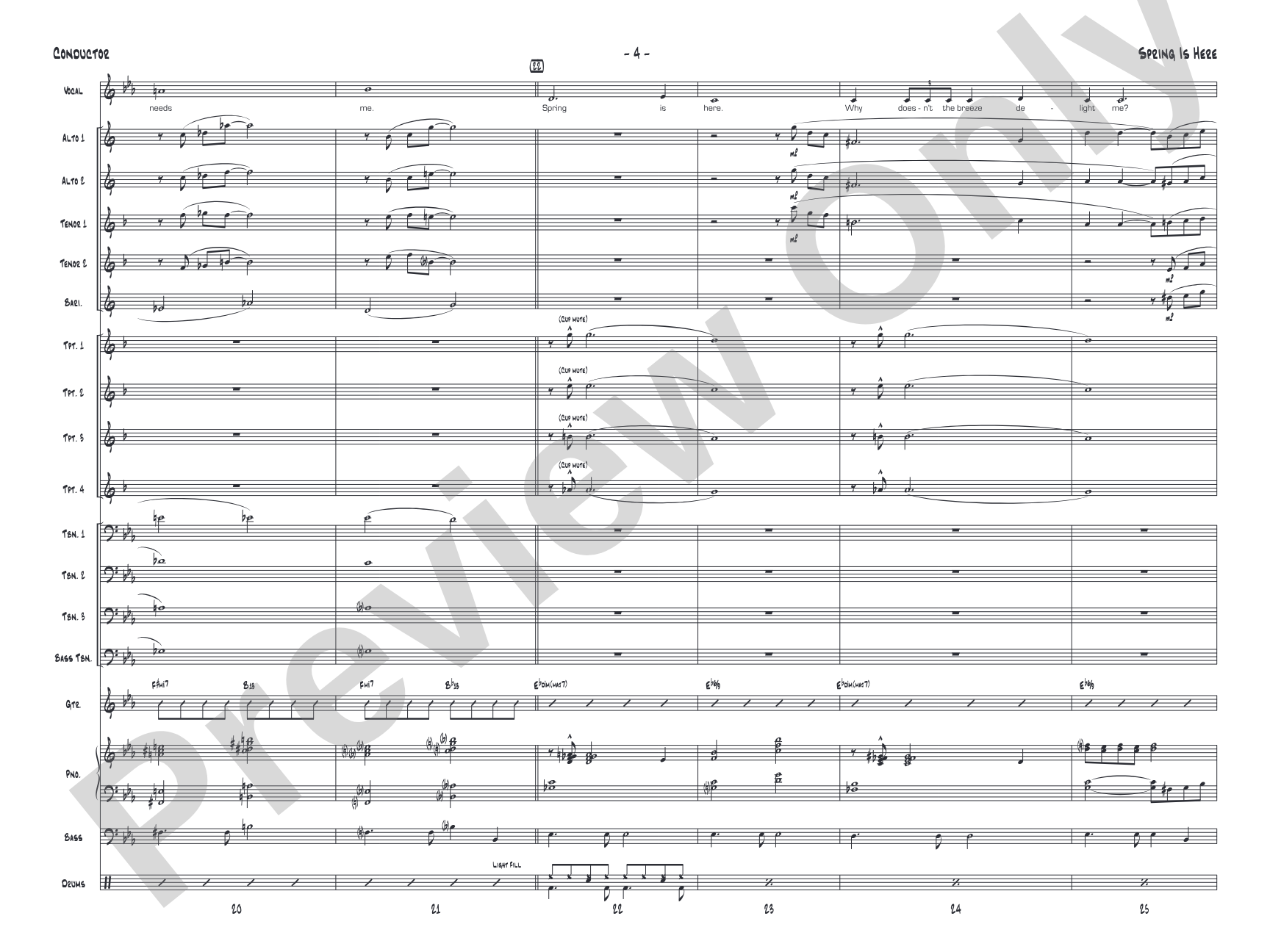
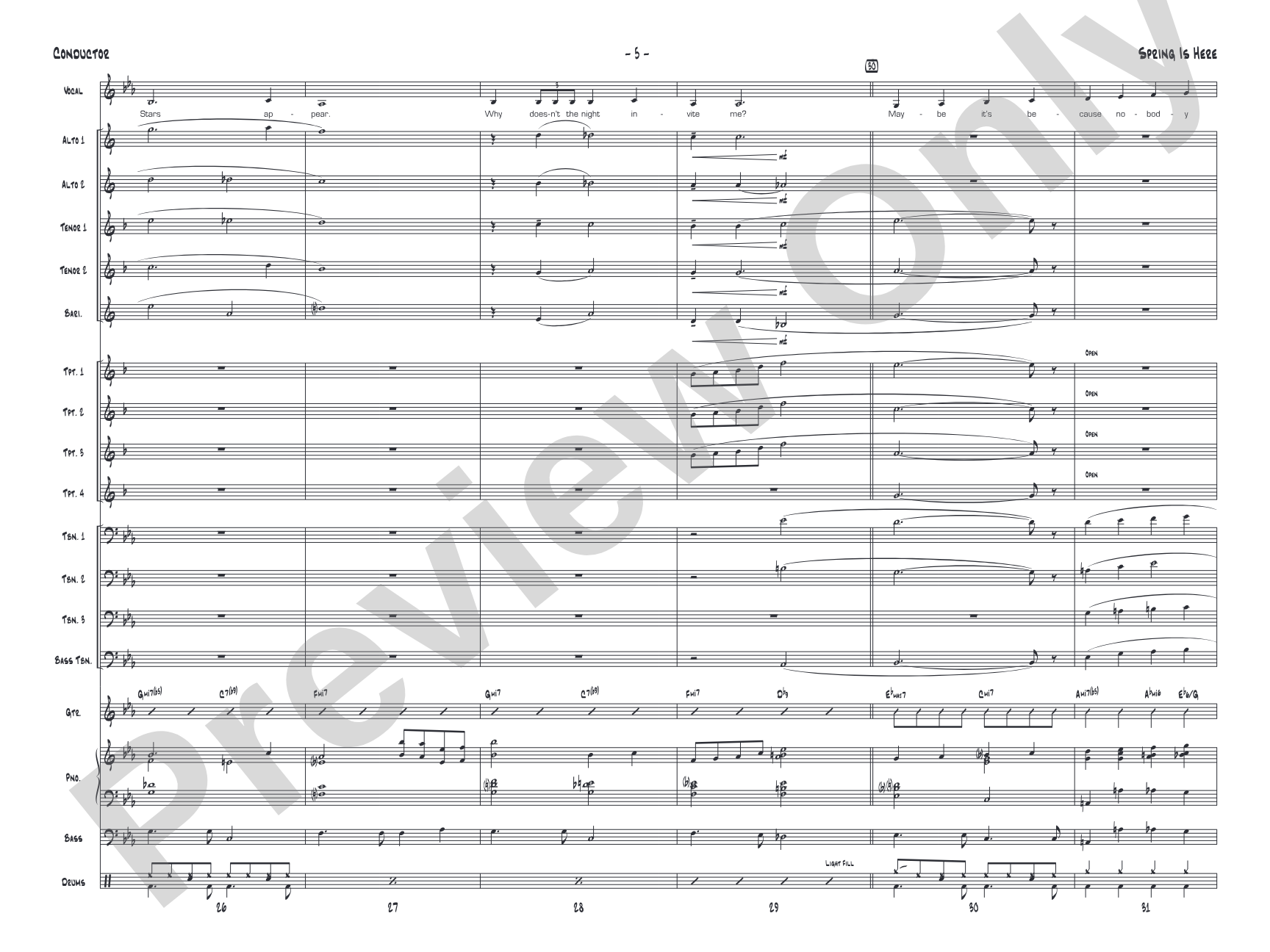
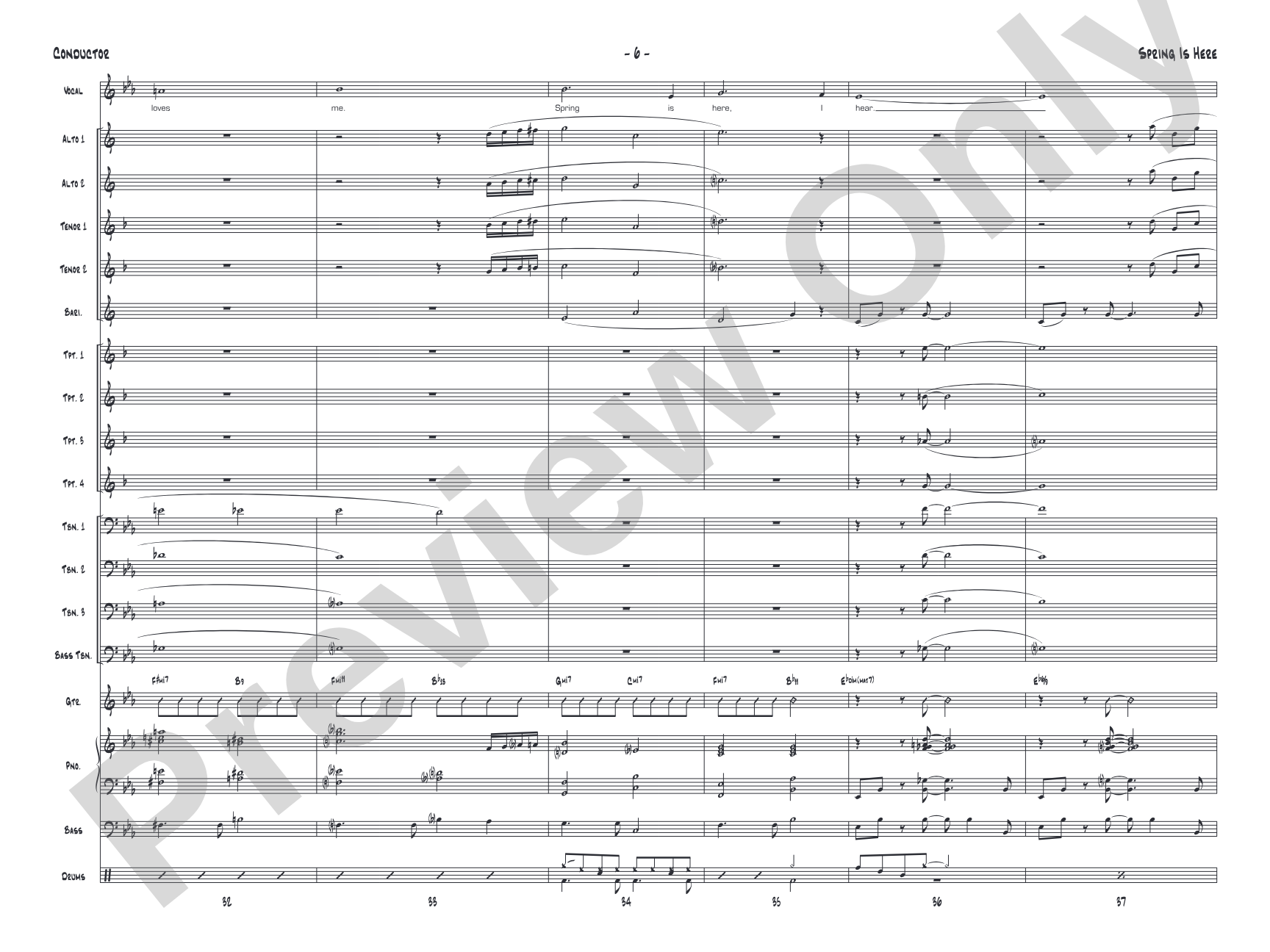
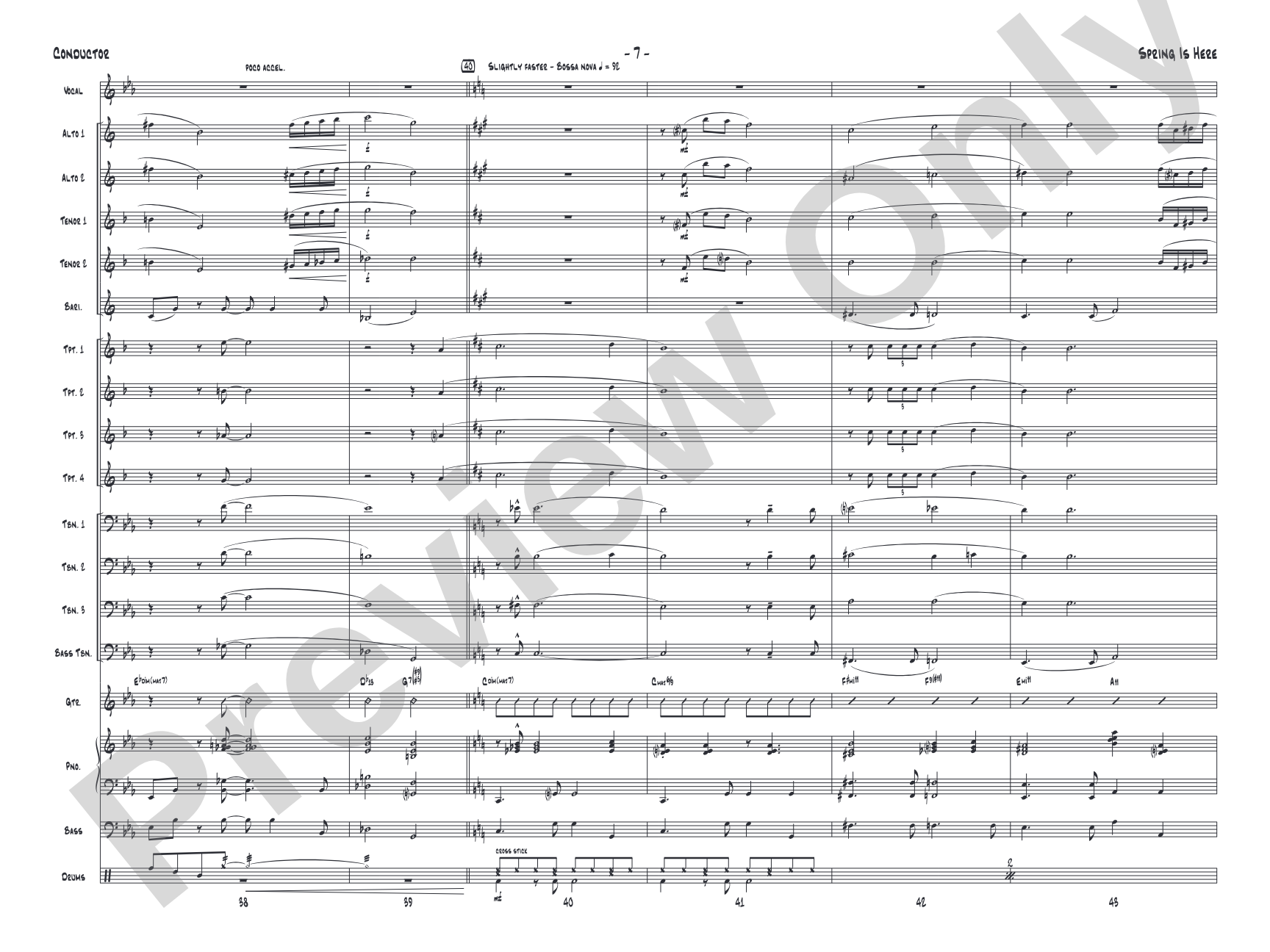
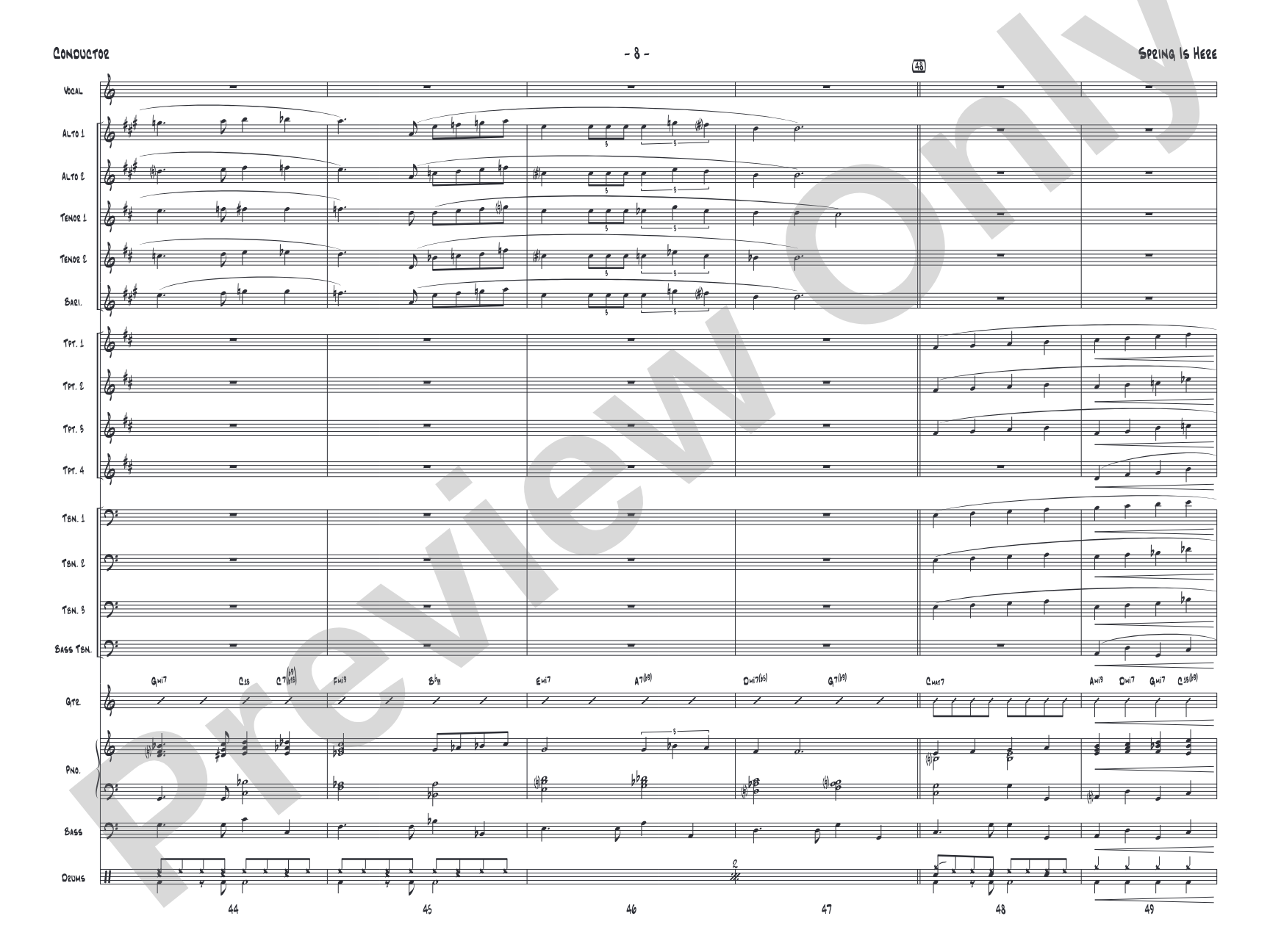
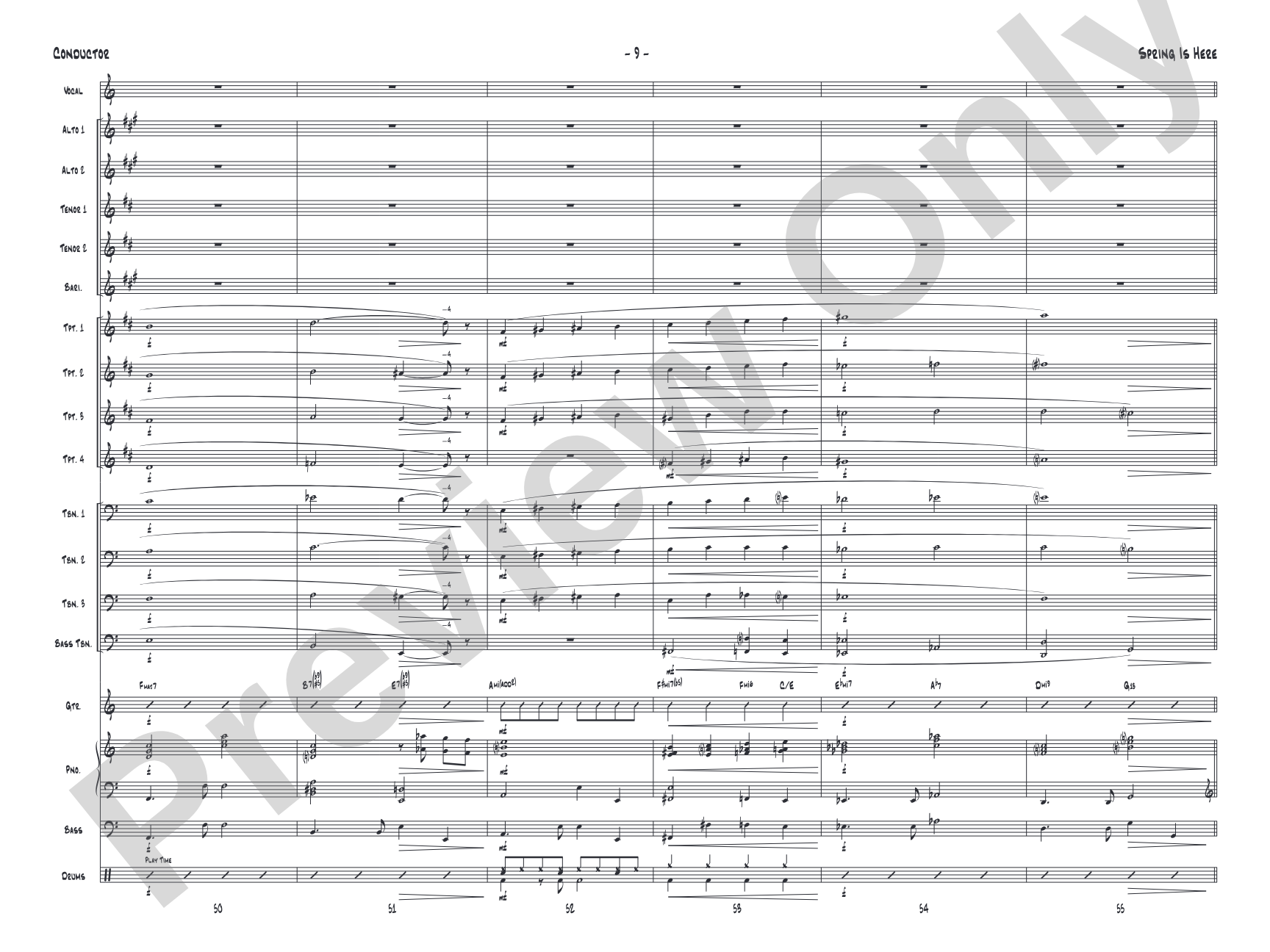
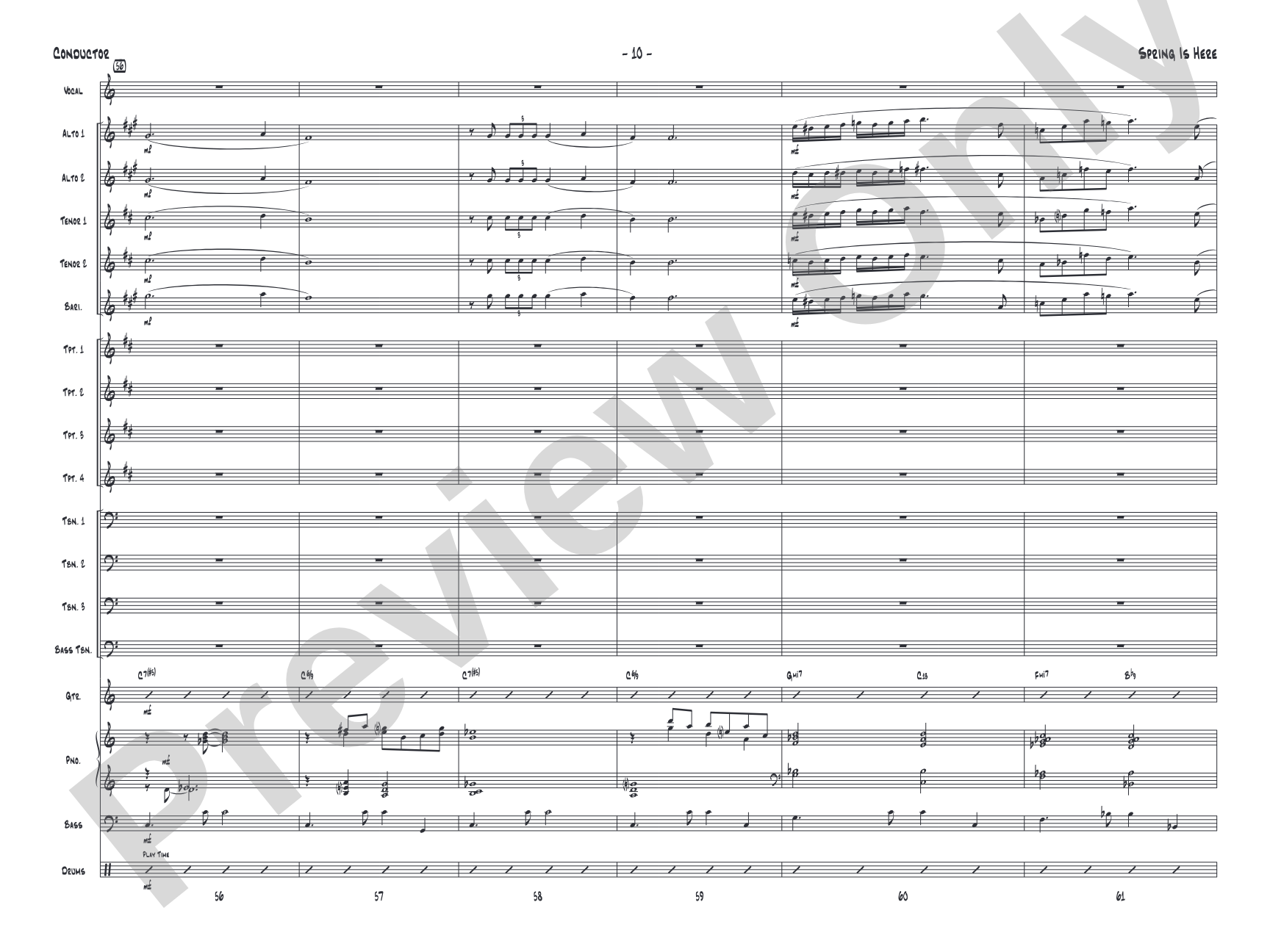
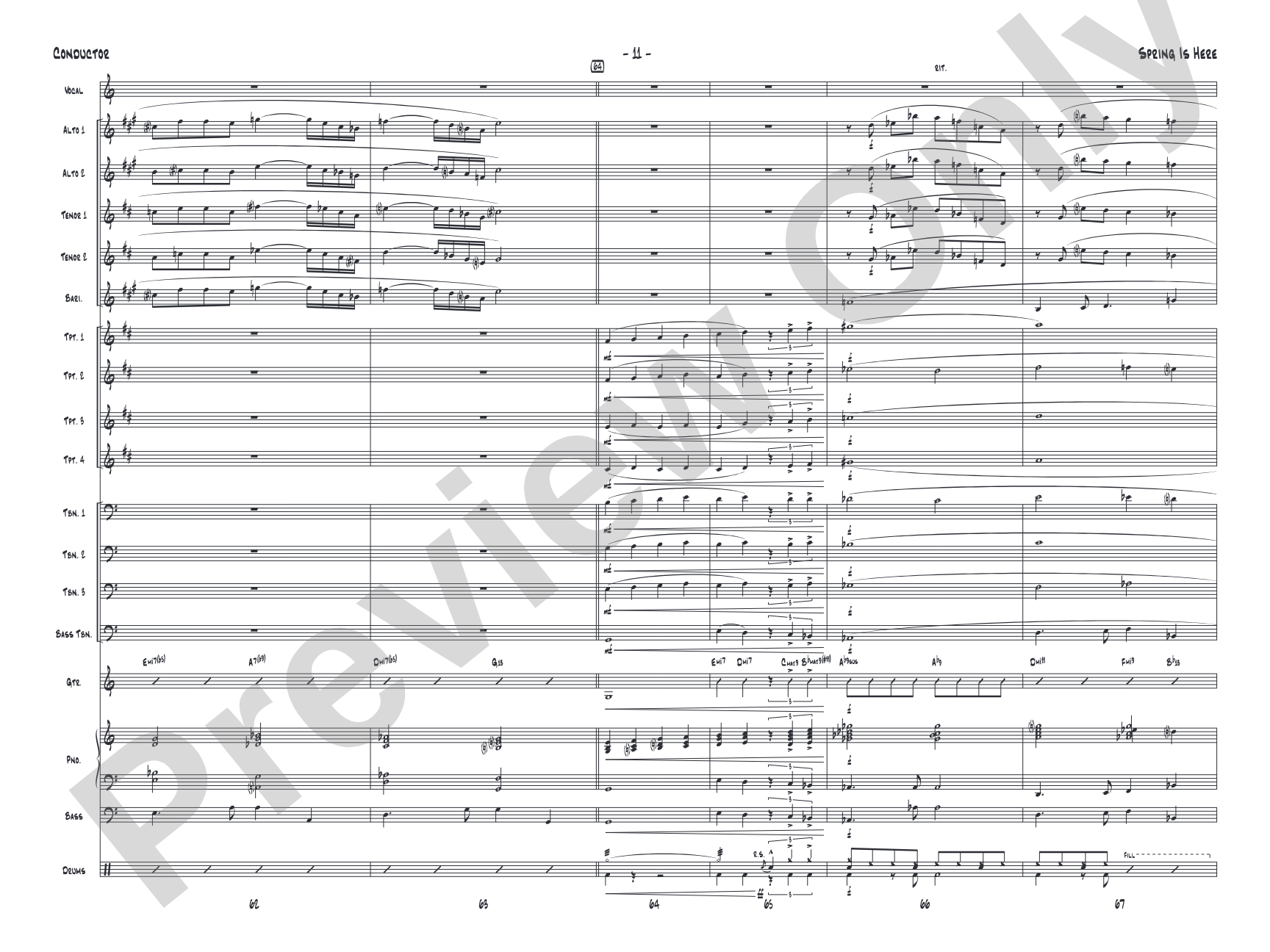
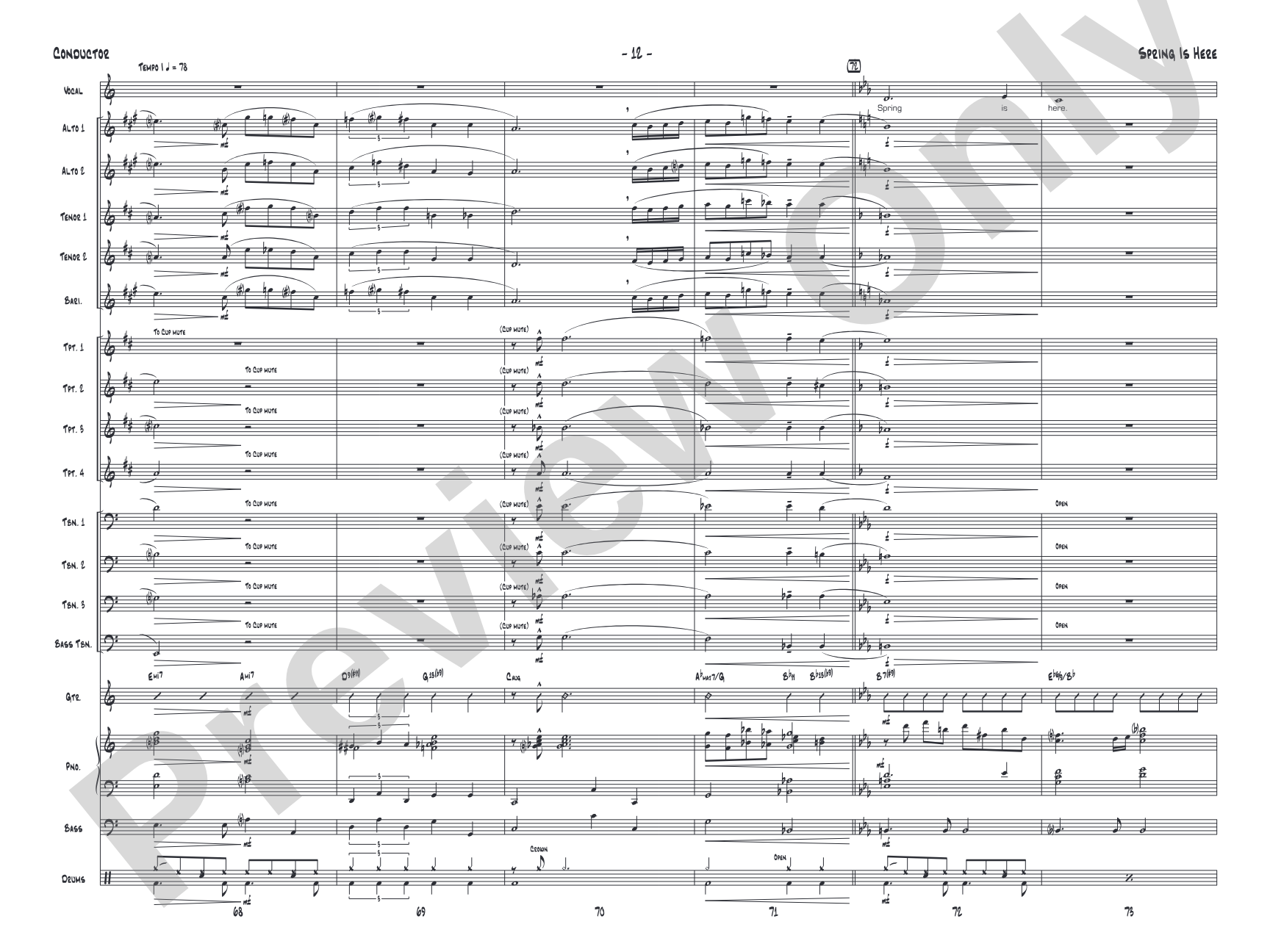
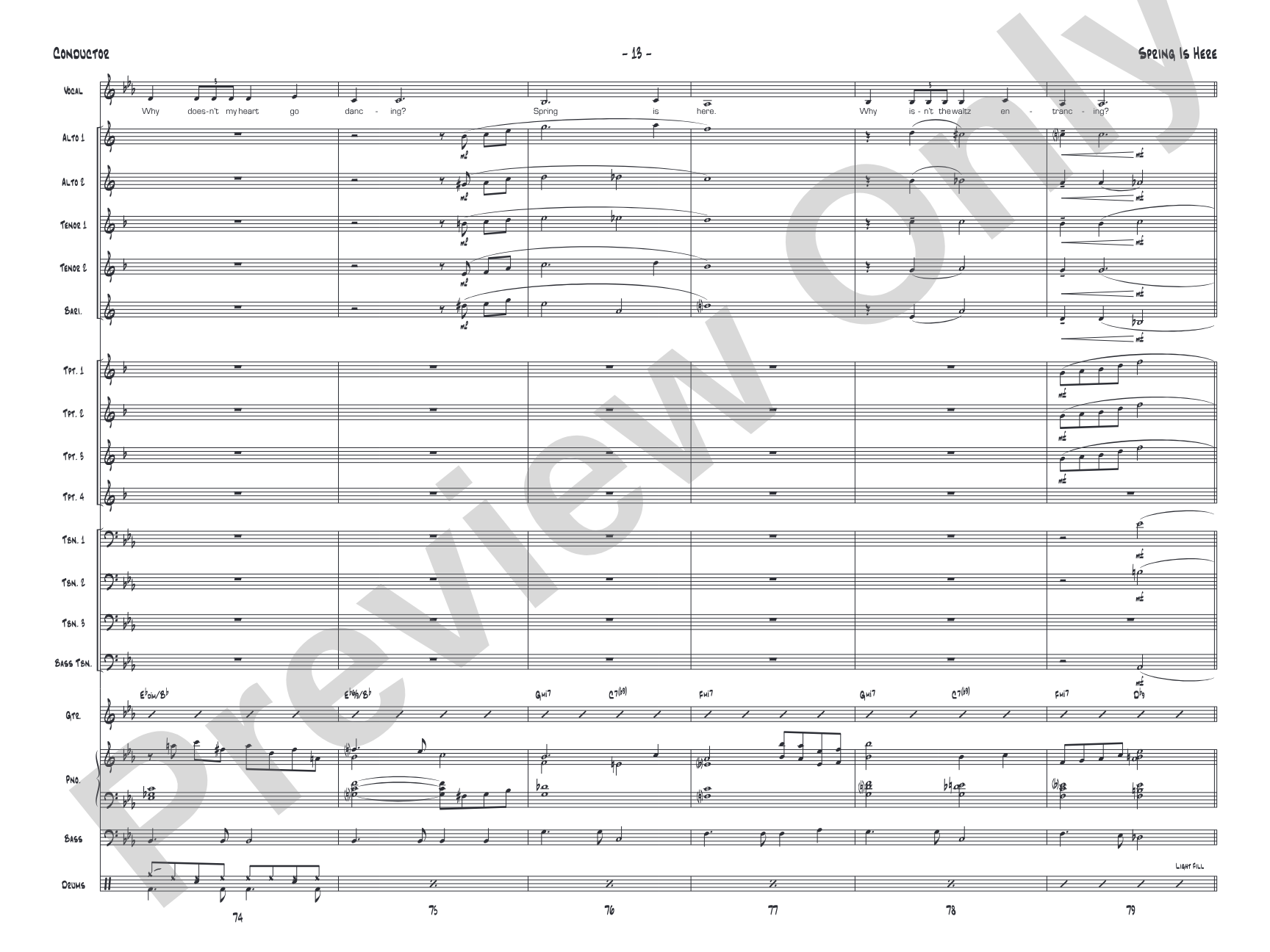
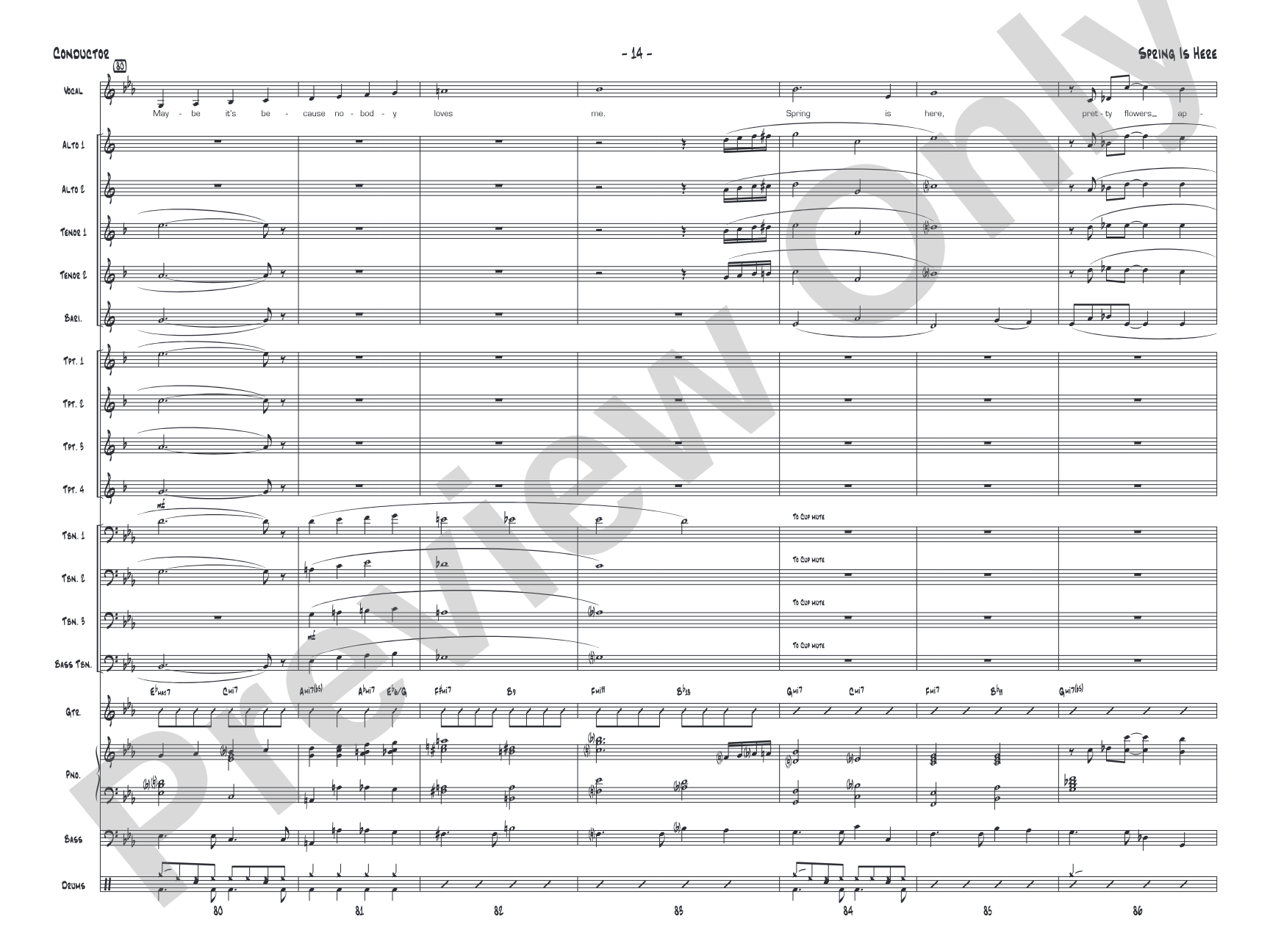
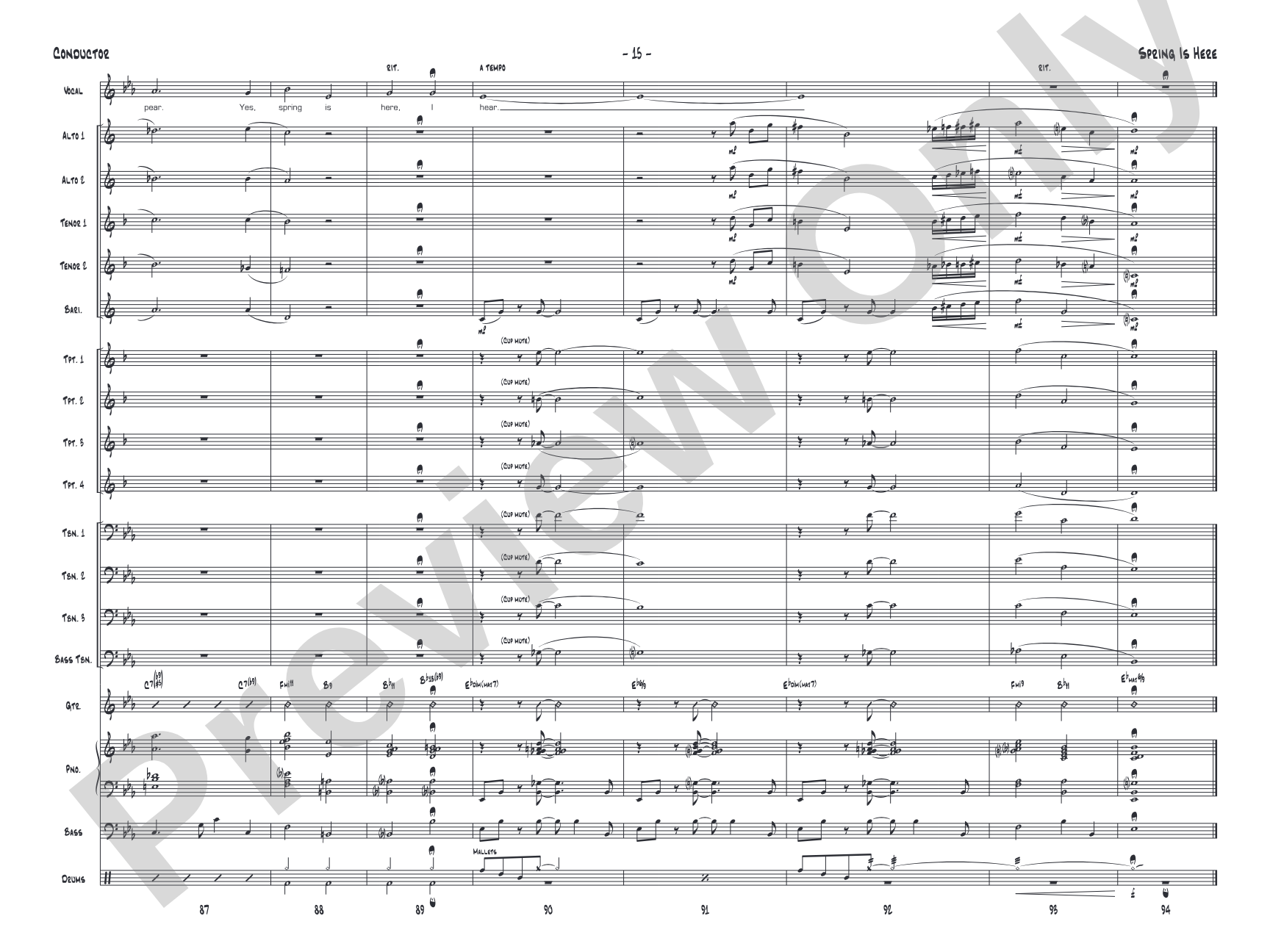



Spring Is Here: Jazz Ensemble Conductor Score & Parts
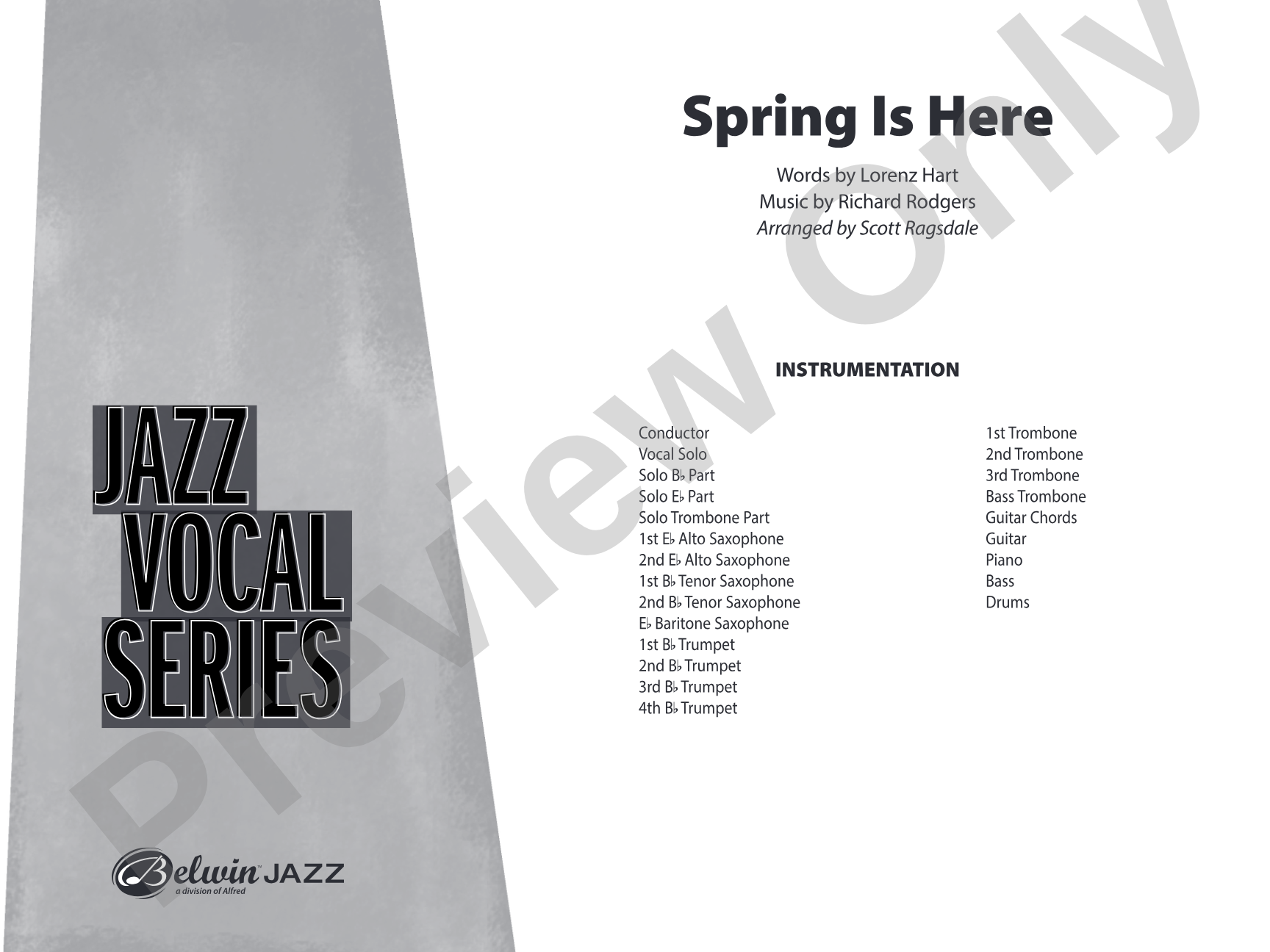
By Richard Rodgers / Words by Lorenz Hart / arr. Scott Ragsdale
Grade: 3
Item: 00-PK-0009580
$57.00
One moment…
Description
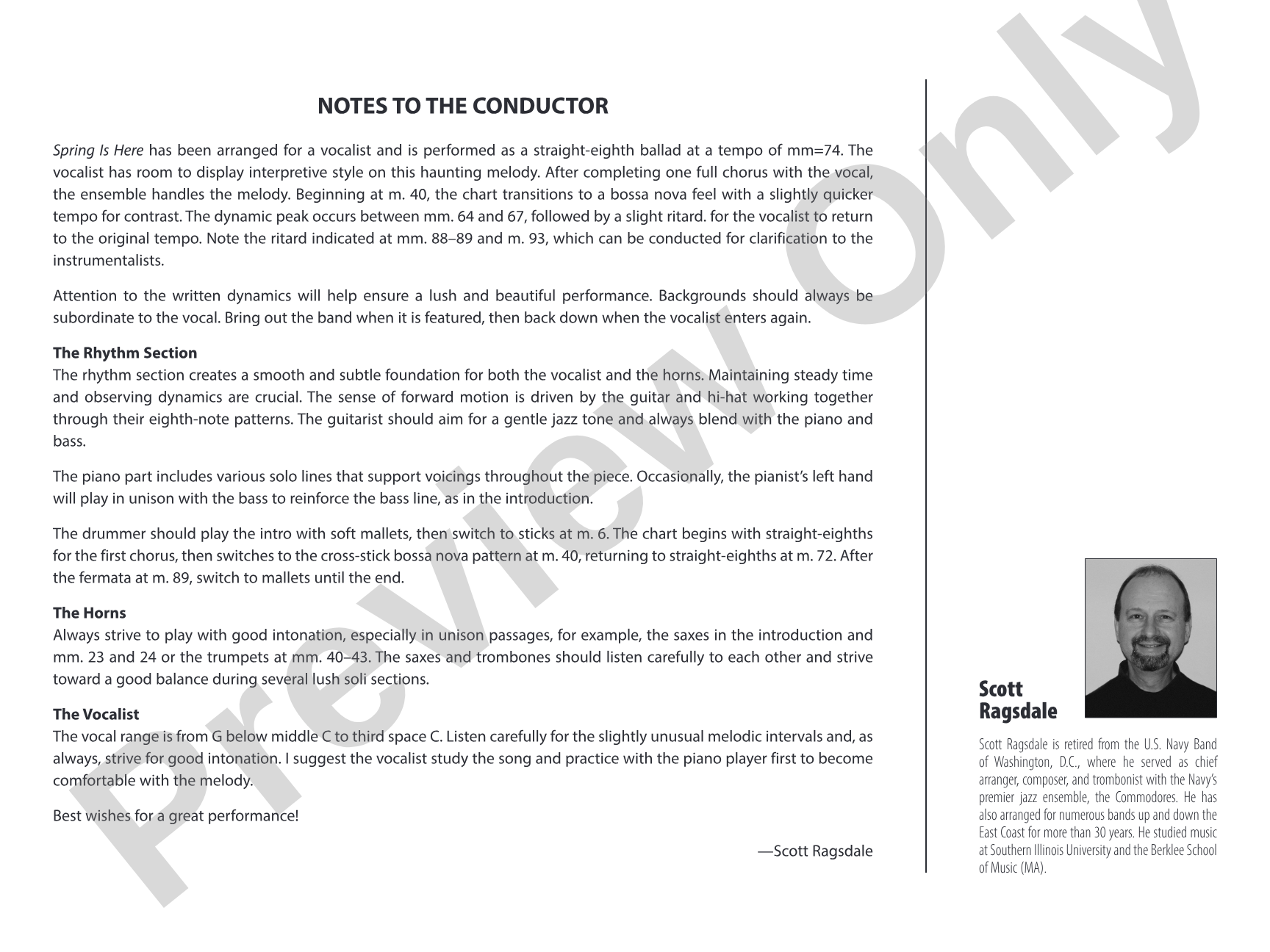
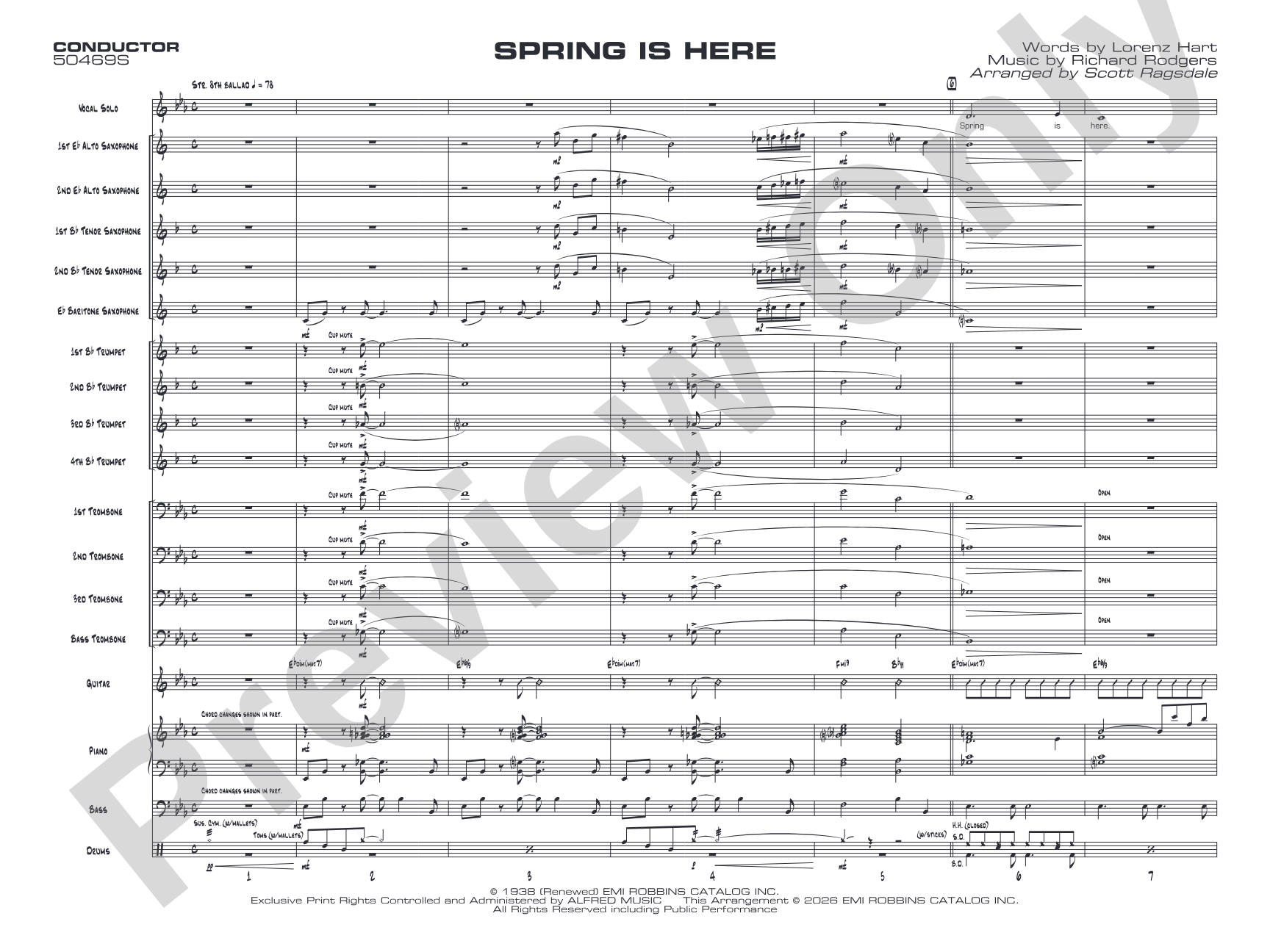
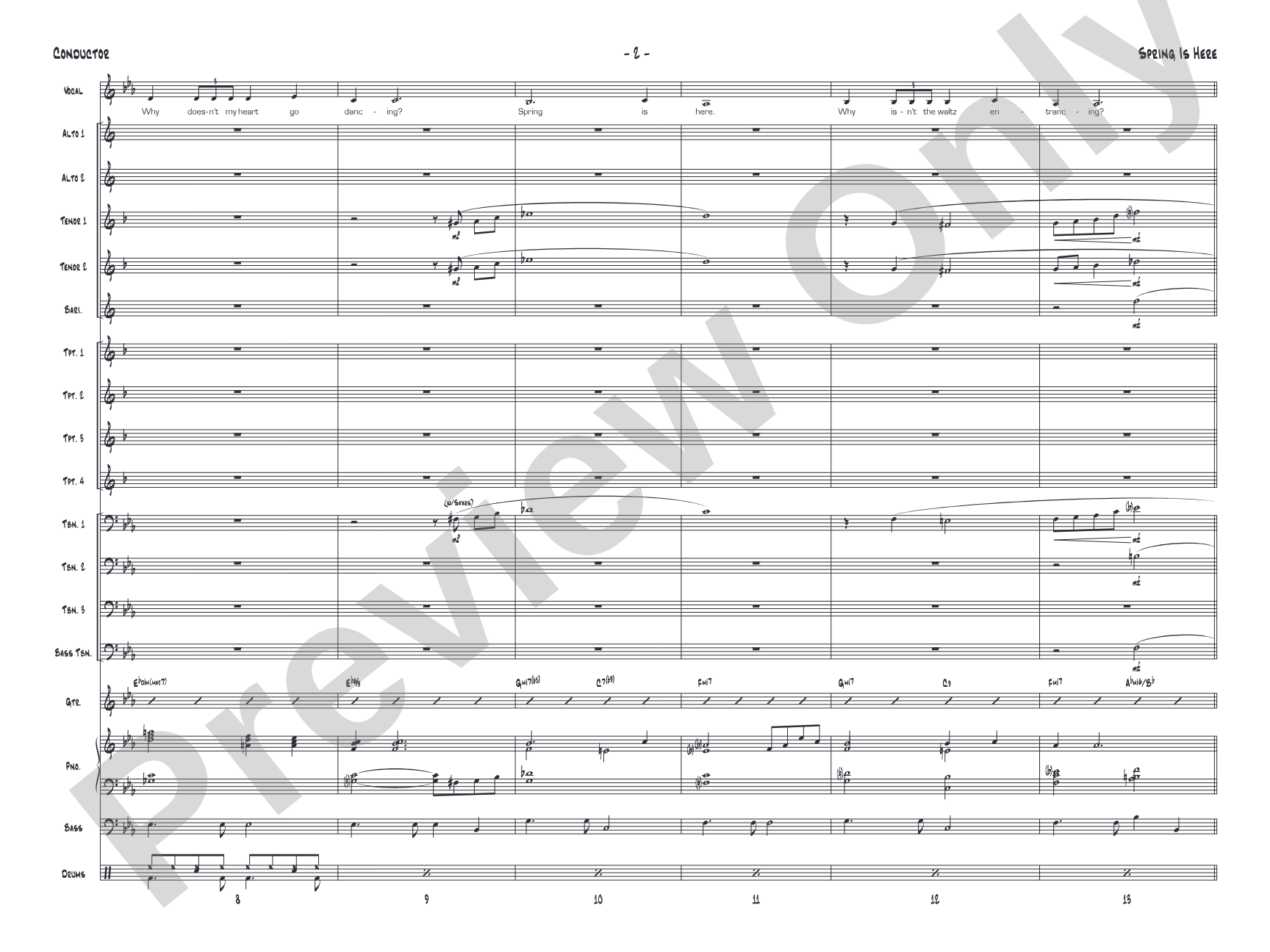
Simply a gorgeous vocal with big band chart. This straight-eighth ballad is played around 74-78 BPM. The vocal range is from G below middle C to third space C and lead trumpet range is to written A above the staff. The ballad transitions midway to a bossa with a slightly quicker feel then returns to the sweet ballad. Exquisite vocal chart.


Discover MakeMusic Cloud: thousands of interactive titles your students can play along with today.
Sample Audio
1
Audio File
--:--
0:00
0:00
Sample Video
Additional Details
Series:
Belwin Jazz Vocal Series
Publisher:
Alfred Music
SKU:
00-PK-0009580
More about this title
About the Composer: Richard Rodgers
Richard Rodgers (1902-1979) shaped American musical theatre across five decades, collaborating first with lyricist Lorenz Hart and then Oscar Hammerstein II to create some of the most enduring standards in the jazz and popular music repertoire. His melodic gift combined structural sophistication with immediate emotional appeal, qualities that made his songs natural vehicles for jazz interpretation and reharmonization.
Why we love this
Scott Ragsdale's arrangement captures the tenderness of Rodgers's melody while giving your ensemble room to breathe and support a vocalist meaningfully. The structural arc, ballad into bossa, then back again, provides compositional sophistication without overwhelming a Grade 3 group, and the orchestration sits beautifully across a standard jazz band.
What to expect
A moment of genuine tenderness—the kind that makes silence feel like part of the music. The ballad's slow harmonic movement and the vocalist's intimate range create an introspective quality that the bossa section refreshes without breaking, as if the song itself is taking a deeper breath before returning to its original contemplation.
Who it's for
Jazz ensembles with a confident vocalist and the maturity to balance soloing against ensemble texture. This works equally well for high school and college jazz bands seeking accessible but substantial vocal repertoire that doesn't require advanced modal language or complex harmony.
How to get the most out of it
- Establish the straight-eighth feel clearly in early rehearsals; the transition to bossa midway through requires precision from the rhythm section to land the style shift cleanly without losing the song's inherent lyricism.
- Balance the vocalist prominently but not overwhelmingly; the big band chart is written to support, not compete, so dynamics and texture shifts are your primary tools for letting the vocal narrative breathe.
- Take time to shape the return from bossa back to ballad as a genuine moment, not just a reversion. This phrase benefits from slightly relaxed time and dynamic softening to feel like a musical resolution rather than a restart.
- Let the ensemble listen to the vocalist during the ballad sections; this isn't a backdrop—it's collaborative accompaniment. Attention to the vocalist's phrasing will tighten ensemble response and deepen the performance's emotional coherence.
How to use it
Pair this with instrumental standards or blues charts in a jazz concert to showcase the range and refinement of your ensemble. The ballad-to-bossa structure also makes it an excellent closer for a first half, providing tonal variety and giving audiences a vocal moment in a program that might otherwise lean instrumental.
Skills your students will build
- Balancing vocal soloist with big band accompaniment texture
- Playing stylistically appropriate straight-eighths in a ballad context
- Executing a clean transition between ballad and bossa feels (tempo, swing ratio, groove)
- Listening and responding as an ensemble to solo phrasing
- Reading jazz chord changes and interpreting them idiomatically across multiple style sections