
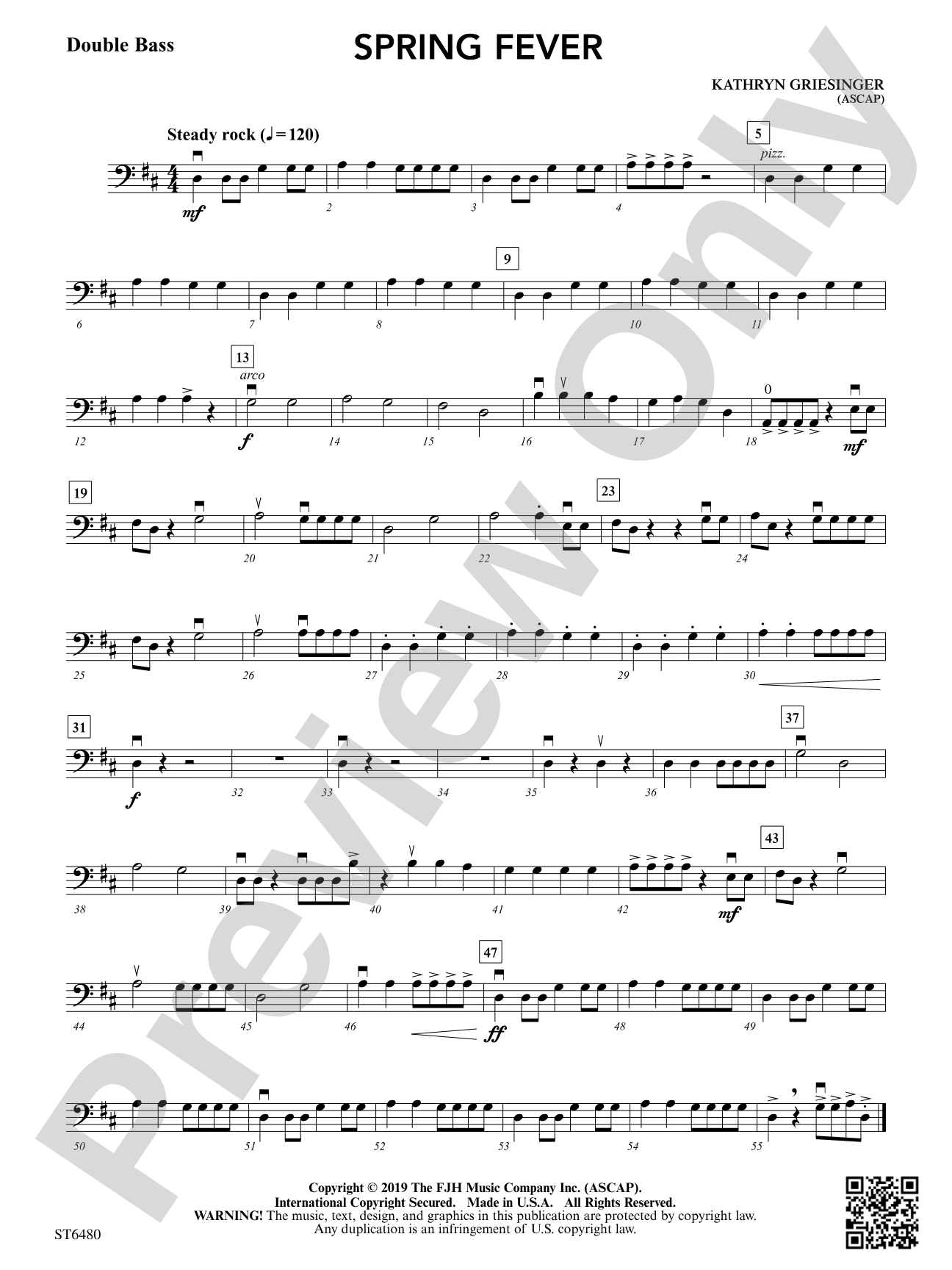

Spring Fever: Double Bass
By Kathryn Griesinger
Grade: 1
Item: 98-PC-DST6480_SB
$7.00
Pickup currently not available
Description
A fun, 50s-style rock piece for beginning string players! This easy, up-beat tune only uses notes from the D and G Major scales with just a few open E strings in violin. Add optional drum set for a real dance party beat. The perfect finale for a first-year spring concert!


Spring Fever: Double Bass isn't in MakeMusic Cloud just yet...but it could be. Let us know you'd like to see it, and you'll help shape what comes next. In the meantime, start a free trial and dive into thousands of interactive titles your students can play along with today.
Request This Title
Tell us you want it.
Start Your Free Trial
Explore everything that's ready to play right now.
Sample Audio
1
Audio File
--:--
0:00
0:00
Sample Video
Additional Details
Series:
FJH Beginning Strings
Publisher:
The FJH Music Company, Inc.
SKU:
98-PC-DST6480_SB
More about this title
About the Composer: Kathryn Griesinger
Kathryn Griesinger is a prolific composer whose work spans educational ensembles of all levels. Her compositions consistently balance accessibility with genuine musicality, creating pieces that engage students while building real technical skills. Griesinger understands the teaching orchestra intimately and writes with clarity about what young players need to succeed.
Her catalog includes hundreds of titles across band, orchestra, and mixed ensemble settings. She has become a trusted voice in music education publishing, known for pieces that teachers return to year after year because they work in the classroom and sound great in concert.
Why we love this
Griesinger nails the balance between authentic 50s rock energy and genuine pedagogical restraint. By limiting the melodic content to D and G Major scales with minimal open E string passages, she gives first-year students room to focus on ensemble playing and rhythmic precision rather than wrestling with unfamiliar fingerings. The optional drum set part transforms a simple piece into a full-ensemble experience that feels polished and genuinely fun to perform.
What to expect
Bright, bouncy, and impossibly fun. The 50s rock vernacular comes through in the rhythmic drive and straightforward harmonic language, evoking the carefree energy of a spring dance. There's nothing apologetic about this piece; it swings with authentic style while keeping every player in their comfort zone.
Who it's for
String orchestra directors with beginning ensembles (first or second year of instruction) who want a concert piece that feels genuinely entertaining rather than remedial. Students thrive when the technical demands align with their current abilities, leaving mental energy for musicality and ensemble cohesion. This works equally well for heterogeneous groups mixing complete beginners with slightly more advanced players.
How to get the most out of it
- Lock in the rhythm section early. If you're including drums, have those players rehearse independently first so they can anchor the tempo while strings focus on intonation and articulation.
- Shape the phrasing even in simple melodies. Young players often play note-to-note without direction; encouraging them to hear the melodic shape keeps the 50s character alive.
- Tape down open E strings if players struggle with intonation. A light piece of painter's tape at the correct stopping point helps beginners find consistent pitch without breaking concentration.
- Bring out the rhythmic groove in the accompaniment parts. Viola and cello pizzicato or light bow strokes create the authentic rock feel without requiring advanced technique.
How to use it
Reserve this as your spring concert finale or a between-pieces mood lifter when you need audience energy. The approachable style and built-in fun factor make it ideal for family concerts where newer string students deserve a chance to shine in something that doesn't sound like a beginner's exercise. If you're programming a longer concert, it works beautifully after a slower, more serious piece to reset the room.
Skills your students will build
- Reading and executing rhythms in 4/4 with consistent tempo
- Playing in tune within D and G Major scales
- Coordinating bow changes and articulation in ensemble texture
- Balancing melody and accompaniment roles
- Responding to a drum set accompaniment without losing rhythmic independence