

Spring Concerto: In Four Movements for Solo Piano with Piano Accompaniment - Piano Duo (2 Pianos, 4 Hands): Piano Duets & Four Hands
In Four Movements for Solo Piano with Piano Accompaniment
By Alexander Peskanov
Level: Intermediate
Item: 00-PB-0000894
$9.99
Pickup currently not available
Related Items
Spring Concerto: Piano Duo (2 Pianos, 4 Hands) Book (2 copies required for performance) |
$9.50
|
View |
Description
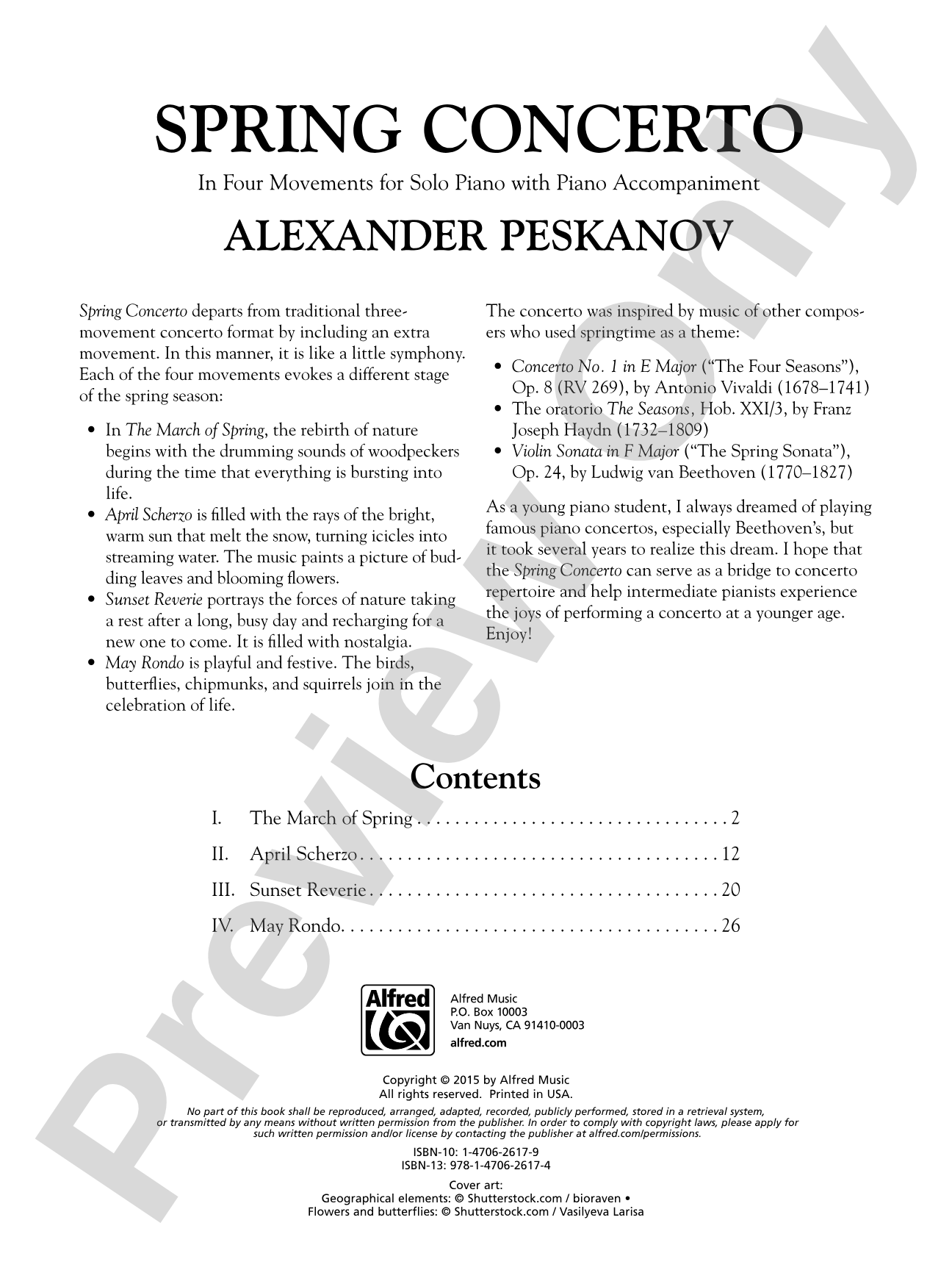
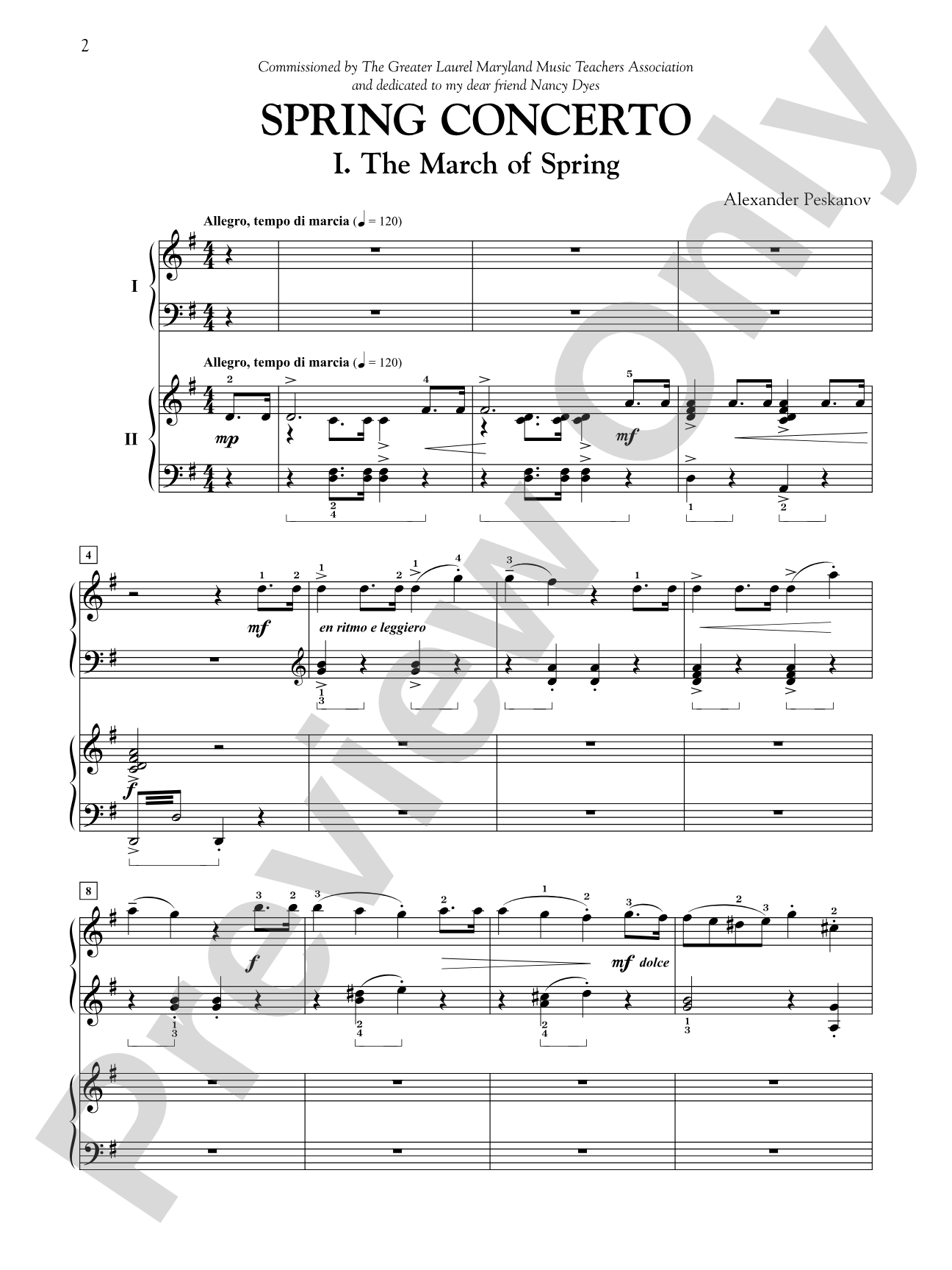
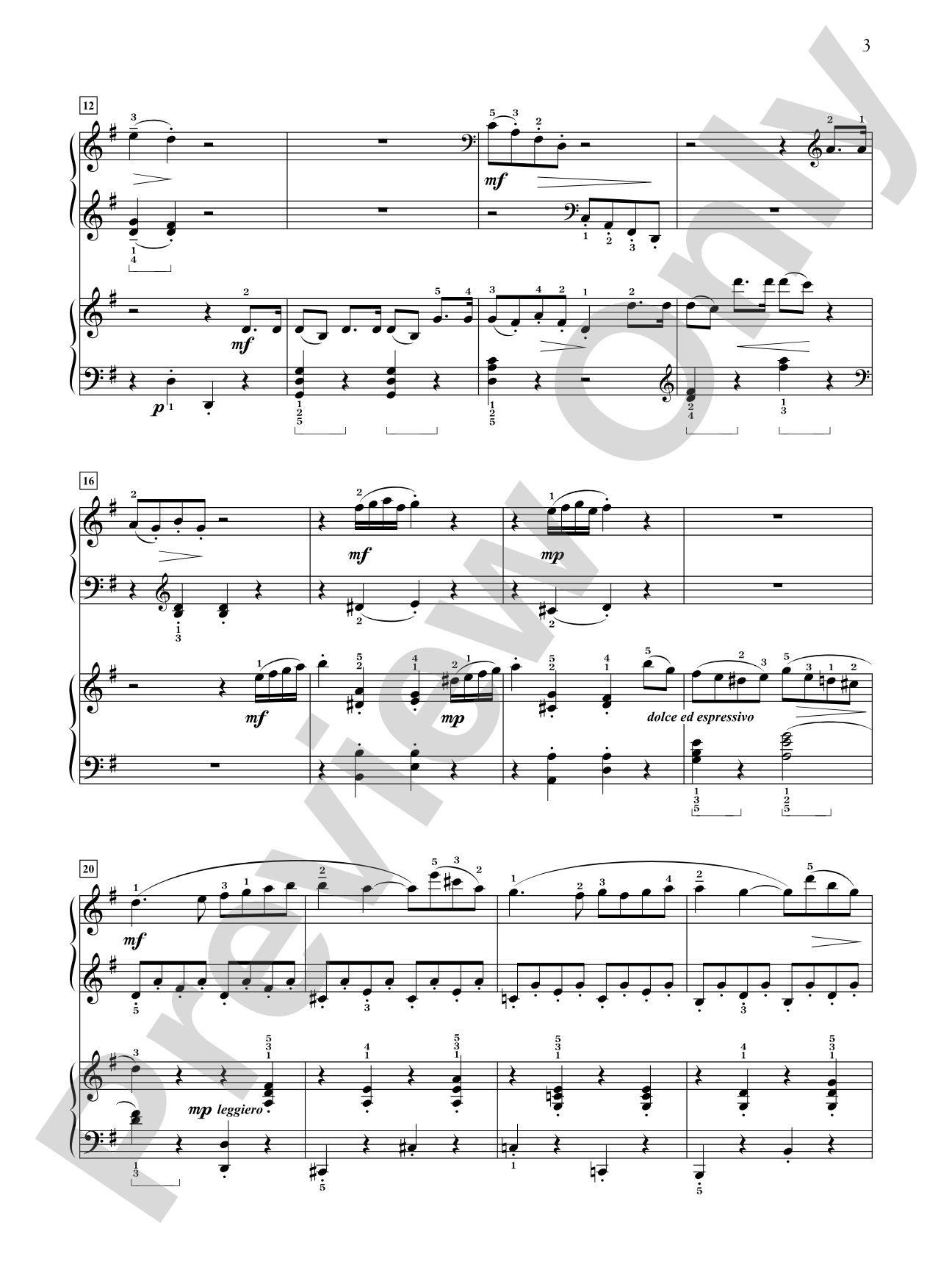
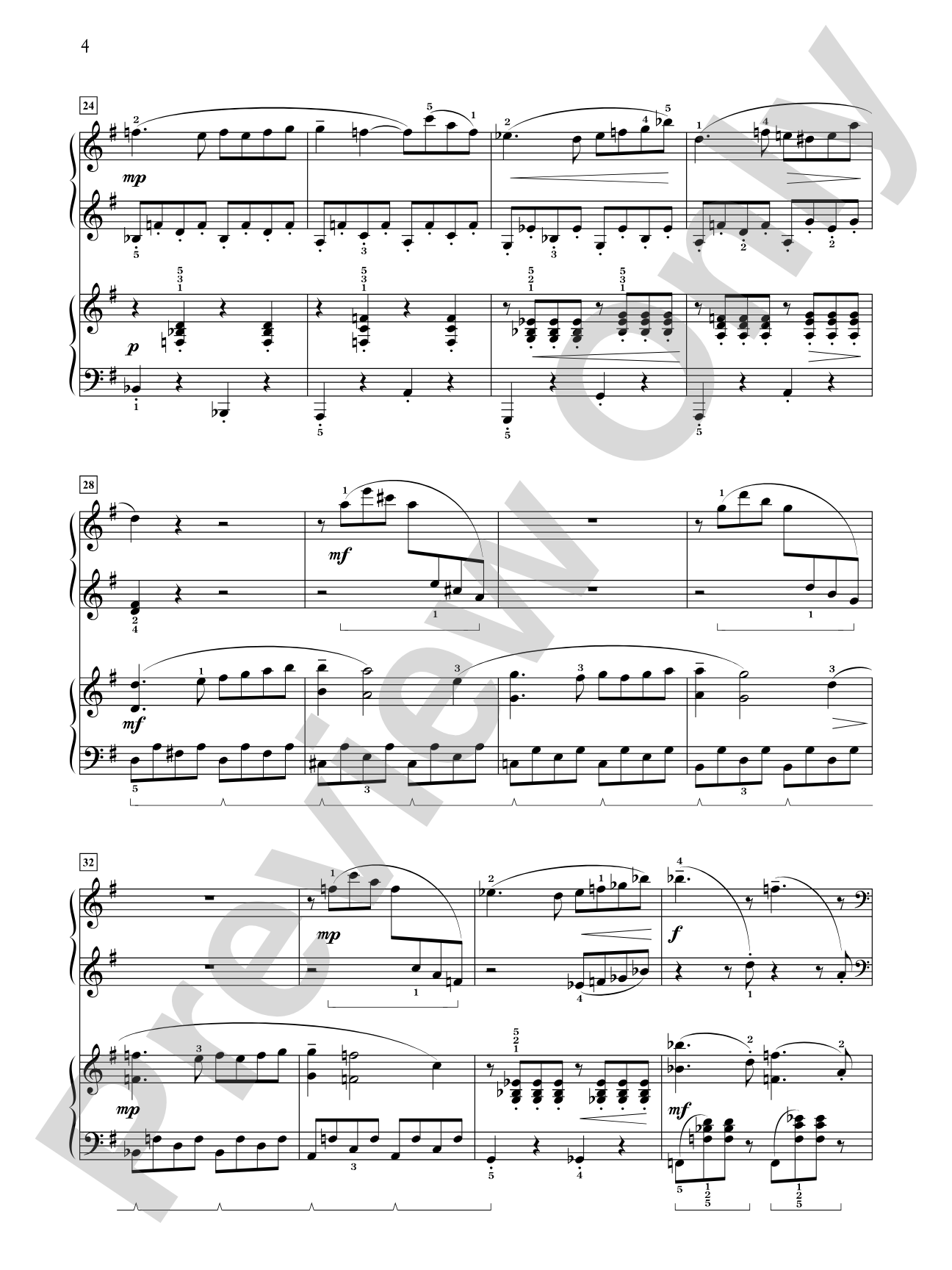
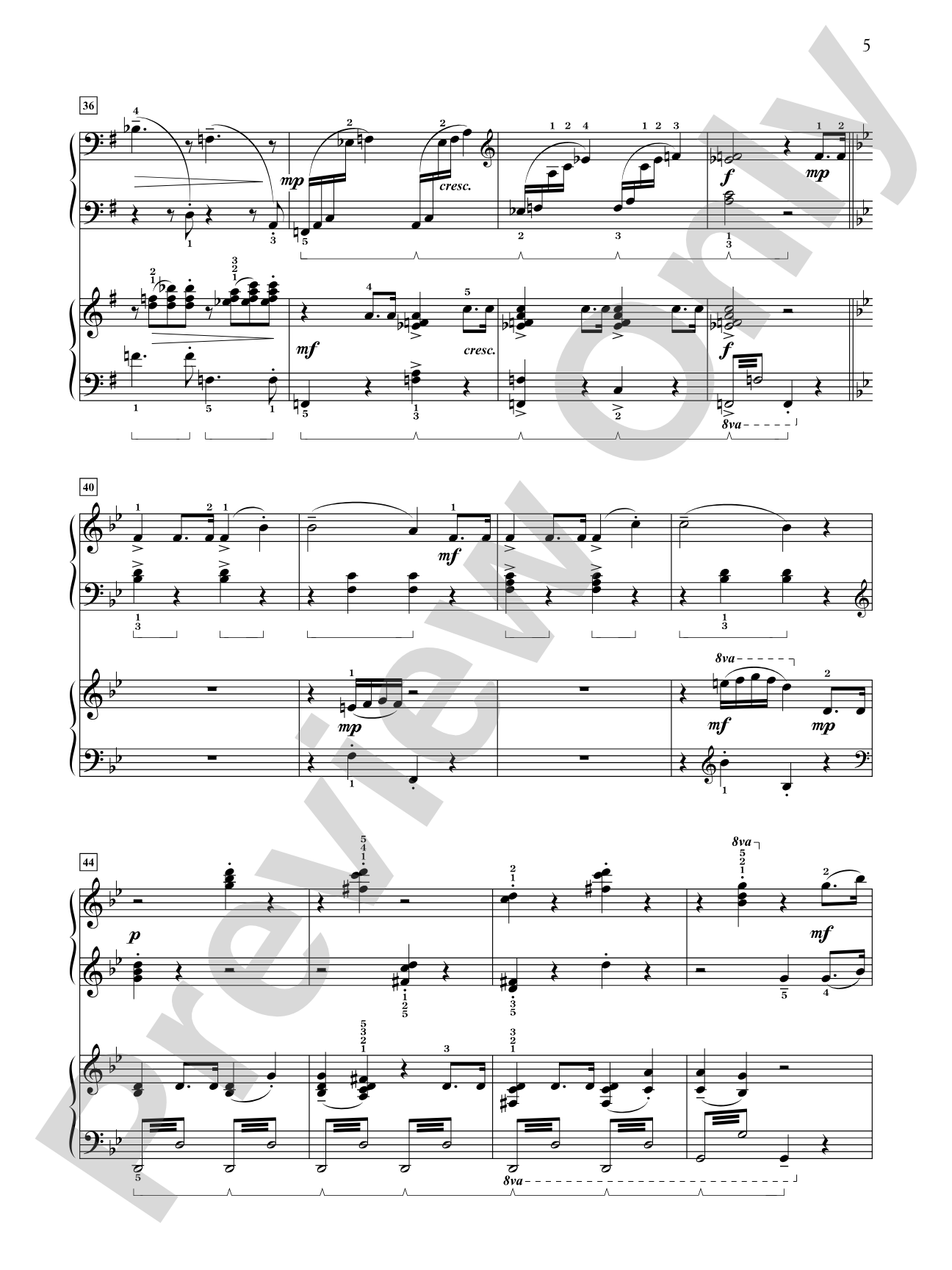
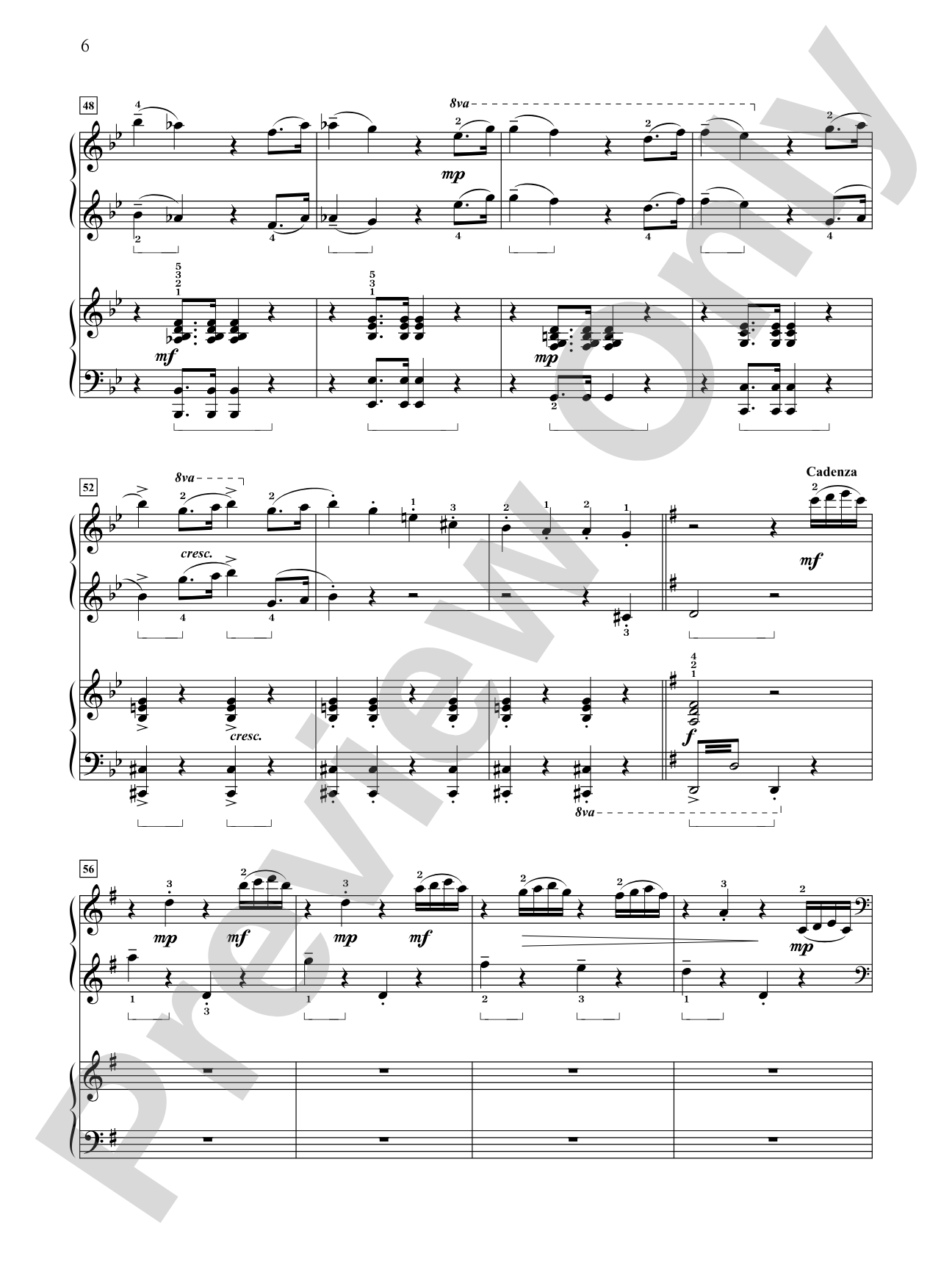
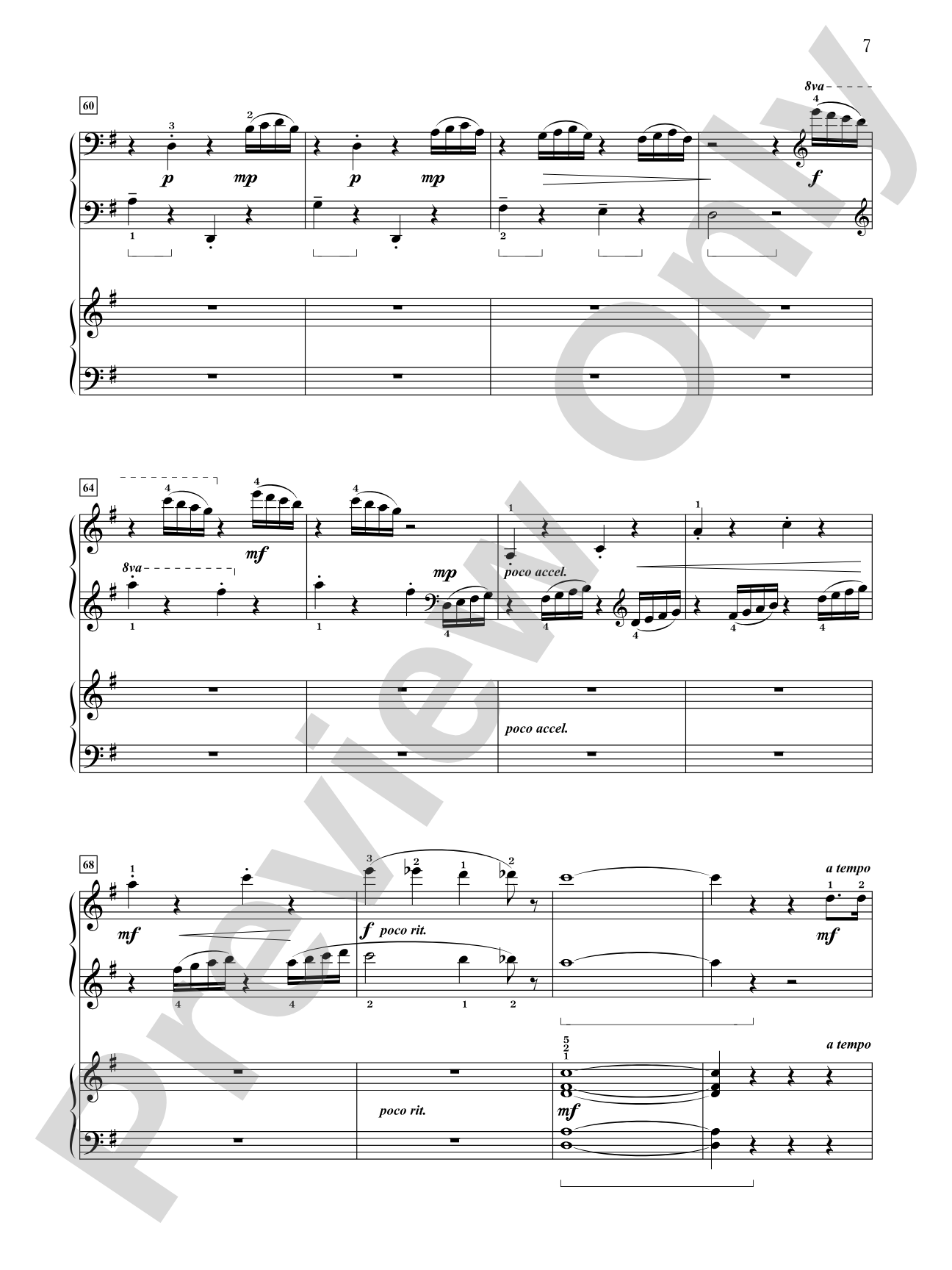
Concert pianist, composer, and master teacher Alexander Peskanov has written Spring Concerto as a bridge to the concerto repertoire that will help pianists at the intermediate level experience the joys of performing a concerto at a young age. Inspired by springtime-themed masterpieces by Vivaldi, Haydn, and Beethoven, this concerto for solo piano with piano accompaniment is divided into four distinctive movements: "The March of Spring," "April Scherzo," "Sunset Reverie," and "May Rondo." The movements explore Classical forms, such as sonata-allegro form and rondo form, while depicting the lively sounds of nature in spring. A Federation Festivals 2024-2028 selection.


Spring Concerto: In Four Movements for Solo Piano with Piano Accompaniment - Piano Duo (2 Pianos, 4 Hands): Piano Duets & Four Hands isn't in MakeMusic Cloud just yet...but it could be. Let us know you'd like to see it, and you'll help shape what comes next. In the meantime, start a free trial and dive into thousands of interactive titles your students can play along with today.
Request This Title
Tell us you want it.
Start Your Free Trial
Explore everything that's ready to play right now.
Sample Audio
No sample audio found.
Sample Video
No sample videos found.
Additional Details
Publisher:
Alfred Music
Page Count:
36
SKU:
00-PB-0000894
More about this title
About the Composer: Alexander Peskanov
Alexander Peskanov is a concert pianist, composer, and pedagogue whose work bridges performance and teaching. He has built his career on creating repertoire that opens doors for developing pianists, understanding firsthand the technical and musical challenges students face at each level.
Why we love this
Peskanov has written a concerto that actually works for intermediate pianists rather than asking them to fake their way through adult repertoire. The four-movement structure gives performers real narrative arc and formal understanding, while the accompaniment part is genuinely musical and engaging for the partner pianist, making this a true collaborative experience rather than a one-sided showcase.
What to expect
Spring unfolds across four vivid snapshots: a bright processional, a playful scherzo, a quiet moment of reflection, and a triumphant finale. The harmonic language is transparent and classical, but the orchestral gestures of the accompaniment create the feeling of performing with a full ensemble.
Who it's for
Intermediate pianists ready to experience concerto performance without the technical barrier of standard adult repertoire. This is equally valuable for duet partnerships seeking substantial concert material that respects both players' musicianship.
How to get the most out of it
- Rehearse the two piano parts separately first so each player owns their material before combining. The solo part needs secure technical control, while the accompaniment requires sensitivity to the soloist's phrasing and tempo variations.
- Shape the four movements as distinct characters. "The March of Spring" and "May Rondo" benefit from rhythmic clarity and forward motion, while "Sunset Reverie" requires deeper legato and patience with rubato.
- Listen for balance in the accompanimental texture. The second piano should sit behind the solo line even when playing octaves or arpeggiated figures; this is support, not competition.
- Mark your interpretive choices early: pedal articulation, tempo relationships between movements, and the specific harmonic weight you want in accompanimental voices. These decisions save rehearsal time and create coherence across the full work.
How to use it
This works beautifully as a concerto slot in a student recital, giving young pianists the experience of substantial form and festival-level programming. It pairs naturally with single movements of the classical masters it emulates, or stand alone as a complete concert statement.
Skills your students will build
- Sonata-allegro form and rondo form analysis through performance
- Ensemble balance and listening in a two-piano setting
- Coordinating tempo relationships and musical intention across multiple players
- Sustaining musical narrative across an extended multi-movement work
- Interpreting accompanimental textures with harmonic clarity and restraint