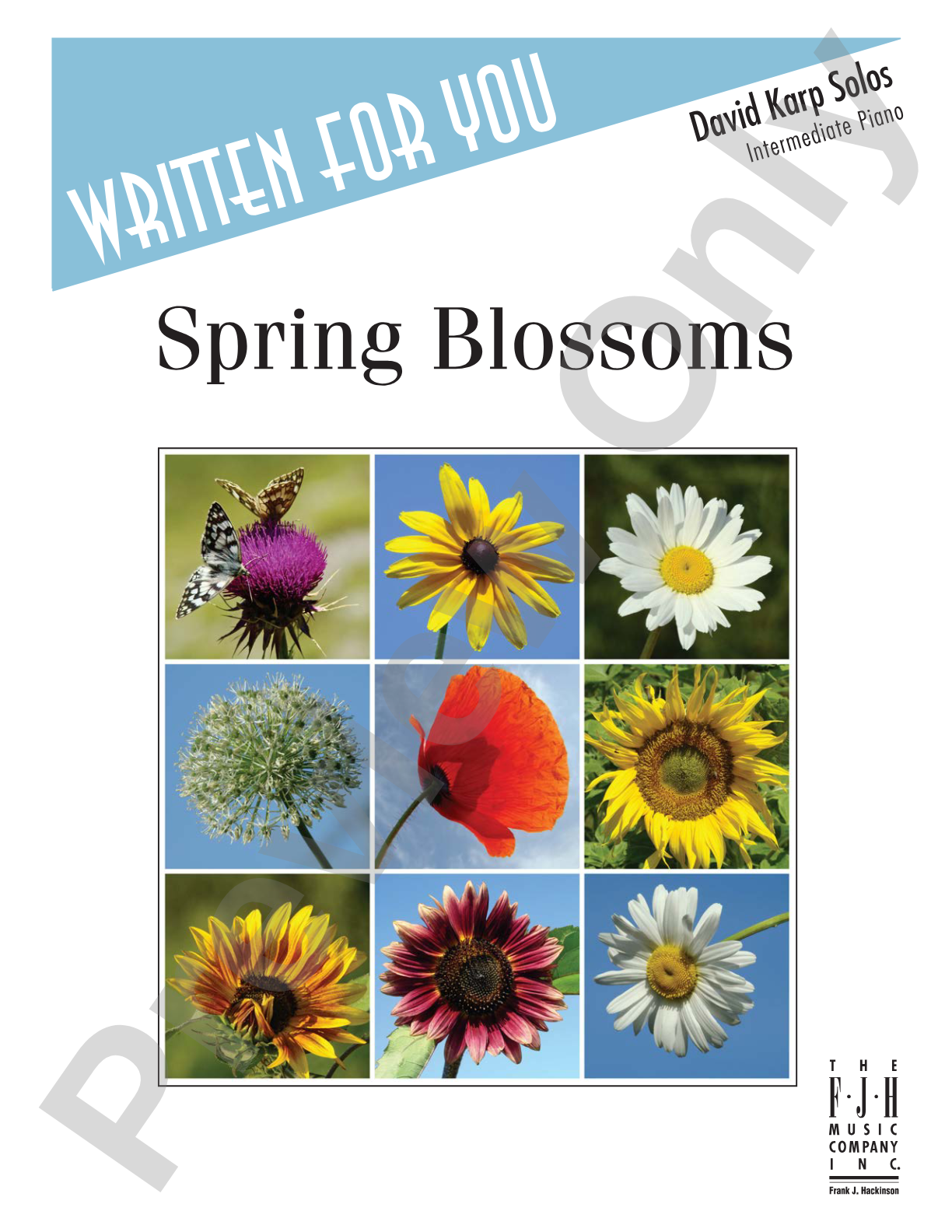
As delicate and tender as a spring flower, this lush piece has a gorgeous melody above flowing arpeggio patterns spanning two octaves in the L.H. Patterned and easy to pedal, it starts in G major, modulates to G minor, then back to G major. It’s a good piece to teach rubato and expressive playing.
Discover MakeMusic Cloud: thousands of interactive titles your students can play along with today.
Spring Blossoms captures that sweet spot where technical interest and musical beauty align without overwhelming intermediate pianists. The two-octave left-hand arpeggio patterns give students real work to do while the melody remains singable and lyrical, and the major-minor-major harmonic arc creates a moment of genuine emotional depth that feels earned rather than imposed.
What to expect
Gentle and contemplative, like watching light filter through new leaves. The cascading arpeggios create a sense of movement and renewal, while the minor-key middle section adds a moment of reflection before the return to sunlit major harmonies.
Who it's for
Intermediate pianists ready to explore expressive playing and rubato within a supportive harmonic framework. This piece rewards students who are developing independence between hands and looking for repertoire that prioritizes musicality alongside technical growth.
How to get the most out of it
Shape the melody with a singing tone while maintaining even, flowing arpeggio accompaniment; resist the urge to rush the left hand despite its rippling texture.
The modulation to G minor invites a shift in color and weight. Let the minor section feel slightly more introspective before the return to G major restores brightness.
Experiment with rubato in the outer G major sections, allowing the melody to breathe and stretch naturally over the steady arpeggios rather than locking to a rigid pulse.
Pedal changes should follow the harmonic rhythm, not the arpeggio pattern, to maintain clarity in the flowing accompaniment figure.
How to use it
Spring Blossoms works beautifully as a recital opener that sets a lyrical, intimate mood, or as a bridge piece between more technically demanding works. Its seasonal character makes it ideal for spring concerts, and its focus on expressive playing rather than flashy technique fits naturally into a program emphasizing artistry over virtuosity.
Skills your students will build
Sustaining evenness and independence in two-octave left-hand arpeggio patterns
Rubato and expressive phrasing over a steady accompaniment
Managing dynamic contrast and tonal color in major versus minor tonalities
Strategic pedal use to support harmonic motion while preserving textural clarity
You May Also Like
Scan to Complete Your Purchase
Use your phone's camera to scan the code below
You'll log in on your phone and the order will be added to your account