Spoon River Variations: 2nd E-flat Alto Saxophone Sheet Music Preview

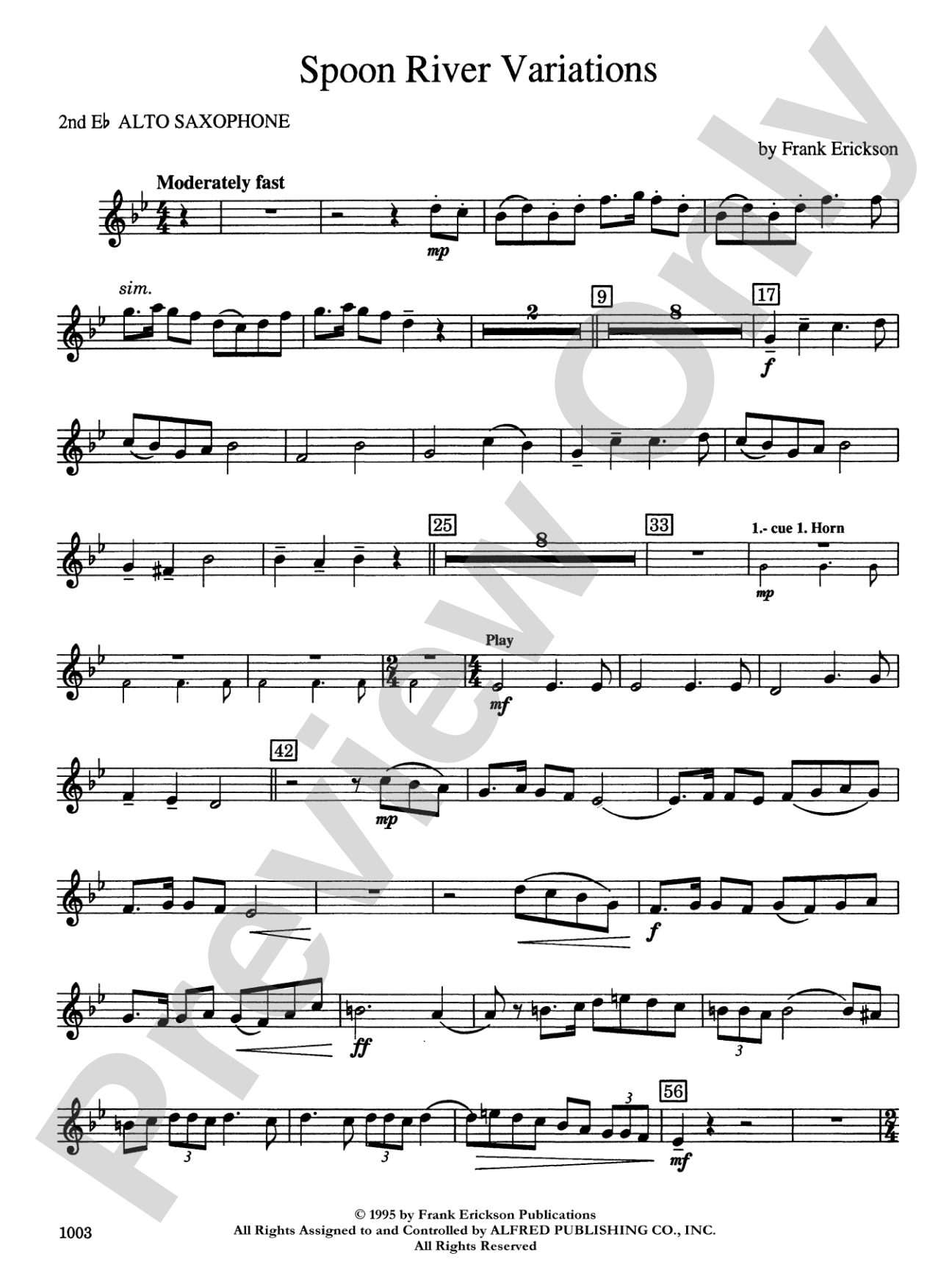
Spoon River Variations: 2nd E-flat Alto Saxophone

By Frank Erickson

Grade: 4 (Medium)

Item: 00-PC-0001630_AX2

Digital Download
$3.00
Description
Spoon River is and American folk-dance or fiddle-tune, the same melody that was used by Percy Grainger in his composition, Spoon River. The first eight measures in unison woodwinds is followed by the main melody (harmonized quite traditionally) and seven variation, varying widely in character and length without the usual marked distinction found in more traditional theme and variation forms.

Don't just read it, hear it, play along with it, and watch your students grow with it. In MakeMusic Cloud, Spoon River Variations: 2nd E-flat Alto Saxophone comes alive with professional accompaniment, adjustable tempo, and built-in practice tools that turn solo practice into real progress.

Sample Audio
No sample audio found.
Sample Video
Additional Details
Series: Frank Erickson Publications
Publisher: Alfred Music
Page Count: 288
SKU: 00-PC-0001630_AX2

More about this title

About the Composer: Frank Erickson

Frank Erickson (1923-1996) was a prolific composer and arranger whose output shaped the concert band repertoire for generations of student musicians. His gift for orchestration and his ability to write idiomatically for young ensembles made him a staple of school band programs across North America. Erickson understood what students needed to play and what conductors needed to teach, producing works that challenged without overwhelming and entertained without condescension.

Why we love this

Erickson's treatment of this American folk melody strips away the pretense often found in theme-and-variation writing, letting the tune breathe naturally while the seven variations genuinely shift character and texture. The opening unison statement establishes the material clearly, and what follows is compositionally inventive without abandoning the tune's folk roots. It's the kind of piece that sounds like your band is making real music, not grinding through a study work.

What to expect

Spoon River has the warmth and accessibility of a folk tune wedded to the craft of a skilled orchestrator. The variations move from straightforward and lyrical to more elaborate and textured, each one revealing different colors in the band without losing sight of the core melody. There's a sense of discovery as the piece unfolds, as if the familiar tune is being turned over and examined from new angles.

Who it's for

Band directors programming a concert that needs a strong centerpiece with immediate appeal to student musicians and audiences alike. This works especially well for bands at the Grade 4 level that are ready to tackle ensemble balance, variation writing, and the challenge of maintaining musical integrity across structural shifts.

How to get the most out of it

  • Balance the opening unison woodwinds carefully so the melody reads clearly; use it as a tuning and blend moment before the harmonized statement enters.
  • Treat each variation as a distinct character study rather than rushing through them as separate sections. Let the band hear the dramatic shifts in orchestration and texture.
  • Watch the harmonic rhythm in the traditionally harmonized main melody; young players often rush through block chords, so establish a steady ensemble pulse early.
  • In the lengthier variations, maintain forward motion without dragging; Erickson's writing breathes naturally when the band stays connected to the pulse.

How to use it

Open a concert with this piece to establish an American character and set an inviting tone for the audience. It pairs well with contemporary concert band music and works equally effectively as a closing number for a pops concert or family matinee. The piece fits naturally into a program celebrating folk-based compositional approaches or works that bridge traditional and modern concert band idioms.

Skills your students will build

  • Identifying and tracking a melodic theme through textural variation
  • Balancing ensemble sound when the same melody appears in different instrument combinations
  • Maintaining rhythmic precision across shifts in harmonic and orchestral density
  • Understanding how orchestration and color function as compositional devices in theme-and-variation form

You May Also Like