Spooky Wooky Waltz Sheet Music Preview

Spooky Wooky Waltz: Piano

By Darragh Gilleece

Level: Elementary

Item: 00-PS-0017760

Digital Download
$5.99
Description
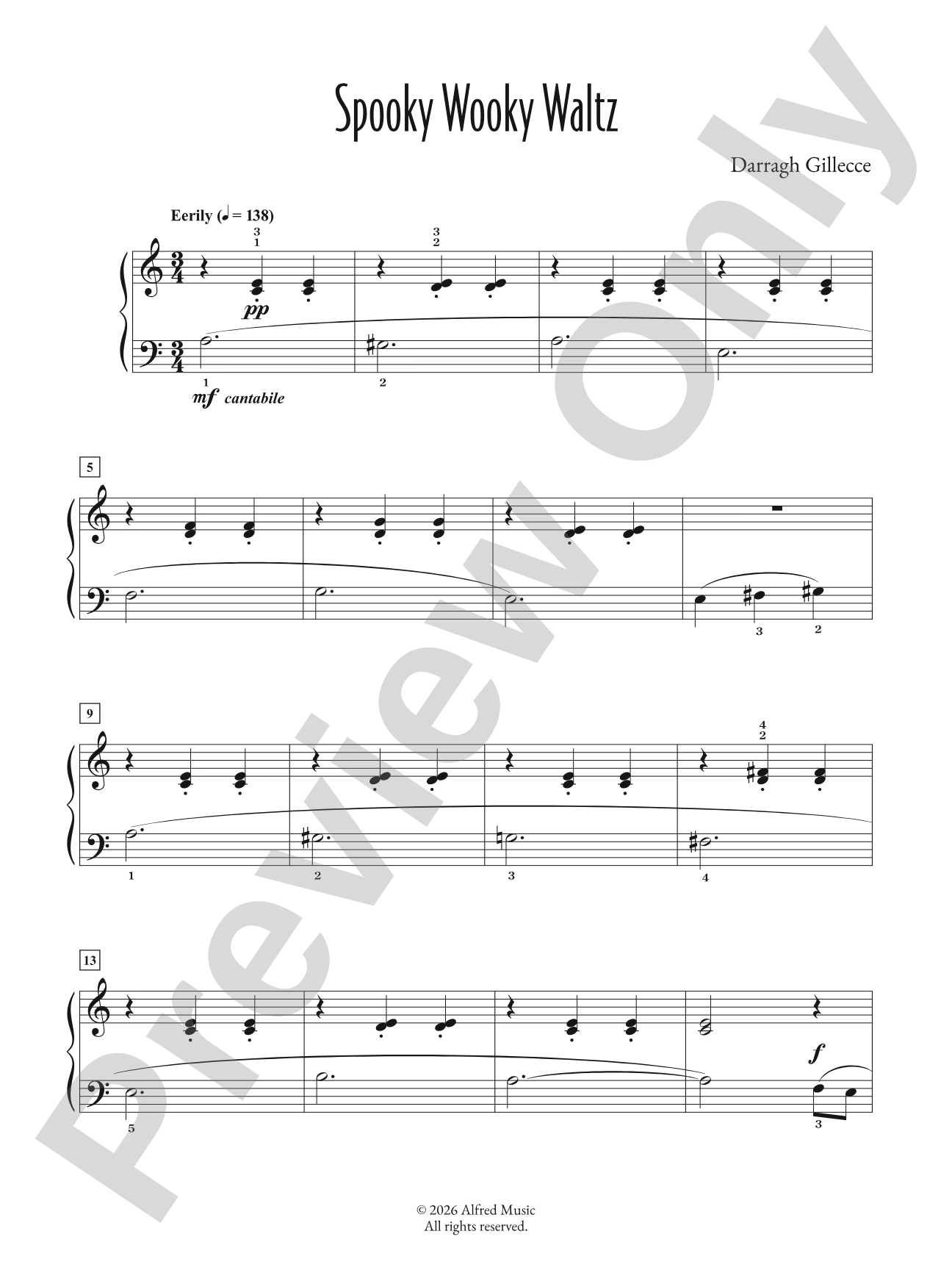
This playful waltz is sure to delight elementary students with its catchy melody and lighthearted character. Simple harmonic intervals support the tune, while easy chromatic bass lines add a touch of spooky fun.

Spooky Wooky Waltz: Piano isn't in MakeMusic Cloud just yet...but it could be. Let us know you'd like to see it, and you'll help shape what comes next. In the meantime, start a free trial and dive into thousands of interactive titles your students can play along with today.

Sample Audio
0:00
0:00
Sample Video
Additional Details
Series: Signature Series
SKU: 00-PS-0017760

More about this title

About the Composer: Darragh Gilleece

Darragh Gilleece

Darragh Gilleece is an Irish composer and pianist whose work spans performance, pedagogy, and scholarship. He teaches piano at Maynooth University and serves as a music examiner for the Royal Irish Academy of Music, where he previously held a lecturer position. His academic credentials include a BA in Music (with study at the University of Vienna), a master's degree in performance and musicology, and a PhD in musicology supported by the prestigious John and Pat Hume Scholarship, which focused on Schubert's piano duets and their pedagogical applications.

As a composer of teaching repertoire, Gilleece has developed works for major Irish exam syllabi and collaborated with method book publishers used in conservatoire programs. His research on piano pedagogy has been presented internationally at the Schubert Institute UK and the Society for Musicology in Ireland. He has authored the First Steps piano repertoire books and is preparing jazz and blues-influenced compositions for publication. His pieces consistently appear on exam boards and in conservatoire teaching collections, reflecting his deep understanding of what young pianists need to develop musically.

Why we love this

Gilleece writes with a keen sense of what engages elementary pianists without talking down to them. The waltz rhythm provides immediate structural familiarity, while the chromatic bass lines introduce genuine musical texture and a playful spooky atmosphere that makes Halloween programming feel intentional rather than forced. Students get to play something genuinely fun that also builds harmonic awareness and bass line independence.

What to expect

Delightfully eerie in a lighthearted way, like a haunted house designed for fun rather than fright. The waltz lilt gives it a playful, almost cartoonish quality, while the chromatic touches add just enough musical intrigue to keep fingers and ears engaged.

Who it's for

Elementary pianists ready to explore waltzes and basic bass line writing without navigating overly complex harmonies. The piece works well for students who are comfortable reading in treble and bass clefs and want to play something with genuine character and seasonal appeal.

How to get the most out of it

  • Shape the melody with clear phrase peaks; resist the urge to play every note at the same dynamic level, even though the piece is lighthearted.
  • Keep the waltz pulse steady and unhurried. A relaxed three-count gives the spooky character time to register with the listener.
  • Balance the chromatic bass so it's present enough to be heard but never heavier than the melody; think of it as coloring around the tune rather than competing with it.
  • Experiment with slight rubato in the melody line while maintaining strict time in the accompaniment; this adds sophistication while keeping young players grounded rhythmically.

How to use it

Schedule this for fall recitals or Halloween-themed student performances where you want something musically substantive yet seasonally relevant. It pairs well on a recital with other waltz repertoire to help students understand the form, or standalone as an encore piece that audiences always enjoy.

Skills your students will build

  • Playing steady waltz rhythm in 3/4 time
  • Balancing melody and accompaniment in both hands
  • Reading and executing chromatic bass lines
  • Shaping melodic phrases with dynamic control
  • Coordinating treble and bass clef independence

You May Also Like