Spooky Scary Skeletons (arr. Roger Emerson) Sheet Music Preview

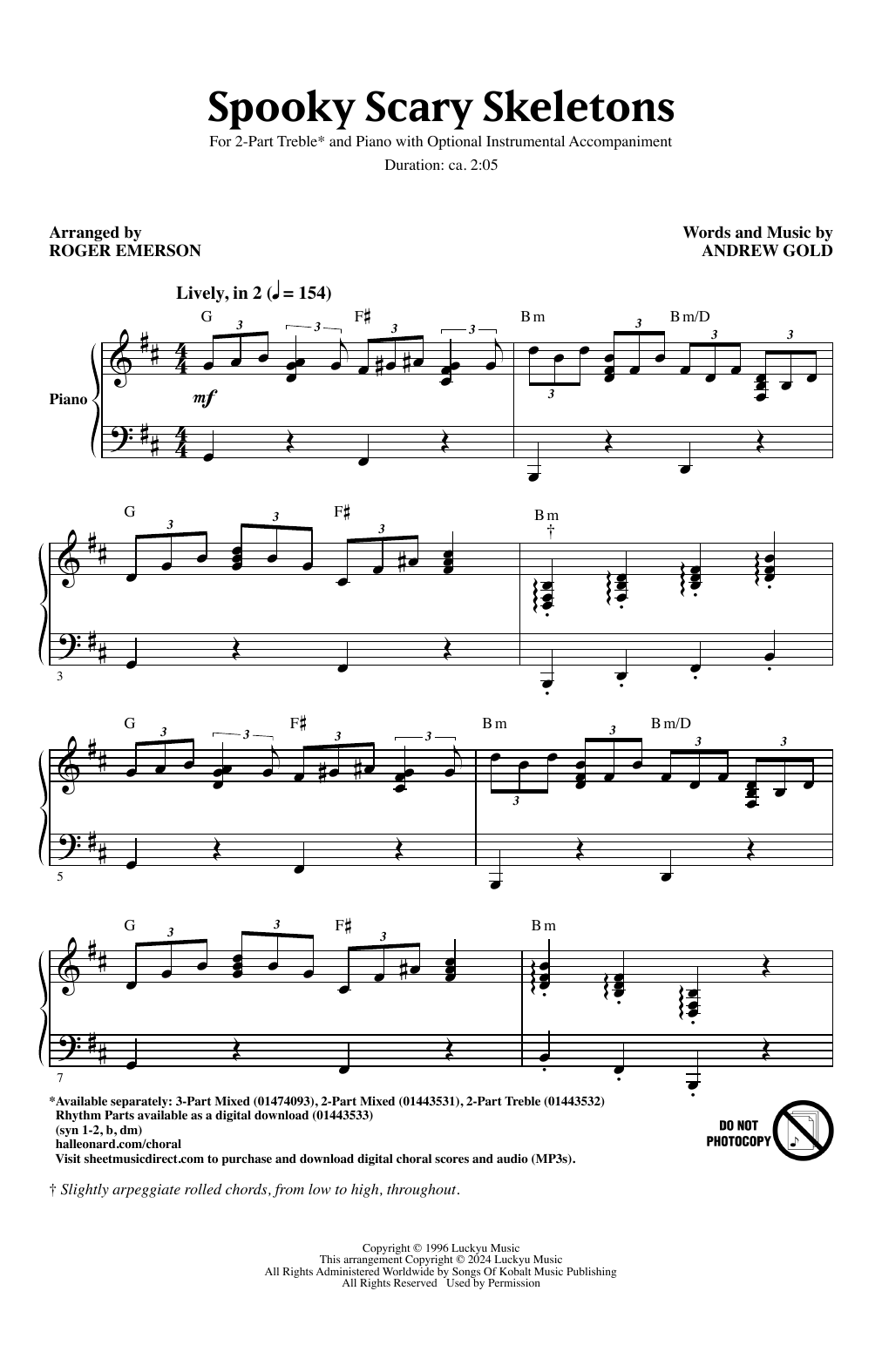
Spooky Scary Skeletons (arr. Roger Emerson): 2-Part Treble Choral Octavo

By Andrew Gold / Arranged by Roger Emerson

Item: 35-DS01424497

Digital Download
$2.99
Description

Spooky Scary Skeletons (arr. Roger Emerson): 2-Part Treble Choral Octavo isn't in MakeMusic Cloud just yet...but it could be. Let us know you'd like to see it, and you'll help shape what comes next. In the meantime, start a free trial and dive into thousands of interactive titles your students can play along with today.

Sample Audio
No sample audio found.
Sample Video
Additional Details
Publisher: Hal Leonard
Page Count: 6
SKU: 35-DS01424497

More about this title

About the Composer: Andrew Gold

Andrew Gold rose to prominence in the 1970s and 1980s as a singer-songwriter and session musician, contributing to the work of artists across pop and rock. His versatility as a performer and arranger made him a sought-after collaborator in studio and live settings. Gold demonstrated a gift for crafting memorable melodies and arrangements that bridged commercial appeal with genuine musicality.

Beyond his recording career, Gold became known for compositions that entered popular culture and found new life through covers and adaptations. His work exhibits an understanding of what makes a song stick in people's minds, a skill that translates effectively to choral and educational contexts.

Why we love this

Roger Emerson's 2-part arrangement captures the novelty spirit of the original without devolving into parody. It maintains the instantly recognizable hook while offering enough harmonic interest to keep singers engaged across multiple verses, making it genuinely fun to rehearse rather than merely disposable. This is the kind of piece that reminds students why singing together matters, even when the subject matter is deliberately silly.

What to expect

Spooky and exuberant in equal measure. The arrangement captures the campy horror aesthetic of the original song while creating a driving, modern sound that feels contemporary rather than dated. Singing this piece generates visible energy from the ensemble and genuine smiles from audiences who recognize the melody instantly.

Who it's for

Middle school and high school choirs looking for Halloween programming or seeking pieces that energize rehearsals and engage singers who might otherwise feel disconnected from classical choral music. Directors programming concerts that balance substantive repertoire with moments of levity will find this Emerson arrangement a reliable crowd pleaser that still demands musical attention.

How to get the most out of it

  • Lean into the rhythmic precision of the opening ostinato. The repetitive nature of this material only works if the ensemble locks in together, so spend rehearsal time drilling the exact rhythmic placement in unison before introducing parts.
  • Adjust the tempo slightly if needed to match your ensemble's comfort level with articulation and breath management. The original recording moves briskly, but a slightly slower tempo can showcase the arrangement's harmonic choices more effectively.
  • Balance the melody with the harmonic support underneath. In 2-part voicing, the lower part carries essential harmonic content, so ensure both sections hear their line as equally important to the overall sound.
  • Consider subtle dynamic variation across verses to maintain listener interest. The arrangement works best when singers shape phrases intentionally rather than singing at one volume throughout.

How to use it

Reserve this for fall concerts, Halloween-themed fundraisers, or mixed holiday programs where you want to shift the mood from reverent to playful. It works exceptionally well as a finale or penultimate selection when you're ready to send an audience out laughing. Pair it with one or two other novelty pieces to create a coherent set, or use it as a standalone statement of your choir's range and personality.

Skills your students will build

  • Rhythmic precision in ensemble unison and parts
  • Harmonic listening and blend in 2-part voicing
  • Stylistic commitment to contemporary pop-influenced choral music
  • Dynamic shaping and phrasing in a modernist context

You May Also Like