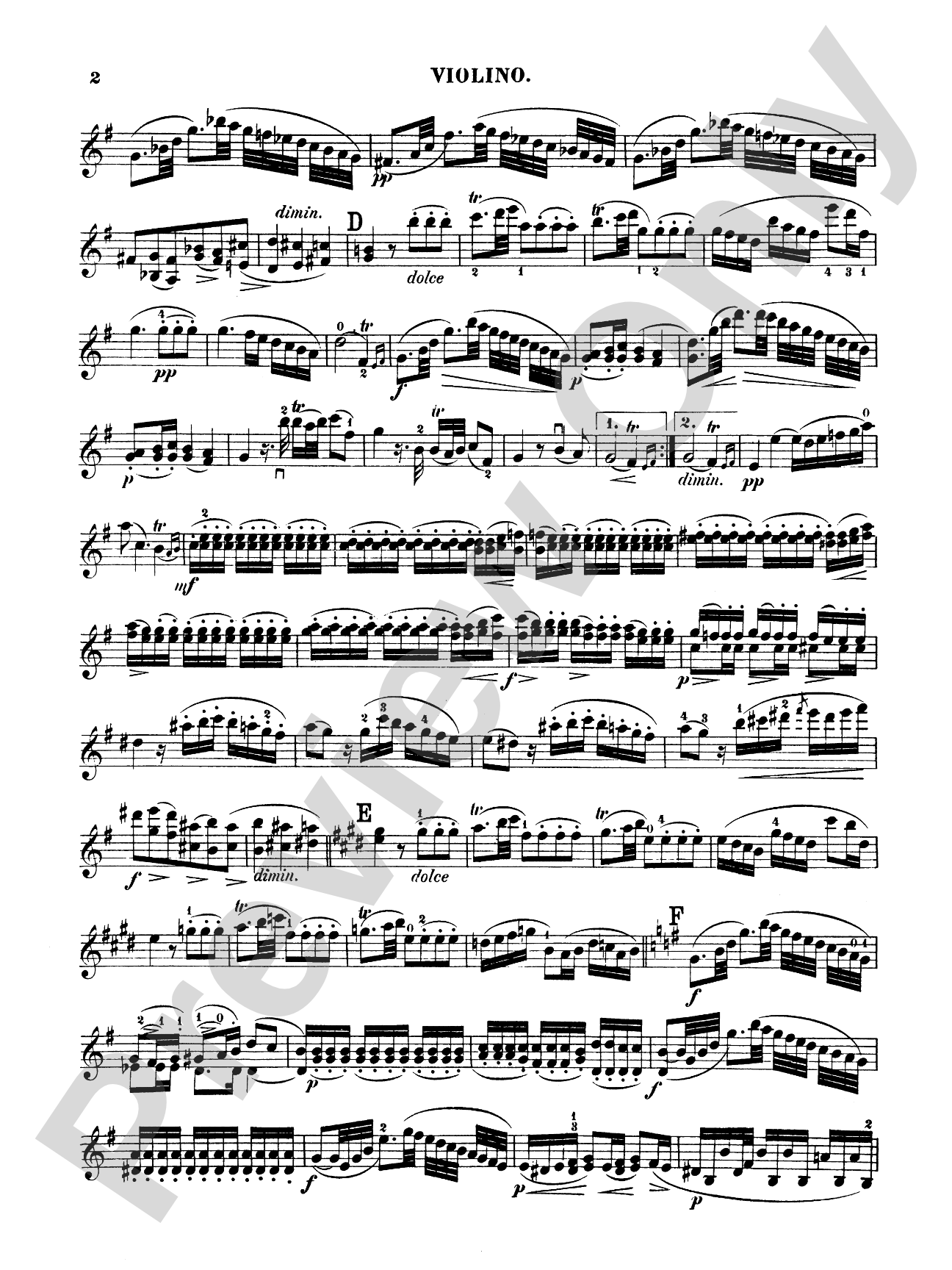
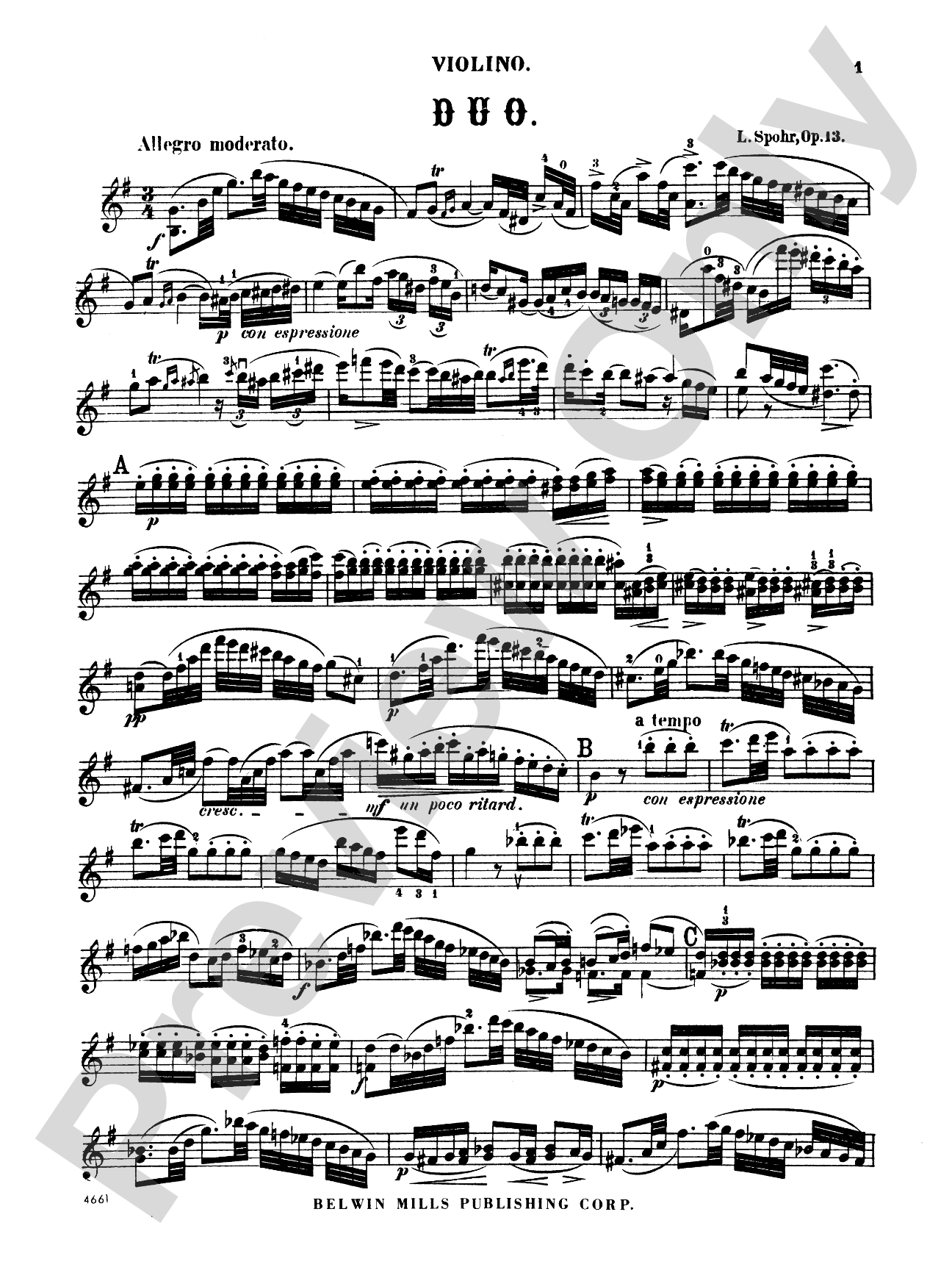
Spohr: Duet, Op. 13 Sheet Music Preview

Spohr: Duet, Op. 13

By Louis Spohr

Item: 00-PC-0010927

Digital Download
$2.99
Description
A String Duet for Violin and Viola composed by Louis Spohr.

Don't just read it, hear it, play along with it, and watch your students grow with it. In MakeMusic Cloud, Spohr: Duet, Op. 13 comes alive with professional accompaniment, adjustable tempo, and built-in practice tools that turn solo practice into real progress.

Sample Audio
No sample audio found.
Sample Video
Additional Details
Series: Kalmus Edition
Publisher: Alfred Music
Page Count: 16
SKU: 00-PC-0010927

More about this title

About the Composer: Louis Spohr

Louis Spohr (1784-1859) was a violinist and composer whose works bridged the Classical and Romantic eras. His dual mastery of performance and composition gave him unique insight into what violinists could accomplish, and his duets remain staples of chamber music repertoire for their musical substance and technical elegance.

Spohr's prolific output includes ten symphonies, concertos for multiple instruments, and numerous chamber works. He was also a celebrated conductor and pedagogue whose influence shaped 19th-century string playing. His duets are particularly valued in music education for their balance of accessibility and artistic depth.

Why we love this

Spohr's duets occupy a sweet spot between genuine artistic substance and genuine playability. Unlike works that demand near-professional execution or those that merely fill rehearsal time, Op. 13 offers violinists and violists a Romantic-era score with melodic generosity, clear harmonic thinking, and moments of real dialogue between parts. Contest and festival judges recognize this work because students can demonstrate musicianship, not just technical competence.

What to expect

Spohr's writing unfolds with elegant phrasing and Romantic warmth, never sacrificing clarity for effect. The duet breathes with natural lyricism; melodies are singable, harmonies are direct, and the two voices engage in genuine musical conversation rather than mere technical display. There is a refinement here that speaks to an earlier age of chamber music while remaining entirely accessible to modern ears.

Who it's for

This duet suits intermediate to advanced high school violinists and violists preparing for competition or recital. It also works well for college-level chamber musicians seeking 19th-century repertoire that demonstrates musicianship without virtuosic extremes. Adult amateur duos will find the piece rewarding both musically and practically.

How to get the most out of it

  • Balance the melodic line between instruments by listening carefully to whose voice carries the primary idea in each phrase; Spohr writes both as equal partners, so avoid defaulting to the violin as soloist.
  • Shape phrases with subtle tempo flexibility rather than rigid adherence to metronomic time; Romantic-era chamber music rewards performers who understand breathing and pacing.
  • Use vibrato expressively to enhance cantabile passages, particularly in slower movements; Spohr's writing invites the warmth and color that judicious vibrato brings to a duo setting.
  • Attend to intonation in thirds and sixths with particular care, since the two instruments often move in parallel motion where tuning imprecision becomes immediately audible.

How to use it

Include this work on a festival or competition program where it showcases musical maturity and stylistic understanding of the Romantic era. It pairs effectively with 20th-century string duos or with other Spohr chamber works if your program emphasizes a single composer. The 16-page length makes it suitable as a standalone chamber piece on a recital or as part of a duet showcase.

Skills your students will build

  • Balancing melody and accompaniment roles in two-part writing
  • Sustaining long phrases with appropriate pacing and direction
  • Intonation accuracy in parallel thirds and sixths
  • Interpreting Romantic-era phrasing and vibrato choices
  • Ensemble listening and response in true duo partnership
  • Understanding period style and harmonic language of early 19th-century chamber music

You May Also Like