Splanky: 3rd Trombone Sheet Music Preview

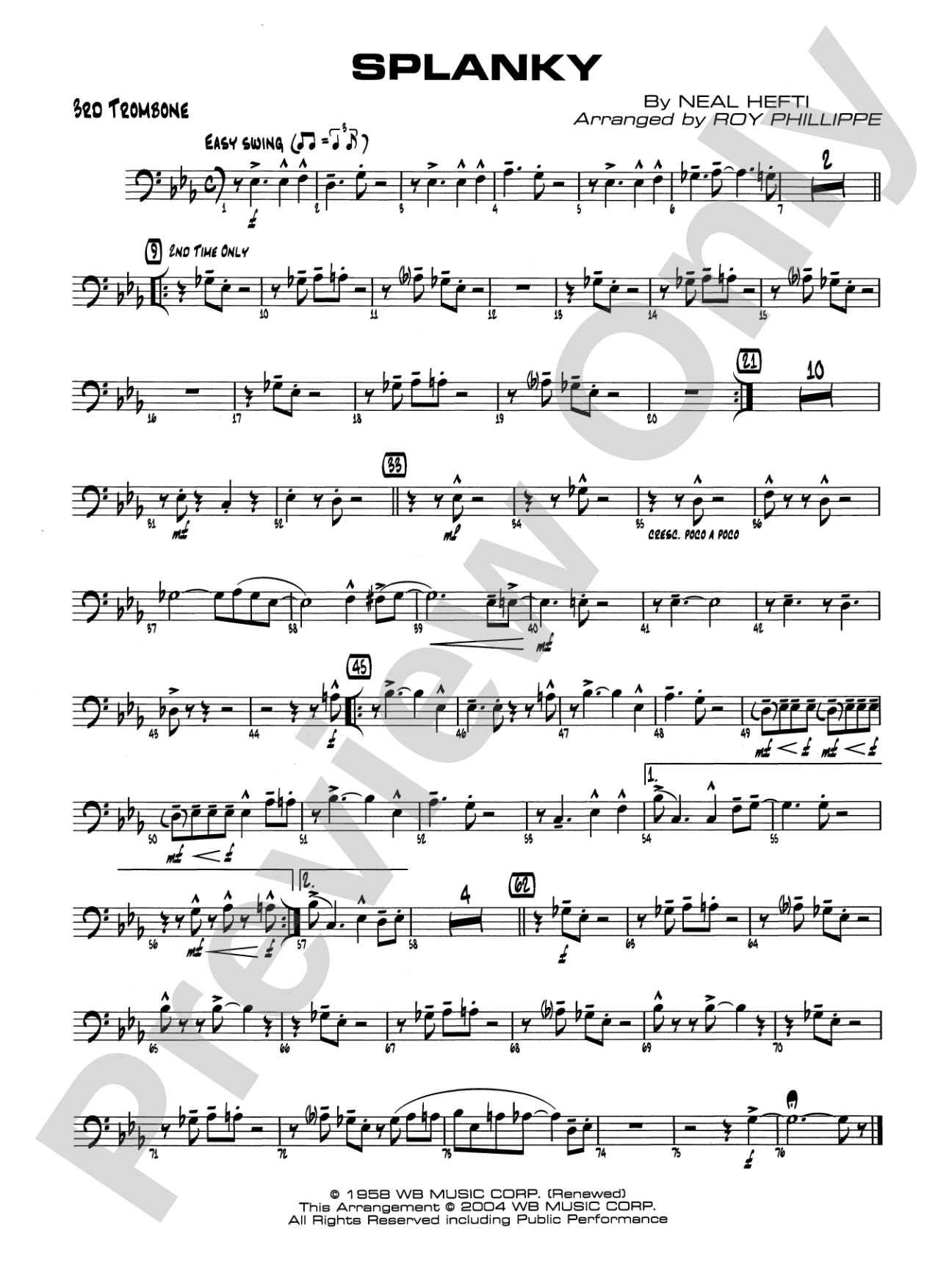
Splanky: 3rd Trombone

By Neal Hefti / arr. Roy Phillippe

Grade: 1 (Easy)

Item: 00-PC-0014725_TN3

Digital Download
$3.00
Description
"Splanky" was composed by jazz great Neal Hefti for the legendary Count Basie band. Check out how arranger Roy Phillippe brings this arrangement to the easy level and yet keeps the integrity of Hefti's original chart. Solos are written out or ad lib for piano and 1st alto saxophone. Teaching the famous Basie shout chorus will be a breeze and the trademark Basie piano style is in there, too. This title is available in MakeMusic Cloud. (3:14)

Don't just read it, hear it, play along with it, and watch your students grow with it. In MakeMusic Cloud, Splanky: 3rd Trombone comes alive with professional accompaniment, adjustable tempo, and built-in practice tools that turn solo practice into real progress.

Sample Audio
0:00
0:00
Sample Video
Additional Details
Series: First Year Charts for Jazz Ensemble
Publisher: Alfred Music
Page Count: 42
SKU: 00-PC-0014725_TN3

More about this title

About the Composer: Neal Hefti

Neal Hefti composed and arranged for some of the most influential big bands in jazz history, including the Count Basie Orchestra and the Harry James band. His gift for writing memorable melodies, sophisticated harmonies, and infectious swing grooves made him a cornerstone of the big band era and a crucial voice in shaping the sound of mid-century jazz. Hefti's charts remain teaching staples because they balance musical substance with accessibility, proving that good writing works across all levels of musicianship.

Why we love this

Roy Phillippe's arrangement strips away nothing essential from Hefti's original vision while meeting your ensemble exactly where they are. A Grade 1 chart that still captures the swagger and precision of the Basie sound is rare; this one delivers both, complete with written-out solos that give your soloists a framework without removing the jazz.

What to expect

Slanky, propulsive, and full of swagger. The chart moves with the effortless bounce of the original, driven by a rhythm section that feels loose and relaxed even as it locks in tightly. Solos breathe naturally over changes that sit comfortably under the fingers and horns.

Who it's for

Jazz ensembles in their first or second year, especially groups new to big band tradition and the swing idiom. Directors working with younger students or developing musicians who need accessible yet legitimate repertoire that doesn't compromise on sound or musicianship.

How to get the most out of it

  • Nail the shout chorus as an ensemble first. Lock the rhythm section (bass, drums, and piano) into a unified pocket before layering in the horn section; the Basie sound lives in that cohesion.
  • Balance the written-out piano and alto saxophone solos carefully against the full ensemble. These voices need to sit in front without drowning out the supportive harmonies behind them.
  • Lean into the Basie style markers: crisp articulation on the horn section, a relaxed but driving tempo, and a rhythmic precision that feels loose but is anything but. This is 'easy' in notes, not in feel.
  • Use the recorded accompaniment to establish the proper groove and tempo before rehearsing live. Hearing the Basie legacy in motion helps students understand the style faster than description alone.

How to use it

Open a jazz-focused concert with this piece to establish the band's command of swing style and ensemble precision. Its contest-ready status makes it ideal for festival appearances, and its approachable level means you can program it early in the season while students are building jazz literacy alongside more complex charts.

Skills your students will build

  • Big band section blend and balance
  • Swing articulation and phrasing
  • Jazz soloing over written changes
  • Basie-style rhythm section comping and timekeeping
  • Reading through full ensemble charts with multiple written solos
  • Responding to the shout chorus as a unified horn section

You May Also Like