Splanky: 2nd B-flat Trumpet Sheet Music Preview

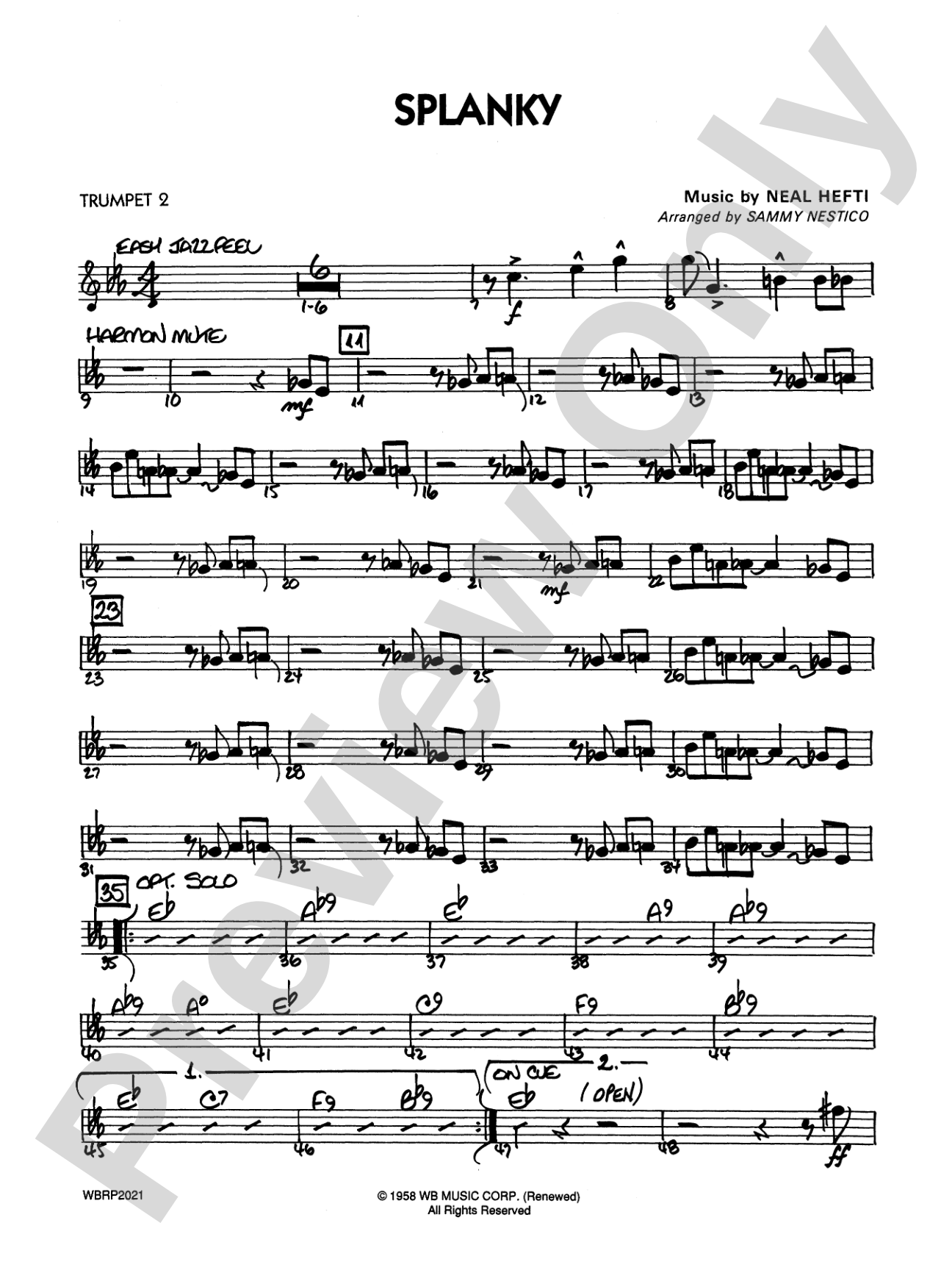
Splanky: 2nd B-flat Trumpet

By Neal Hefti / arr. Sammy Nestico

Grade: 3 (Medium)

Item: 00-PC-0015629_T2

Digital Download
$3.00
Description
Composer Neal Hefti wrote this classic swinger for Count Basie and legendary arranger Sammy Nestico scored it for the Jazz Band Series. Your band will shine on this medium tempo chart and the ensemble writing will have the band sounding just like Basie. Solo space provided for 1st tenor sax, 2nd trumpet and 1st trombone, accessible brass ranges, add the Basie-style rhythm section fills and you have a superior chart that will stand the test of time. Basie, Hefti and Nestico-what a combination!

Don't just read it, hear it, play along with it, and watch your students grow with it. In MakeMusic Cloud, Splanky: 2nd B-flat Trumpet comes alive with professional accompaniment, adjustable tempo, and built-in practice tools that turn solo practice into real progress.

Sample Audio
No sample audio found.
Sample Video
Additional Details
Series: Jazz Band Series
Publisher: Alfred Music
Page Count: 74
SKU: 00-PC-0015629_T2

More about this title

About the Composer: Neal Hefti

Neal Hefti composed and arranged for some of the most significant big bands of the swing era, working directly with Count Basie and establishing himself as a master of the accessible, swinging chart. His ability to write melodies that stick in your head while keeping ensemble writing clean and playable made him a go-to composer for bands that needed to sound professional without unnecessary complexity.

Hefti's legacy in jazz education rests on pieces that teach fundamental swing style without requiring advanced technique. His compositions remain staples in jazz curricula because they balance genuine artistry with the practical needs of student ensembles.

Why we love this

Sammy Nestico's arrangement filters a Hefti classic through the Basie sound, which means your band gets the swagger and precision of one of jazz history's greatest orchestras without the extreme demands. The solo slots feel natural rather than tacked on, the rhythm section has room to really play, and the whole thing sits in a sweet spot where students sound genuinely good without fighting the music.

What to expect

The groove settles into a medium-tempo bounce that feels effortless once your rhythm section locks in. Hefti's melody has the kind of approachability that lets the ensemble focus on phrasing and articulation rather than note-reading, while Nestico's voicings keep things sophisticated enough that you never sound like you're playing something easy.

Who it's for

Intermediate jazz ensembles ready for their first serious contest or festival appearance. This is the piece that proves your band has learned something real about swing style and section playing.

How to get the most out of it

  • Anchor the chart in the rhythm section. Have your drummer listen closely to the hi-hat and kick pattern on the reference recording; those Basie-style hits under the band hits are what lock the swinging feel into place.
  • Shape the brass fills with space. The Nestico arrangement gives you authentic rhythm section comping, so let those moments breathe rather than filling every gap with ensemble sound.
  • Build solo confidence during sectional rehearsals before running full ensemble. Tenor, trumpet, and trombone soloists need to hear how their lines sit against the walking bass and comping chords.
  • Balance the full ensemble sound by checking your trumpet and trombone counts. Grade 3 ranges sit comfortably here, but watch for any players pushing too hard on sustained notes.

How to use it

Slot this into a contest set where you want something that demonstrates both jazz fundamentals and musicality in the middle position. It also works beautifully on a concert alongside standard big band charts, showing audiences the connective tissue between Basie-era repertoire and what student musicians can handle.

Skills your students will build

  • Swing articulation and phrasing in an ensemble context
  • Comping and rhythm section communication for piano, bass, and drums
  • Solo construction over jazz changes
  • Reading and playing sectional brass voicings with balance and clarity
  • Listening for head arrangement cues and section hits

You May Also Like