

Spirit of the Season (from The Polar Express): SATB Choral Octavo
From The Polar Express
Words and music by Glen Ballard and Alan Silvestri / arr. Robert Sterling
Level: Moderate
Item: 00-PO-0002578
$2.25
Minimum order quantity: 20 copies
Pickup currently not available
Description
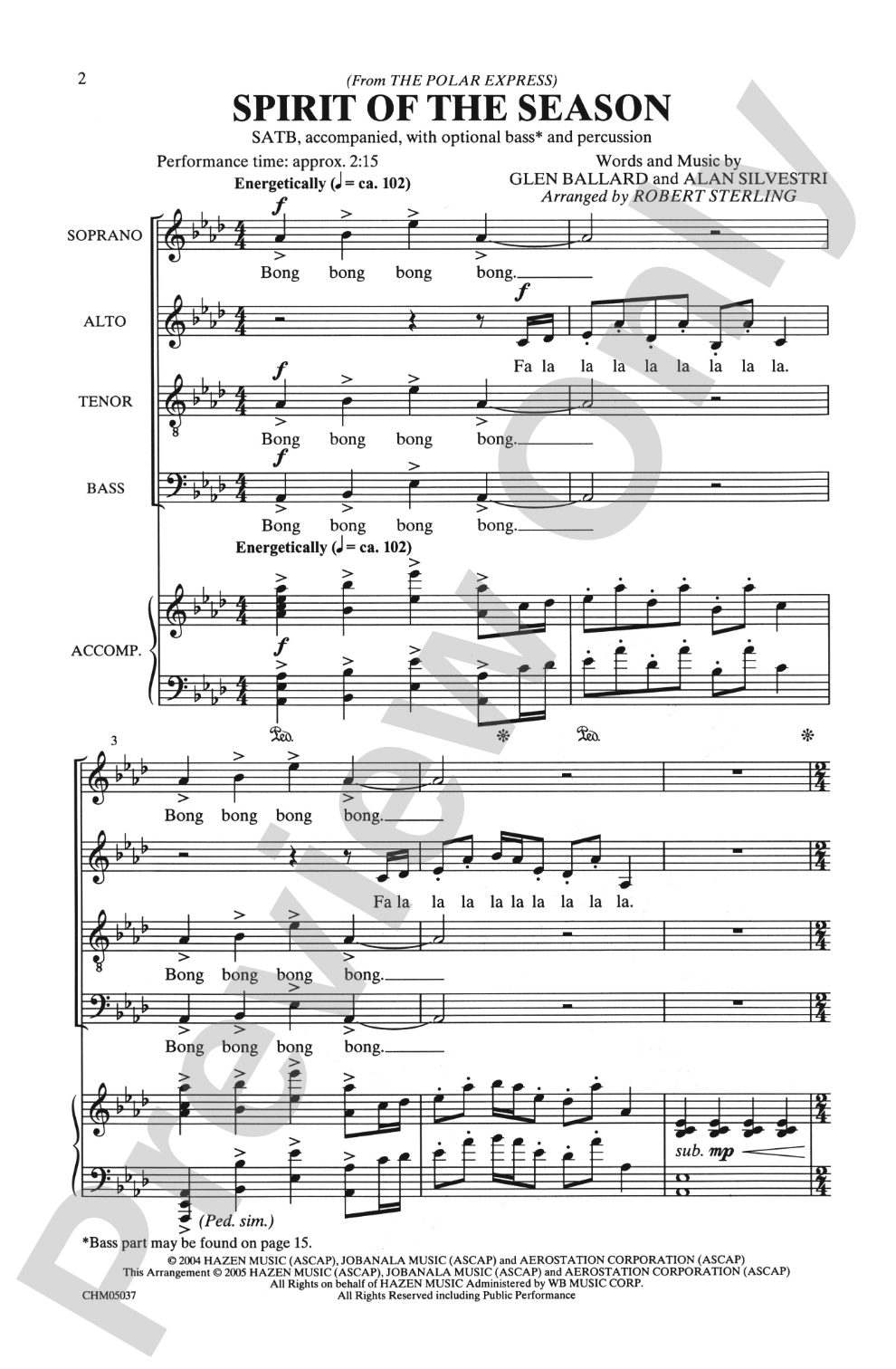
A wonderful holiday carol from the movie The Polar Express. From its opening bell tones to its fa la las, this work truly captures the "Spirit of the Season." You'll want to make this a part of your holiday concerts for many years to come. Robert Sterling's exceptional arrangement captures all the spirit of the original movie score.


Spirit of the Season (from The Polar Express): SATB Choral Octavo isn't in MakeMusic Cloud just yet...but it could be. Let us know you'd like to see it, and you'll help shape what comes next. In the meantime, start a free trial and dive into thousands of interactive titles your students can play along with today.
Request This Title
Tell us you want it.
Start Your Free Trial
Explore everything that's ready to play right now.
Sample Audio
1
Audio File
--:--
0:00
0:00
Sample Video
Additional Details
Series:
Alfred Pop Choral Series
Publisher:
Alfred Music
Page Count:
16
SKU:
00-PO-0002578
More about this title
About the Composer: Glen Ballard
Glen Ballard is a prolific composer and producer whose film and television scores have shaped popular music for decades. His work on The Polar Express demonstrates his gift for writing melodies that feel both timeless and immediately familiar, capturing emotional moments with orchestral color and harmonic sophistication that translates beautifully to choral arrangements.
Ballard's compositions for film and stage consistently prioritize singability and emotional clarity. His ability to write for ensemble voices has made his work particularly valuable to music educators seeking holiday repertoire that engages singers across all levels.
Why we love this
Robert Sterling's arrangement preserves the cinematic warmth of the original while adapting it smartly for SATB voices at a manageable level. The opening bell tones and fa la la sections give your singers memorable melodic moments to shine, and the moderate difficulty means you can program this across a range of choir configurations without compromise.
What to expect
Warmth meets wonder. The arrangement opens with delicate, bell-like textures that recall the quiet magic of the film before building into moments of genuine choral jubilation. There's a theatrical quality throughout without feeling forced—the music breathes with sincerity.
Who it's for
This octavo works well for concert and festival choirs at the secondary and adult levels, as well as community and church choirs looking for accessible holiday material. The Grade 3 difficulty makes it appropriate for developing singers while remaining musically satisfying for more experienced ensembles.
How to get the most out of it
- Bring out the bell tones in the opening by having sopranos and altos enter with clarity and slight separation from the lower voices. This atmospheric detail sets the movie's magic immediately.
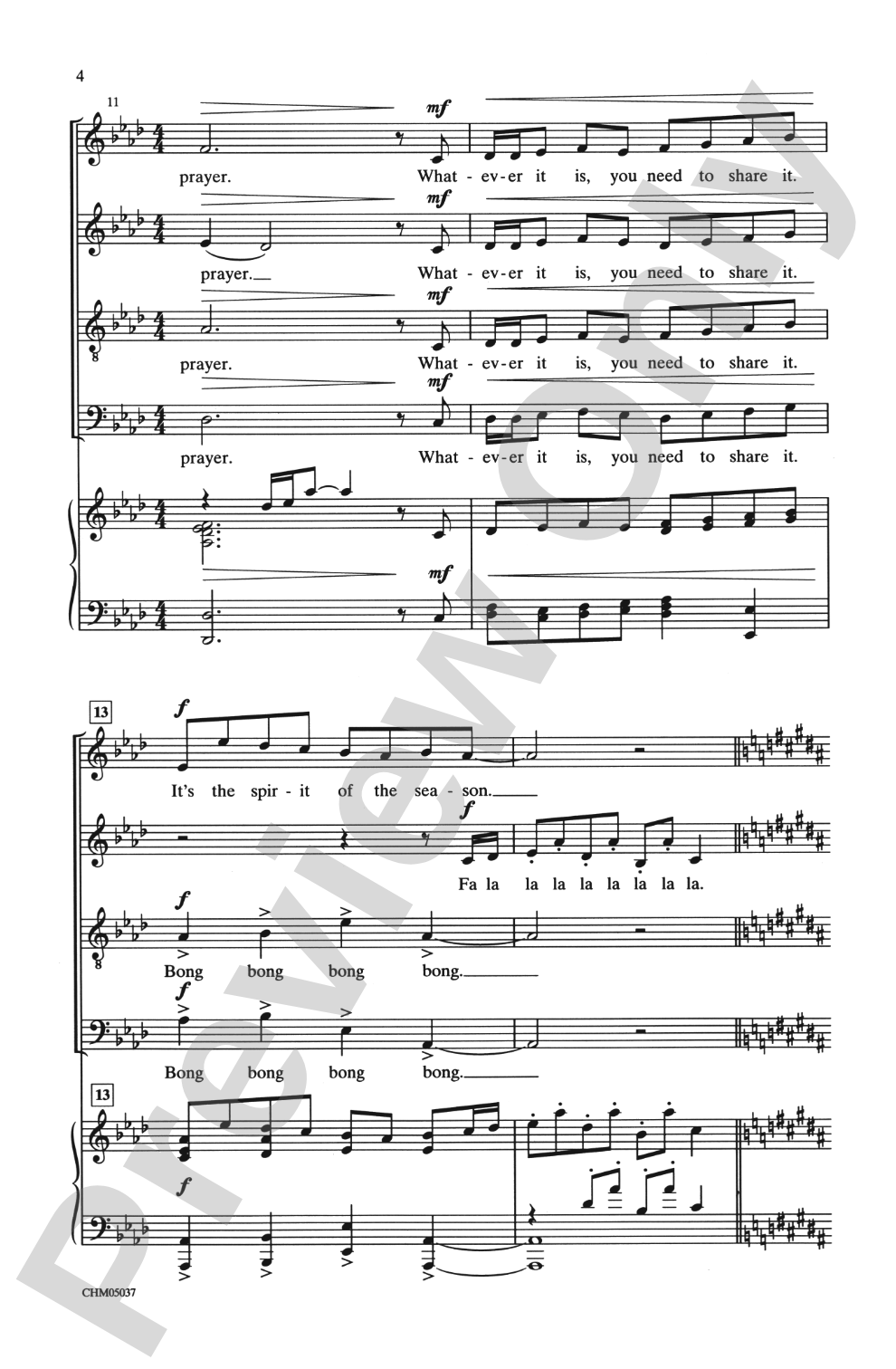
- Shape the fa la la sections with energy but control. Resist the urge to rush these sections; let them settle into the harmonic rhythm so the jubilation feels earned rather than frantic.
- Use the recorded accompaniment early in rehearsal to establish the harmonic context and mood. This supports singers in finding their parts without having to rely solely on the piano.
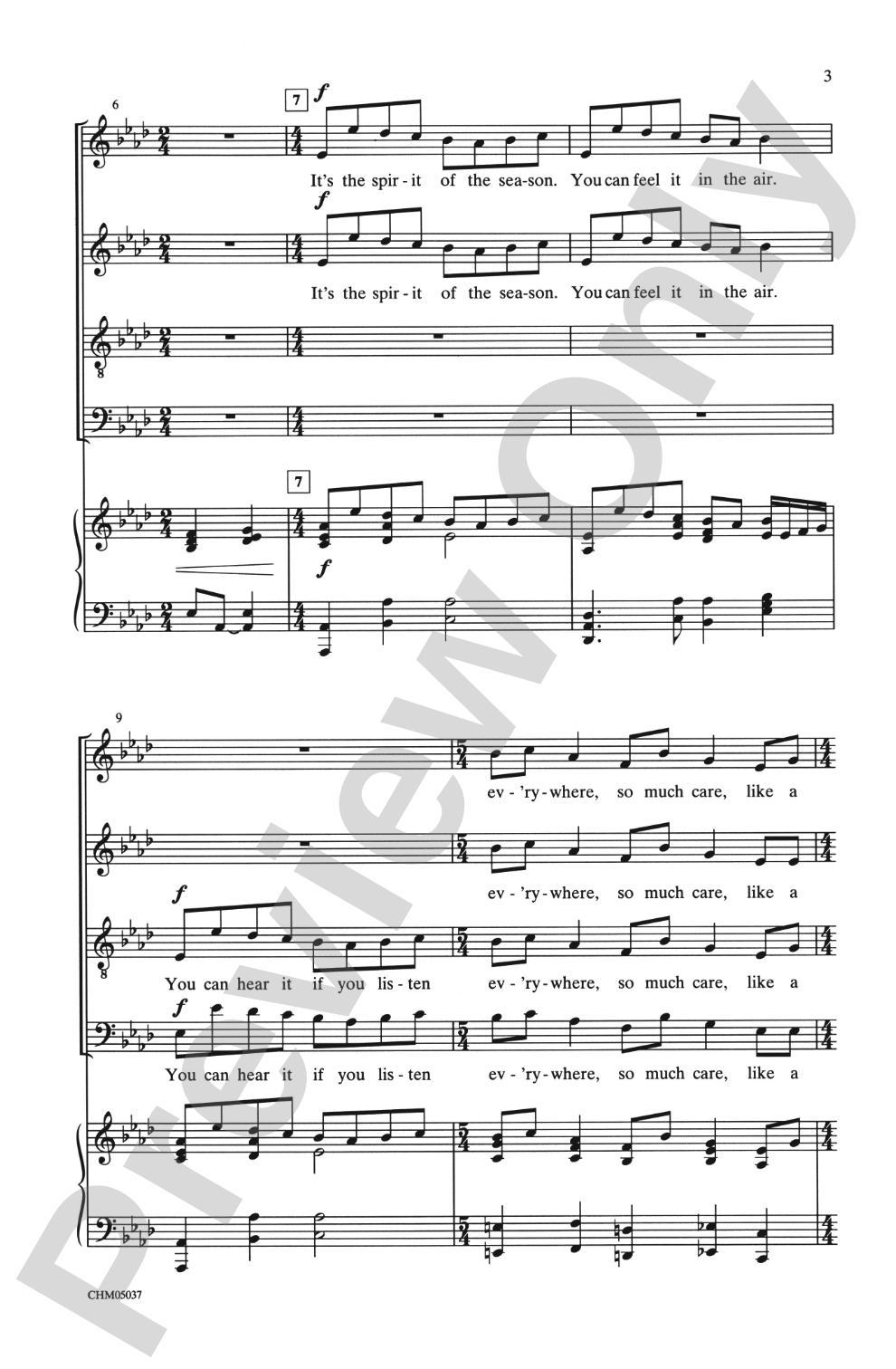
- Balance melody and harmony carefully in the middle section. Check that your inner voices aren't drowning out the primary melodic line, especially if you have fewer soprano voices.
How to use it
This works beautifully as a centerpiece in a holiday concert, particularly when paired with other secular seasonal repertoire at similar or contrasting difficulty levels. Consider programming it early in your second half to establish the festive mood, or save it as a crowd-pleasing closer that audiences instantly recognize.
Skills your students will build
- SATB voice independence and blend
- Singing sustained tones with uniform vowel quality
- Articulating rhythmic unison passages (the fa la la sections)
- Responding to dynamic and textural changes within a single piece
- Interpreting cinematic material in a choral context