
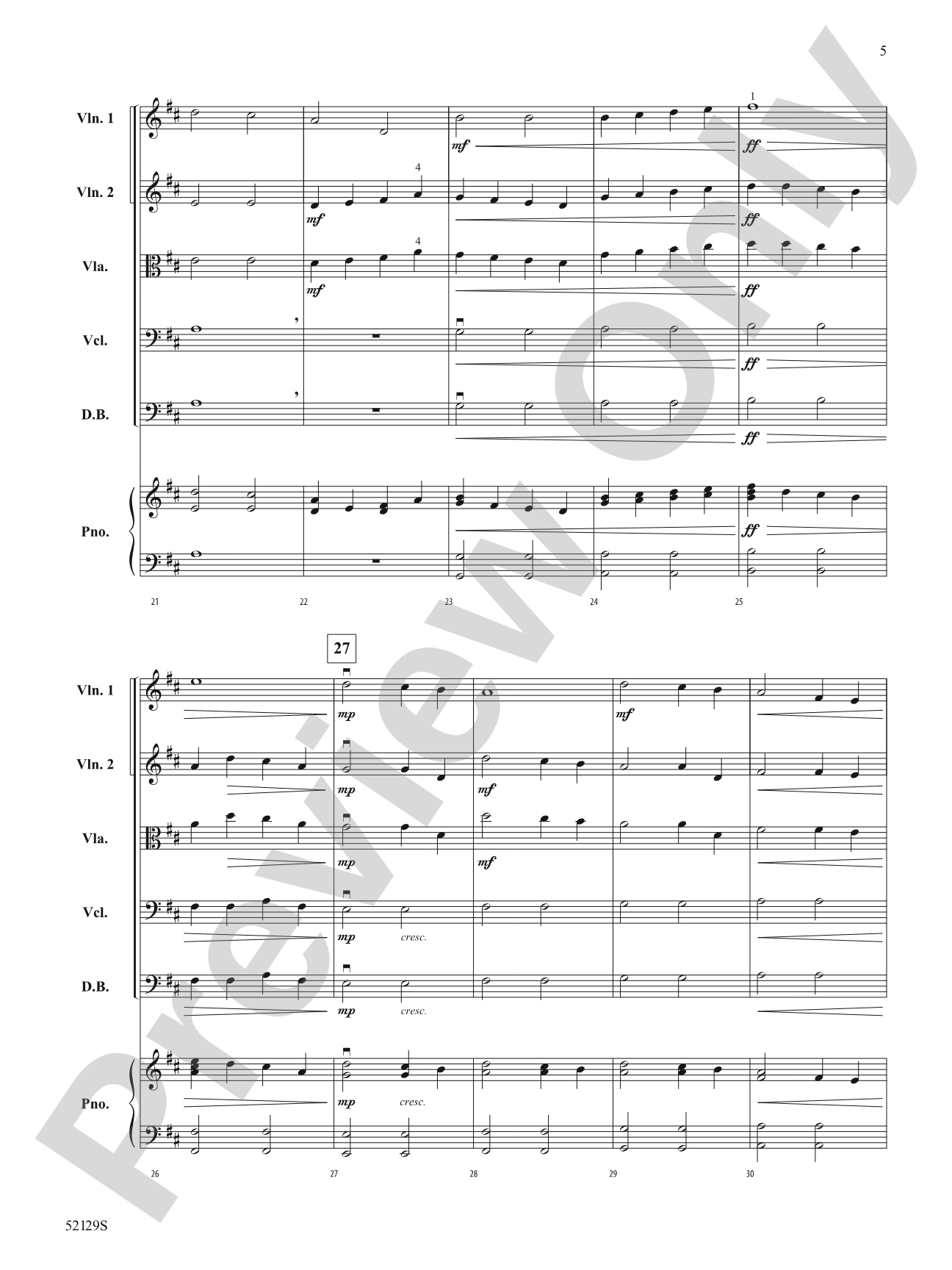
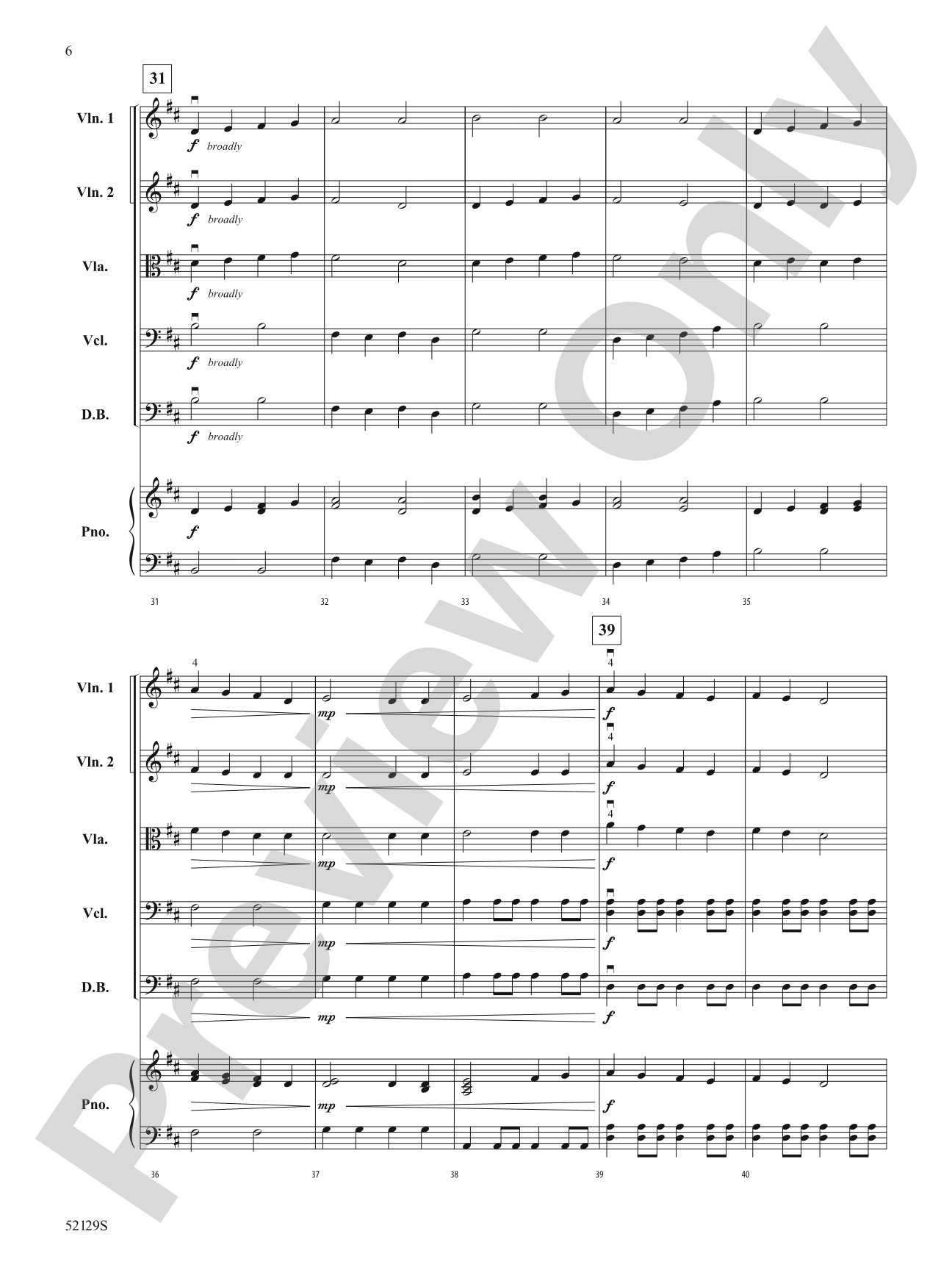
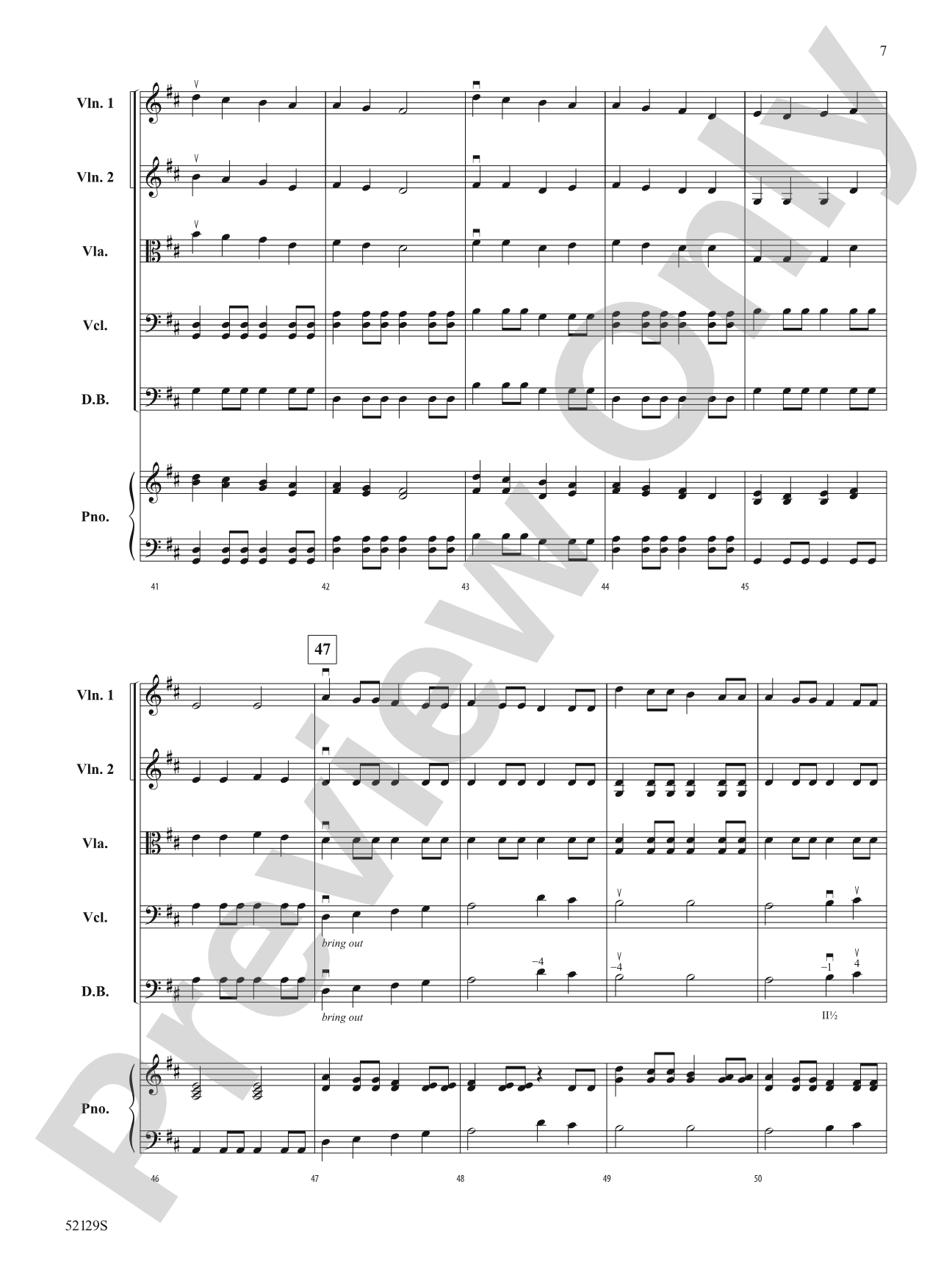
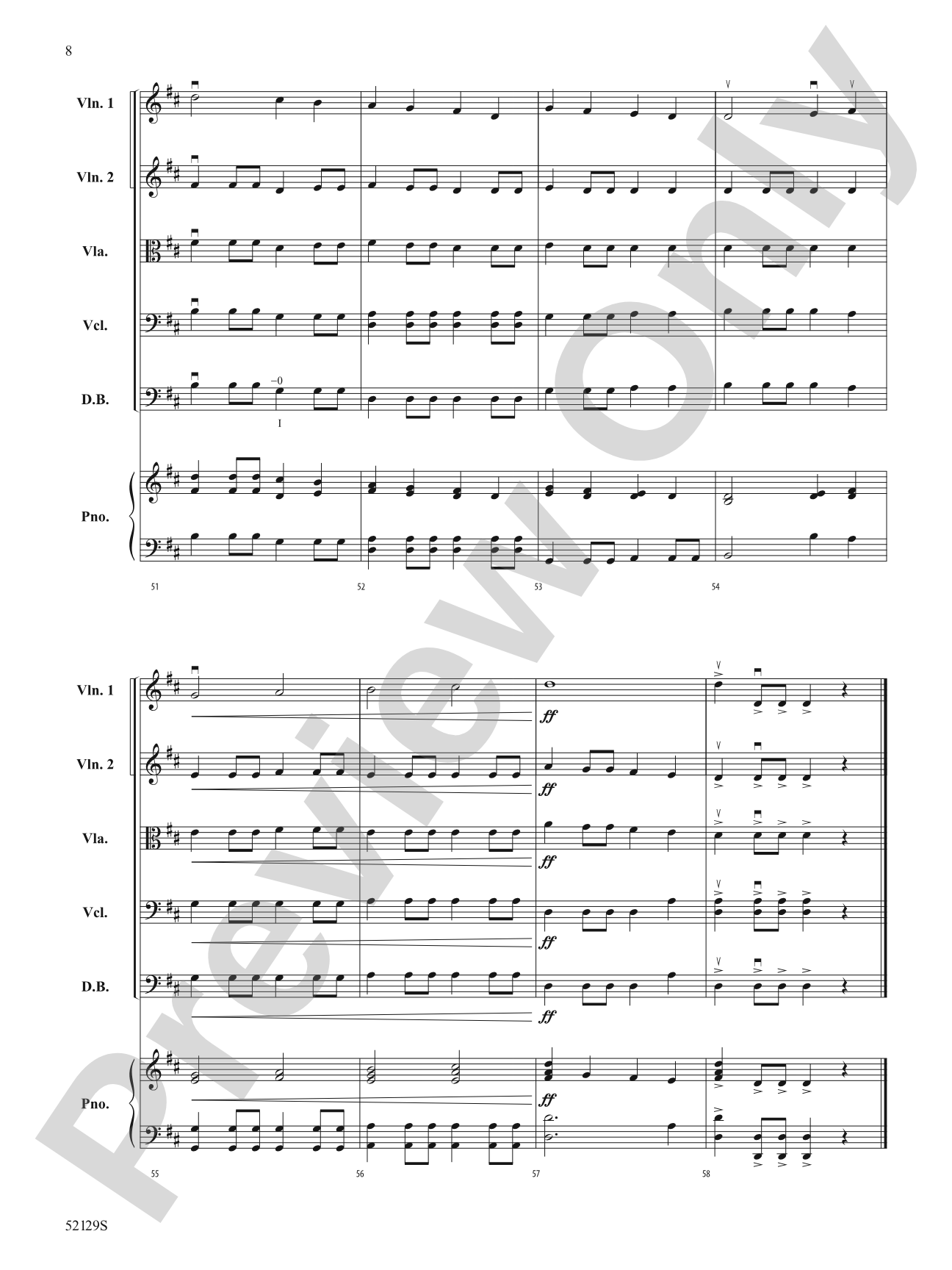

Spirit of Noel: String Orchestra Conductor Score & Parts
By Katie O'Hara LaBrie
Grade: 1
Item: 00-PK-0009400

$55.00
Pickup currently not available
Buy Extra Parts (Digital PDF Download)
| Product | Price | Quantity |
|---|---|---|
| Spirit of Noel: Score | $12.00 | |
| Spirit of Noel: 1st Violin | $3.00 | |
| Spirit of Noel: 2nd Violin | $3.00 | |
| Spirit of Noel: Viola | $3.00 | |
| Spirit of Noel: Cello | $3.00 | |
| Spirit of Noel: String Bass | $3.00 | |
| Spirit of Noel: Piano Accompaniment | $3.00 |
Parts Added to Cart!
Description
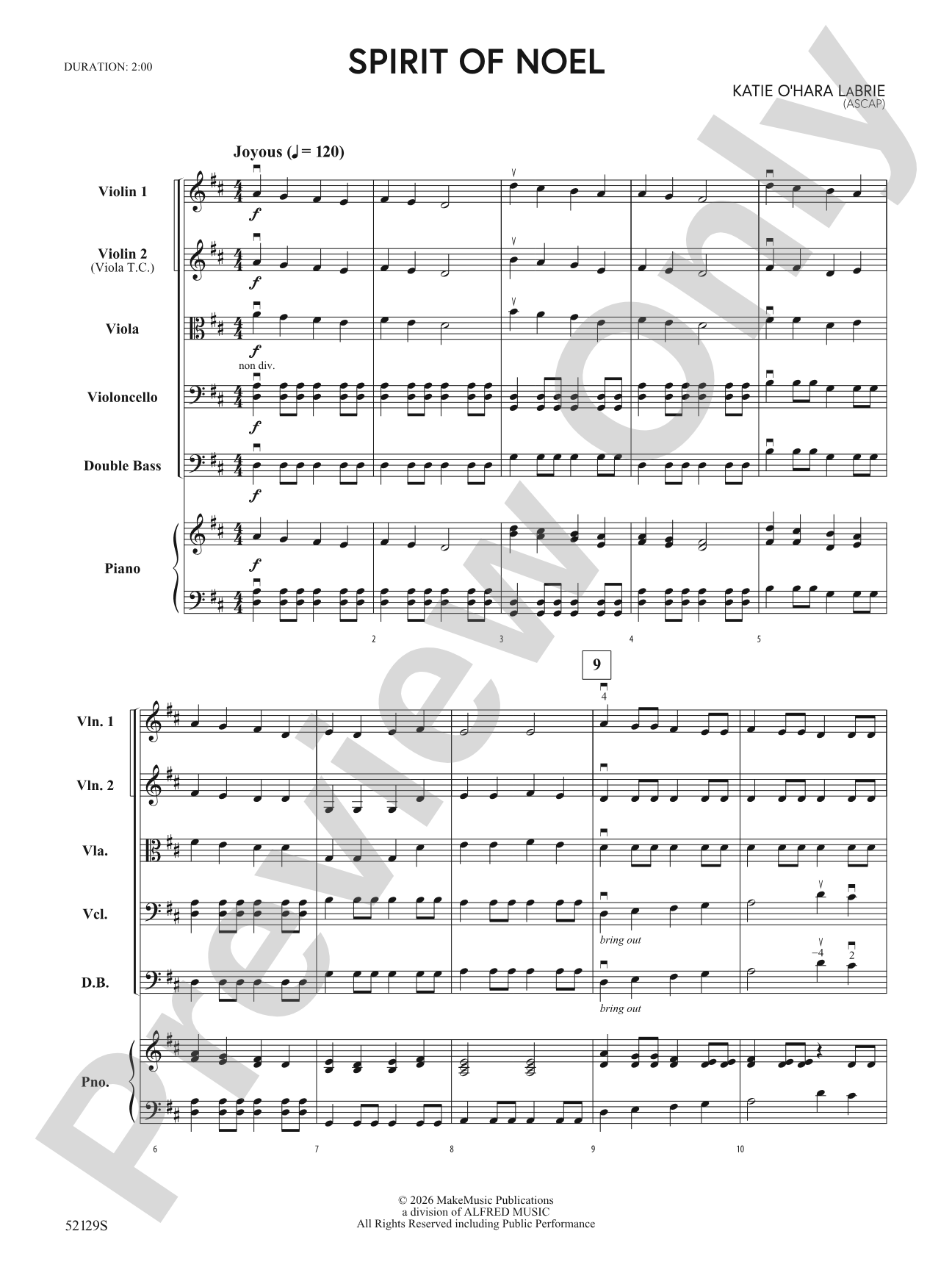
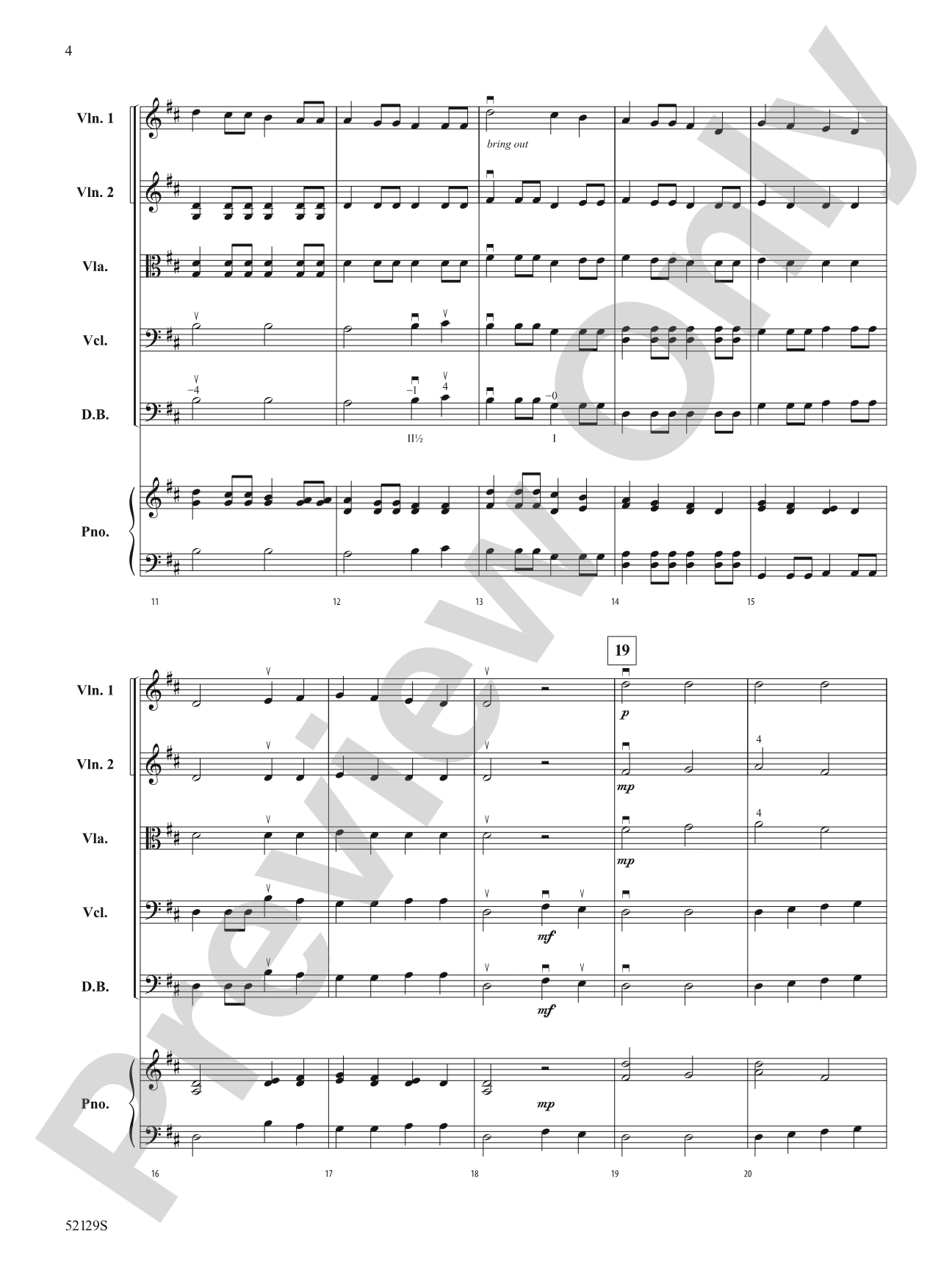
Capture the essence of the season with Spirit of Noel, a bright and cheery musical celebration by Katie O'Hara LaBrie. Familiar carols are woven into a vibrant tapestry, featuring an energetic opening and close, and a reflective middle section perfect for reminiscing on cherished holiday traditions. Keep the joyous spirit alive! (2:00)


Don't just read it, hear it, play along with it, and watch your students grow with it. In MakeMusic Cloud, Spirit of Noel: String Orchestra Conductor Score & Parts comes alive with professional accompaniment, adjustable tempo, and built-in practice tools that turn solo practice into real progress.
Open in the Player
Jump straight in and assign it today.
Start Your Free Trial
Open this title and explore the full library in minutes.
Sample Audio
1
Audio File
--:--
0:00
0:00
Sample Video
Additional Details
Series:
MakeMusic Developing Strings
Publisher:
MakeMusic Publications
SKU:
00-PK-0009400
More about this title
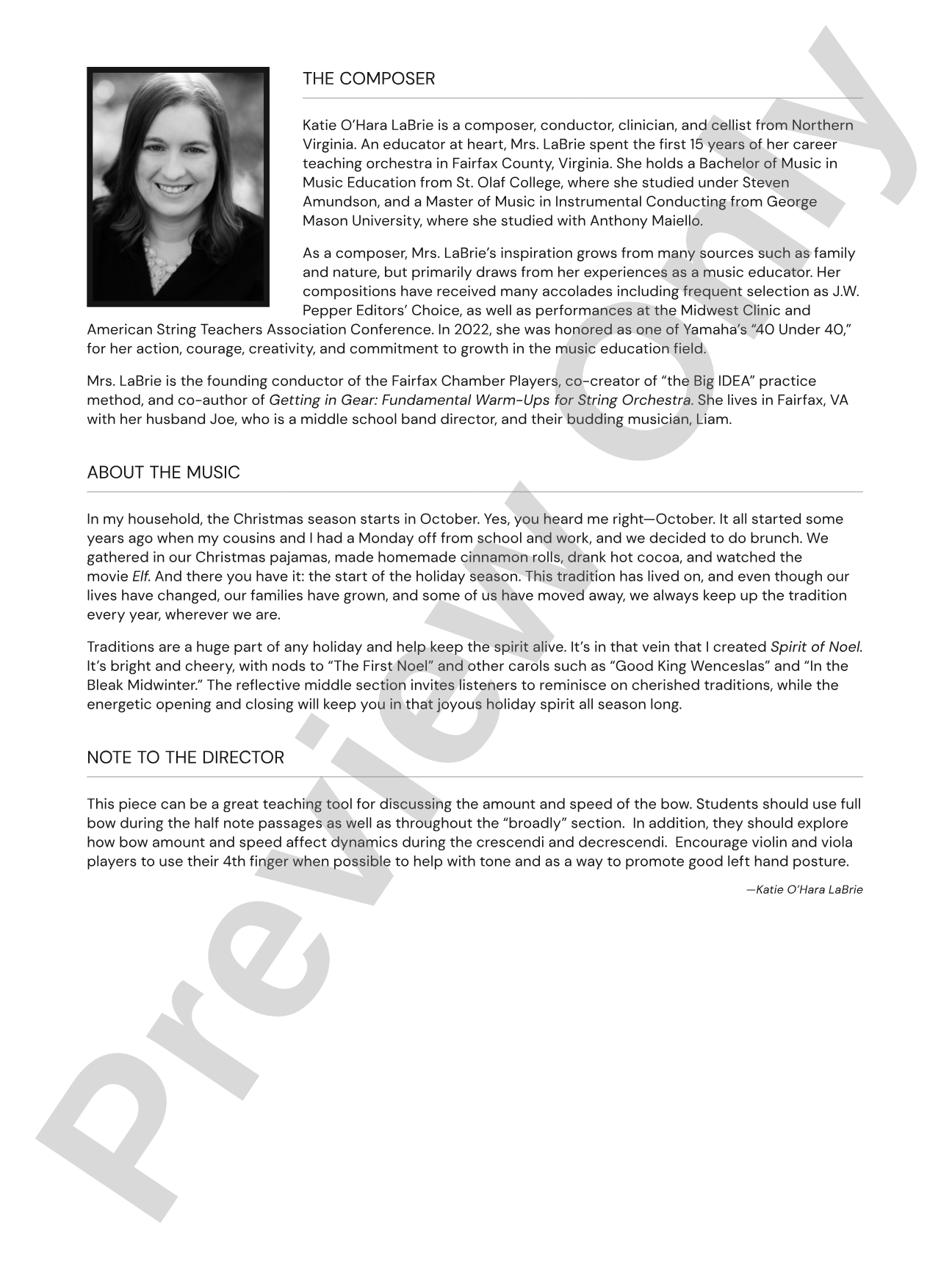
About the Composer: Katie O'Hara LaBrie

Katie O'Hara LaBrie is a Northern Virginia-based composer, conductor, and cellist whose music emerges directly from her classroom. After 15 years teaching orchestra in Fairfax County, she completed her Bachelor of Music in Music Education at St. Olaf College and her Master's degree in Instrumental Conducting at George Mason University. Her compositions balance educational purpose with genuine musical satisfaction, prioritizing both artistic merit and player enjoyment.
LaBrie's work has earned recognition including multiple J.W. Pepper Editor's Choice selections, performances at the Midwest Band and Orchestra Directors Clinic and ASTA Conference, and recognition as one of Yamaha's "40 Under 40" in 2022. She is the founding conductor of the Fairfax Chamber Players and co-creator of "the Big IDEA" practice method. Her music draws inspiration from family, nature, and her deep commitment to purposeful music education.
Why we love this
LaBrie's gift for weaving carols into a cohesive narrative rather than stringing them together gives this piece real musical architecture. The structural arc, energetic bookends with a genuinely reflective middle, respects your students' musical maturity while keeping the energy that Grade 1 ensembles need to feel accomplished. At two minutes, it's substantial enough for a concert opener yet short enough that intonation and balance stay manageable.
What to expect
Bright and spirited from the opening phrase, this arrangement captures holiday warmth through familiar melodic material rendered in fresh orchestration. The midsection invites quiet reflection, giving ensemble members space to connect emotionally with the music before the joyful closing energy returns.
Who it's for
Beginning string orchestras in Grades 1-2 seeking repertoire that sounds polished and celebratory without requiring advanced technique. Directors programming holiday concerts for middle or high school groups will find this particularly useful for its accessibility and immediate appeal to family audiences.
How to get the most out of it
- Shape the opening with clear articulation in the rhythmic figures; let the energy come from precision rather than simply playing louder.
- The reflective middle section benefits from slight expansion of tempo and a focus on phrase singing; guide students to think about the emotional arc rather than individual notes.
- Balance the familiar melodies against accompaniment figuration; use sectional rehearsal to ensure supporting lines remain secure so soloists can breathe musically.
- The close mirrors the opening energy; use the final rehearsals to build confidence in the ensemble so the conclusion feels celebratory rather than rushed.
How to use it
Program this as the centerpiece of a winter concert, pairing it with one lighter opening piece and one contrasting non-holiday work to create a balanced program. The two-minute duration and recognizable melodic material also make it an ideal finale that leaves audiences in an uplifted mood.
Skills your students will build
- Shaping long phrases across multiple measures
- Balancing solo lines with accompaniment texture
- Transitioning smoothly between contrasting tempi and moods
- Reading and executing rhythmic figures with clarity and precision
- Performing with historical awareness of familiar melodies