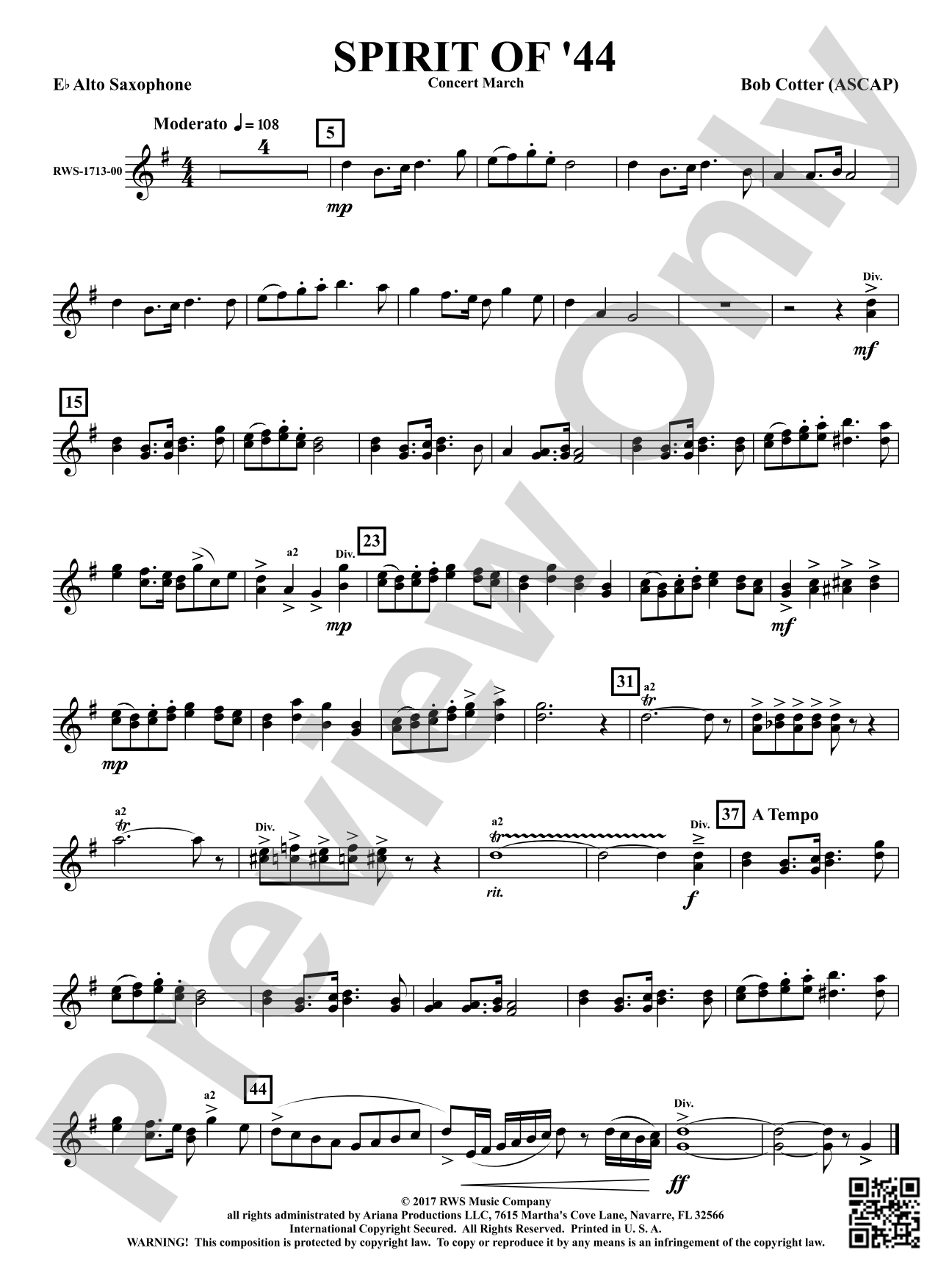
Spirit Of '44 - Concert March: 1st E-flat Alto Saxophone Sheet Music Preview

Spirit Of '44 - Concert March: 1st E-flat Alto Saxophone

Concert March

By Bob Cotter

Grade: 2.5

Item: 98-PC-RWS1713_AX1

Digital Download
$3.99
Description
Toward the end of WWII, both sides had amassed a great number of POW's. These people were used as labor to build roads and bridges. To keep moral high, the POW's made up songs that were sung or whistled. These tunes made the work go faster and were used to communicate messages. The "Spirit of '44" was written in honor of those valiant men and women. Try whistling the melody. It might raise your spirits, too.

Original Item#: RWS-1713-00

Spirit Of '44 - Concert March: 1st E-flat Alto Saxophone isn't in MakeMusic Cloud just yet...but it could be. Let us know you'd like to see it, and you'll help shape what comes next. In the meantime, start a free trial and dive into thousands of interactive titles your students can play along with today.

Sample Audio
0:00
0:00
Sample Video
Additional Details
Series: RWS - Developing Band
Publisher: RWS Music Company
SKU: 98-PC-RWS1713_AX1

More about this title

About the Composer: Bob Cotter

Bob Cotter brings a gift for accessible, meaningful writing to the developing band repertoire. His compositions balance straightforward musical language with genuine emotional substance, creating works that engage both students and audiences.

Why we love this

Cotter anchors this march in genuine historical context rather than generic patriotic sentiment. The programmatic framing transforms a Grade 2.5 piece into something with real weight, and the whistleable melody gives your ensemble an immediate connection to the story they're telling.

What to expect

Steady, purposeful, and human. The march form provides forward momentum, but the melody carries the emotional core of the piece—reflective and resilient rather than bombastic. There's dignity in the writing that honors the people whose story inspired it.

Who it's for

Concert bands at the Grade 2.5 level who want accessible literature with real educational substance. This works equally well for developing ensembles building march technique and for more experienced groups seeking repertoire with meaningful context.

How to get the most out of it

  • Bring out the melody clearly in the upper voices. This tune needs to be singable and memorable, just as it was for the POWs who created it.
  • Shape the phrase endings with slight retards rather than clipping them short. The work songs had a natural, conversational quality.
  • Balance the harmonic foundation so the march pulse supports without overpowering the melody line.
  • Consider having players whistle along during sectional rehearsals to internalize the tune before full-band run-throughs.

How to use it

Program this alongside other patriotic or historical-themed works to create a thematic concert section, or use it as the anchor piece in a program exploring how music sustains us through hardship. The Grade 2.5 level makes it suitable for spring concerts where your ensemble can tackle something more substantial than early-year repertoire.

Skills your students will build

  • March form and phrasing
  • Balanced voice leading in harmonic progressions
  • Melodic clarity and sustenance
  • Connecting musical expression to historical narrative

You May Also Like