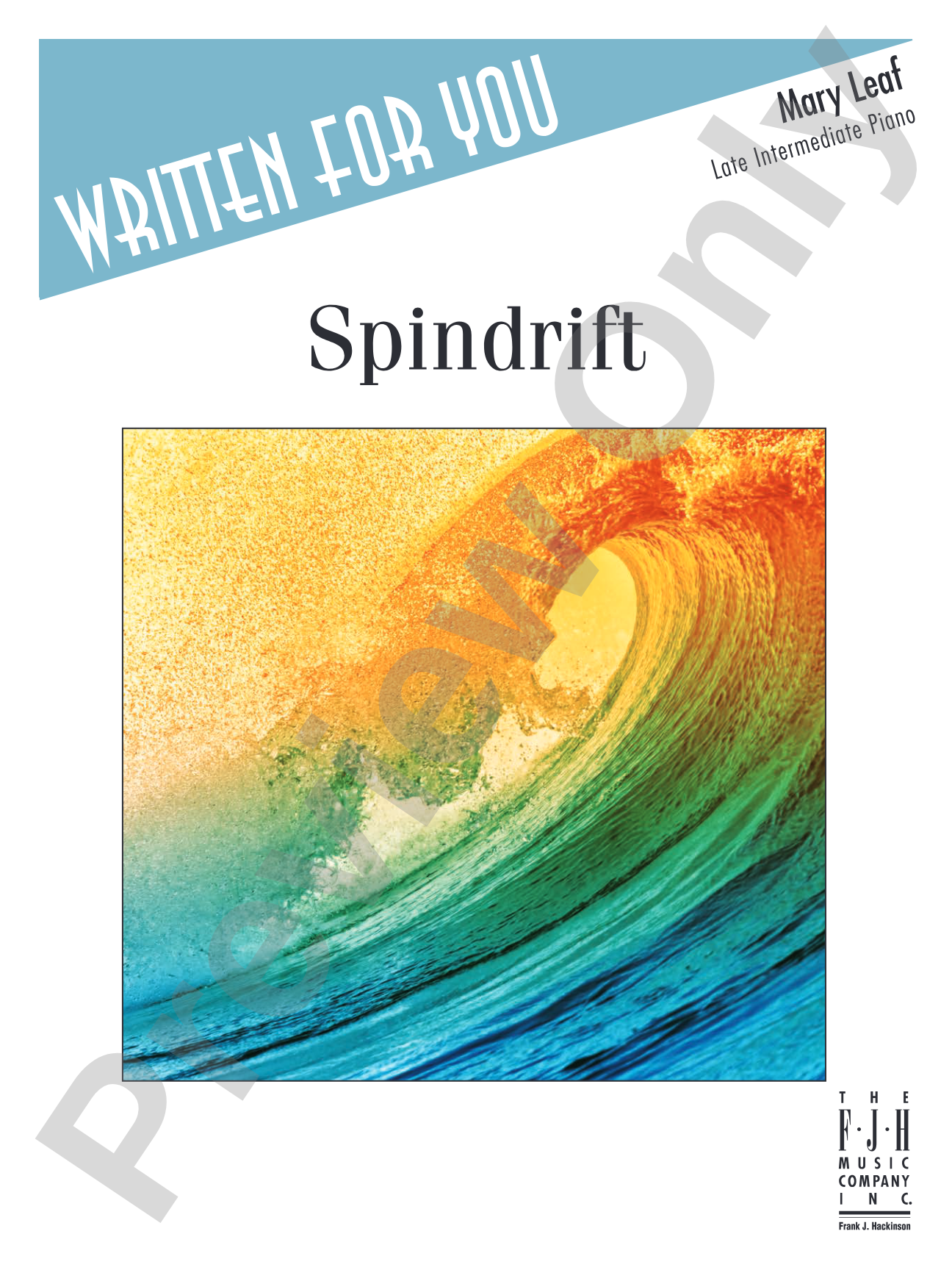
A beautiful, flowing solo by Mary Leaf that captures the essence of rolling wave and sunlight dancing on the ocean's surface. This piece is an excellent opportunity for students to practice voicing melody with hand crossings, and maintain a steady tempo
Discover MakeMusic Cloud: thousands of interactive titles your students can play along with today.
Spindrift finds that rare balance between lyrical writing and genuine technical challenge. Students work through hand crossings and voicing decisions that feel musical rather than mechanical, and the flowing tempo creates an ideal context for developing both independence and control between the hands.
What to expect
Spindrift evokes the gentle, hypnotic motion of light rippling across water. The piece breathes with the rhythm of waves, creating an almost meditative quality that rewards careful listening and thoughtful shaping. You move through it with ease and clarity, never rushed, always aware of the light dancing just beneath the surface.
Who it's for
Intermediate and late intermediate pianists ready to handle hand independence and voicing control. This works well for students developing comfort with more lyrical contemporary writing, or for recital programs seeking something substantial but approachable.
How to get the most out of it
Plan your hand crossings in advance during practice. Mark the exact moment the hands exchange registers so transitions stay seamless and don't interrupt the melodic line.
Set a tempo you can sustain without rushing. The piece's beauty depends on breathing room; choose a speed that lets you shape the phrasing rather than chase the clock.
Balance the melody against accompaniment by listening for the singing quality in your top voice. This isn't about volume but about intent; let the listener hear exactly where the music is going.
How to use it
Consider pairing this with other contemporary solo work in a student recital, or program it as a palette cleanser between heavier classical pieces. It also serves well as part of a concert exploring nature-inspired repertoire, where its impressionistic quality can anchor a thematic program.
Skills your students will build
Hand independence across registers
Voicing melody with accompaniment
Executing hand crossings smoothly
Maintaining even tempo in flowing passages
Shaping lyrical lines in contemporary contexts
You May Also Like
Scan to Complete Your Purchase
Use your phone's camera to scan the code below
You'll log in on your phone and the order will be added to your account