
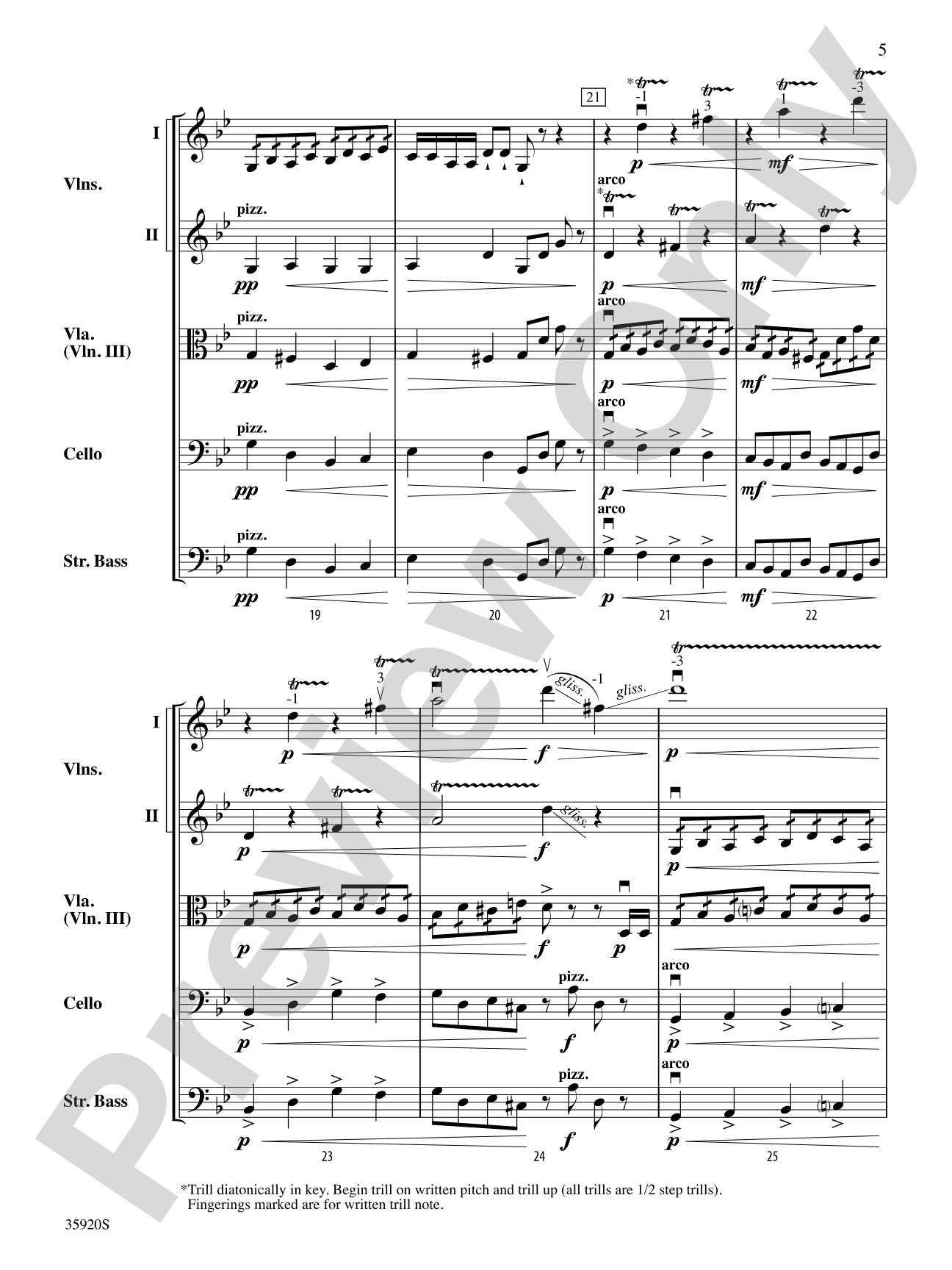
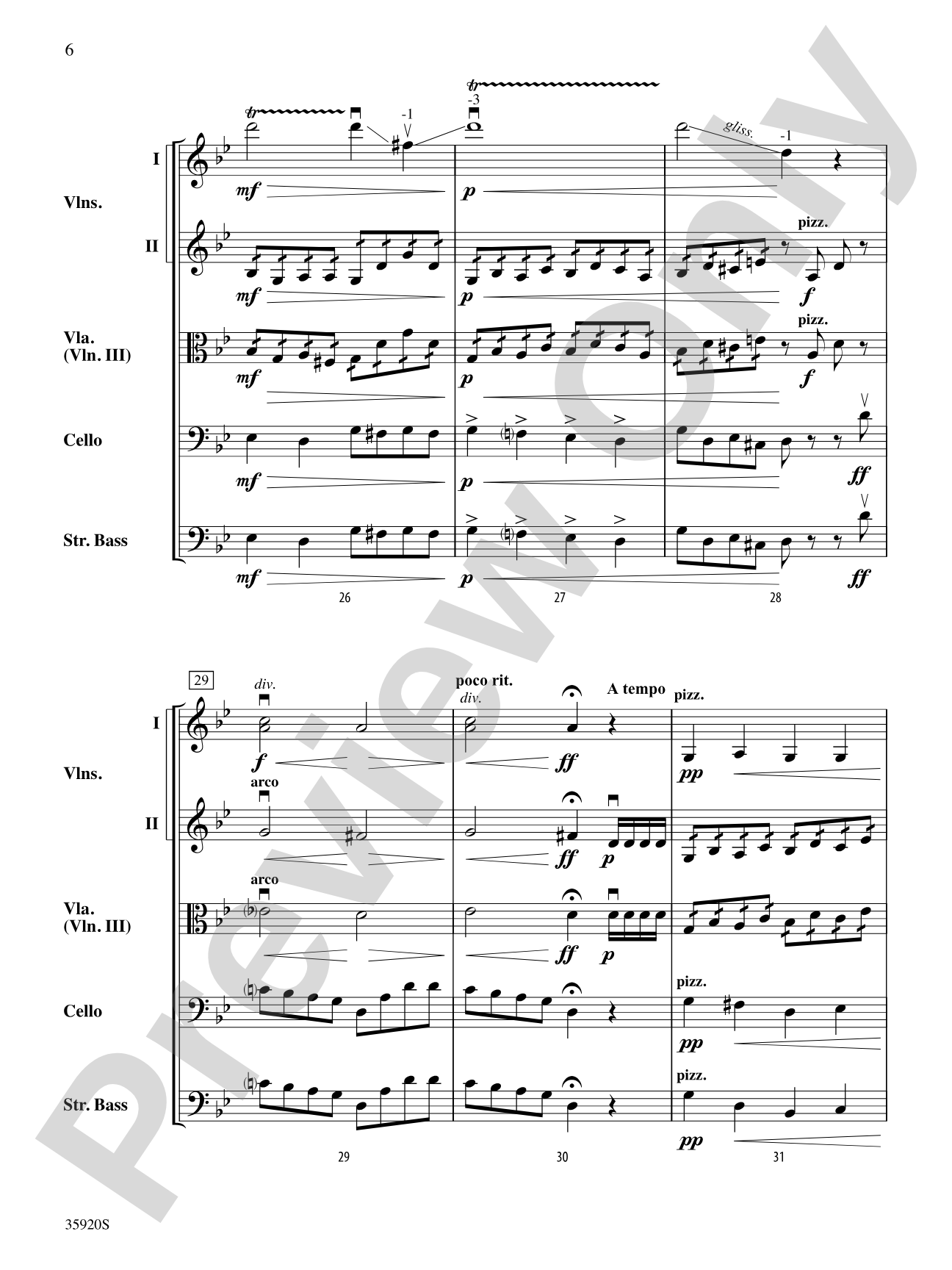
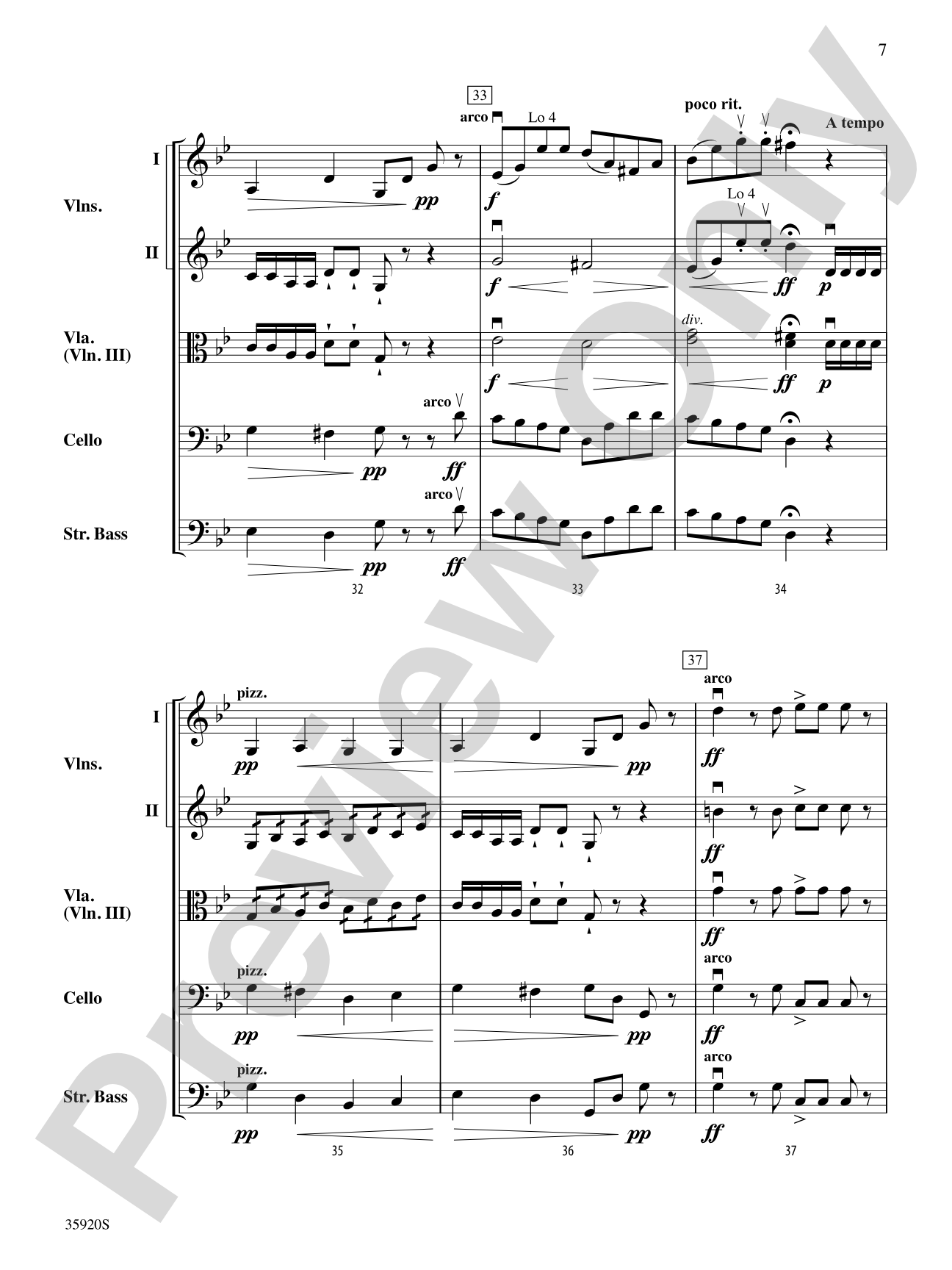
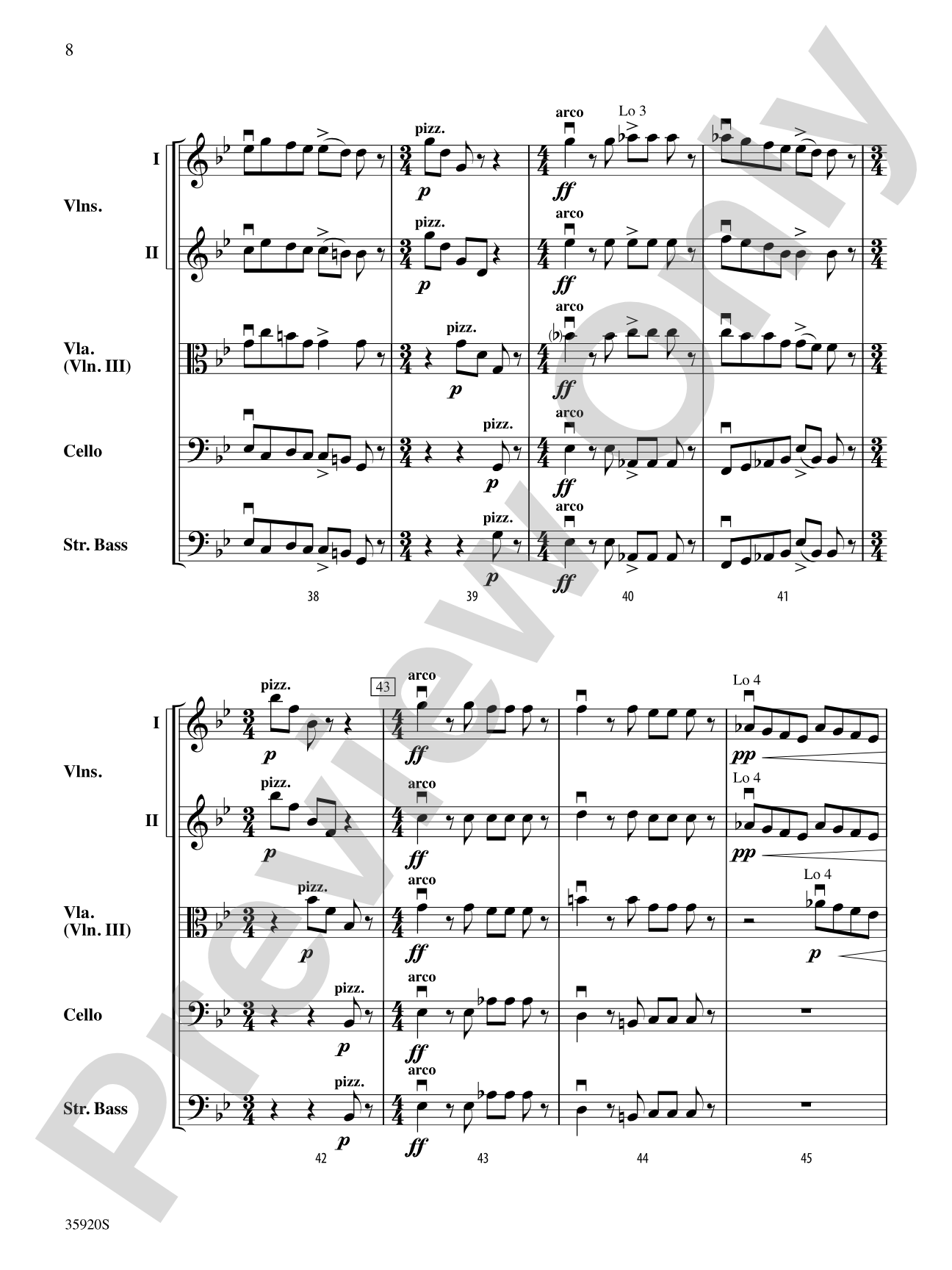
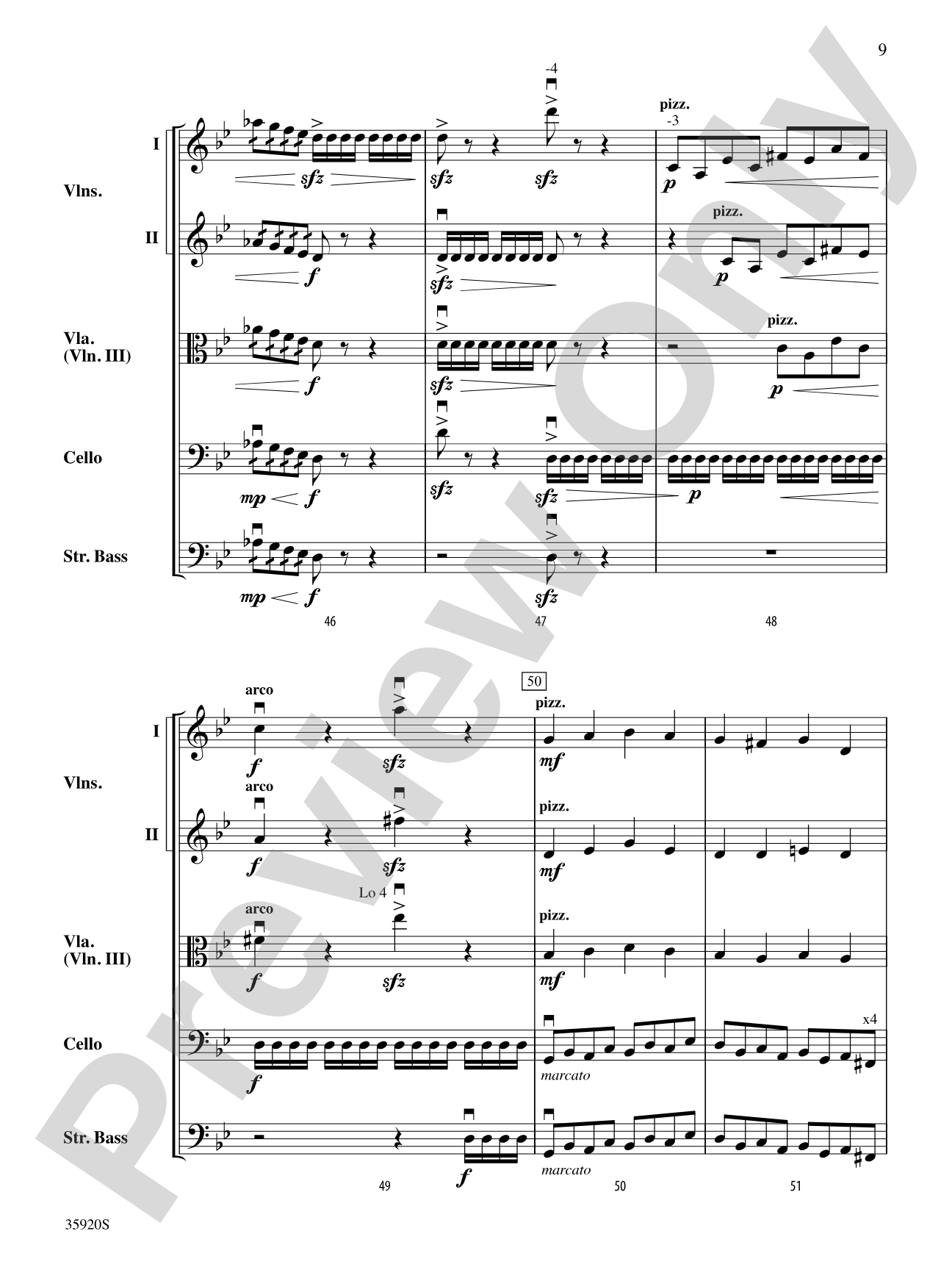
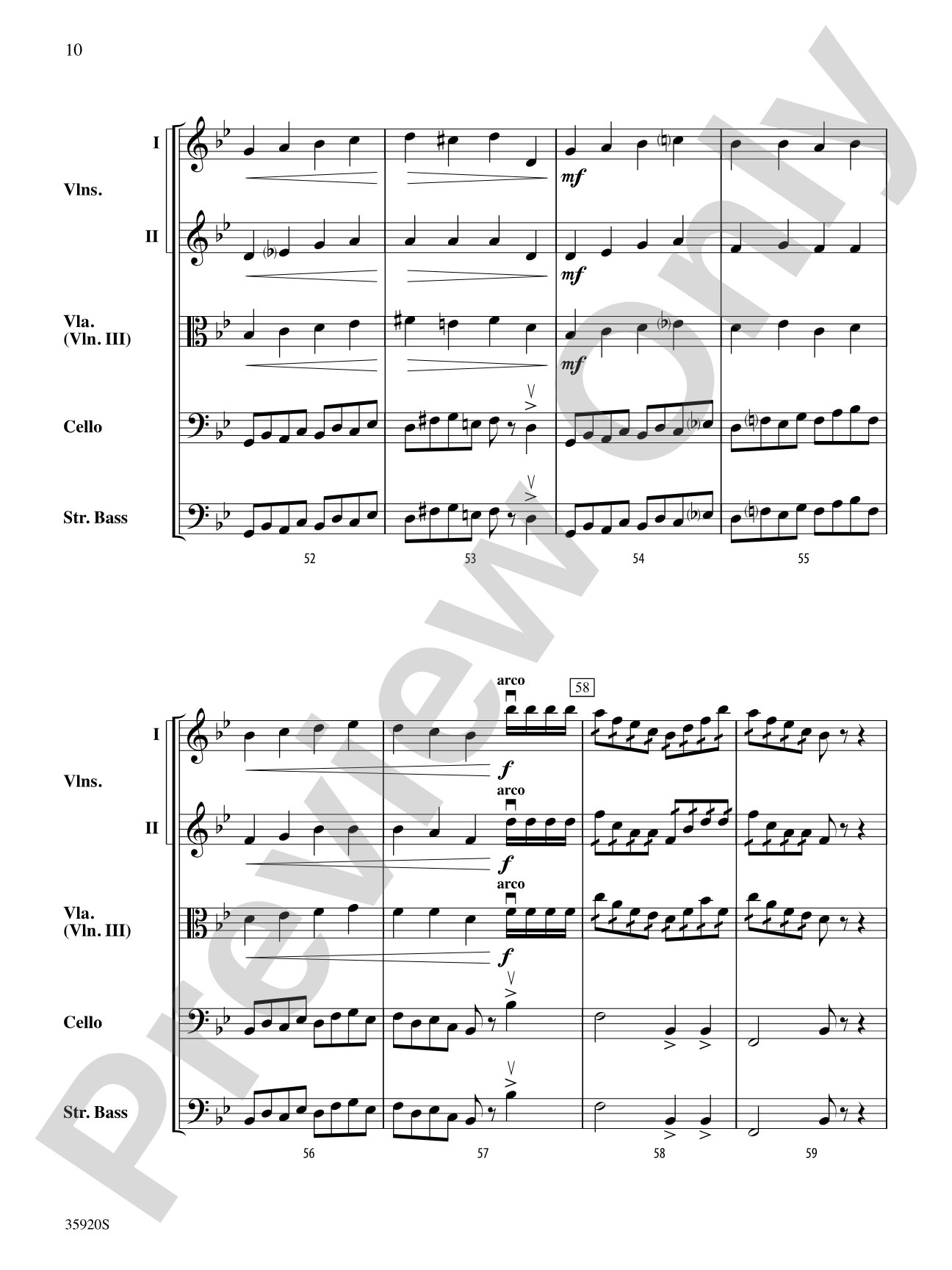
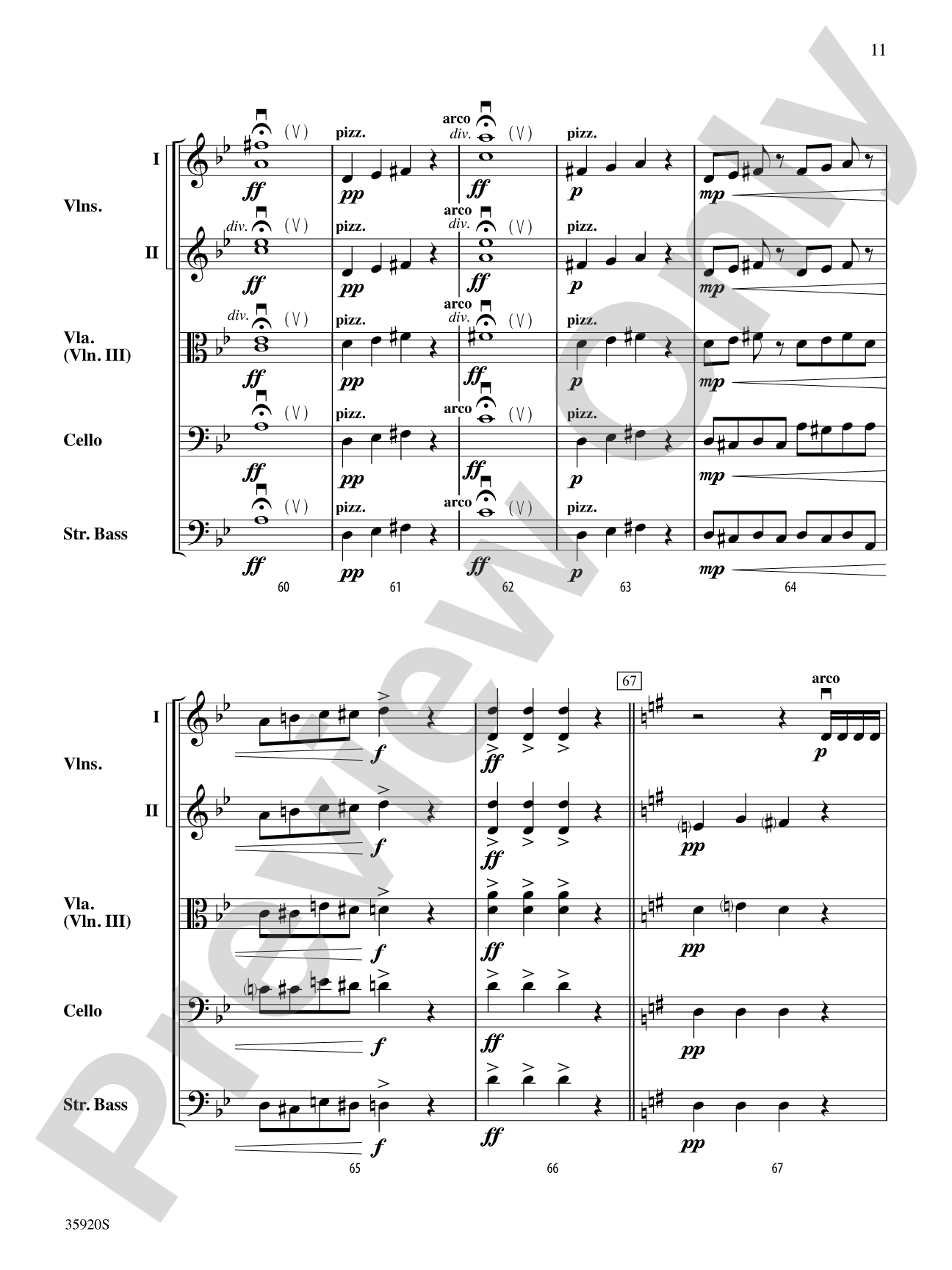
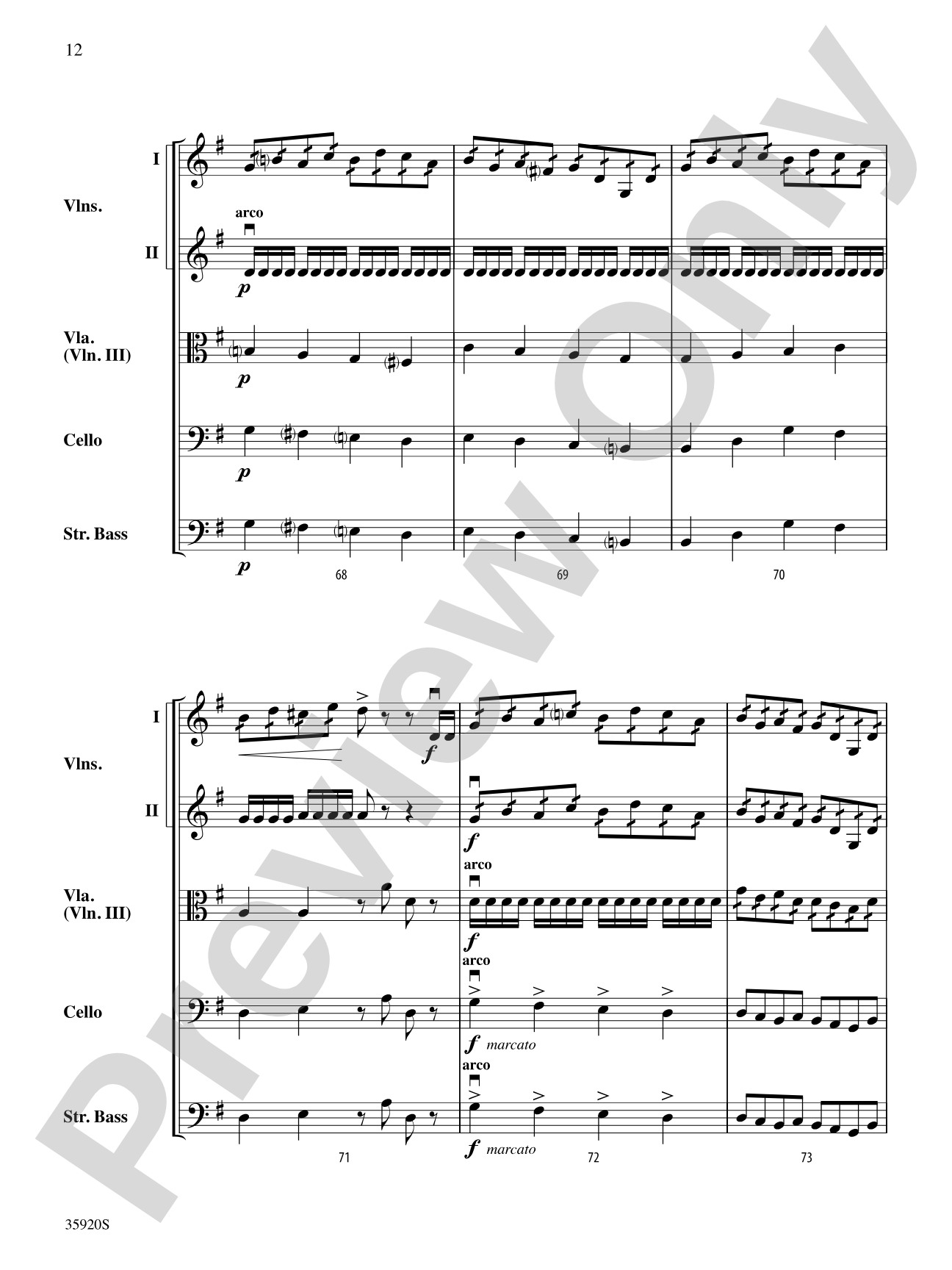

Spider Dance: String Orchestra Conductor Score & Parts
By Michael Hopkins
Grade: 3
Item: 00-PK-0004716

$56.00
Pickup currently not available
Buy Extra Parts (Digital PDF Download)
| Product | Price | Quantity |
|---|---|---|
| Spider Dance: Score | $9.00 | |
| Spider Dance: 1st Violin | $7.99 | |
| Spider Dance: 2nd Violin | $7.99 | |
| Spider Dance: 3rd Violin (Viola [TC]) | $7.99 | |
| Spider Dance: Viola | $7.99 | |
| Spider Dance: Cello | $7.99 | |
| Spider Dance: String Bass | $7.99 |
Parts Added to Cart!
Description
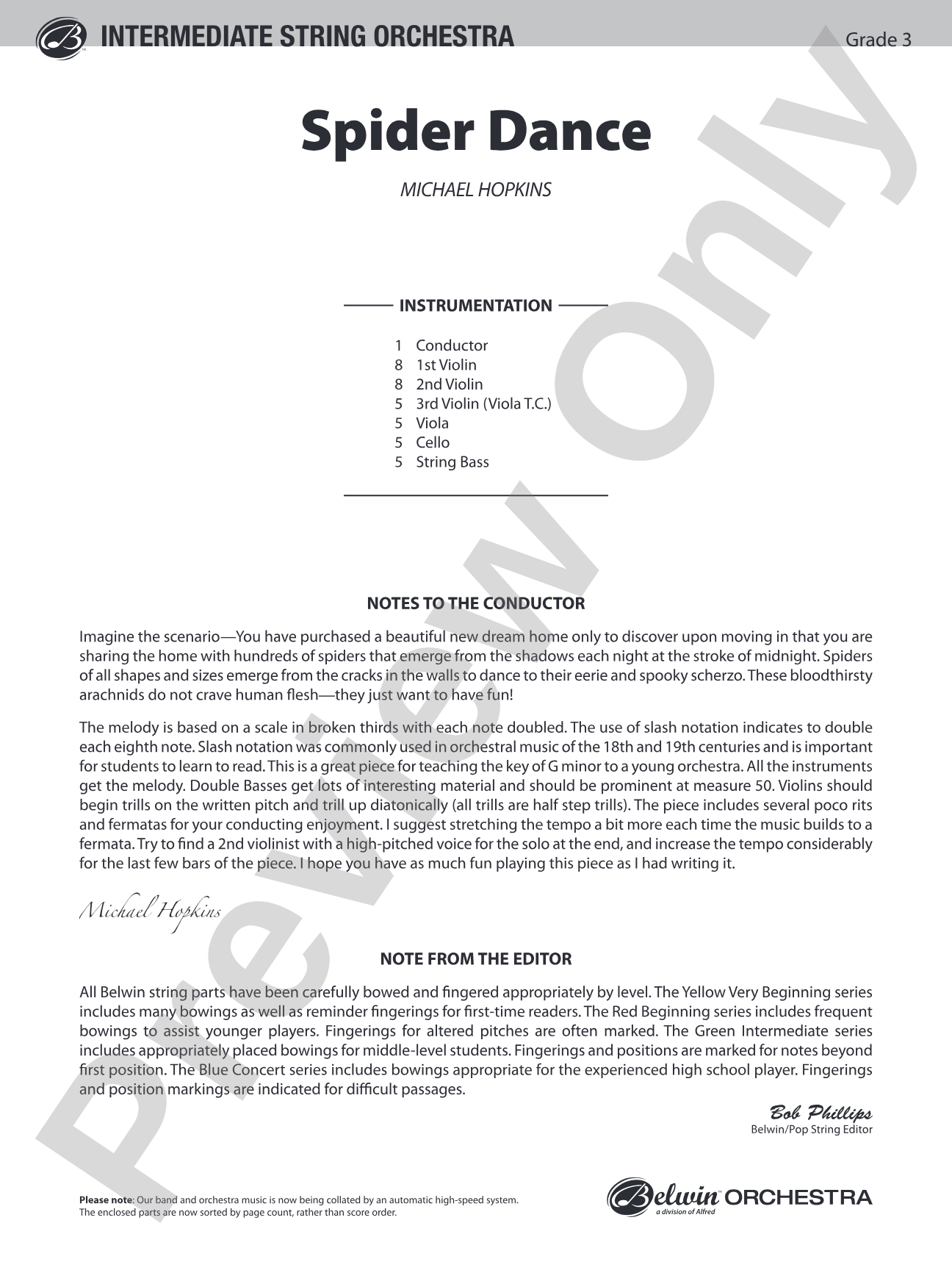
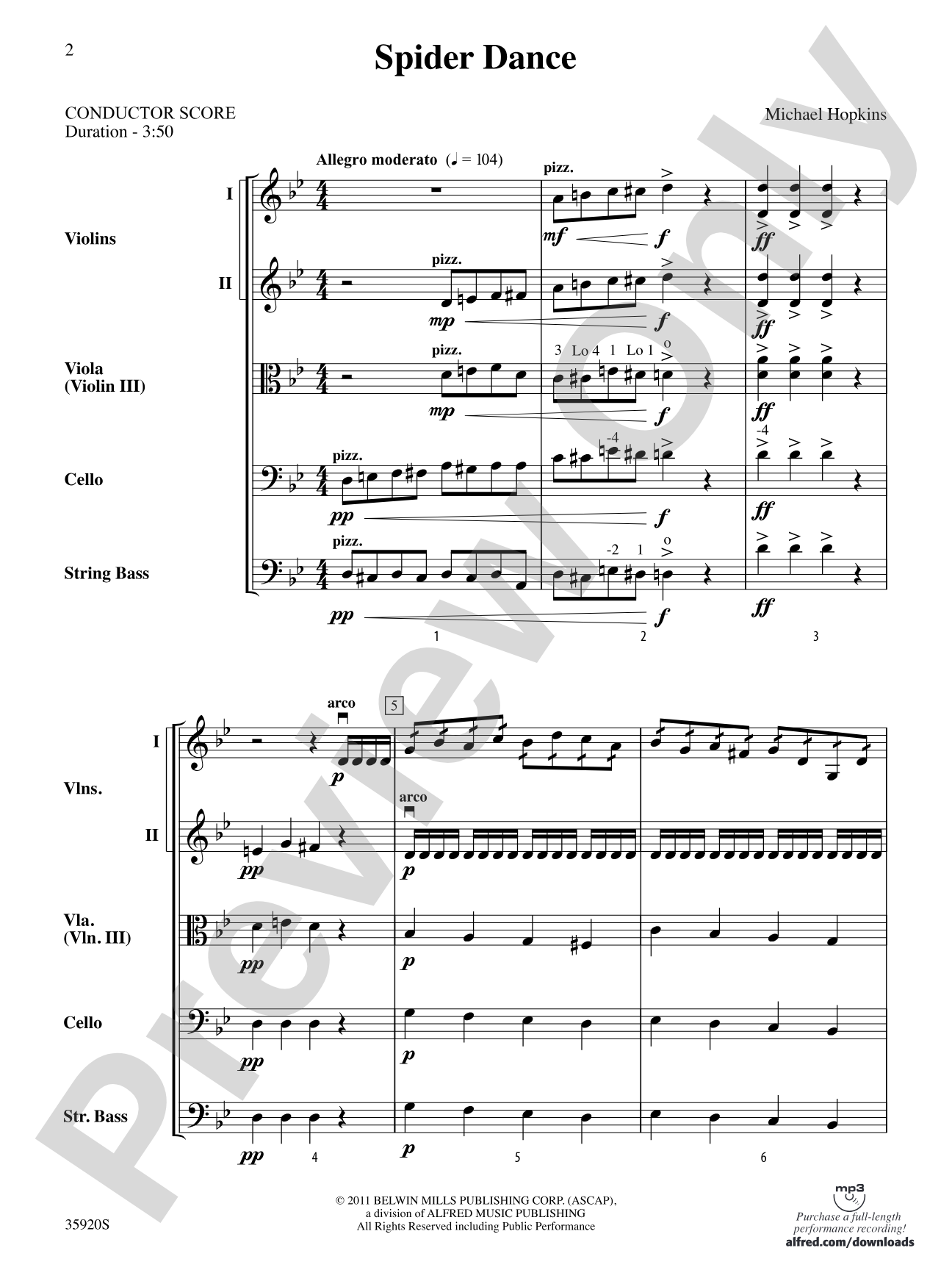
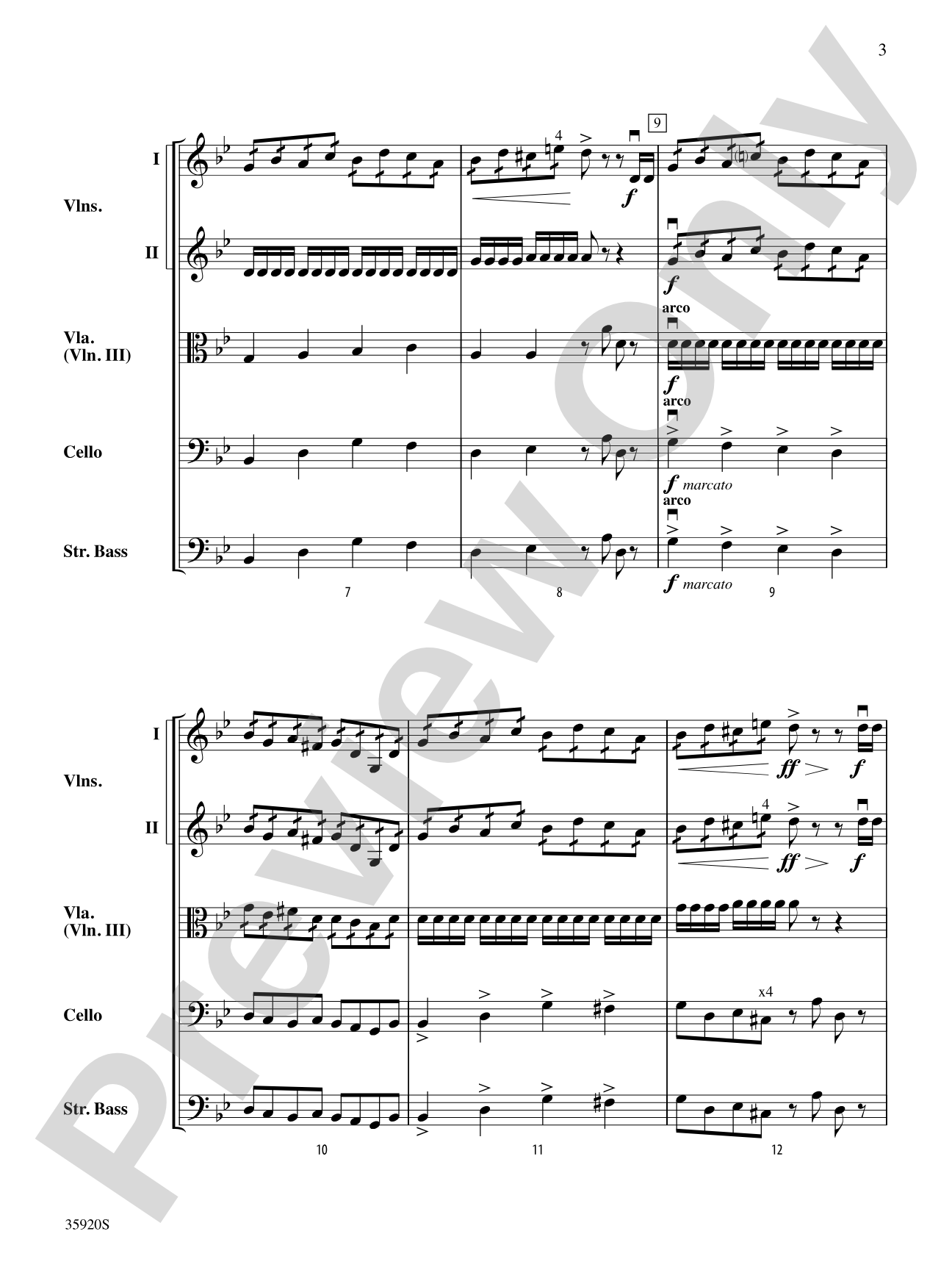
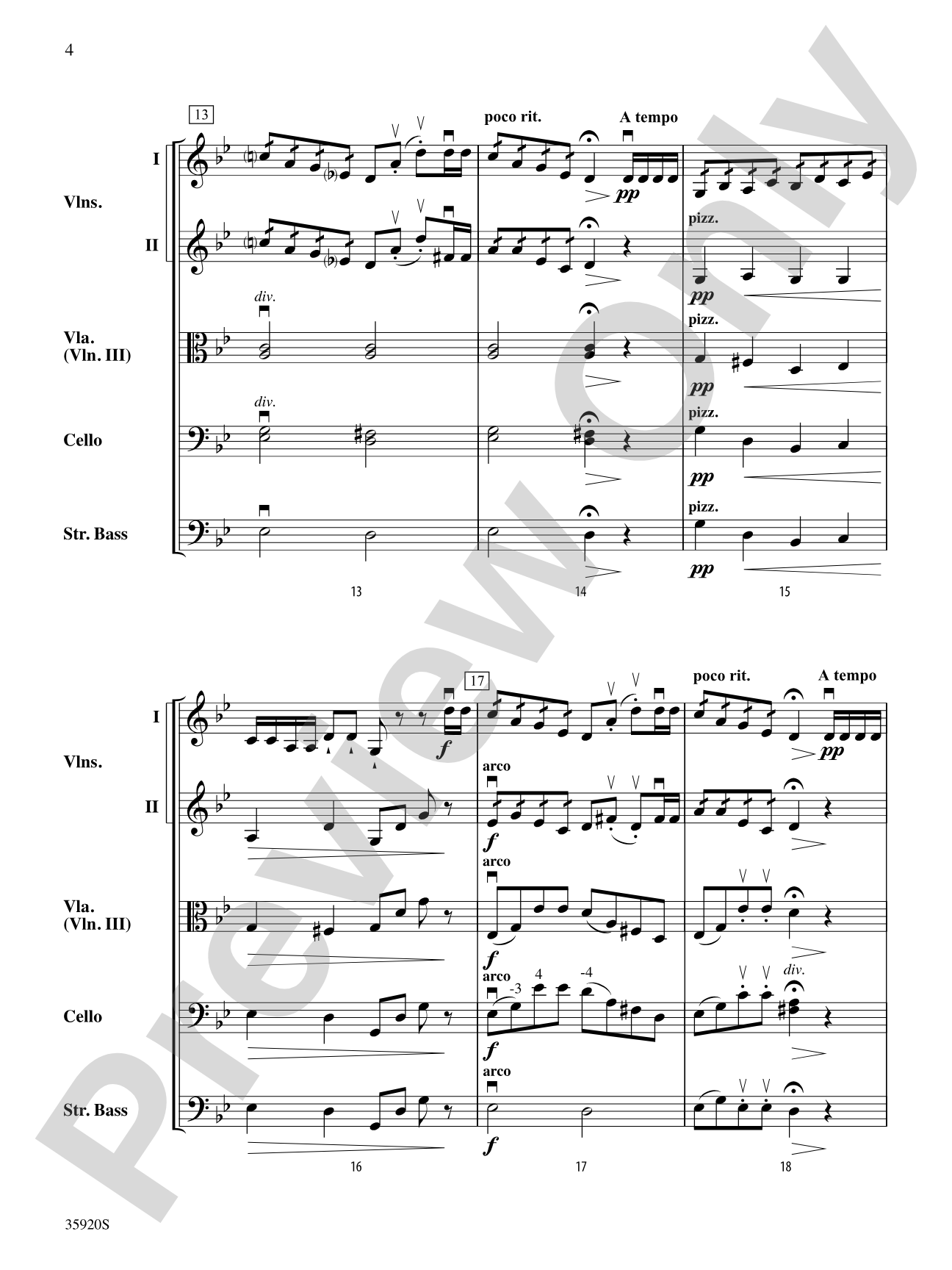
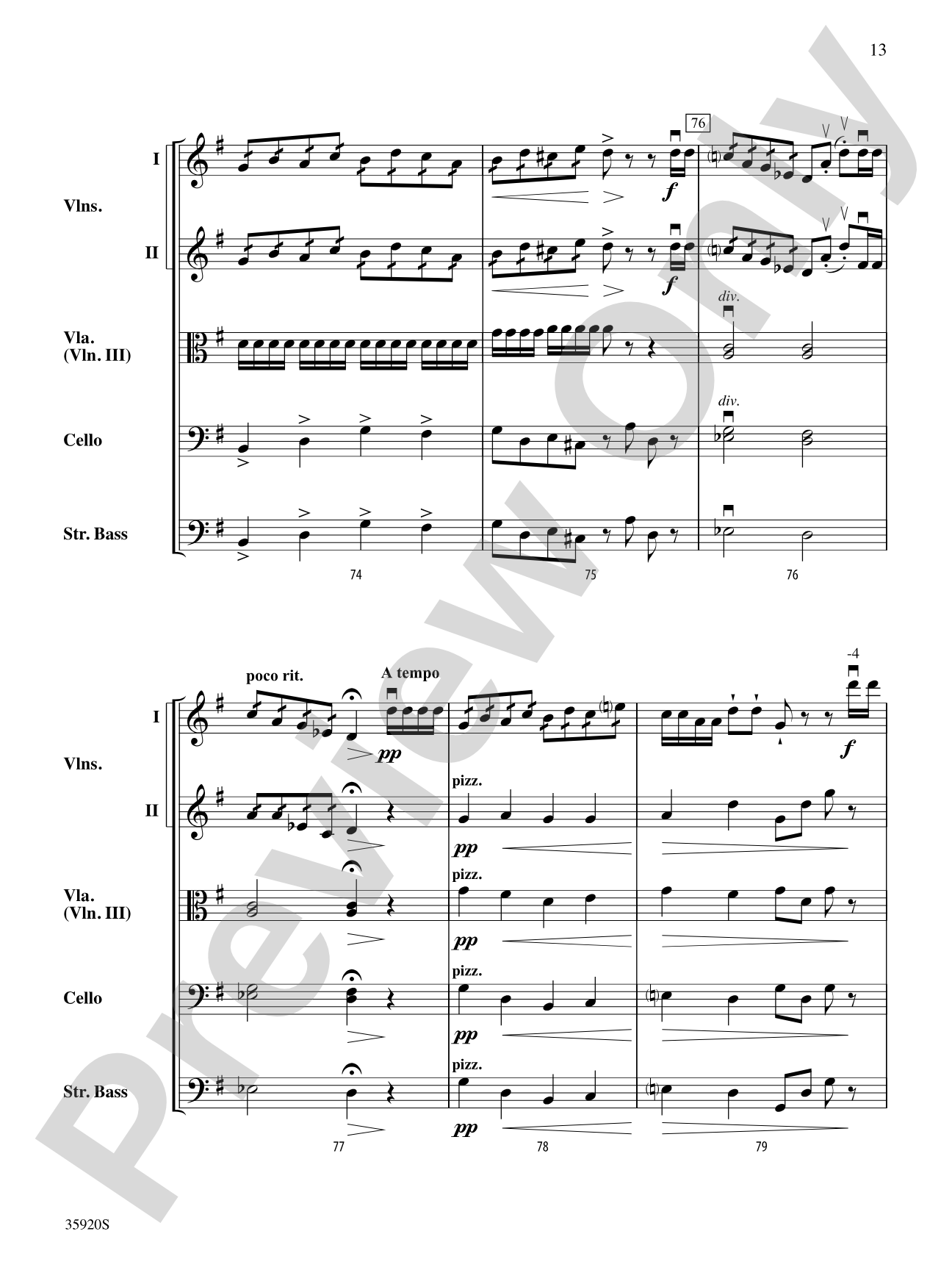
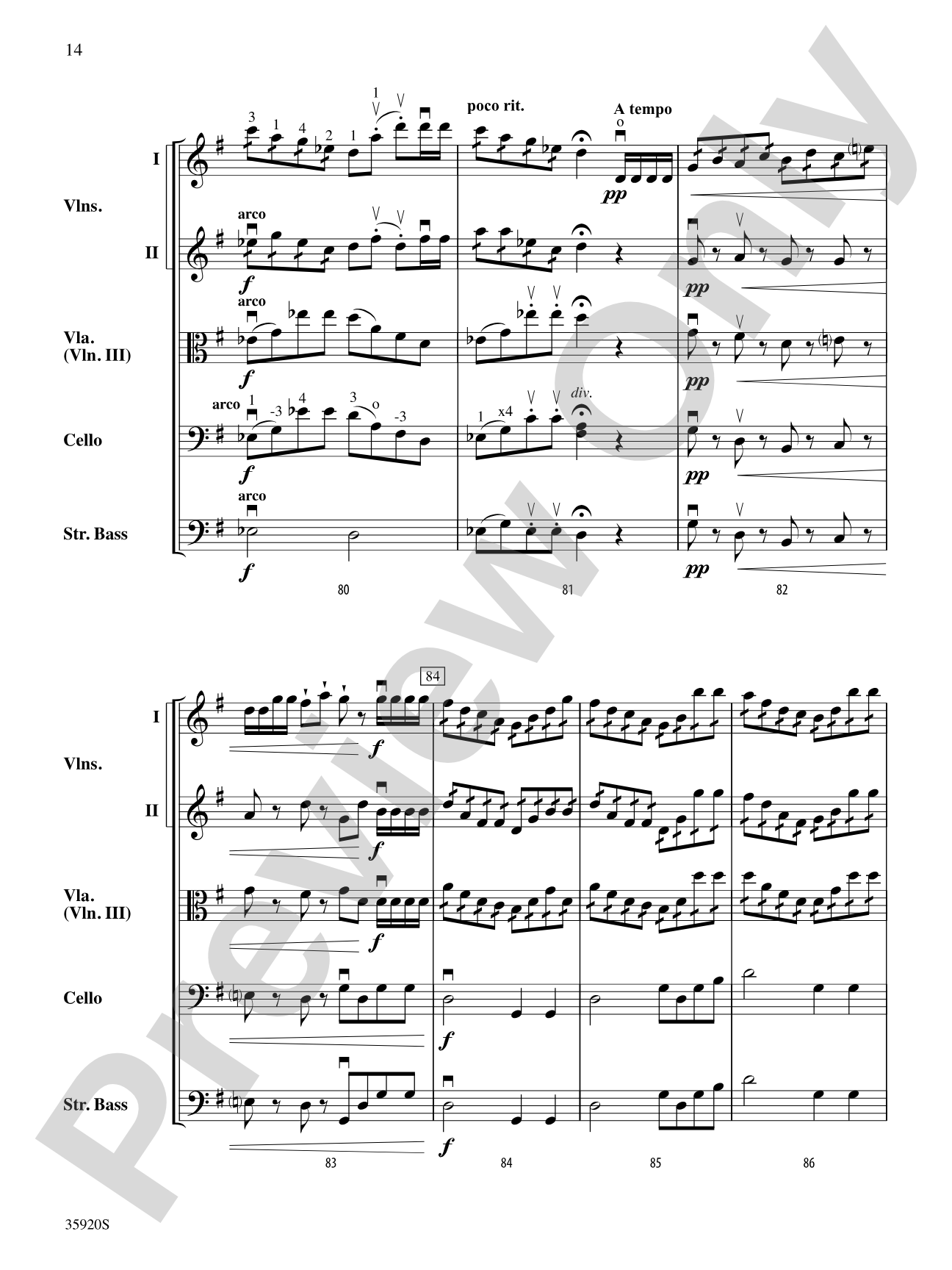
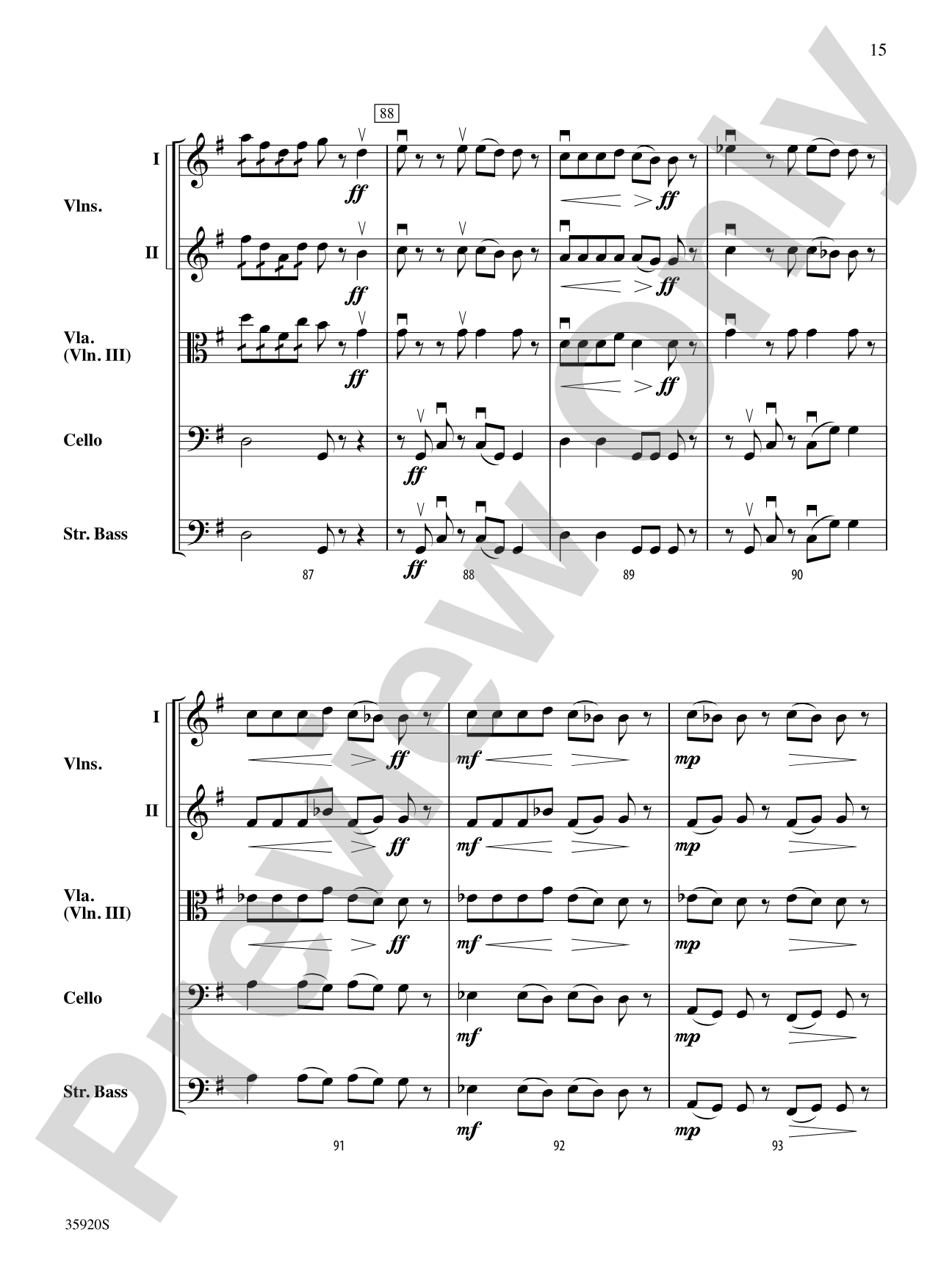
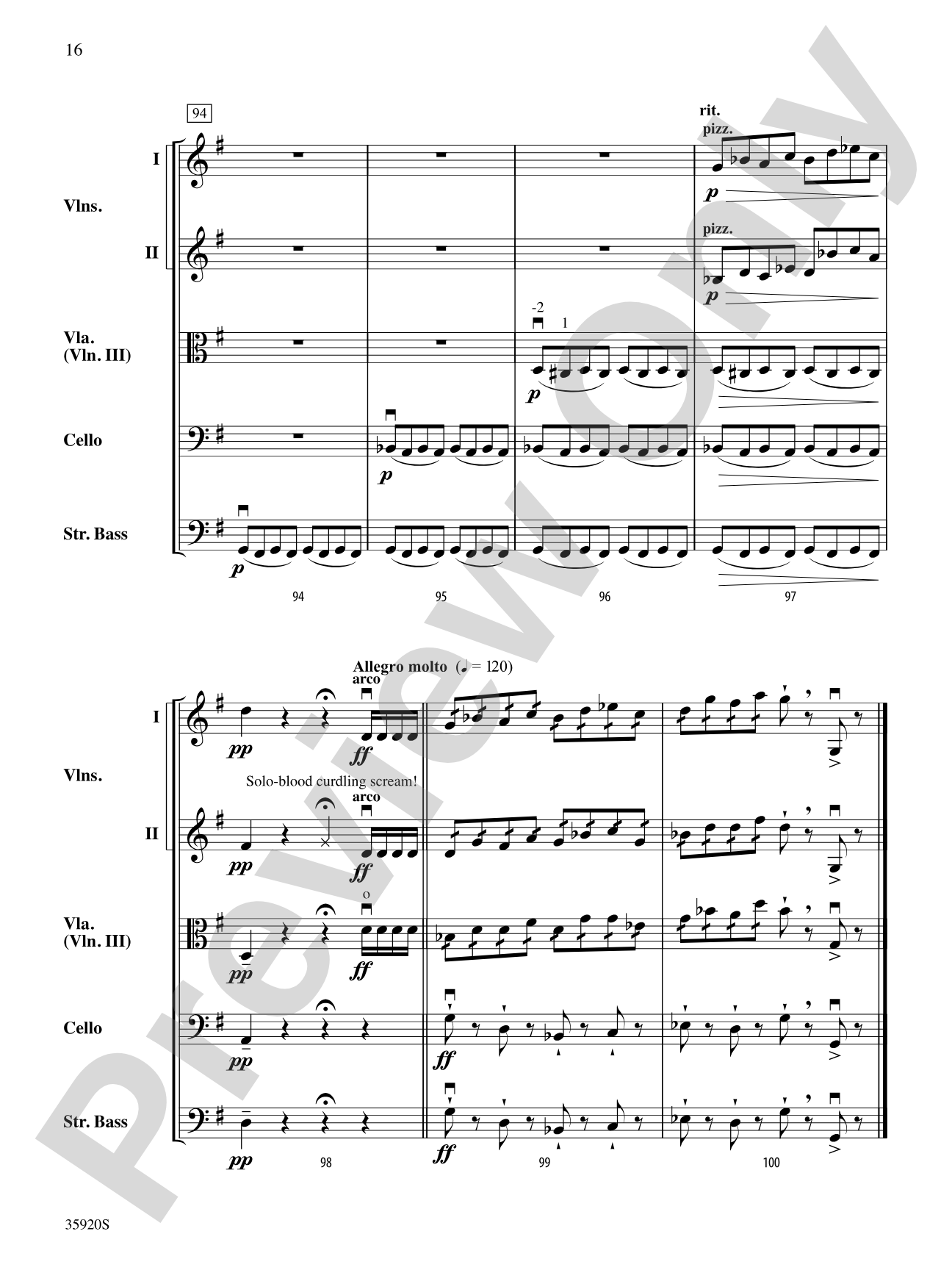
This energetic and spooky scherzo is a great piece for teaching the key of G minor to a young orchestra. It features a melody based on a scale in broken thirds with short fast bow strokes. All the instruments get the melody and the double basses get lots of interesting material. Some shifting to 3rd position for first violin and bass is included as well as 2nd position for cello. Perfect for developing trills, dynamics, and bow distribution, this piece also includes several poco rits and fermatas for teaching tempo changes.


Don't just read it, hear it, play along with it, and watch your students grow with it. In MakeMusic Cloud, Spider Dance: String Orchestra Conductor Score & Parts comes alive with professional accompaniment, adjustable tempo, and built-in practice tools that turn solo practice into real progress.
Open in the Player
Jump straight in and assign it today.
Start Your Free Trial
Open this title and explore the full library in minutes.
Sample Audio
1
Audio File
--:--
0:00
0:00
Sample Video
No sample videos found.
Additional Details
Series:
Belwin Intermediate String Orchestra
Publisher:
Alfred Music
Page Count:
144
SKU:
00-PK-0004716
Instrumentation:
string w/ vln3
More about this title
About the Composer: Michael Hopkins

Michael Hopkins leads the music education program at the University of Michigan, where he teaches string techniques, orchestra methods, and music psychology. His background spans conducting university orchestras and directing secondary school ensembles across multiple states, along with founding the Burlington Chamber Orchestra and guest conducting at over 100 festivals nationwide.
Hopkins has published extensively on string pedagogy and music technology in peer-reviewed journals including the Journal of Research in Music Education and American String Teacher. He authored The Art of String Teaching (GIA Publications), a resource for pre-service teachers, orchestra conductors, group string instructors, and private teachers. His catalog includes more than 70 published compositions and arrangements for orchestra.
Why we love this
Hopkins writes with a conductor's ear for what young orchestras need to learn and perform simultaneously. The piece distributes the scherzo's playful energy across all sections, ensuring every stand stays engaged while building practical technique (position shifts, trills, dynamics) that serves repertoire beyond this single piece.
What to expect
Spooky and playful in equal measure, with eight-legged precision. The broken-thirds melody skitters across the ensemble while short, sharp bow strokes keep the energy contained and unsettling, perfect for building suspense before it dissolves into bright virtuosity.
Who it's for
Grade 3 string orchestras ready to work in a minor key with confidence. This piece works for ensembles that have solid bow control and can handle basic position work without falling apart rhythmically.
How to get the most out of it
- Separate the broken-thirds melody from the underlying harmonic pulse during sectionals; rhythmic precision in this figure determines whether the piece sparkles or muddles.
- Map the position shifts (first violin to 3rd position, cello to 2nd position) in advance with your section leaders so intonation doesn't suffer during the spooky passages.
- Honor the poco rits and fermatas as genuine tempo changes, not afterthoughts. These moments build dramatic tension and teach your students when to breathe as an ensemble.
- Demand crisp, consistent bow strokes on the fast passages. Bow distribution problems will expose themselves immediately at tempo in a novelty piece like this.
How to use it
Program this in October for a Halloween-themed concert, or use it as a fall opener that showcases a young orchestra's technical growth without requiring heavy emotional lifting. It pairs well with more lyrical pieces and serves as a natural confidence builder before tackling longer or more complex repertoire.
Skills your students will build
- Playing in G minor with secure intonation
- Reading and executing broken-thirds melodic figures
- Position shifting to 3rd position (violin) and 2nd position (cello)
- Executing trills with musical intent
- Managing dynamic contrast and bow distribution in fast passages
- Responding to tempo changes (poco rit and fermatas) as an ensemble