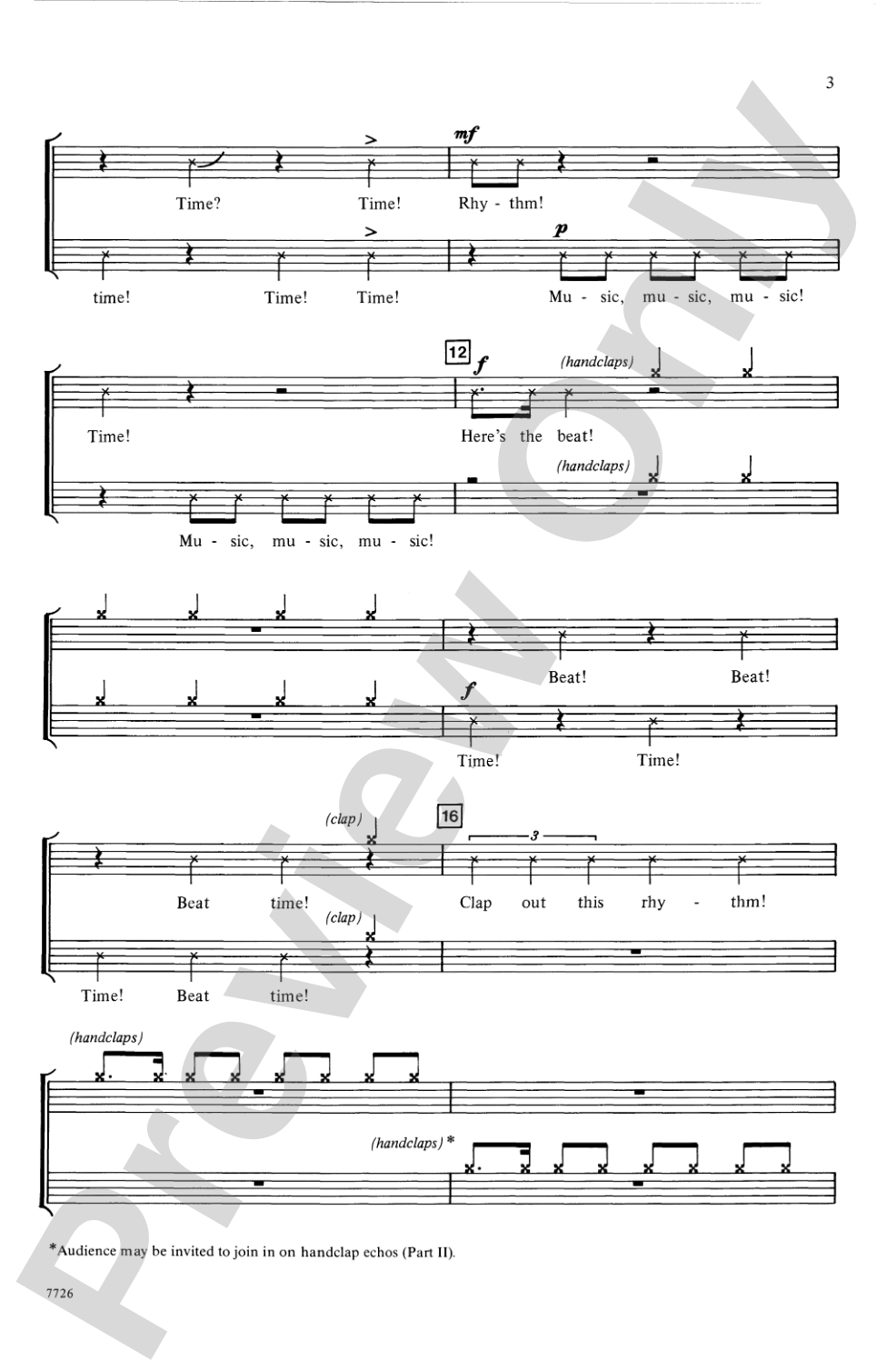
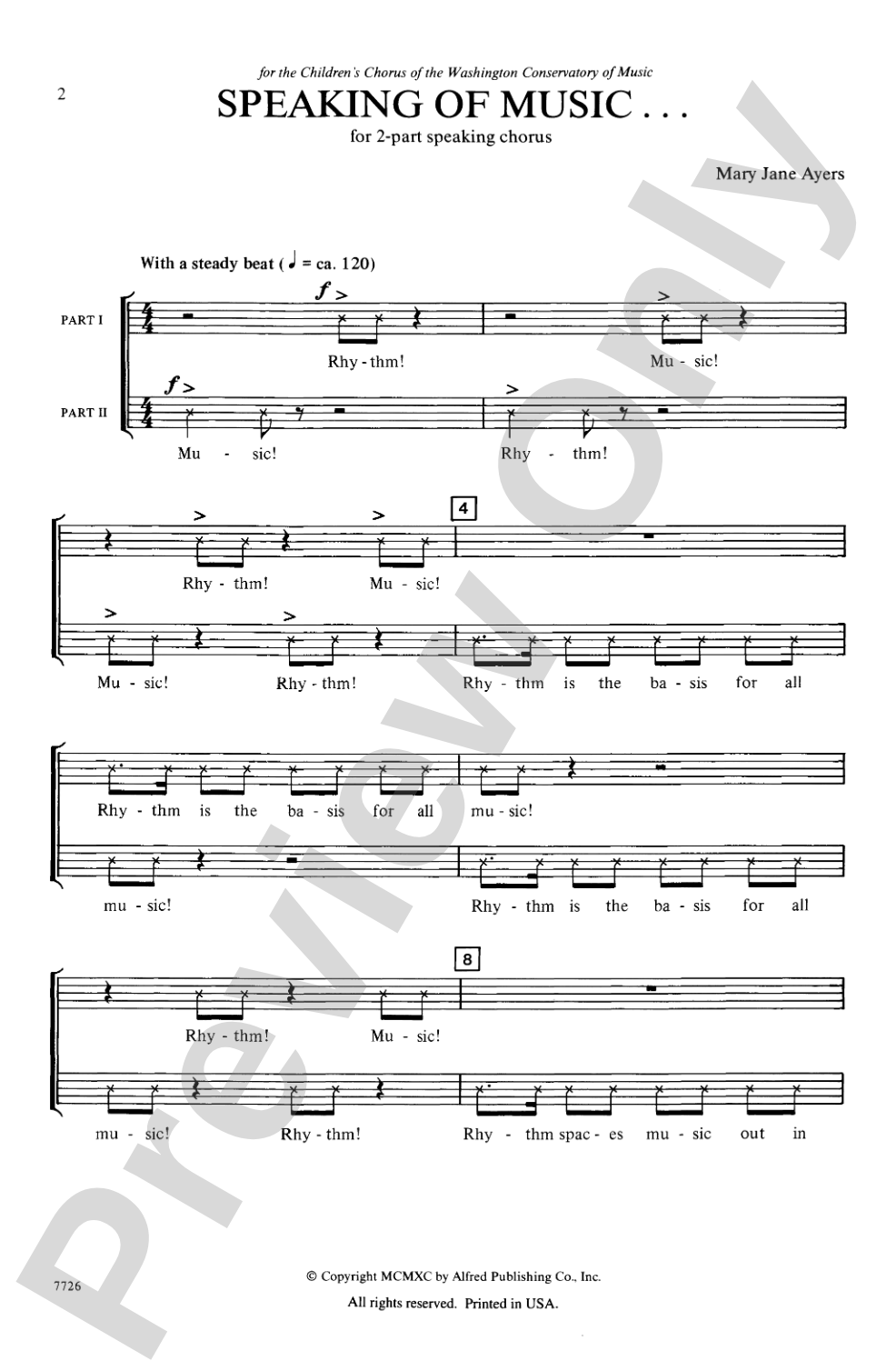
Speaking of Music Sheet Music Preview

Speaking of Music: 2-Part Speaking Chorus Choral Octavo

Music by Mary Jane Ayers

Item: 00-PO-0004567

Digital Download
$2.25

Minimum order quantity: 20 copies

Description
Rhythm...beats...rests...note values...pitch...harmony...chords. Teach them all with this amazing, educational piece for 2-part music.

Speaking of Music: 2-Part Speaking Chorus Choral Octavo isn't in MakeMusic Cloud just yet...but it could be. Let us know you'd like to see it, and you'll help shape what comes next. In the meantime, start a free trial and dive into thousands of interactive titles your students can play along with today.

Sample Audio
No sample audio found.
Sample Video
Additional Details
Series: Alfred Archive Edition: Alfred Choral Designs
Publisher: Alfred Music
Page Count: 8
SKU: 00-PO-0004567

More about this title

Why we love this

This piece transforms music theory instruction into something singers actually want to perform. Rather than drilling concepts in isolation, students encounter rhythm, pitch, harmony, and chord function within a musical context that holds their attention. The speaking chorus format makes ensemble participation immediate and accessible for younger or less experienced singers.

What to expect

The piece reads as engaging and purposeful rather than academic. Speaking passages create rhythmic energy and forward momentum, while the singing portions offer straightforward harmonic content that lets students focus on listening to and blending with one another.

Who it's for

This octavo works well for middle school, high school, and adult community choirs seeking literature that reinforces musicianship alongside performance. It suits ensembles at all vocal ranges, since the two-part voicing accommodates flexible voice assignments.

How to get the most out of it

  • Establish clear articulation during the spoken sections so that rhythmic patterns land with precision; treat the speaking parts as you would a percussion ensemble.
  • Balance the singing and speaking elements by rehearsing them separately first, then layering them together so neither overwhelms the other.
  • Use the educational content as a springboard for deeper discussion. Pause rehearsals to point out where students hear the concepts being demonstrated in real time.

How to use it

Program this during a concert featuring educational or community themes, or use it as an opening number that captures attention while setting a musical learning objective for the audience. It also serves ensemble building early in the rehearsal year, when singers benefit most from explicit instruction in fundamental concepts.

Skills your students will build

  • Recognition and performance of rhythm patterns and note values
  • Understanding of pitch and interval relationships
  • Harmonic listening and chord identification
  • Ensemble articulation and rhythmic precision in spoken sections
  • Two-part singing and blend

You May Also Like